Phi Phi Island Day Trip From Krabi: Boats, Stops and Timing
Phi Phi sits about 45 km southwest of Ao Nang, which puts it 45 to 50 minutes away by speedboat and roughly two hours by public ferry. A day trip is enough to see Maya Bay, Pileh Lagoon and the best snorkeling in the group, but only if you leave early: the crowd curve on Phi Phi is driven entirely by departure time, not by season.
Compare the nine-hour early speedboat’s inclusions and pickup conditions before arranging the rest of your Krabi stay. Explore Early-Bird Phi Phi & 4 Islands.
Booking choice: The early speedboat combines Phi Phi and the 4 Islands with snorkeling, lunch and location-dependent pickup arrangements. Check dates for Early-Bird Phi Phi & 4 Islands.
Phi Phi From Krabi at a Glance
A Phi Phi day trip from Krabi is a full day, not a half one. Speedboats cross in 45 to 50 minutes from the Ao Nang piers, the standard circuit takes in Maya Bay, Pileh Lagoon, Viking Cave, Monkey Beach and one or two snorkel stops, and the national park fee for the Phi Phi area runs around 400 THB per adult, collected in cash.
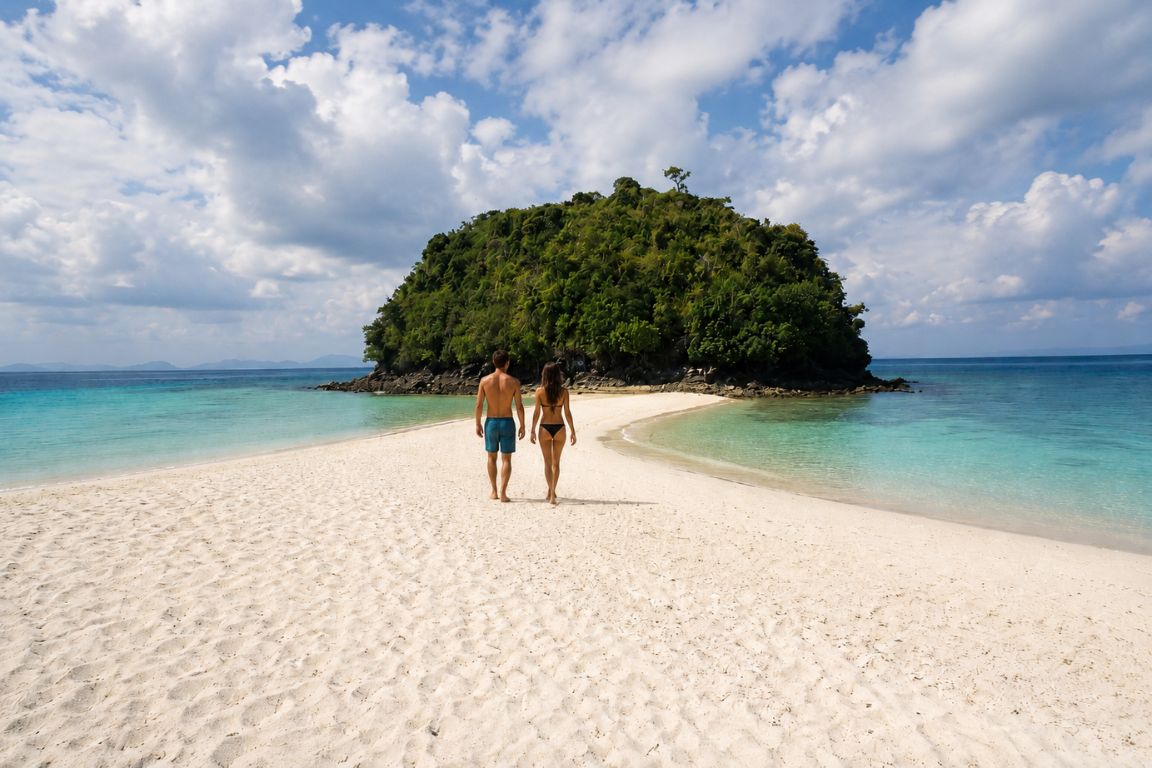
The distance is what shapes everything else. Phi Phi is 45 km from Ao Nang, roughly three times further than the inner 4 Islands circuit, and that single number decides which hull you take, how early you leave, and whether the day feels spacious or rushed. Get the timing right and it is the best day on the water available from Krabi. Get it wrong and you spend the good hours queuing behind other boats.
| Detail | What to expect |
|---|---|
| Distance from Ao Nang | About 45 km to Phi Phi Don, 50 km to Bamboo Island |
| Speedboat crossing | 45 to 50 minutes |
| Public ferry crossing | Around two hours each way from the Krabi Town piers |
| Longtail | Over 90 minutes and rarely attempted; fuel range and open-sea comfort rule it out |
| Typical tour length | 8 to 9 hours door to door |
| National park fee | Around 400 THB per adult foreigner, 200 THB per child, cash on the day |
| Main departure piers | Nopparat Thara Pier and Ao Nam Mao Pier at Ao Nang |
| Best months | December to April, with January and February the strongest |
| Best departure | The earliest one you can book, ideally on the water before 07:00 |
One framing worth holding on to before you book anything: Phi Phi is spectacular, the boats are crowded, and Maya Bay operates under strict time and access rules now. First-timers who book it on day one, before they have found their sea legs, often enjoy it less than travelers who start closer to shore. Our complete Krabi boat tours guide makes the same argument at length.
How Do You Get to Phi Phi From Krabi?
Four ways, and only three of them are sensible. A tour speedboat from Ao Nang crosses in 45 to 50 minutes and is what almost every day trip uses. The public ferry from the Krabi Town piers takes about two hours each way and suits people staying overnight. A private speedboat charter buys you the schedule. A longtail is not a realistic option for this crossing.
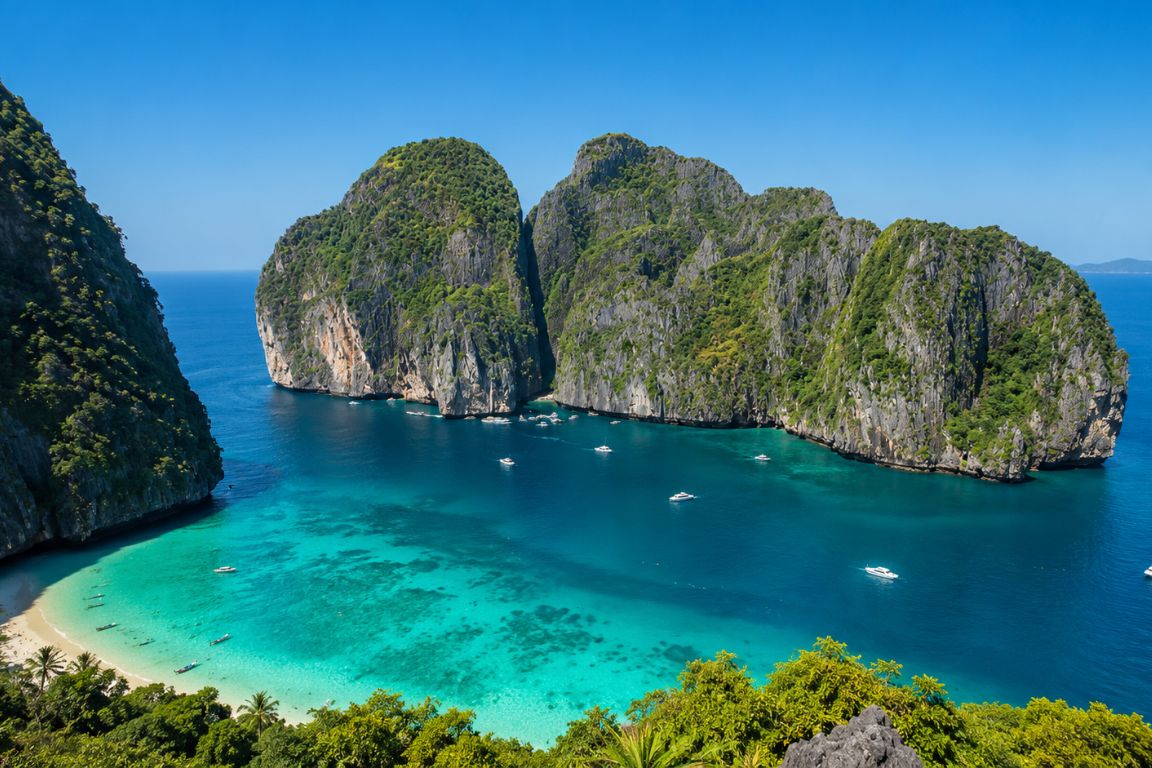
The tour speedboat is the default because it solves the whole day at once: hotel pickup, the crossing, the park fee logistics, snorkel gear, lunch and a guide who knows which bay is empty at which hour. From Ao Nang the boats leave from Nopparat Thara Pier at the end of the beach road, or from Ao Nam Mao Pier a few kilometres east, which is the main speedboat departure point for Phi Phi day trips with transfer arrangements varying by product and accommodation area.
The public ferry is a different product with a different purpose. It runs from the Krabi Town side, takes roughly two hours, lands at Tonsai Pier on Phi Phi Don, and does not stop anywhere scenic on the way. It makes sense if you are moving to Phi Phi for a night or two. As a day trip it burns four hours of your day in transit and reaches none of the snorkeling sites directly, because those need a boat that will anchor at them.
A longtail can technically make the crossing and almost nobody does it. It is over 90 minutes each way, most operators will not take a longtail that far because of fuel range, and the open-sea section in any real conditions becomes genuinely uncomfortable in that hull for that duration. Our page on longtail versus speedboat sets out where each boat earns its keep, and Phi Phi is the one route where the answer is not close.
| Option | Crossing time | Typical cost | Reaches snorkel sites? | Best for |
|---|---|---|---|---|
| Group tour speedboat | 45 to 50 min | Around 900 to 1,200 THB per person for a standard group day, before park fees | Yes, several stops | Almost everyone on a day trip |
| Public ferry | About 2 hours | Ticketed per crossing, check the operator schedule | No | Travelers staying overnight on Phi Phi |
| Private speedboat charter | 35 to 45 min | Around 15,000 to 22,000 THB for the boat, full day | Yes, on your schedule | Groups who want Maya Bay before the convoy |
| Private catamaran | Slower, but the deck is the point | Charter pricing on the live listing | Yes, fewer stops | Families and groups who want space over speed |
| Longtail | 90+ minutes | Not offered by most operators | Limited | Nobody, realistically |
Whichever hull you pick, Krabi Boat Tours lists the departures with their real pickup windows and inclusions, so you can see which boat is leaving at 06:00 and which is leaving at 09:00 before you commit money to a day where that difference decides everything.
Which Boat Is Best for the Phi Phi Island Tour?
For a first Phi Phi day from Krabi, an early group speedboat is the right answer: it is designed for an early start, although crowd levels and arrival order can vary. Upgrade to a private speedboat if you want the schedule yourself, or to a catamaran if deck space and a calmer ride matter more than the number of stops.
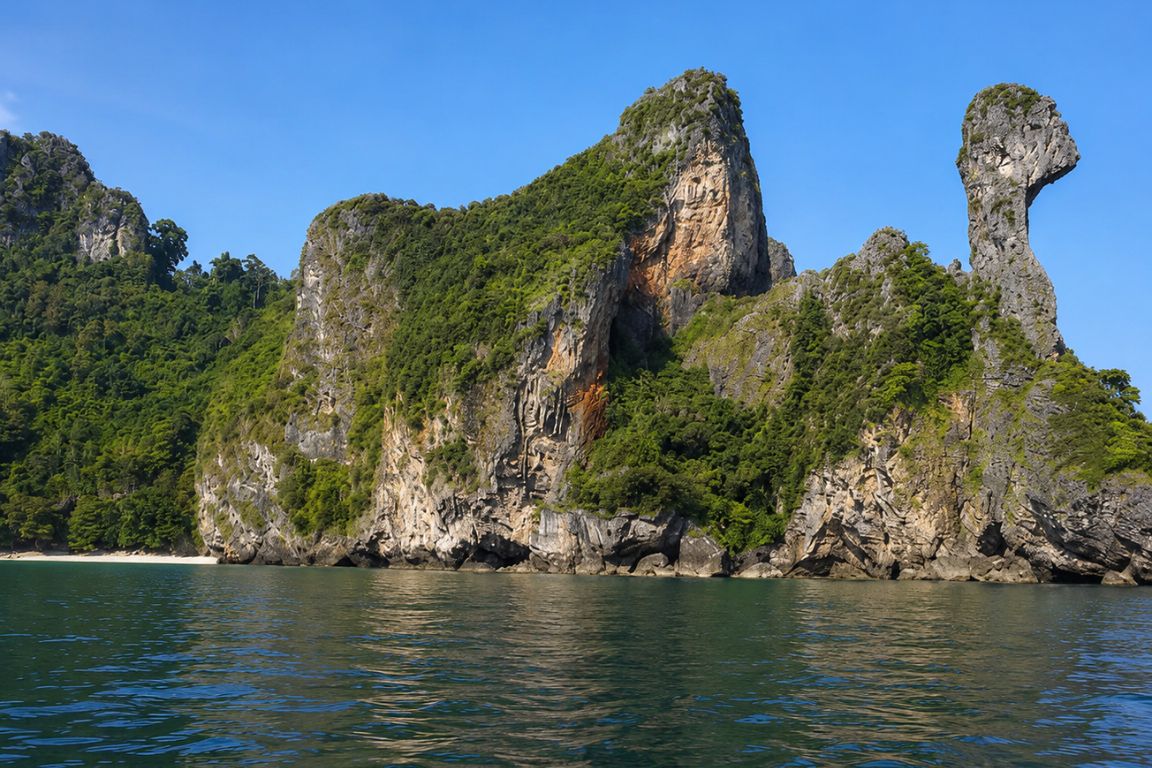
The case for the early group speedboat is entirely about arrival order. The early-bird Phi Phi and 4 Islands speedboat adventure is built around one logistical insight: Maya Bay is staggeringly beautiful and close to unbearable at midday in high season, when dozens of boats arrive at once and hundreds of people are ashore together. Its pickup window runs from 05:20 to 06:30, which is a brutal alarm and the single highest-value decision of the day. It is a nine-hour shared speedboat tour with lunch, snorkeling equipment and location-dependent pickup arrangements.
The private upgrade solves a different problem. A private speedboat charter is justified for groups who want early-morning Maya Bay access before the tour convoy arrives and who would rather not share a hull with twenty strangers. The private Phi Phi sunset cruise by speedboat runs the reverse shape, combining Phi Phi and the 4 Islands with the Andaman sunset at the end, with park fees already included in the price rather than collected in cash on the boat.
The catamaran is the outlier and suits a specific group. The listed private catamaran offers shaded lounge and sunbathing areas, but it visits Hong or the 4 Islands rather than Phi Phi.
| You are | Book | Why |
|---|---|---|
| First-timer on a budget | Early group speedboat | Reaches Maya Bay before the convoy at group pricing |
| Family with young children | Catamaran or private speedboat | Shade, deck space, less transit time on a hard hull |
| Snorkeling focused | Early group speedboat with a Bamboo Island stop | Bida Nok and Bamboo are the reason to make this crossing |
| Group of four or more | Private speedboat | Per-head cost closes fast and you own the schedule |
| Prone to seasickness | Catamaran, and a morning departure | Wider hull, calmer morning sea |
| Photographers | Private charter or the sunset format | You control where the boat sits and when |
What Does a Phi Phi Day Trip From Krabi Actually Stop at?
The standard circuit is Maya Bay on Phi Phi Leh, Pileh Lagoon, Viking Cave viewed from the water, Monkey Beach, a snorkel stop at Koh Bida Nok, and lunch at Bamboo Island or on Phi Phi Don. Most Krabi departures add one or two of the inner 4 Islands stops on the way out or back, which is why the day runs eight to nine hours.
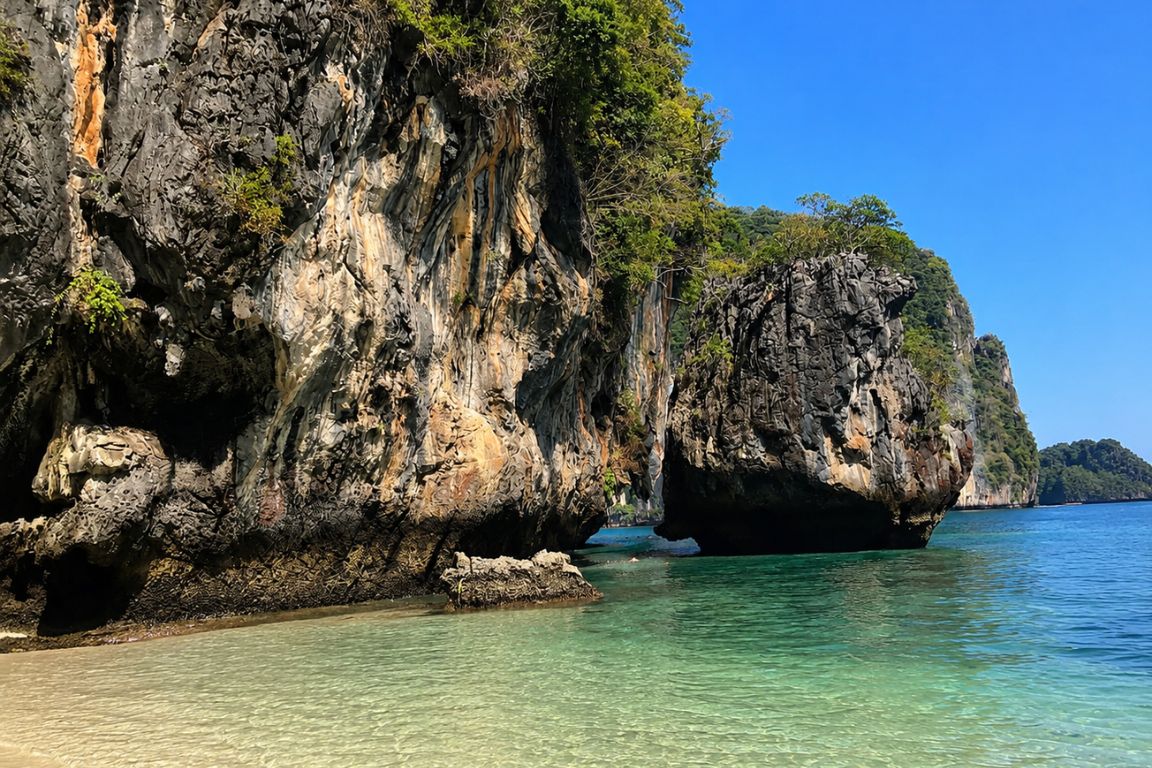
Ordering varies by operator and by tide, and a good captain will change it on the morning. What does not vary is that the two Phi Phi Leh stops, Maya Bay and Pileh, are the pinch points, and everything upstream of them is really about arriving there at a sensible hour.
Koh Bida Nok is the stop snorkelers should be watching for. It is one of the genuinely excellent sites in the region, with blacktip sharks, turtles and soft coral on a north-facing reef away from the main anchorage, and it is meaningfully richer than anything on the inner 4 Islands circuit. Bamboo Island runs a close second, with clear water, clownfish and fewer boats. If underwater time is the reason you are crossing, our ranking of the best snorkeling islands near Krabi explains why Phi Phi is where the upgrade lives for travelers who cannot commit to the outer islands run.
| Stop | What happens there | Typical time ashore or in the water | Worth prioritising? |
|---|---|---|---|
| Maya Bay, Phi Phi Leh | Boardwalk access from the back of the island, beach time only | 30 to 45 minutes | Yes, and only early |
| Pileh Lagoon | Swim stop inside a flooded limestone bowl | 20 to 30 minutes | Yes |
| Viking Cave | Viewed from the water, no landing | A slow pass | Photo stop only |
| Monkey Beach | Beach with a resident macaque population | 15 to 30 minutes | Manage your bag; the monkeys are opportunists |
| Koh Bida Nok | The best snorkeling on the circuit | 30 to 45 minutes in the water | Yes, this is the underwater highlight |
| Bamboo Island | Lunch, powdery sand, clear shallow water | 60 to 90 minutes | Yes on a longer itinerary |
| Inner 4 Islands add-ons | Tup sandbar, Chicken Island, Poda on the way out or home | 30 to 60 minutes each | Bonus rather than reason |
How Does the Maya Bay Stop Actually Work?
Boats no longer moor inside Maya Bay. Arrivals come in through the back of the island and a short walk brings you over to the beach, time ashore is capped, and swimming in the bay itself is not permitted. The bay has been documented as a blacktip reef shark breeding ground, which is a large part of why the restrictions exist and why they are enforced.
Treating this as an inconvenience is the wrong read. Maya Bay was closed to visitors for years to let the reef and the beach recover, and the current access rules are what allow it to be open at all. The bay also closes for an annual recovery window in the low season, and those dates move, so anyone booking August or September should check the current position with the Thai national parks authority or with the operator before paying for the day.
The practical consequence for your itinerary is simple. Because access is metered and the beach is small, arrival time determines whether Maya Bay feels like the photographs or like a queue. A standard group speedboat arriving at 11am in January finds it at close to capacity with other tour groups. The same beach at 08:30 is a different place. Our page on visiting Maya Bay goes deeper on the rules and the closure history.
Bring cash for the park fee before you get anywhere near the boardwalk. Phi Phi area fees run around 400 THB per adult foreigner and 200 THB per child, collected on the day, and whether they are included or payable separately depends on the specific listing. Check each listing’s inclusions and cash requirements before departure.
Is 1 Day Enough for Phi Phi Island?
One day is enough to see Phi Phi properly, and not enough to experience it. A single early departure covers Maya Bay, Pileh, the best snorkeling and a beach lunch, which is the entire highlight reel. What one day cannot give you is Phi Phi at dawn, Phi Phi after the day boats leave, or the viewpoint climb on Phi Phi Don.
For most Krabi itineraries, one day is the right call. Phi Phi as a day trip covers one spectacular destination in depth rather than four inner-circuit islands in breadth, and the boat handles the awkward parts: the fees, the timing, the anchoring, the lunch. If you are building a multi-day plan around it, the one-day island-hopping itinerary shows the sequencing rule most plans miss, which is to do the inner circuit first as orientation and upgrade to Phi Phi afterwards.
The case for staying over is narrower but real. Overnighting puts you on Maya Bay at opening rather than at mid-morning, gives you the Phi Phi Don viewpoint in the early light, and lets you swim at Loh Dalum before the ferries arrive. It also puts you on an island with a loud late-night scene in the Tonsai area, which some travelers book for and others regret entirely.
The compromise most people should consider: one day trip from Krabi on an early boat, and if the crossing goes well, one further boat day at the inner islands or the Hong group rather than a second Phi Phi run. The marginal value of a second Phi Phi day is lower than the marginal value of a completely different coastline.
A Worked Example Day: 05:40 Pickup to 17:00 Drop-off
The listed early-bird tour lasts nine hours, but its exact route and stop times can change with weather and tides. Times shift by operator and tide, but the shape holds, and the reason it works is that every stop happens roughly ninety minutes before the standard-departure boats reach it.
| Time | What is happening | Why it matters |
|---|---|---|
| 06:45 | Check-in at the pier, park fee paid in cash, life jackets and briefing | Have exact notes ready; queues form fast |
| 07:15 | Inner-island stop at Tup and Koh Mor, sandbar visible at low tide | The sandbar is tide dependent, not schedule dependent |
| 08:30 | Crossing to Phi Phi Leh | Morning sea is at its calmest; take this hour if you are prone to seasickness |
| 09:00 | Maya Bay, ahead of the Phuket boat wave | The difference between a memory and a queue |
| 10:00 | Pileh Lagoon swim, then Viking Cave pass | Lagoon water is clearest before it is churned |
| 11:00 | Snorkel stop at Koh Bida Nok | Blacktips, turtles and soft coral on the north-facing reef |
| 12:00 | Lunch on Bamboo Island, roughly 90 minutes | The longest stop of the day, and the best sand |
| 14:00 | Return leg with a Chicken Island and Poda pass | The afternoon light on the karsts is the day's other photograph |
| 16:00 to 17:00 | Back at the pier and on to your hotel | Early enough for a proper dinner, unlike a sunset itinerary |
05:50 to 06:30 Pickup window for Ao Nang, Klong Muang and Tubkaek; exact time is reconfirmed The whole advantage of the day is built here
Note what the early start also buys you on the way home: you get the inner-island stops in afternoon light with the morning crowds gone, rather than fighting through them at 10am.
Where Should You Not Swim in Phi Phi?
Do not swim in Maya Bay itself, where swimming is not permitted and the restriction is enforced. Stay out of the boat lanes at Tonsai and around any anchorage where longtails and ferries are moving. Do not stand on coral anywhere, and treat Loh Dalum at low tide as a walk rather than a swim.
The Maya Bay rule is the one that surprises people most, because the water in front of them looks perfect. The bay is documented as a blacktip reef shark breeding ground, and the swimming restrictions there are part of the same protection framework that reopened the beach in the first place. You can swim at Pileh Lagoon a few minutes away, which is where the operators send everyone instead.
Boat traffic is the practical hazard on the rest of the group. Tonsai Bay on Phi Phi Don takes ferries, longtails and speedboats continuously through the middle of the day, and a swimmer in that water is invisible to a captain until very late. Swim off the ends of beaches rather than the middle where boats run in, and keep between the buoy lines where they exist.
Coral contact is the one that causes lasting damage rather than immediate risk. The reefs here rebounded significantly after the 2024 bleaching event and sites reopened in April 2025 after park officials confirmed strong recovery, so the coral you are floating over is doing something worth protecting. Feeding fish is banned outright, with fines up to 100,000 THB, and reef-safe sunscreen is a legal requirement in Thai marine parks. Our page on marine life around Krabi covers what you are likely to see and the rules attached to it.
| Location | Swim? | Reason |
|---|---|---|
| Maya Bay | No | Swimming not permitted; blacktip breeding ground under active protection |
| Pileh Lagoon | Yes | Sheltered, deep, and the designated swim stop on most itineraries |
| Koh Bida Nok | Yes, with fins and care | Excellent reef; stay off the coral and watch the current at the edges |
| Bamboo Island | Yes | Shallow, clear, the easiest water of the day |
| Tonsai Bay, Phi Phi Don | Not in the lanes | Continuous ferry and longtail traffic |
| Loh Dalum at low tide | Not really | The bay empties; it becomes a sand walk rather than a swim |
| Monkey Beach | Yes, briefly | Fine water, but keep bags and phones away from the macaques |
What Does a Phi Phi Day Cost Once the Extras Are Added?
Budget the tour price plus roughly 400 THB per adult in cash for the park fee, a small pier fee, and whatever you spend ashore. A group speedboat day runs around 900 to 1,200 THB per person before fees at local rates, while the listed early-bird speedboat from Krabi should be checked on the live listing; lunch, snorkeling equipment and location-dependent transfers are included.
The line item that catches people is always the park fee, because some tours collect it separately while others include it and collected in cash at the boat or the island. Phi Phi area routes are charged at the higher rate: around 400 THB per adult foreigner and 200 THB per child. There is also a small pier docking fee at Ao Nam Mao, in the order of 10 THB per person, which is trivial in itself and annoying if you have no coins.
| Line item | THB | Roughly in USD | Notes |
|---|---|---|---|
| Group speedboat day, local rate | 900 to 1,200 per person | 25 to 35 | Lunch usually included, fees are not |
| National park fee, adult foreigner | About 400 | 11 to 12 | Cash only, on the day |
| National park fee, child | About 200 | 5 to 6 | Cash only, on the day |
| Pier docking fee | About 10 | Under 1 | Ao Nam Mao Pier |
| Private speedboat charter, full day | 15,000 to 22,000 per boat | 420 to 620 | Splits well across four or more |
| Contingency to carry | 400 to 500 per person | 11 to 14 | Fees, drinks ashore, tips |
Listed early-bird Phi Phi and 4 Islands speedboat Check the live listing Check live price Lunch, snorkeling equipment and location-dependent transfers included
Currency conversions move, and so do listing prices, so treat the dollar column as an order of magnitude and read the live prices on the listing before you commit. What does not move much is the cash requirement: arrive at the pier without baht in hand and the day starts badly.
Which Months Make the Crossing Worth It?
December through April, with January and February at the centre. Those months give flat seas for a 45 km crossing, snorkeling visibility that makes Bida Nok worth the stop, and lower-seasonal-risk conditions, although weather, tides and minimum participation can still affect departures. September and October are the two months when a Phi Phi day is most likely to be cancelled or genuinely unpleasant.
The reason is the same monsoon pattern that governs every route out of Krabi. From November through April the Andaman sits under dry, cooler northeast air that suppresses swell, and the open-water section between the inner islands and Phi Phi Leh is exactly where that matters. In September, on a day with sustained 1.5 metre swell, the crossing is rough, landing at Tonsai is difficult, and snorkeling visibility at Bida Nok drops enough to reduce the encounter quality significantly.
April deserves a specific mention because it is consistently underrated: dry-season sea conditions, accommodation 30 to 40 percent below the December peak, and islands that feel spacious rather than full. The trade is heat, with middays reaching 34 to 36 degrees, so an early boat matters more in April than in January. For a month-by-month read on the question, see our post on the best time to visit Phi Phi, and for the wider Andaman picture, the best months for boat tours.
What to Bring, and Who Should Skip the Day
Cash for fees, reef-safe sunscreen applied before boarding, a dry bag, a rash guard and more water than you expect to drink. Skip the day if you get badly seasick and the forecast is marginal, if you have only 48 hours in Krabi and have not yet seen the inner islands, or if a 05:30 alarm would ruin the rest of your trip.
- Cash in baht, separated: park fee in one pocket, spending money in another.
- Reef-safe sunscreen, legally required in the marine park and better for you than a burn on an open deck.
- A dry bag for phone and documents. Boarding is often through shallow water.
- Rash guard or long-sleeve swim top: six hours of open-deck sun is the single most underestimated part of the day.
- Water shoes with grip, for beach landings and for standing on wet fibreglass.
- Ask a clinician or pharmacist about medication suitability.
The honest skip case: if this is your first day in Krabi and you have never been on the Andaman, a shorter inner-island day gives you sea legs and orientation for a fraction of the transit. Where first-timers most often go wrong is booking Phi Phi on day one. Start closer and start calmer, then make this crossing on day two or three when you know how your group handles a boat. If Railay is on the list as well, our Railay Beach guide covers the peninsula that most Phi Phi boats pass on the way out, and the geography of the Phi Phi group is worth ten minutes before you go.
Frequently Asked Questions
How long does it take to get to Phi Phi from Krabi?
About 45 to 50 minutes by speedboat from the Ao Nang piers, which is what nearly every day trip uses. The public ferry from the Krabi Town side takes roughly two hours each way. A longtail is over 90 minutes and most operators will not run one that far.
Is a Phi Phi day trip from Krabi worth it?
Yes, if you take an early boat. The circuit covers Maya Bay, Pileh Lagoon and the best snorkeling reachable in a day from Krabi. The value collapses on a late departure, because arrival time rather than season decides how crowded Maya Bay and Pileh feel.
Can you swim at Maya Bay?
No. Swimming in Maya Bay is not permitted and the restriction is enforced. The bay is documented as a blacktip reef shark breeding ground, and access to the beach itself is metered. Operators use Pileh Lagoon a few minutes away as the swim stop instead.
How much is the national park fee for Phi Phi?
Around 400 THB per adult foreigner and 200 THB per child, paid in cash on the day. Some outings include park admission and others charge it separately; check the inclusions and payment instructions for your selected package.
What time should a Phi Phi day trip leave Krabi?
As early as you can book. The listed early-bird speedboat picks up between 05:20 and 06:30, which puts it at Maya Bay before the Phuket boat wave arrives mid-morning. That single decision changes the day more than the boat type, the operator or the season.
Is one day enough for Phi Phi island?
Enough to see it, not enough to experience it. One early day covers Maya Bay, Pileh, a good snorkel stop and a beach lunch. Staying overnight adds the Phi Phi Don viewpoint at dawn and the island after the day boats leave, which is a different place entirely.
Which is better for Phi Phi, speedboat or ferry?
Speedboat for a day trip, ferry for an overnight move. The ferry does not stop at snorkeling sites and burns about four hours in transit. The speedboat crosses in under an hour and anchors at the stops that make the crossing worth doing.
Do Phi Phi tours from Krabi include the 4 Islands?
Several do. Krabi departures often add Tup, Koh Mor, Chicken Island or Poda on the way out or back, which is why the day runs eight to nine hours rather than six. It also means an early boat sees those inner islands without the mid-morning crowd.
Check your travel date before arranging the rest of Krabi
Match the outing to your plans
Blank fields keep the initial suggestion. Age pricing alone does not confirm suitability; if eligibility is unverified, the tool will not recommend a match. Check pickup and restrictions for your selected package.
Compare two total quotes
Use current quotes in the same currency, including park fees, transfers and option extras.
Initial recommendation. Adjust the optional choices to match your plans.
Phi Phi Early Bird & 4 Islands - Day Tour by Speedboat From Krabi
Compare a nine-hour early speedboat with swimming, snorkeling, lunch and pickup rules that vary by accommodation area.
9h · English guide listed · Early pickup, lunch and snorkeling gear; park fees extra. Maya Bay is closed August–September under the listing’s seasonal policy. · Confirm your selected option’s pickup, inclusions, fees and participant restrictions before booking.
Choose a date to view the published schedule. Confirm availability and final price on Viator.
No reviewed option matches these choices.