Best Islands for Snorkeling Near Krabi
The best snorkeling near Ao Nang ranges from easy inner-island reefs packed with tropical fish to outer islands with sea turtles, reef sharks, and much healthier coral systems.
See what an early Phi Phi and 4 Islands snorkeling day includes before choosing your route. Explore Early-Bird Phi Phi & 4 Islands.
Last updated: June 17, 2026
The best snorkeling islands within a standard day trip from Ao Nang are Chicken Island (Koh Gai) for reef fish density, Koh Poda for coral gardens, and Koh Bida Nok (Phi Phi, 45 km) for blacktip sharks and sea turtles. Koh Rok and Koh Haa are the outer-circuit benchmarks: healthier coral, better visibility, and genuine sea turtle encounters at 60-65 km from Ao Nang. Hong Island has spectacular scenery but variable snorkeling; go there for the lagoon, not the reef. Arrive at any island before 10am. Everything changes after the tour convoys arrive.
Booking choice: The early speedboat option combines Phi Phi, 4 Islands, swimming, and snorkeling in one nine-hour day. Check dates for Early-Bird Phi Phi & 4 Islands.
Best Snorkeling Islands Near Krabi: Quick Reference
| Chicken Island (Koh Gai) | 8 km / 20 min | Good | Reef fish, beginners, 4 Islands tour | 200 THB |
| Koh Poda | 12 km / 25 min | Good-Very Good | Coral gardens, parrotfish, calm water | 200 THB |
| Tup Island (Koh Tub) | 10 km / 20 min | Good | Sandbar walk, shallow reef fringe | 200 THB |
| Koh Bida Nok (Phi Phi) | 45 km / 50 min | Excellent | Blacktip sharks, turtles, soft coral | 400 THB |
| Bamboo Island (Phi Phi) | 50 km / 60 min | Very Good | Clear water, clownfish, less crowded | 400 THB |
| Koh Rok (Rok Nok / Rok Nai) | 60 km / 75 min | Outstanding | Sea turtles, diverse coral, 20m+ visibility | 300 THB |
| Koh Haa (Five Islands) | 65 km / 80 min | Outstanding | Hawksbill turtles, whale shark (seasonal), cavern lagoon | 300 THB |
Hong Island (Koh Hong) 20 km / 35 min Variable Lagoon scenery, rocky-shore fish 300 THB
Park fees vary by route and may be excluded; confirm the current amount for your trip. Fees are collected in cash on the boat or at the island. Koh Rok and Koh Haa are open November to May only.
What Are the Best Islands for Snorkeling Near Krabi?
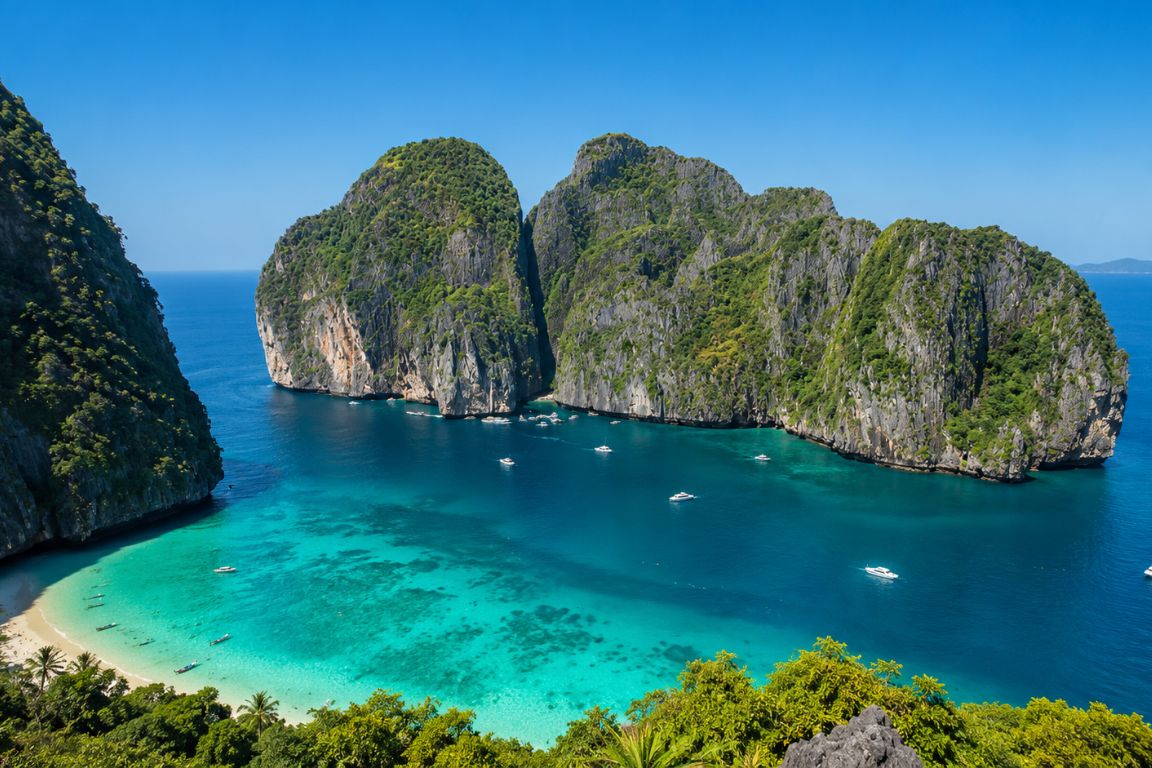 The best snorkeling islands within easy reach of Ao Nang split into two tiers. The inner circuit – Chicken Island, Koh Poda, and Tup Island – is accessible in 20-30 minutes and delivers consistent reef fish encounters year-round on standard boat tours. The outer islands – Koh Rok and Koh Haa – require 75-80 minutes by speedboat, are open November to May only, and produce the most biodiverse and visually striking underwater experiences accessible to snorkelers from the Krabi region.
The distinction matters because most visitors book the inner circuit by default and occasionally wish they had gone further. The 4 Islands tour is a good day on the water with decent snorkeling. Koh Rok is a different category of experience: bleached-white beach, emerald water, clownfish in anemones so vivid they look artificial, hawksbill turtles grazing the seagrass in the channel between the two Rok islands, visibility that on a good day reaches 20 metres. The travel time is longer. The snorkeling is not comparable to the inner circuit – it is substantially better.
That said, Phi Phi sits midway in both distance and quality. Koh Bida Nok and Bamboo Island, accessible on a Phi Phi day trip from Krabi, are significantly richer snorkeling environments than the inner 4 Islands circuit and reachable in about 50-60 minutes from Ao Nang. For travelers who want better than the 4 Islands but can’t commit to the outer islands run, Phi Phi is where the upgrade lives.
One island that requires a separate note: Hong Island. It is one of the most photographed and widely recommended destinations near Krabi, and rightly so for its scenery. The lagoon framed by vertical limestone walls, the arc of white beach at Lao Lading, the quiet coves on the outer islands of the archipelago – these are extraordinary. But honest snorkeling reviews of Hong Island are mixed. The reef sections off the rocky shores deliver decent fish counts. The lagoon itself has limited coral. If snorkeling is your primary goal for the day, the 4 Islands circuit has better underwater conditions. If you want the most dramatic above-water scenery in the Krabi region with some snorkeling included, Hong Island is the answer.
Both routes cover stunning Andaman scenery but they deliver very different days on the water – our Hong Islands vs 4 Islands guide breaks down exactly what sets them apart and which one suits different types of travellers.
Which Island Has the Best Coral for Snorkeling in Krabi?
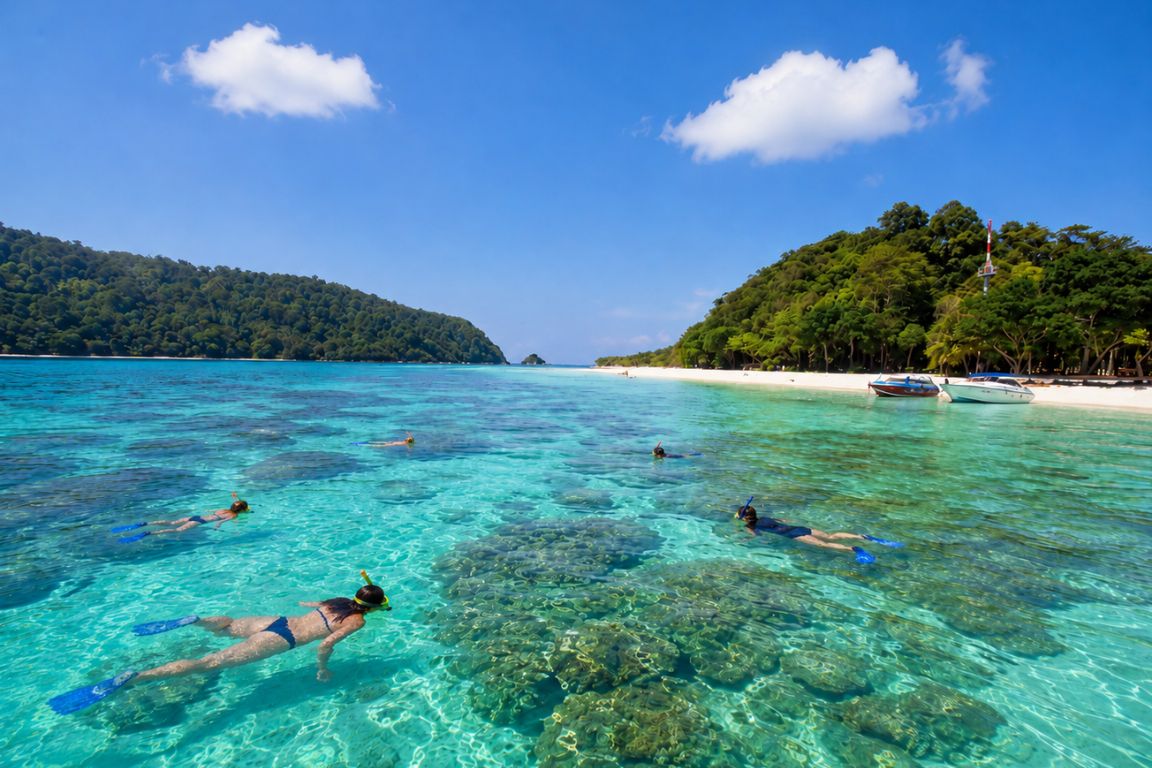 Koh Haa has the healthiest and most extensive coral accessible to snorkelers from the Krabi region, with the lagoon between the five islands holding particularly dense reef in calm, clear water. Koh Rok is the closest rival: vibrant coral gardens in the shallows between Rok Nok and Rok Nai, with anemones and clownfish in high concentration. On the inner circuit, Koh Poda has the best hard coral gardens accessible within 25 minutes of Ao Nang. Site access and reef conditions can change; confirm the current route and operating conditions before departure.
Koh Haa’s lagoon is what distinguishes it from every other snorkeling location in the Krabi orbit. The five islands create a protected interior where the water is calm regardless of surface chop, visibility routinely reaches 20-30 metres, and the coral has had less boat traffic to contend with than sites on the standard day-tour circuit. The lagoon floor is covered in staghorn and brain corals at depths of 2-8 metres, with larger table corals along the outer walls. Hawksbill turtles are seen at Koh Haa with enough regularity that most dry-season trips that visit report at least one sighting. The site that unlocks the most dramatic formations – the Cathedral cavern beginning at 14 metres – is a diving site, but the lagoon surface zone available to snorkelers is itself among the best in the region.
Koh Rok’s claim to excellent coral is specific to the channel between Rok Nok and Rok Nai. This narrow passage has shallow, diverse reef in 1-5 metres of water that a snorkeler can work from one end to the other in about 40 minutes and encounter clownfish, parrotfish, multiple moray eel species, blue-spotted rays on the sandy patches, and the occasional turtle moving through. The outer reef faces of both islands hold deeper, more complex coral structures that produce sightings of fusiliers, snappers, and batfish in large schools. Koh Rok is the better choice if coral diversity is the priority; Koh Haa is the better choice if calm-water clarity and the possibility of whale shark sightings outweigh diversity.
On the inner circuit, Koh Poda’s reef is the best in the 4 Islands group. The southeast face holds hard coral at -2-5 metres that survived the 2024 bleaching in better condition than shallower sites, and the variety of butterflyfish and angelfish species working the coral heads is consistently high. A snorkeler who positions on the southeast face rather than the main beach side will find better coral and more fish than the standard anchor point most group tours use.
Not sure what the Krabi 4 Islands tour actually covers beyond the name and a rough island count? Here’s our Krabi 4 Islands tour guide so you know exactly what’s included before you book.
| Koh Haa lagoon | Outstanding | Central lagoon interior, all five islands | 0-8m |
| Koh Rok (channel) | Excellent | Channel between Rok Nok and Rok Nai | 1-5m |
| Koh Bida Nok (Phi Phi) | Very Good | North-facing reef, away from main anchorage | 2-8m |
| Bamboo Island | Very Good | Eastern reef fringe, offshore from main beach | 1-6m |
| Koh Poda | Good | Southeast face, away from beach anchorage | 2-5m |
| Chicken Island | Good | Northeast reef, away from boat anchorage | 1-4m |
| Hong Island (Pak Bia rocky shore) | Moderate | Rocky south shore of Koh Pak Bia | 1-3m |
| Tup Island | Moderate | Shallow reef fringe off sandbar ends | 0.5–3m |
What Marine Life Can You See Snorkeling at Krabi’s Islands?
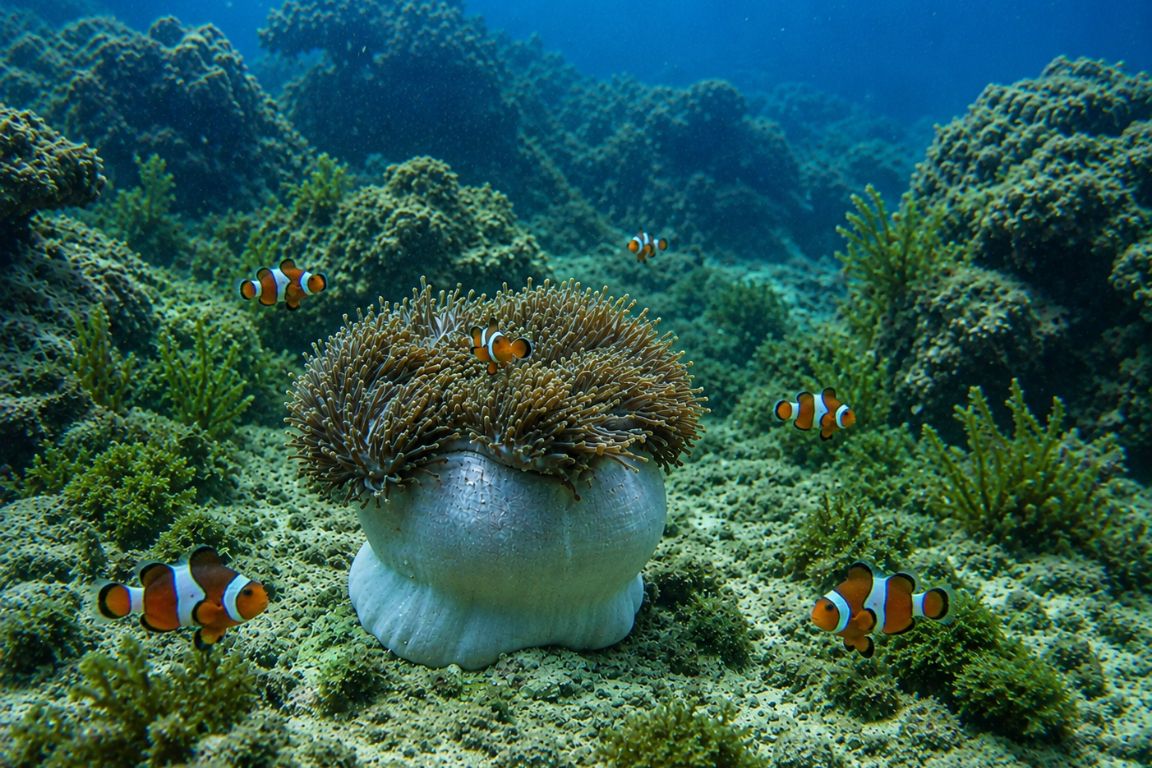 Inner circuit (Chicken Island, Koh Poda, Tup Island): parrotfish, clownfish, butterflyfish, angelfish, damselfish, sergeant majors, pufferfish, and occasional blacktip reef sharks. Phi Phi islands (Koh Bida Nok, Bamboo Island): blacktip sharks reliably, sea turtles with good frequency, leopard sharks occasionally, lionfish under overhangs. Outer islands (Koh Rok, Koh Haa): hawksbill and green turtles frequently, moray eels, blue-spotted rays, large parrotfish, and seasonal whale sharks at Koh Haa from February to April.
Parrotfish are present on every snorkeling island from Chicken Island to Koh Rok. They are the most consistently seen large reef fish in Krabi’s waters, the most visually striking (terminal-phase males run through blue, green, and pink coloration simultaneously), and among the most important to the reef ecosystem. The white sand beaches that define every island in this article were partially produced by parrotfish processing coral algae through digestion over thousands of years. At Koh Rok, terminal-phase parrotfish reach sizes that make them seem too large for the setting – 60-70 centimetre fish grazing a reef at 2 metres depth that a snorkeler is watching from 1 metre above.
The blacktip reef shark distribution across Krabi’s snorkeling islands follows a pattern worth knowing. Inner circuit sightings happen but are not reliable: Chicken Island sees them occasionally, Koh Poda rarely. Koh Bida Nok at Phi Phi has them consistently – the Shark Point area off Long Beach on Phi Phi Don produces multiple blacktip sightings on most visits. Bamboo Island’s eastern reef holds them less reliably but regularly enough to count as a reasonable expectation rather than a lucky event. These sharks are 70-120 cm, non-aggressive, and move through the reef edge rather than patrolling it actively.
Sea turtles: Hong Island produces occasional sightings in the lagoon channel. Koh Bida Nok produces frequent sightings on the north reef. Koh Rok produces sightings on most dry-season snorkeling visits – the channel between the two Rok islands has hawksbill turtles grazing the seagrass with enough regularity that operators mention it as an expectation rather than a bonus. Koh Haa produces the highest frequency of all accessible snorkeling sites; hawksbill turtles are seen in the lagoon and on the outer reef faces on the majority of visits from November through April.
We’ve put together a full underwater breakdown in our marine life in Krabi guide so you know exactly what to expect beneath the surface, which sites to prioritize, and which tours actually take you to the right spots.
How Do You Get to the Best Snorkeling Islands From Ao Nang?
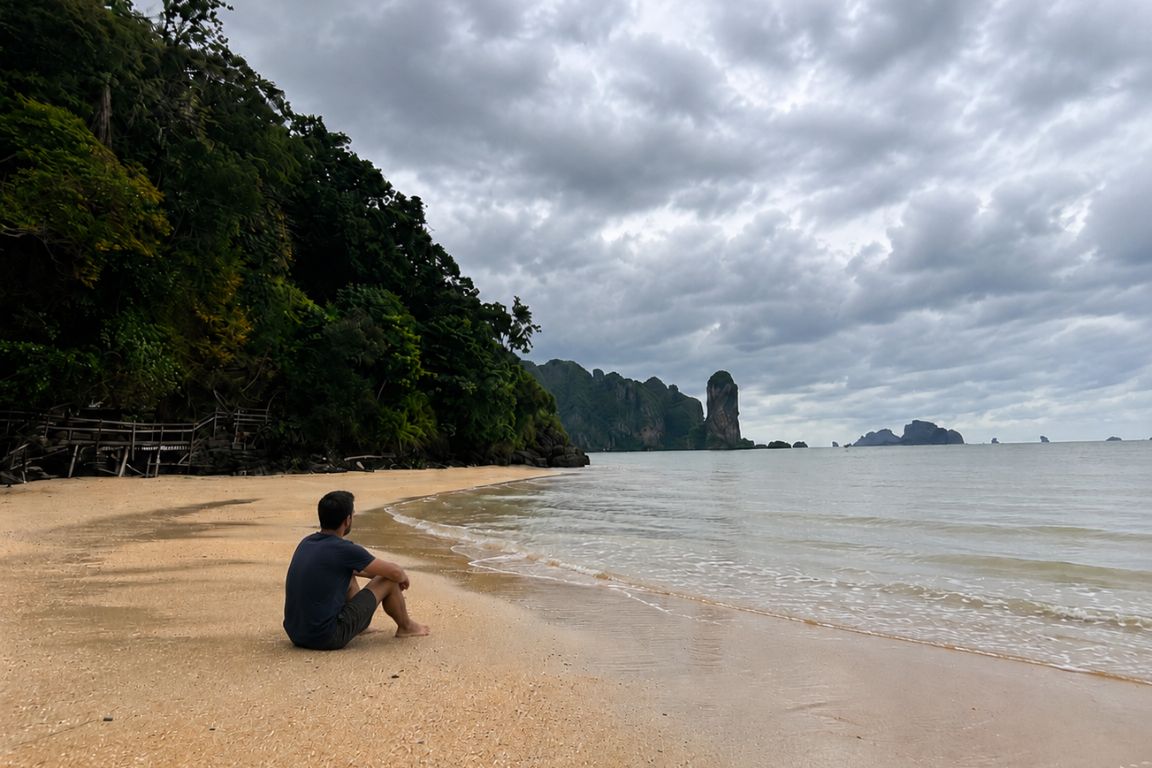 Chicken Island, Koh Poda, and Tup Island: 20-30 minutes by longtail or speedboat from Ao Nang Pier or Noppharat Thara Pier. Hong Island: 35 minutes by speedboat. Phi Phi (Koh Bida Nok, Bamboo Island): 50-60 minutes by speedboat from Ao Nang. Koh Rok and Koh Haa: 75-90 minutes by speedboat from Ao Nang, or 45-60 minutes from Koh Lanta. All require pre-booked tours; independent access by public ferry does not reach snorkeling-specific sites directly.
The departure pier matters more than most booking platforms make clear. Ao Nang Beach pier is the most convenient for guests staying in Ao Nang town, but the boats run into moderate swell on the open section between Ao Nang and the 4 Islands, particularly in the transition months. Noppharat Thara Pier, 15 minutes west of Ao Nang, provides a slightly more sheltered departure for some routes. For Phi Phi day trips, Ao Nam Mao Pier southeast of Ao Nang is the main speedboat departure point, with transfer arrangements varying by package and accommodation.
The longtail boat versus speedboat choice affects how you experience the transit between islands as much as anything else. A longtail at 25-30 minutes to Chicken Island gives you open-air passage at low height over the water, full exposure to the sea conditions, and a scenic approach to the karst formations. A speedboat to Phi Phi in 50 minutes gets there faster but the forward seating means that in chop you’re bouncing rather than skimming. For snorkeling-focused trips where the transit is a means rather than an end, speedboats make sense for the longer distances. For the inner circuit, longtails are the authentic and perfectly adequate option.
Getting to Koh Rok and Koh Haa: most tours to these outer islands operate from Koh Lanta rather than directly from Ao Nang, because the transit from Lanta is 45-60 minutes compared to 75-90 from Ao Nang. Travelers staying in Ao Nang who want to do the Koh Rok and Koh Haa day trip have two options: join a tour that departs from Ao Nang directly (available but less common), or plan a night on Koh Lanta as part of the itinerary and join a Lanta-based operator. The Lanta-based format produces better snorkeling time because less of the day is spent in transit. Ready to work out which route suits your schedule? A private 4 Islands longtail includes shared transfers around Ao Nang, with extra charges listed for several other areas.
Want an honest comparison between the two main ways to explore Krabi’s coastline before you hand over your money at the pier? Here’s our longtail boat vs speedboat in Krabi guide so you choose wisely.
Which Krabi Snorkeling Island Is Best for Beginners?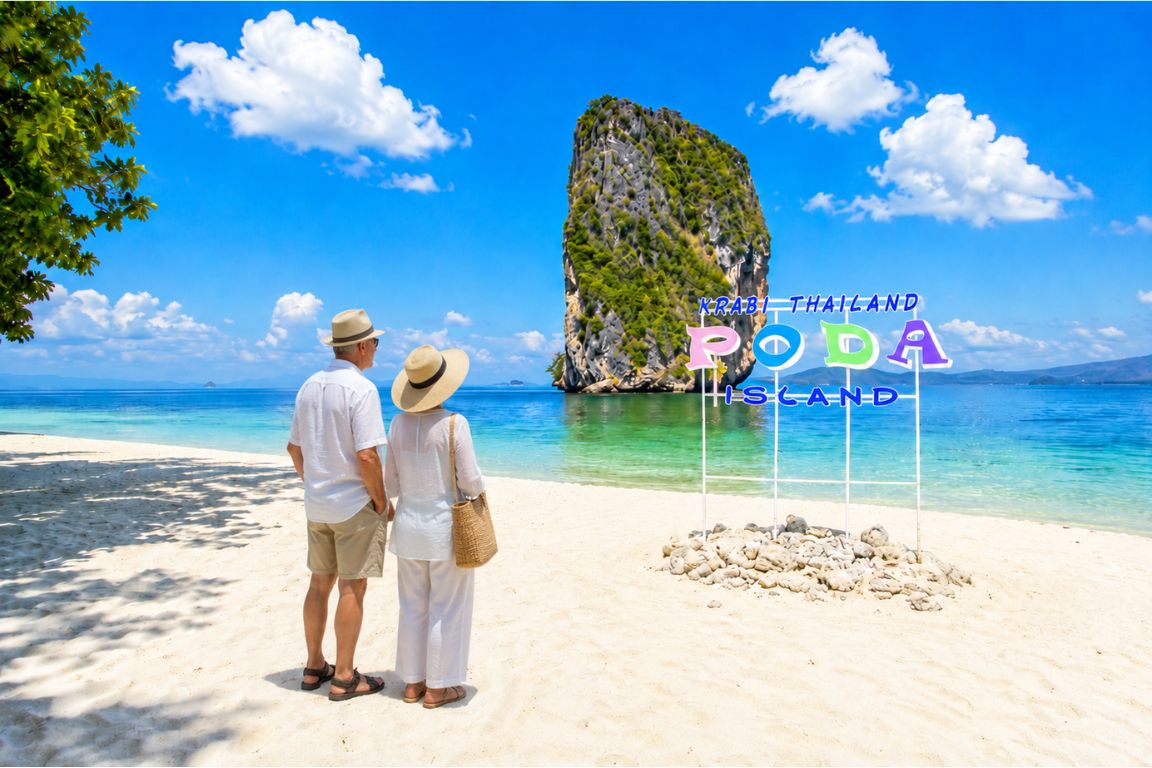
Koh Poda is the best inner-circuit island for first-time snorkelers: calm anchorage, coral starting within 50 metres of the beach, shallow reef at 2-4 metres, and enough fish activity to reward a 30-minute swim without requiring anyone to venture beyond wading depth. Chicken Island is the second-best beginner choice and the most likely to be included in a standard 4 Islands tour. Both are accessible on standard group tours without extra planning, and both are forgiving of swimmers who are still getting comfortable with mask and fins.
The beginning snorkeler’s main concern is usually not wildlife: it is buoyancy, breathing through the snorkel without anxiety, and not swallowing water when a wave crosses the mask. All of this is easiest in shallow, calm water where the bottom is visible and the waves are minimal. Koh Poda’s main beach faces west and is sheltered from the easterly swell that can affect some Krabi sites. The reef begins right off the beach rather than requiring a swim out over featureless sand, which means a nervous snorkeler can put their face in the water within a few metres of the shore and immediately see fish. That first visual confirmation – “there are things down there” – is what settles most beginners into the activity.
Tup Island’s sandbar is often included in the 4 Islands tour and has a snorkeling component that is better suited to paddlers and very shallow-water explorers than dedicated snorkelers. The water around the sandbar is 0.5-1.5 metres at low tide and holds small reef fish in the fringing coral. It’s not technically challenging and the rewards are proportionally modest: good for children and hesitant swimmers, underwhelming for anyone who has snorkeled before. The value of Tup Island is the sandbar walk, not the snorkeling.
For beginners who want more than the inner circuit provides without the transit time of Phi Phi or the outer islands, Hong Island’s Lao Lading beach offers snorkeling off a sheltered cove with rocky shores. The Pak Bia island of the Hong archipelago has a south-facing rocky shore with clear, shallow water and enough fish to maintain interest. Neither matches Koh Poda for beginner-friendly conditions, but both suit travelers whose primary goal for the day is the scenery and who want snorkeling as a secondary activity.
First time choosing between snorkeling and diving in Krabi and not sure which one suits you better as a first-time underwater explorer? Here’s our snorkeling vs diving in Krabi guide so you make an informed decision.
Which Krabi Islands Are Best for Advanced or Serious Snorkelers?
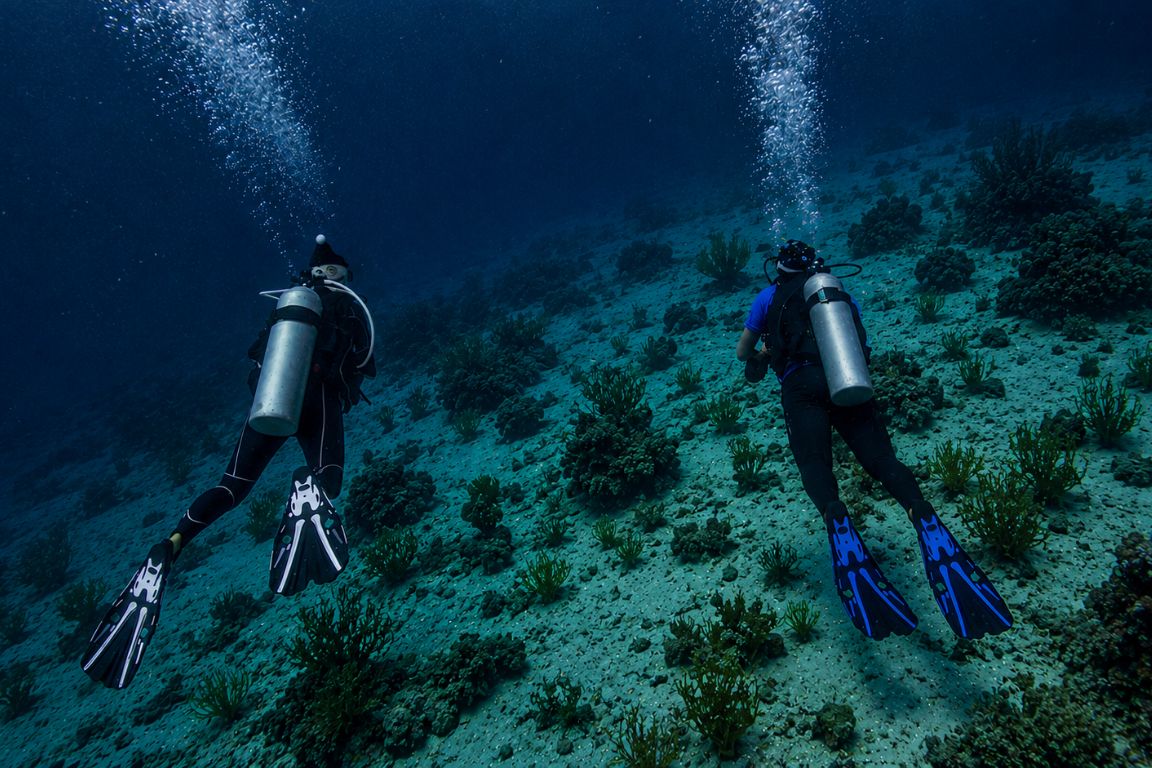 Koh Rok and Koh Haa are the correct answer for any snorkeler who finds the inner 4 Islands circuit too crowded or too shallow. Koh Rok’s channel between the two islands has the best accessible shallow coral in the Krabi region. Koh Haa’s lagoon has the best visibility and highest hawksbill turtle frequency. For blacktip shark encounters specifically, Koh Bida Nok at Phi Phi is the most reliable. For the possibility of a whale shark encounter without diving, Koh Haa from February through April is the correct choice.
The serious snorkeler’s frustration with the standard Krabi experience is specific: 45-60 minutes at a fixed anchor point, shared with 15-25 other people, on a section of reef that gets the same boat positioning every day. The solution is not finding a better operator for the same route but changing the route entirely. Koh Rok does not have this problem. The two islands are large enough and the reef varied enough that a competent snorkeler can spend two hours in the water and still not cover all the productive sections. The channel between the islands alone is 200-300 metres of active reef.
Koh Haa for serious snorkelers: the lagoon provides the clearest water accessible without a tank anywhere in the Krabi orbit. Visibility of 20-30 metres in the lagoon interior on a good day in January means you can see the bottom at 8 metres from the surface with enough clarity to identify species. This is what Krabi’s inner circuit looks like on its best day occasionally; it’s what Koh Haa’s lagoon looks like on most days from November through March. The whale shark probability from February through April adds an element of genuine anticipation that no inner-circuit island can match.
For snorkelers who are experienced enough to be comfortable in mild open water and want the most access-to-quality ratio for a single day trip, the Koh Rok and Koh Haa combined day from Koh Lanta is the correct booking. Three snorkeling stops, two hours in the water across different reef environments, and a beach lunch at Koh Rok between stops. For travelers who want a guide in the water pointing out species rather than managing from the boat deck, choose an operator who specifically briefs this as part of the experience.
What Do Travelers Consistently Get Wrong About Snorkeling at Krabi’s Islands?
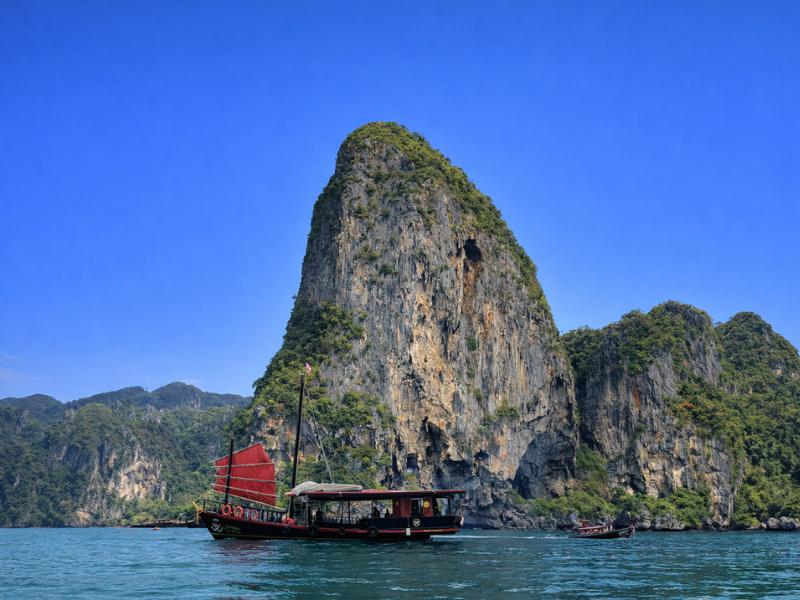
Four consistent mistakes: visiting the right island at the wrong time (after 10am when boat traffic has disturbed the water), anchoring on the wrong side of the reef (most boats anchor for convenience, not snorkeling quality), assuming Hong Island has the best snorkeling because it has the best scenery (it doesn’t), and not accounting for the tide on islands with sandbars (Tup Island’s sandbar disappears at high tide).
Timing is the variable that most impacts snorkeling quality at every Krabi island, and it costs nothing to optimise. The first boat arrives at Chicken Island around 9am. By 10am there are six or seven boats at anchor, 80-100 people in the water, and the fish have retreated to deeper sections of reef away from the surface activity. A group that arrives at 7:30-8am on an early-departure tour snorkels the same reef in undisturbed conditions: clearer water, more active fish, better visibility. This is not a marginal difference. Multiple reviews from travelers who did the same route on different days at different times describe the early experience as significantly better. The reef is the same; the conditions are not.
The wrong-side-of-the-reef problem is structural rather than individual. Boats anchor where anchoring is convenient and where the beach for breaks is located. This is often not where the best reef section is. At Chicken Island, the northeast reef face holds more active coral than the main beach side. At Koh Poda, the southeast face has better coral than the beach-side anchorage. A snorkeler who swims away from the main anchorage point, toward the less-crowded reef sections, almost always finds more to see. Ask the guide which direction produces the best results before entering the water rather than following the group by default.
The Hong Island snorkeling expectation gap generates the most consistent disappointment among first-time visitors who chose Hong Island specifically because of how often it appears at the top of “best snorkeling in Krabi” articles. The lagoon is genuinely extraordinary as a visual experience. The snorkeling in the lagoon is limited because the lagoon floor has patches of coral rather than continuous coverage. The best snorkeling at Hong Island happens off the rocky shores of the outer islands – Pak Bia’s south shore and the Daeng Island reef – not in the main lagoon that draws most visitors. Know this before you go, and position accordingly.
Which Krabi Snorkeling Island Should You Visit First?
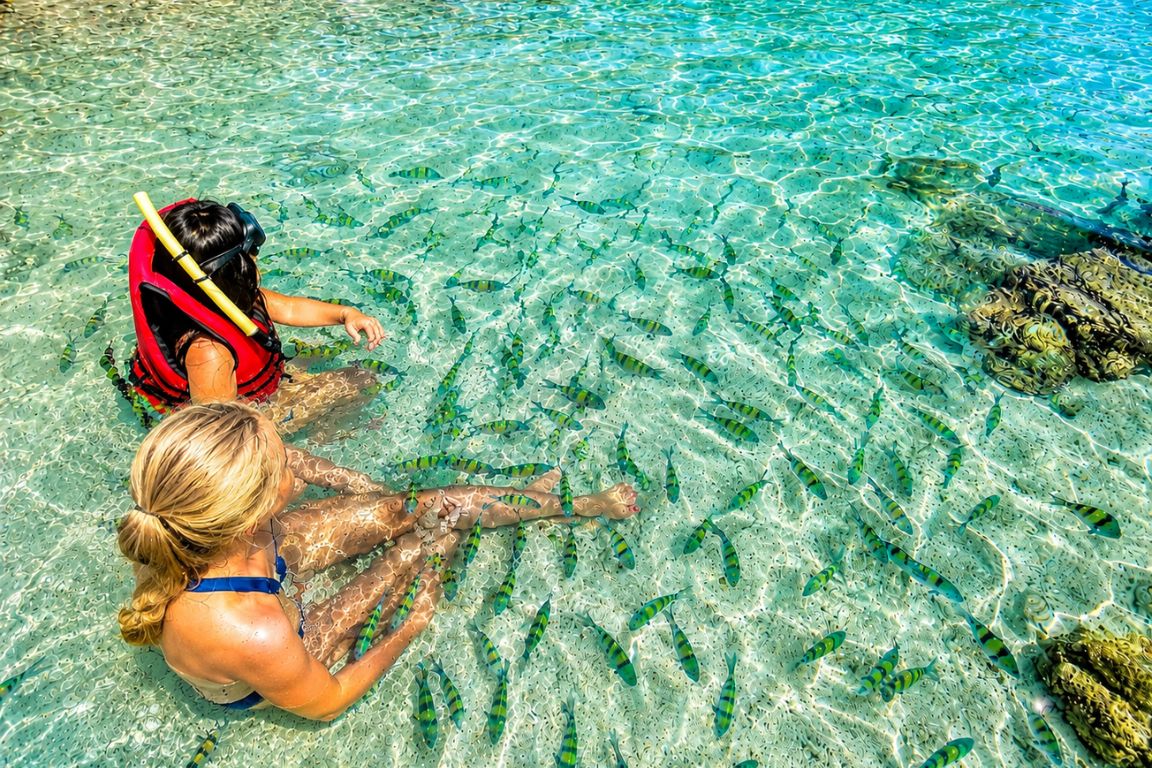 For a first visit to Krabi with one snorkeling day available: book the 4 Islands tour and prioritise the Chicken Island and Koh Poda snorkeling stops. For travelers with two days or more who want the best snorkeling Krabi offers: do the 4 Islands on day one for orientation, then the Koh Rok and Koh Haa outer run from Koh Lanta on day two. For travelers who want one strong snorkeling day without a repeat: go straight to Phi Phi for the Koh Bida Nok reef and Bamboo Island combination.
The 4 Islands tour as a first snorkeling day in Krabi makes sense as orientation rather than as the pinnacle of the experience. You learn the gear, get comfortable in the water, see the inner reef fish, and get a sense of what Krabi’s Andaman environment looks and feels like. Most travelers who do this and then go to Koh Rok the next day describe it exactly this way: the 4 Islands was good; Koh Rok was where the snorkeling actually became what they hoped the 4 Islands would be. This is not a criticism of the inner circuit. It is an accurate sequencing of the experience.
For travelers with only one day and a specific goal of seeing blacktip sharks, the Phi Phi day trip is the correct choice. Koh Bida Nok at Phi Phi produces the most reliable blacktip sightings of any snorkeling site accessible on a day trip from Ao Nang. The 50-minute speedboat transit is longer than the 4 Islands route, the national park fee is higher (400 THB versus 200 THB), and the day is longer (most Phi Phi day trips return around 4-5pm). The snorkeling quality at Bida Nok and Bamboo Island justifies both in full.
One honest note for travelers reading this before they’ve booked anything: the snorkeling island you visit matters less than the guide you have in the water with you, the time of day you arrive, and which section of reef you’re positioned on. A mediocre tour with bad timing at Koh Rok produces less than an excellent early-departure tour with a knowledgeable guide at Chicken Island. The island is the setting; the experience is everything else. The early-bird speedboat offers a nine-hour Phi Phi and 4 Islands day with swimming and snorkeling.
Not sure how to sequence the four Krabi tour routes across your available days without overlapping too much or missing the best stops? Check out our Krabi island hopping itinerary guide before you start booking.
Snorkeling Island Planning Checks
Guide support is one useful factor when comparing snorkeling outings
Travelers comparing Hong with the 4 Islands should weigh scenery against snorkeling priorities
Blacktip reef shark sightings at Phi Phi remain uncertain on every visit
Sea turtle sightings at Koh Rok remain uncertain on every visit
Travelers choosing departure times often weigh early schedules against convenience
Travelers comparing Koh Rok/Koh Haa with the 4 Islands circuit often prioritize reef quality and journey time
This Hong Island expectation gap is why we’re direct about what Hong Island’s snorkeling actually delivers before guests book it. The scenery is world-class. The snorkeling is good, not exceptional. Guests who know this before they arrive appreciate both dimensions of the island. Guests who arrive expecting Koh Rok-quality coral in a lagoon framed by limestone walls leave having missed the actual point of the place.
Frequently Asked Questions
Which Is the Best Island for Snorkeling Near Krabi for First-timers?
Koh Poda on the 4 Islands circuit. The reef starts close to shore, the water is shallow and calm, and the fish density is high enough to reward a first snorkeling session without requiring any distance from the beach. Chicken Island on the same tour is the second best beginner option and typically the livelier of the two for reef fish variety. Both are accessible on standard group tours from Ao Nang without extra planning.
Is Koh Rok Worth the Extra Travel Time From Ao Nang?
Yes, for anyone who wants the best snorkeling accessible from the Krabi region without diving. Koh Rok’s channel between the two islands has the densest and most diverse shallow-water coral in the area, sea turtle sightings on the majority of dry-season visits, and visibility that regularly exceeds 15-20 metres. The 75-90-minute speedboat transit from Ao Nang is long. The snorkeling quality is not comparable to the inner circuit islands and justifies the distance comfortably.
Can You See Sharks Snorkeling at Krabi’s Islands?
Yes. Blacktip reef sharks are seen at Chicken Island on the inner circuit occasionally, at Koh Bida Nok (Phi Phi) regularly, and at Shark Point on Long Beach Phi Phi Don very reliably in the morning. They are 70-120 centimetres, harmless, and move through the reef rather than approaching snorkelers. Leopard sharks rest on sandy bottoms at 4-8 metres and are occasionally visible from the surface at sites like Koh Rok on a calm, clear day. Whale sharks are possible at Koh Haa from February through April.
Is Hong Island Good for Snorkeling?
Moderate. The lagoon is spectacular visually but has patchy coral coverage. The best snorkeling at the Hong Islands group is off the rocky shores of the outer islands – particularly the south face of Koh Pak Bia and the reef around Koh Daeng. If you book a Hong Island tour expecting the same snorkeling quality as the 4 Islands circuit at Chicken Island or Koh Poda, you may find it underwhelming. Book Hong Island for the lagoon and the scenery, and treat the snorkeling as a welcome addition.
What Is the Best Time of Day to Snorkel at Krabi’s Islands?
Before 10am at any island. The first tour boats arrive around 9-9:30am. Before that window, the water is undisturbed, fish behaviour is natural, and surface clarity is at its daily maximum. By mid-morning on any popular inner-circuit island, 6-10 boats may be anchored simultaneously with 100+ people in the water. Early departure tours – available from reputable operators in Ao Nang – consistently produce better snorkeling experiences at identical islands compared to standard departure times.
Are Koh Rok and Koh Haa Open All Year?
No. Both Koh Rok (Mu Ko Lanta National Park) and Koh Haa close for the monsoon season, generally from mid-May through October, to allow reef recovery. The exact dates vary slightly year to year. The 2026 season follows standard closures; confirm current access dates with operators before booking trips in May or October. The inner Krabi islands (4 Islands circuit, Hong Island) remain open year-round, with conditions varying by weather.
Written by Ryan Supakorn
Thai tour guide since 2011 · Founder, Krabi Boat Tours
Ryan has guided travelers through Krabi’s islands, lagoons, and coastline since founding the agency.
Check your actual travel date before arranging hotels, ferries, or other island days.
Match the outing to your plans
Blank fields keep the initial suggestion. Age pricing alone does not confirm suitability; if eligibility is unverified, the tool will not recommend a match. Check pickup and restrictions for your selected package.
Compare two total quotes
Use current quotes in the same currency, including park fees, transfers and option extras.
Initial recommendation. Adjust the optional choices to match your plans.
Phi Phi Early Bird & 4 Islands - Day Tour by Speedboat From Krabi
The nine-hour early speedboat day includes Phi Phi, 4 Islands, guided snorkeling, equipment, lunch, and transfers from eligible areas.
9h · English guide listed · Early pickup, lunch and snorkeling gear; park fees extra. Maya Bay is closed August–September under the listing’s seasonal policy. · Confirm your selected option’s pickup, inclusions, fees and participant restrictions before booking.
Choose a date to view the published schedule. Confirm availability and final price on Viator.
No reviewed option matches these choices.