Which Phi Phi Island Is Best to Stay on?
There is only one island in the Phi Phi group you can actually sleep on, so the real decision is which bay of Phi Phi Don you pick. Tonsai for noise and convenience, Long Beach for a middle path, the north for quiet, or none of them if a day trip from Krabi suits you better.
Wonder what a nine-hour Phi Phi speedboat day reveals before committing to an island stay? Explore Early-Bird Phi Phi & 4 Islands.
Phi Phi Don is the only island in the group with accommodation, so it is the answer by default. The genuine choice is which part of it: Tonsai Village for nightlife and ferry access, Long Beach for a quieter beach within reach of town, and Laem Tong or Loh Bagao in the north for resort seclusion.
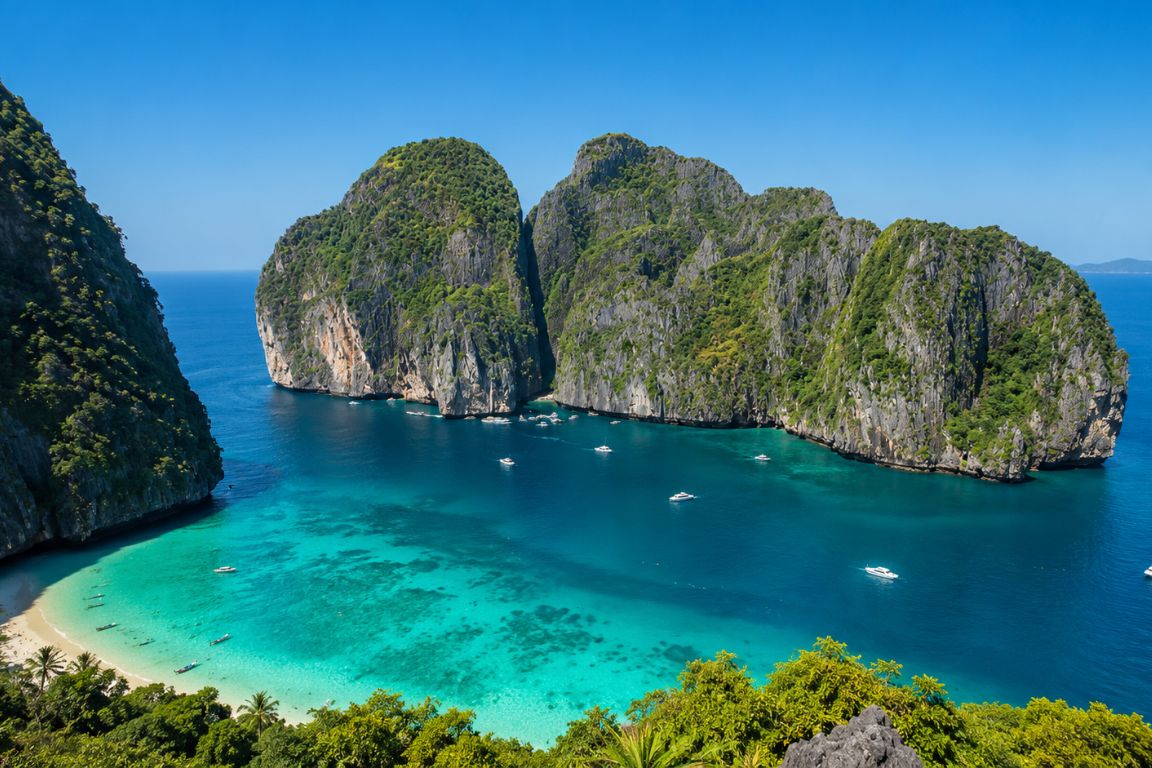
Phi Phi Leh, the island with Maya Bay on it, is currently an uninhabited national park with no visitor accommodation. Bamboo Island, Mosquito Island and the Bida rocks are day-stop territory, reachable on the same day trips to Phi Phi from Krabi that most visitors use instead of an overnight.
Booking choice: Compare an early-start day trip with a private sunset cruise, a one-way ferry, or beginner diving after an island night. Check dates for Early-Bird Phi Phi & 4 Islands.
Which Phi Phi Islands Can You Actually Stay on?
One. Phi Phi Don holds every hotel, hostel, restaurant and dive shop in the group. The other islands are protected, undeveloped, or simply too small, and several sit inside Hat Noppharat Thara-Mu Ko Phi Phi National Park where overnight stays are not on offer.
| Island | Can you stay? | What it is |
|---|---|---|
| Phi Phi Don | Yes | The inhabited island: villages, beaches, the whole accommodation range |
| Phi Phi Leh | No | Uninhabited national park; Maya Bay, Pileh Lagoon, Viking Cave |
| Koh Mai Phai (Bamboo Island) | No | Day-stop beach and snorkel reef on longer itineraries |
| Koh Yung (Mosquito Island) | No | Small snorkeling stop, no facilities |
| Bida Nok and Bida Nai | No | Limestone rocks; dive and snorkel sites, no landing |
That single fact resolves most of the question people are actually asking. From there it is a matter of which stretch of one island's coastline fits the trip.
Which Part of Phi Phi Don Suits You?
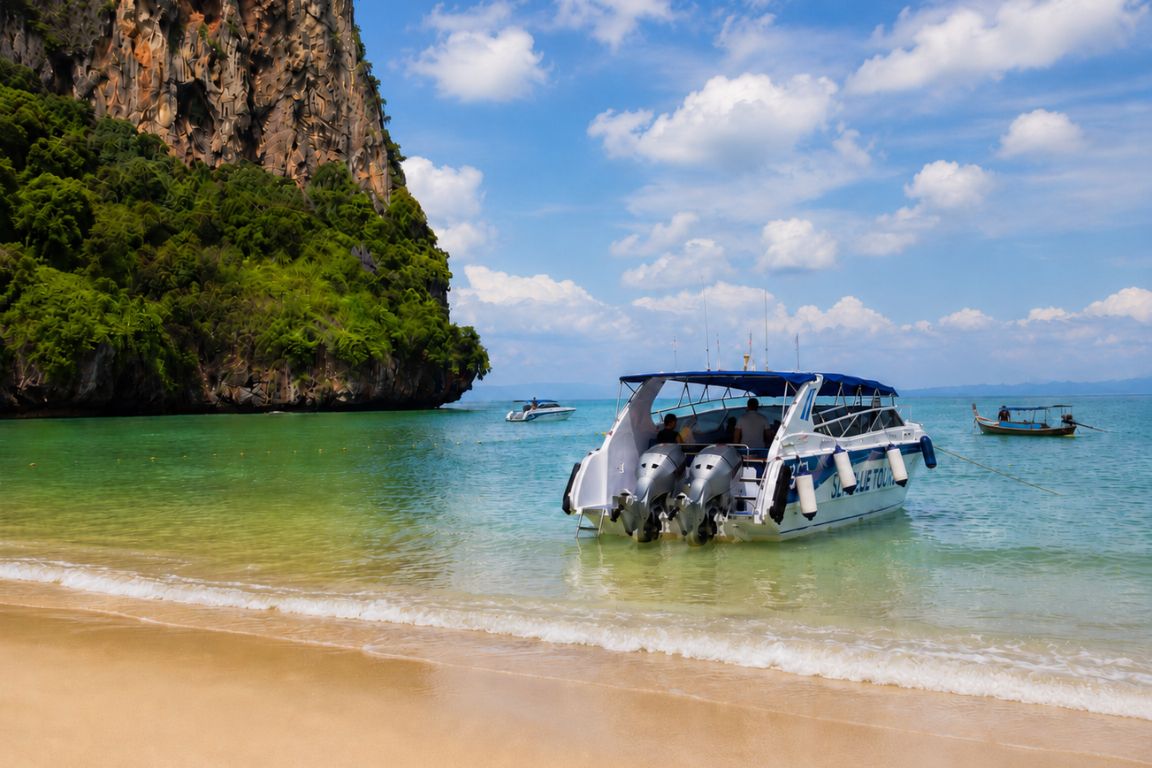
Tonsai is the centre and the loudest. Long Beach trades a few minutes of travel for calmer sand and the best snorkeling within walking distance. Loh Bagao and Laem Tong in the north are resort country, quiet by design, and reached by boat rather than on foot.
| Area | Character | Getting there from the pier | Best for |
|---|---|---|---|
| Tonsai Village | Dense, walkable, loud at night | You are already there | Short stays, nightlife, easy logistics |
| Loh Dalum Bay | The party beach, shallow at low tide | Minutes on foot across the isthmus | Sunset drinks and late nights |
| Long Beach (Hat Yao) | Relaxed, real sand, reef offshore | Shoreline path or a short longtail hop | Snorkelers who still want dinner options |
| Loh Bagao | Mid-island, resort-led, calm | Longtail transfer | Couples wanting quiet with some choice |
| Laem Tong | Northern tip, secluded, few visitors | Longtail transfer, no road | Resort stays where you barely leave the bay |
Phi Phi Don has no cars. Everything moves on foot or by longtail, which is charming on arrival and less so at 2am with luggage, so pick your bay around how much walking you want to do in the heat.
Is Tonsai Worth Staying in?
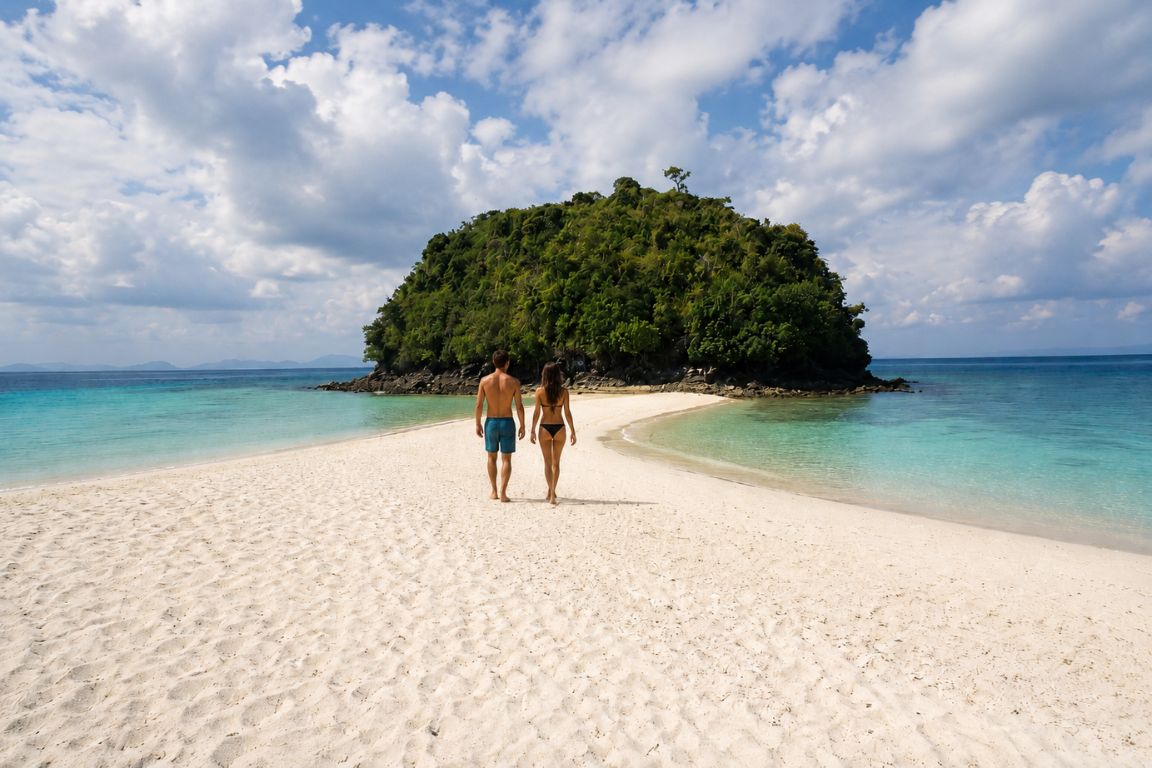
Yes, if you want the island's social side and short transfers to everything. Tonsai is the ferry pier, the restaurants, the dive shops and the bars, packed into a narrow strip between two bays. It is also the noisiest place on the island, and the sound carries across the isthmus until late.
Rooms at the edges of the village get most of the convenience with less of the volume. If sleep matters more than the bar scene, treat Tonsai as somewhere to eat rather than somewhere to book.
What About Long Beach?
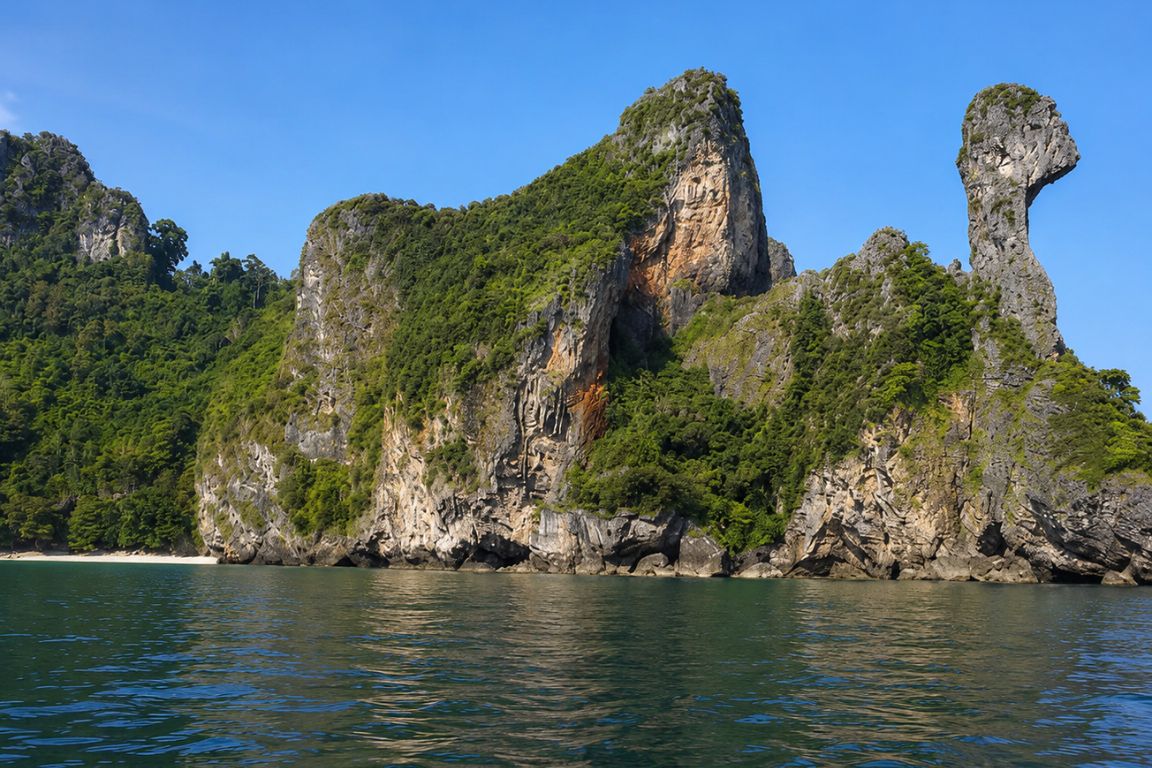
Long Beach is the compromise most repeat visitors settle on: a proper stretch of sand, sunset views back towards Phi Phi Leh, and Shark Point just offshore, where marine wildlife sightings remain unpredictable. Town is close enough for dinner without being close enough to hear it.
Marine wildlife size, behavior and sightings should not be treated as predictable. Swimming out to see them at first light is one of the few genuine advantages of sleeping on the island, since day boats do not arrive until later. Our page on the best islands for snorkeling around Krabi puts that reef in context with the mainland's options.
Is the North of the Island Better?
Better if you want quiet, worse if you want spontaneity. Laem Tong and Loh Bagao are boat-access bays with resort infrastructure and very little else, which means calm water and empty sand, and it also means every dinner or dive shop trip is a longtail ride.
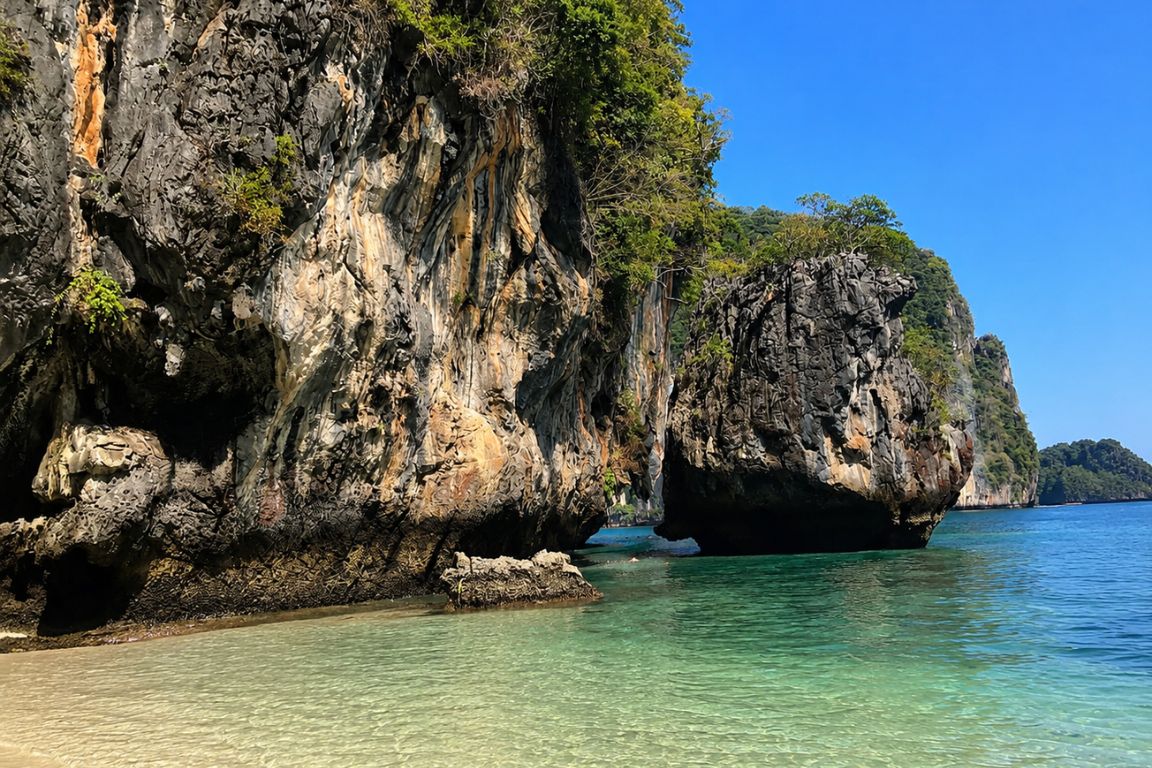
Budget for those transfers in both money and time. The north suits people planning to stay put for several days; it suits nobody planning to be out on a different boat every morning.
Do You Need to Stay on Phi Phi at All?
Most people do not. Phi Phi Don is reachable from Krabi on a two-hour one-way ferry transfer, and a nine-hour early-start trip combines Phi Phi and four islands with swimming and snorkeling before returning you to a mainland base with more choice and lower prices.
| Day trip from Krabi | Overnight on Phi Phi Don | |
|---|---|---|
| Time at the sights | A structured full day, roughly 9 hours door to door | Early mornings and late afternoons without day boats |
| Where you sleep | Ao Nang, Krabi Town or Railay, wide price range | Island prices, limited range, book well ahead |
| Flexibility | Itinerary may change with weather and tides | Committed once the ferry has gone |
| Best for | First visits and short trips | Divers, and anyone who wants the island after dark |
The mechanics of the crossing, the stop order and the pickup times are set out in our guide to the Phi Phi day trip from Krabi . If the goal is to see the bays before the convoys arrive, the early-bird Phi Phi speedboat starts early; a private Phi Phi and 4 Islands sunset cruise adds a Railay sunset after its Phi Phi and four-island route.
When Should You Book?
Early, and earlier still for December through February. Phi Phi Don has a fixed and fairly small stock of rooms, no road network to spread demand, so live room availability matters when planning peak-season dates.
Season shapes the choice as much as budget does. In the monsoon months the northern bays feel remote in a way that is not always pleasant, while current restaurant openings should be checked for your travel dates. Our note on the best time to visit Phi Phi Island covers which months hold up. Park rules for the surrounding waters, including Maya Bay's closures, are published by the Department of National Parks, and the island group's geography is set out on Wikipedia.
Frequently Asked Questions
Is Phi Phi Don or Phi Phi Leh better?
They are not alternatives. Phi Phi Don is the inhabited island with all the hotels, beaches and restaurants; Phi Phi Leh is uninhabited national park that you visit by boat for Maya Bay, Pileh Lagoon and Viking Cave. Visitors can see Phi Phi Leh by boat and sleep on Phi Phi Don or the mainland.
Where is the quietest place to stay on Phi Phi?
Laem Tong at the northern tip, followed by Loh Bagao. Both are boat-access resort bays with calm water and very few day visitors. The trade-off is that a longtail transfer stands between you and the restaurants, dive shops and pier traffic of Tonsai Village.
Can you stay on Maya Bay?
No. Maya Bay is on Phi Phi Leh, which is uninhabited national park with no accommodation of any kind. Swimming off the beach is prohibited under the restoration rules, and the bay closes annually so the reef can recover, most recently across August and September.
Is one night on Phi Phi enough?
One night gets you a single quiet evening and one early morning before the day boats arrive, which is the whole point of staying. Two nights is more comfortable, since a single night usually means arriving on a midday ferry and leaving on one, leaving very little island time on either side.
Is it better to stay in Krabi or on Phi Phi?
Krabi, for most first visits. You get a wider range of accommodation at lower prices, easy access to the inner islands, Railay and the inland jungle trips, and Phi Phi can still be visited on a nine-hour early-start speedboat day. Stay on the island if diving or its evenings are the draw.
Check your actual travel date before arranging accommodation or transfers
Match the outing to your plans
Blank fields keep the initial suggestion. Age pricing alone does not confirm suitability; if eligibility is unverified, the tool will not recommend a match. Check pickup and restrictions for your selected package.
Compare two total quotes
Use current quotes in the same currency, including park fees, transfers and option extras.
Initial recommendation. Adjust the optional choices to match your plans.
Phi Phi Early Bird & 4 Islands - Day Tour by Speedboat From Krabi
The nine-hour speedboat day combines Phi Phi and four islands with swimming, snorkeling, lunch and eligible Krabi-area transfers.
9h · English guide listed · Early pickup, lunch and snorkeling gear; park fees extra. Maya Bay is closed August–September under the listing’s seasonal policy. · Confirm your selected option’s pickup, inclusions, fees and participant restrictions before booking.
Choose a date to view the published schedule. Confirm availability and final price on Viator.
No reviewed option matches these choices.