Railay Beach, Krabi: How to Get There and What to Expect
Railay is a peninsula on the Krabi mainland, not an island, but limestone walls seal it off from every road, so the only way in is by boat. A shared longtail from Ao Nang takes about 15 minutes. Once you land, four separate beaches sit within a ten-minute walk of each other, and only two of them are genuinely worth swimming at.
Compare dated outings that add Phra Nang, snorkeling, climbing, or sunset to your Railay plans. Explore 4 Islands Speedboat.
Booking choice: For Phra Nang, Tup, Chicken, and Poda together, check the four-island speedboat for your date. Check dates for 4 Islands Speedboat.
Railay at a Glance: Four Beaches, One Boat Ride
Railay is a peninsula, not an island, and no road reaches it. Four beaches sit within a short walk of each other: Railay West for swimming and sunset, Railay East for cheap rooms and pier arrivals, Phra Nang Cave Beach for the best water and the shrine, and Tonsai Bay for climbers. Every one of them is reached by longtail.
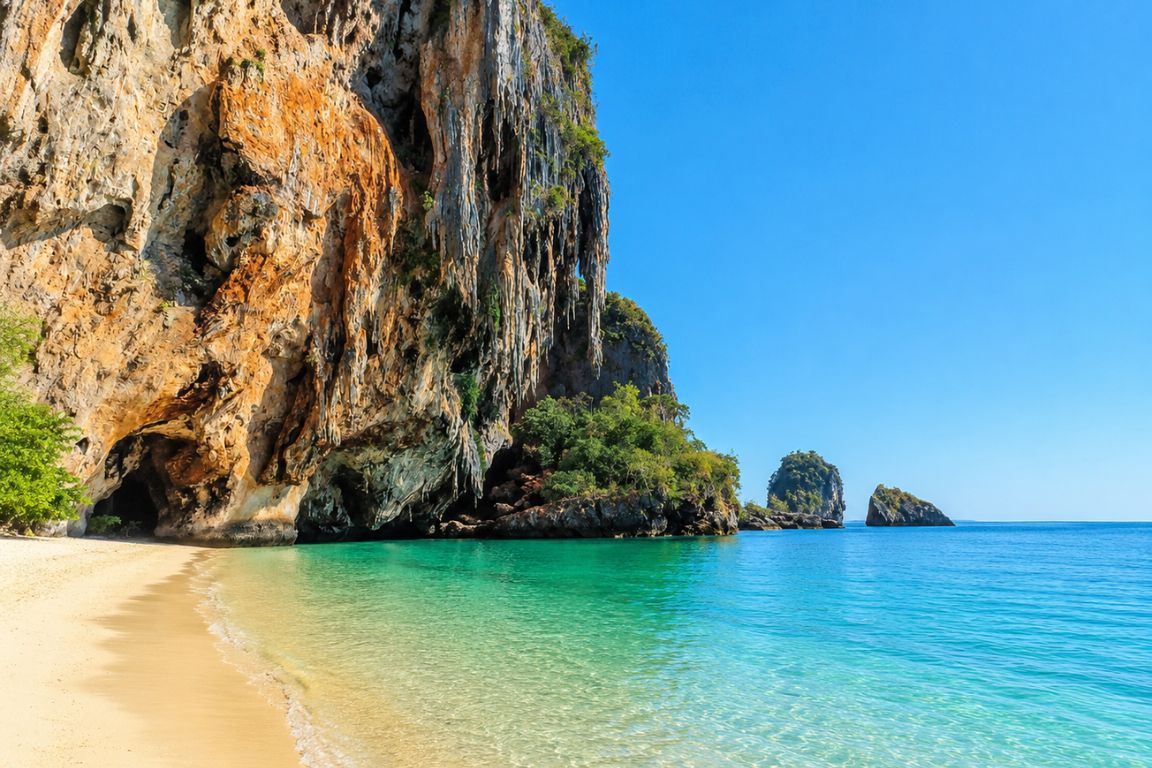
The geography is the whole story here. Two limestone massifs rise off the Krabi coast and pinch the peninsula shut behind them, which is why a place fifteen minutes from a busy tourist strip still feels like it belongs to a different decade. There are no cars. Everything on the peninsula, the beer, the cement, the mattresses, arrived on the deck of a wooden boat, and the prices quietly reflect that.
Distances are tiny. A paved path runs the width of the peninsula between Railay East and Railay West in five to ten minutes, and a second path branches south past the lagoon trailhead toward Phra Nang Cave Beach. Tonsai sits around the northern headland and is reached either by boat or, at low tide, by a rock scramble that is more committing than it looks in photographs.
| Beach | How you land | Sand and water | What it is for |
|---|---|---|---|
| Railay West | Longtails run the bow onto the sand; wet landing, no pier | Wide white sand, gentle shelf, swimmable through most of the tide | Swimming, sunset, the classic karst view |
| Railay East | Floating pier, tide dependent | Mangrove-fringed silt that empties out at low water | Arrivals from Ao Nam Mao, budget rooms, late bars |
| Phra Nang Cave Beach | Longtail directly onto the sand, or a ten-minute walk from either side | The best water on the peninsula, clear and deep enough at most tides | Swimming, the cave shrine, the photograph |
| Tonsai Bay | Longtail from Ao Nang, or a low-tide scramble from Railay West | Rockier entry, less sand | Climbing, overhang routes, budget bungalows |
If you only have half a day, the honest shortlist is Phra Nang for the water and Railay West for the light. Everything else is optional.
Why Is Railay Beach So Famous?
Three things stacked into one small place: limestone towers rising straight out of the sand, a beach no road can reach, and a sacred cave shrine at Phra Nang filled with wooden offerings left by fishermen. The same rock made Railay one of Asia's best known climbing destinations, which pulled in a second audience entirely.
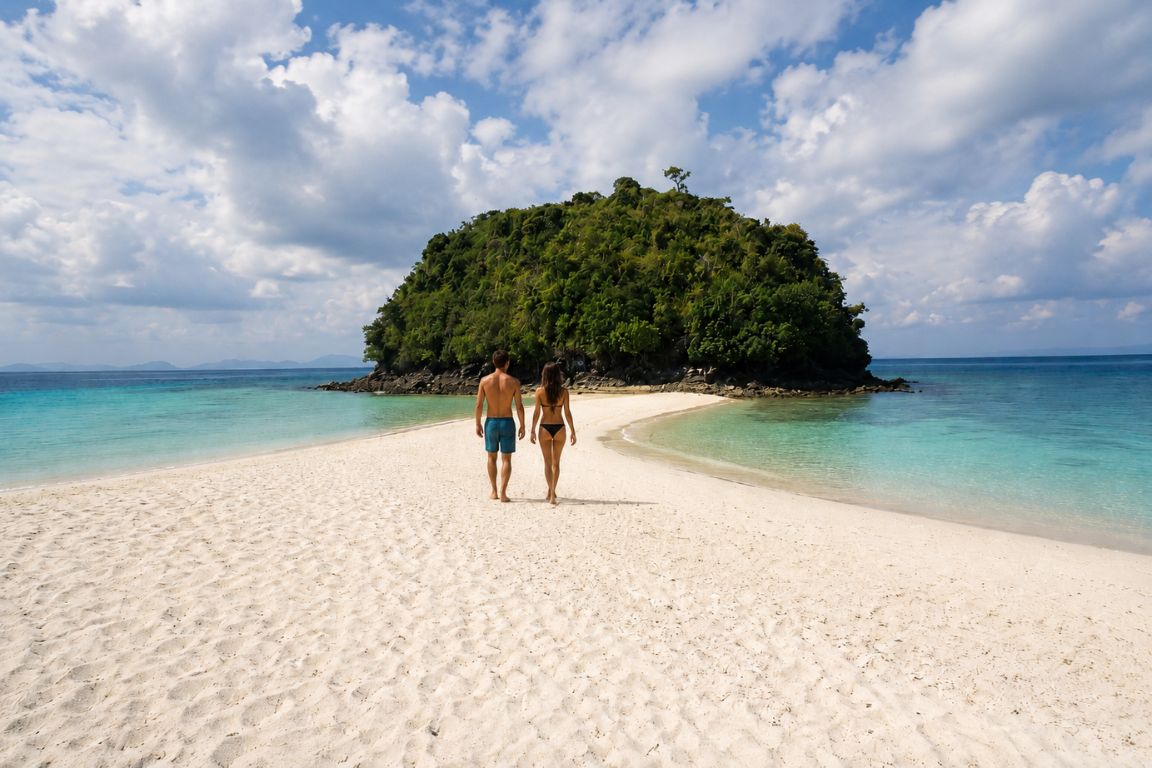
The geology does most of the work. Krabi's karst towers are the eroded remains of an ancient reef system, and at Railay they stand vertically at the back of the beach with almost no transition, so the composition every visitor photographs is handed to them before they have unpacked a camera. That dramatic geology, scattered across mainland peninsulas like Railay and dozens of offshore islands, is what makes Krabi one of the most photogenic coastal provinces in Southeast Asia. Railay's geography is unusual enough that it gets described as an island by half the people who visit it.
The shrine matters more than the guidebook line about it suggests. Inside the cave at the base of the limestone is a shrine to the sea princess Phra Nang, a spirit believed to protect fishermen and grant fertility, and it fills with wooden offerings left by locals and boatmen over generations. It is a working sacred site, not a set piece, and it earns more than a five-minute look followed by a photograph.
Then there is the access filter. Railay Beach is reachable only by boat regardless of where you are coming from, which is why it has retained a quality that the mainland strip at Ao Nang has lost. Day traffic arrives by longtail and tour boat, while the peninsula itself remains roadless. Day-trip traffic often eases toward evening, changing the atmosphere after the busiest visiting hours.
Is Railay Beach Worth Visiting?
Yes, for almost anyone with half a day to spare. The crossing is short and cheap enough that the downside risk is minimal, and Phra Nang Cave Beach is genuinely one of the most striking beaches in southern Thailand. The exception is the traveler chasing an empty beach in high season: Railay West and Phra Nang both fill between roughly 11am and 3pm.
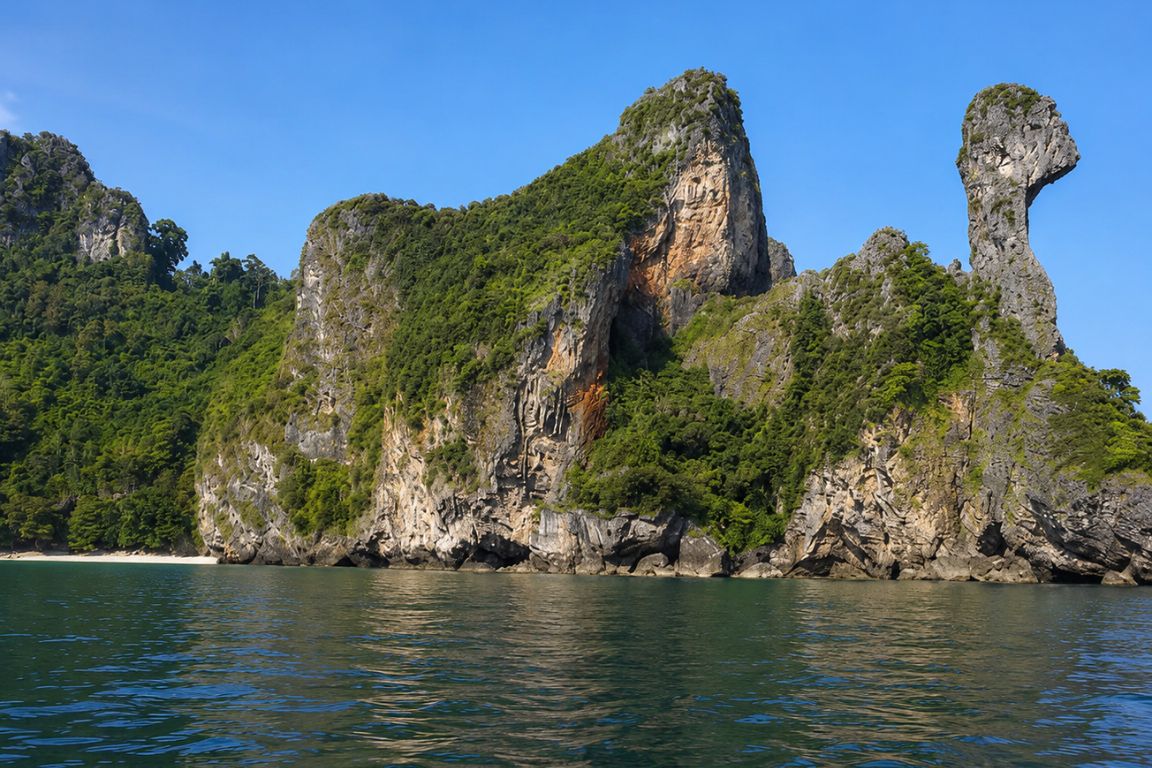
The crowd pattern is predictable because it is driven by boat schedules rather than weather. Phra Nang Cave Beach fills from several directions at once: longtail taxis from Ao Nang bringing beach visitors, tour groups on the 4 Islands circuit, and travelers walking across from Railay. Some island itineraries include Phra Nang, but stop order and time ashore depend on the operator, weather, and tide. If you have read the 4 Islands tour guide you will recognise the shape: Chicken Island first for snorkeling, Tup for the sandbar, Poda for lunch, Phra Nang last.
That gives you two useful strategies. Arrive independently by longtail before 10am and you get the beach in early light with a fraction of the people. Or come in the late afternoon, after the convoy has turned for home, and stay for the sun going down behind the karsts off Railay West. Both beat the middle of the day by a wide margin.
Where the answer turns negative: if your idea of a good day is a quiet stretch of sand with nobody on it, Railay in January is not that, and a private boat to the outer beaches of the Hong group will serve you better. If you have mobility limits, note that the landing is onto wet sand rather than a pier, though the beach itself is flat and easy once you are ashore.
How Do People Get to Railay Beach?
Every route ends in a longtail boat. Shared longtails cross from Ao Nang beach to Railay West in about 15 minutes, and from Ao Nam Mao Pier to Railay East in a similar time. Boats leave when a full load of passengers has paid, so an off-peak afternoon means either a wait or buying the empty seats yourself.
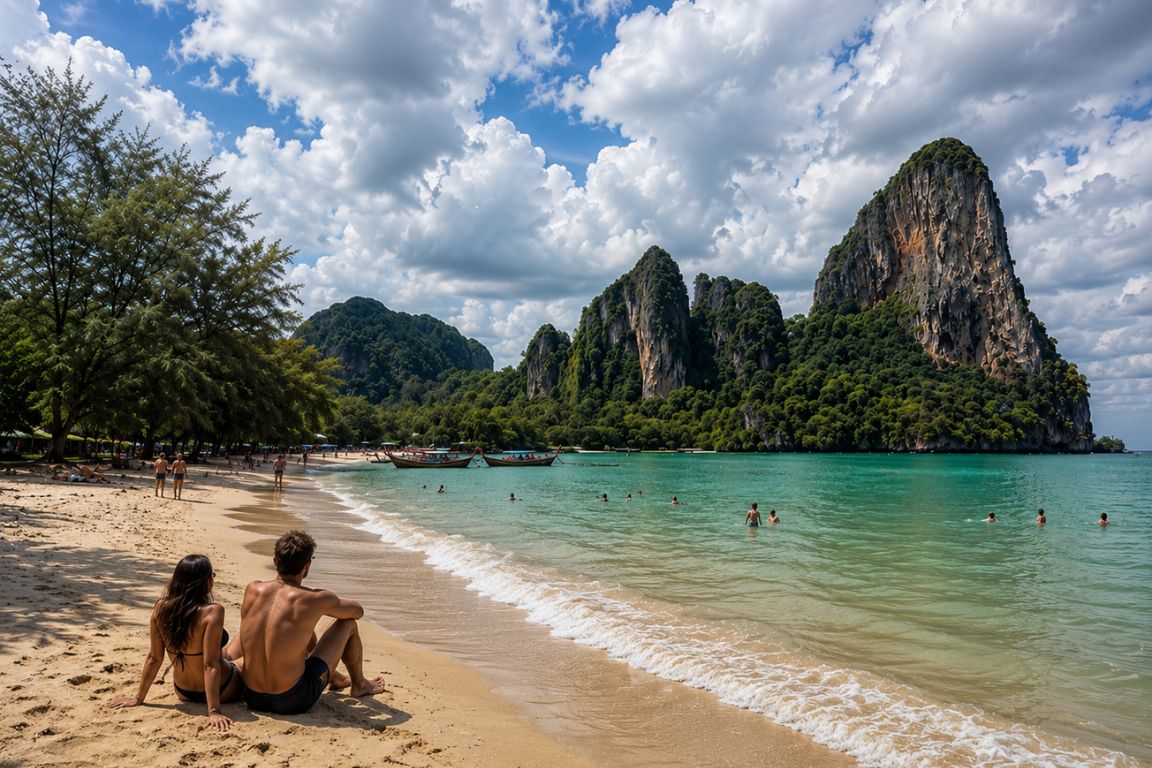
The mechanics are simple once you have seen them once. You pay at the ticket booth on the sand, not to the captain, and you are given a numbered token. When enough passengers have collected, the captain waves everyone down to the waterline. There is no pier at Railay West: the boat runs its bow into shallow water and you step off into ankle to knee deep sea, which is why sandals in your hand and a dry bag for the phone are worth more here than they are on a speedboat day.
Crossings thin out after dark. Operators wind down the west-side shuttle in the evening, so a dinner-on-Railay-and-return plan has to be agreed with a captain in advance rather than assumed. Guests staying overnight rarely notice; day visitors sometimes do, at the wrong moment.
| Coming from | Departure point | Lands at | Typical crossing | Notes |
|---|---|---|---|---|
| Ao Nang | Longtail ticket booth on Ao Nang beach | Railay West | About 15 minutes by longtail, closer to 10 by speedboat | Shared boats leave when full; wet landing on the sand |
| Krabi Town and eastern hotels | Ao Nam Mao Pier | Railay East | A similar short hop | The pier most operators use for Railay guests |
| Klong Muang and Tubkaek | Road transfer first, then longtail | Either side | Add 30 to 45 minutes of road | Transfer supplements of roughly 400 to 800 THB per car are normal |
| Nopparat Thara Pier | Main tour pier at the end of Ao Nang beach road | Phra Nang, as a tour stop | Included in the day | Boat anchors offshore; you wade in |
| On a group island day | Ao Nang or Ao Nam Mao piers | Phra Nang Cave Beach | 45 to 60 minutes ashore | Usually the last stop before the return crossing |
Because the boat is the only door, Railay slots naturally into a day on the water rather than competing with one. A luxury longtail outing visits Railay, Tup, Chicken, and Poda, with snorkeling gear and refreshments included, and a seven-island sunset outing includes Phra Nang, island snorkeling, a beach barbecue, and a night plankton swim. Check each individual tour listing for current availability, meeting points, and transfer terms. Related reading: Krabi Boat Tours
If you are weighing hull types for the crossing, the difference barely registers on this route. Our page on longtail versus speedboat puts the saving at about five minutes to Railay, which is the one destination where the slower, more characterful boat costs you nothing.
East Railay or West Railay: Which Side Should You Land on?
Land at Railay West if you came to swim and watch the sun go down. Land at Railay East if you are arriving from Ao Nam Mao, staying on a budget, or crossing at a tide that makes the west landing awkward. The two sides are a five to ten minute walk apart on a paved path, so the choice is about arrival and accommodation rather than access.
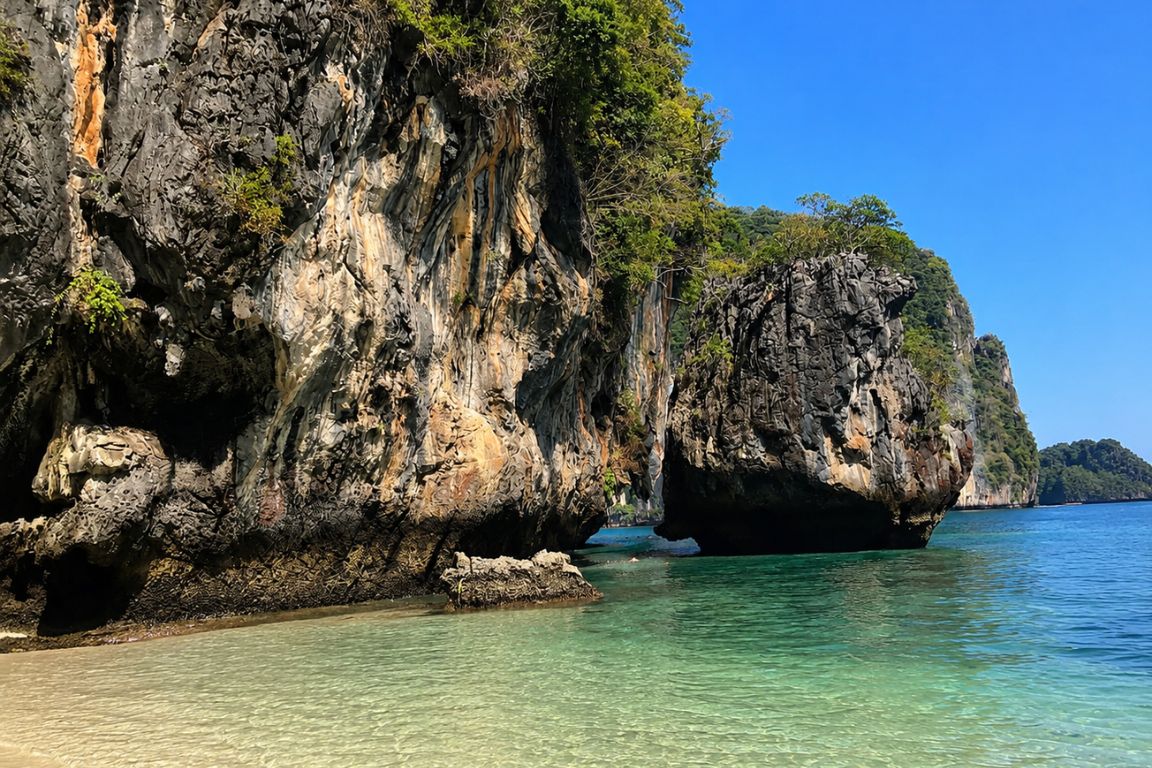
Railay East reads badly on first sight and that puts people off unfairly. It is a mangrove shoreline, the water pulls back a long way at low tide, and the smell of warm mud is part of the deal. What it has instead is the floating pier, the cheapest food on the peninsula, most of the bars that stay open late, and rooms at a fraction of the west-side rate. Climbers have used it as a base for decades for exactly those reasons.
Railay West is the postcard: a broad arc of white sand with resorts set back under the trees and the karsts closing off both ends. It is where the sunset happens, and it is where the day-trip longtails from Ao Nang unload. Nothing about it is quiet at four in the afternoon in February.
| Factor | Railay East | Railay West |
|---|---|---|
| Arrival | Floating pier, dependent on tide | Boats beach on the sand, wet landing |
| Swimming | Poor: silt and mangrove, water retreats far at low tide | Good: clean sand shelf, usable through most tides |
| Sunset | Blocked by the peninsula | The reason people book the extra night |
| Rooms | Hostels and mid-range, the budget side | Resort pricing, beachfront |
| Food and drink | Cheapest on the peninsula, latest bars | Resort restaurants and beach bars |
| Walk to Phra Nang | About 10 minutes past the lagoon trailhead | About 10 minutes on the same path |
| Best for | Budget stays, climbers, arrivals from Krabi Town | Swimmers, couples, day visitors from Ao Nang |
Can I Swim at Railay Beach, Thailand?
Yes at Railay West and at Phra Nang Cave Beach, where the sand shelves gently and the water stays clear. No, in any practical sense, at Railay East: it is a silt and mangrove shoreline that empties out at low tide. Tonsai has swimmable water but a rockier entry that rewards footwear.
Phra Nang is the pick. The water there holds depth across more of the tide cycle than anywhere else on the peninsula, the sand is clean, and the cliffs shade one end of the beach in the late afternoon, which matters more than it sounds when the air is sitting at 34 degrees. Swim away from the northern corner where longtails run in and out; boat lanes are the only real hazard on a normal day, and they are obvious once you look for them.
At Railay West the shelf is gentle enough that a low tide means a longer walk out rather than no swim at all. The water gets stirred by boat traffic through the middle of the day, so the clearest window is early morning before the shuttle picks up.
One rule applies everywhere in Thai national marine park waters, including the reefs you will snorkel on any island day out of here: reef-safe sunscreen is required by law, and conventional formulas containing oxybenzone and octinoxate degrade coral. The fine runs up to 100,000 THB. Buy the right bottle before you leave the mainland, because the shop options on the peninsula are thin.
| Beach | High tide | Low tide | Watch for |
|---|---|---|---|
| Phra Nang Cave Beach | The best water on the peninsula | Shelf partly exposed, still a good swim | Crowd peak roughly 11am to 3pm |
| Railay West | Wide, clean, easy entry | Swimmable, longer walk out, more stirred sand | The longtail lane at the northern end |
| Railay East | Shallow and silty | Effectively no swimming | Pier traffic; treat it as a transport beach |
| Tonsai Bay | Swimmable | Rocky, awkward entry | Sharp rock underfoot; water shoes help |
What Is Inside Phra Nang Cave, and How Should You Behave There?
The cave at the southern end of Phra Nang Cave Beach holds a shrine to the sea princess Phra Nang, a spirit believed to protect fishermen and grant fertility. Generations of local boatmen have left carved wooden offerings there. It is an active place of worship on a public beach, which is an unusual combination and one that visitors regularly misread.
The practical guidance is short. Do not climb on the offerings or move them for a photograph. Keep swimwear covered while you are inside the cave mouth. Give the space to anyone who is clearly there to make an offering rather than to look. None of this is enforced by a sign, which is precisely why it gets ignored.
There is a second, entirely different reason to walk down here. Longtail bows in Krabi carry colored silk garlands and flowers placed each morning to honor Mae Ya Nang, the spirit goddess of boats, and that area of the bow is considered sacred. You do not touch it. Once you know what those garlands are, the shrine at Phra Nang stops looking like a curiosity and starts looking like one end of a living tradition that runs right through the fleet you just travelled on.
Is Railay Worth It If You Have Never Climbed?
Yes. Railay's limestone holds routes from beginner to advanced across Railay West, Railay East and Phra Nang Cave Beach, and half-day beginner sessions are a normal part of the local economy. December through February gives the driest rock, the coolest temperatures and the best grip, which is when a first lesson is most likely to be enjoyable rather than merely survivable.
The season point is worth taking seriously. Rock climbing on Railay's limestone operates best from December through February when the rock is dry, temperatures are lower and friction is at its maximum. The overhanging routes at Railay and Tonsai that attract serious climbers stay usable year-round because their geometry keeps rain off the holds, but the broader route catalogue, including face climbs, needs dry limestone that only the core dry season delivers reliably. Our page on Krabi in the dry season goes through what each month in that window actually delivers.
A beginner lesson at Railay on a clear January morning, with the Andaman visible between the karsts and the beach below you, is one of those cross-activity experiences Krabi produces in ways few other destinations can match. It also pairs neatly with a boat day: climb in the cool morning hours, be back on the sand by lunch, and take the afternoon crossing out to the islands.
| Sector | How you reach it | What it suits | Season note |
|---|---|---|---|
| Railay East walls | Short walk from the east path | Beginner courses and top-rope sessions | Best December to February on dry rock |
| Railay West | Walk from the beach | Mixed routes, easy access between climbs and swims | Same dry-season window |
| Phra Nang Cave Beach | Walk or longtail | Sea-level routes with the beach directly below | Dry season, and avoid the midday crowd |
| Tonsai | Longtail, or a low-tide scramble from Railay West | Overhangs and harder grades | Climbable year-round thanks to the overhang geometry |
Can I Stay on Railay Beach?
Yes. Railay has resorts and guesthouses across all four beach areas. There is no road, so every supply arrives by boat and the pricing follows. Railay East is the budget side, Railay West is the resort side, Tonsai is where climbers settle in, and Phra Nang has almost nothing but sand and cliff.
Staying over changes the character of the place completely. Day-trip traffic often eases in the late afternoon. Overnight guests remain for Railay’s quieter evening atmosphere after much of the day traffic has eased. Travelers who only ever come for four hours in the middle of the day never see this version, and it is the version worth booking a night for. If you are still weighing bases, our guide on where to stay in Krabi compares Railay against Ao Nang and Krabi Town on price, noise and access.
Bring cash. Boat fares, national park fees on any island day and the smaller food stalls all run on baht, and fees are collected by hand rather than by card. Budget 400 to 500 THB per person beyond your estimated spend specifically for park fees and contingencies.
The one genuine friction of sleeping here is tour logistics. Because Railay has no road, operators cannot send a minivan to your lobby, so pickups work differently for Railay guests than for anyone staying in Ao Nang. Meeting points vary by operator: some tours use East Railay, some use West Railay, and others require an independent crossing to Ao Nam Mao. That is not a problem if you plan for it, and a real problem at 07:45 if you did not.
| Tour type | Where Railay guests meet | What it costs you |
|---|---|---|
| Hong Islands speedboat from Ao Nang | The floating blue pier at Railay East | Included in the tour |
| Deep-mangrove canyon kayak | Ao Nam Mao Pier for the 08:30 pickup | Longtail fare excluded from the listing |
Private sunset and bioluminescent snorkel Railay Village resort sign at 11:20 850 THB for 1–3 people, plus 100 THB per additional adult
Klong Root crystal-lake kayak Railay pickup is not offered Arrange your own connection to an eligible pickup area
Bor Thor sea-cave kayaking Ao Nam Mao Pier Cross from Railay independently before the operator-confirmed pickup
Inland jungle day at the Emerald Pool and hot springs Cross to Ao Nam Mao Pier yourself Railay transfer is not included
Early-bird Phi Phi speedboat Railay West in high season or East Railay in low season Pickup requires at least two people and confirmation one day before
Luxury 7 Islands longtail East Railay floating pier Included only when a transfer option is selected
Which Month Should You Pick for Railay?
December through February is the strongest window: flat crossings, dry limestone for climbing, and the clearest water at Phra Nang. April is the value pick, with dry-season conditions, far fewer people and accommodation that may cost less than during the December peak. September and October are the months to avoid if the boat matters to you.
The pattern comes from the monsoon. From November through April the Andaman sits under dry, cooler air flowing from the northeast, which suppresses the swell and wind that the southwest monsoon drives through from May to October. At water level that means the sea off Ao Nang looks like glass on a January morning and the fifteen-minute crossing to Railay is a non-event. In September the same crossing on a day with sustained swell is a genuinely different proposition.
| Month | Crossing conditions | Climbing rock | Crowds on Phra Nang | Note |
|---|---|---|---|---|
| Late November | Good and improving | Drying out | Low to medium | Conditions settling after the monsoon |
| December | Excellent | Very good | High over Christmas and New Year | Check boats and rooms for your travel dates |
| January | Outstanding, flat seas | Best of the year | High | Best on-water conditions; depart early |
| February | Outstanding | Best of the year | Medium to high | Lowest humidity, cleanest light |
| March | Very good | Good, heat building | Medium | Morning sessions beat the afternoon storms |
| April | Good to very good | Hot but usable early | Low to medium | Best value month; Songkran falls 13 to 15 April |
| May | Variable | Humid, patchy | Low | Monsoon onset; outer parks closing |
| June to August | Moderate, mornings usually fine | Overhangs only on wet days | Medium | Accommodation may cost less than at peak |
| September | Poor to moderate | Wet rock | Low | Weather disruption can be more likely |
| October | Poor to moderate, improving late | Wet rock | Low | Wet conditions can continue |
If your dates are already fixed, our page on the best months for boat tours breaks the same calendar down by priority rather than by month, which is more useful when you are trying to protect one specific day on the water.
What Does a Railay Day From Ao Nang Actually Look Like?
A self-organised Railay day runs on your clock, not a tour's, and the whole thing fits inside seven hours with time to spare. The version below assumes a February morning, a base in Ao Nang, and no pre-booking beyond a bottle of reef-safe sunscreen.
08:15. Walk to the longtail ticket booth on Ao Nang beach. Pay, take the token, wait for the boat to fill. At this hour it fills fast, because climbers and staff are crossing too.
08:40. Wet landing on Railay West with the beach still in shade at the northern end. The morning boats have not started running day visitors yet.
09:00. Walk the path south to Phra Nang Cave Beach, roughly ten minutes. This is the hour the beach is worth crossing for. Swim, look at the shrine properly, sit under the cliff shade.
11:00. The first tour longtails begin arriving offshore. Walk back across to Railay East for lunch, which costs about half what the west side charges.
12:30. Either take the lagoon trail from the path between the two sides, which is a steep, muddy, rope-assisted scramble and not the gentle walk it is sometimes described as, or take a beginner climbing session on the east walls.
15:30. Back on Railay West as the day-trip boats begin turning for home. The beach improves by the hour from here.
17:45. Sunset from the west sand. The cliffs on both sides create a natural frame and the sun drops straight into it. If you would rather see this from the water, our page on Krabi sunset cruises covers the boats that position west-facing for the golden hour instead.
18:30. Last comfortable crossing back to Ao Nang. Confirm with a captain earlier in the day if you intend to stay for dinner.
What Should You Bring, and What Railay Will Not Have
Pack for a beach with no road behind it. The peninsula has restaurants, bars and small shops, but the range is narrow and the prices carry a boat freight premium, so the things you forget are the things you end up paying most for.
- Cash in baht, more than you think, in small notes for boat fares and food.
- Reef-safe sunscreen, bought on the mainland. This is a legal requirement in the marine park waters you will be swimming in.
- A dry bag for the phone. The landing is into open water and the spray on the crossing is real.
- Sandals you can carry, or water shoes if Tonsai is on the list.
- A rash guard or long-sleeve swim top. Shade is limited at Railay West through the middle of the day.
- More drinking water than seems reasonable, especially between March and May.
What you will not find: a cash machine on every corner, a pharmacy with any depth of stock, or a reliable way off the peninsula after dark without arranging it first.
Who Should Skip Railay?
Skip it if you are in Krabi for two days and snorkeling is the priority, because Railay's water is for swimming rather than reef life. Skip it if you need step-free, dry-footed access from a pier. And skip the midday visit specifically if crowds are what ruin a beach for you.
The snorkeling point is the one people get wrong most often. There is no reef of consequence off Railay itself. The good underwater ground sits offshore around Chicken Island, Koh Poda and, further out, the Phi Phi reefs, which is a completely different day. Our roundup of the best snorkeling islands near Krabi ranks those properly, and the one-day island-hopping itinerary shows how Railay fits as a stop rather than a destination.
For anyone with three or more days, the sensible answer is both: one boat day on the islands, and one slow half-day on the peninsula with no schedule attached. Railay rewards the second kind of visit far more than the first. If you want the wider shortlist of sand first, our roundup of the best beaches in Krabi puts it side by side with the mainland and island alternatives, and Thailand's official tourism authority keeps the provincial practicalities current.
Frequently Asked Questions
Is Railay Beach an island?
No. Railay is a peninsula attached to the Krabi mainland, but limestone cliffs cut it off from every road, so it functions like an island. The only way in or out is by boat, usually a longtail from Ao Nang beach or from Ao Nam Mao Pier near Krabi Town.
How long is the boat to Railay from Ao Nang?
About 15 minutes by longtail, or closer to 10 by speedboat. It is the one route in Krabi where the faster hull saves you almost nothing, so the cheaper and more characterful longtail is the sensible default unless the sea is genuinely rough.
Do longtails to Railay run on a schedule?
No. Shared longtails leave when a full load of passengers has paid at the beach ticket booth. In the morning that means a short wait. Late in the day it can mean a long one, and you may end up buying the empty seats to leave sooner.
Which Railay beach is best for swimming?
Phra Nang Cave Beach, then Railay West. Phra Nang holds usable depth across more of the tide and has the cleanest water on the peninsula. Railay East is a silt and mangrove shoreline that empties out at low tide and is not a swimming beach in any practical sense.
Can you visit Railay on a Krabi boat tour?
Yes. Phra Nang Cave Beach is the standard final stop on the 4 Islands circuit, and several 7 Islands and sunset itineraries anchor off Railay for the golden hour. Group tours typically give the beach 45 to 60 minutes, which is less time than most people want there.
Do you need to pay a national park fee at Railay?
Not for the beach itself if you arrive independently. On a 4 Islands or island-hopping tour, the park fee that covers the circuit is collected in cash, usually 200 THB per adult foreigner and 100 THB per child aged 3 to 14. Phi Phi area routes are charged at a higher rate.
Is Railay good for a first-time climber?
Yes. The peninsula holds routes from beginner to advanced across Railay West, Railay East and Phra Nang, and half-day beginner sessions are widely available. December through February gives dry limestone and cooler temperatures, which is when a first session is most enjoyable.
What is the best time of day to visit Railay?
Before 10am or after 3.30pm. The middle of the day is when the tour convoy and the beach shuttles converge on Phra Nang and Railay West. Early morning gives you clean light and space; late afternoon gives you the sunset and a beach that empties by the hour.
Check your travel date before arranging the rest of Krabi.
Match the outing to your plans
Blank fields keep the initial suggestion. Age pricing alone does not confirm suitability; if eligibility is unverified, the tool will not recommend a match. Check pickup and restrictions for your selected package.
Compare two total quotes
Use current quotes in the same currency, including park fees, transfers and option extras.
Initial recommendation. Adjust the optional choices to match your plans.
4 Islands Day Tour by Speed Boat from Ao Nang, Krabi
Add Phra Nang Cave to a guided local-island circuit with lunch, snorkeling gear, refreshments, transfers, and an English-speaking guide.
5h–6h · English guide listed · Lunch, drinks and snorkeling gear included; park admission is extra. · Confirm your selected option’s pickup, inclusions, fees and participant restrictions before booking.
Choose a date to view the published schedule. Confirm availability and final price on Viator.
No reviewed option matches these choices.