Marine Life in Krabi
Krabi offers some of Thailand’s richest marine life, from colorful reef fish and sea turtles on everyday island tours to manta rays and whale sharks on the outer dive reefs.
See what a private Phi Phi and 4 Islands cruise adds to a marine-life-focused day. Explore Private Phi Phi Sunset Speedboat.
Last updated: June 17, 2026
Krabi’s waters hold over 200 documented species including parrotfish, clownfish, angelfish, butterflyfish, moray eels, blacktip reef sharks, leopard sharks, hawksbill and green sea turtles, blue-spotted rays, and seasonal whale sharks. The inner islands on a standard boat tour produce reliable fish sightings year-round. The outer reefs at Koh Rok, Koh Haa, and Hin Daeng deliver the most diverse and dramatic encounters, including manta rays and whale sharks from November through April. Reef-safe sunscreen is legally required in Thai national marine parks; violations carry fines up to 100,000 THB. Feeding fish is banned. The coral rebounded significantly after the 2024 bleaching event and dive sites reopened in April 2025.
Booking choice: Compare private fish-ID snorkeling with early departures, sunset plankton swimming, Hong Islands, or introductory scuba. Check dates for Private Phi Phi Sunset Speedboat.
Marine Life in Krabi: Quick Facts
| Documented species in Krabi waters | 200+ (fish, reef invertebrates, marine megafauna) |
| Coral coverage | 80+ species; recovering after 2024 bleaching event; sites reopened April 2025 |
| Shark species present | Blacktip reef, leopard (zebra), nurse, grey reef, whitetip reef, whale shark (seasonal) |
| Sea turtle species | Green turtle, hawksbill turtle |
| Ray species | Blue-spotted stingray, manta ray (outer reefs, seasonal) |
| Best inner-circuit spot for fish | Chicken Island (Koh Gai) |
| Best outer spot for megafauna | Hin Daeng / Hin Muang (manta, whale shark) |
| Bioluminescent plankton | Near Phra Nang Beach; best near new moon, Nov-May |
| Reef-safe sunscreen required? | Yes, by law in all Thai national marine parks. Fine up to 100,000 THB |
| Fish feeding | Banned. Fine up to 100,000 THB or up to 1 year imprisonment |
| Best visibility months | December-March (up to 20m+ at outer reefs) |
What Marine Life Can You See in Krabi’s Waters?
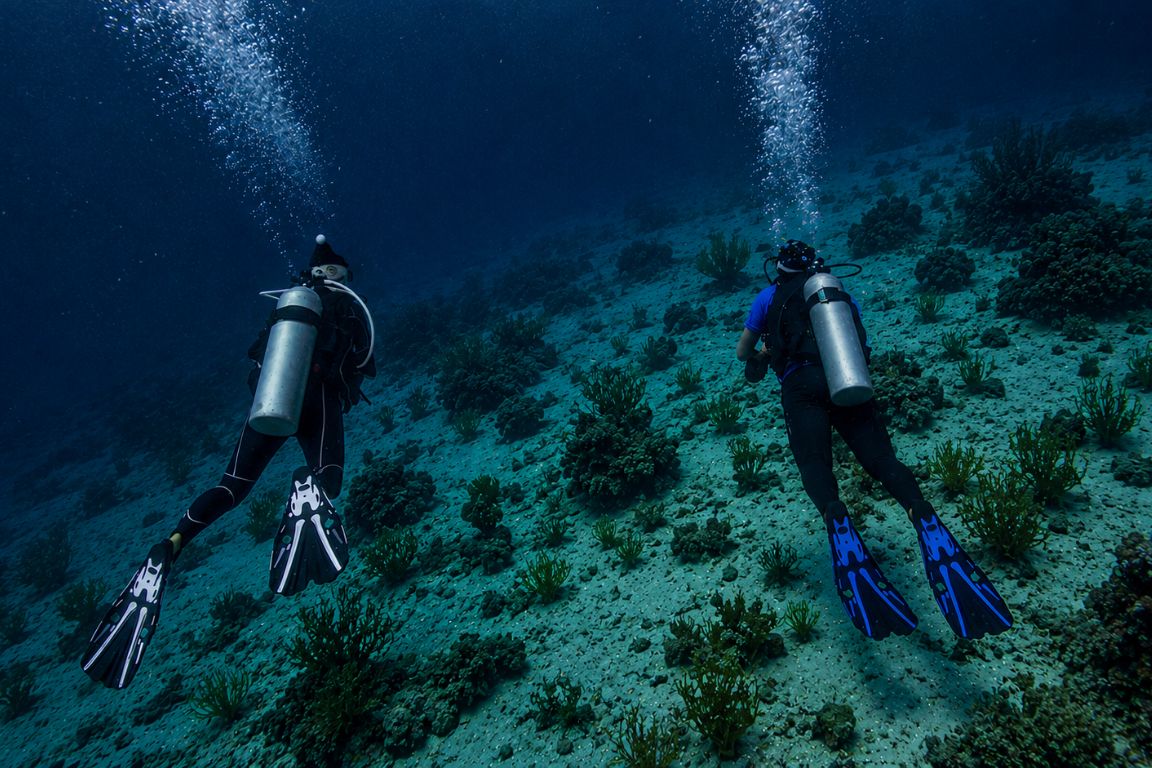 Krabi’s Andaman waters hold over 200 documented species across three environments: the shallow inner reefs around the 4 Islands and Hong Island circuit, the outer reef systems at Koh Rok and Koh Haa, and the deep-water sites at Hin Daeng and Hin Muang near the Trang border. Common sightings include parrotfish, clownfish, angelfish, butterflyfish, moray eels, and blacktip reef sharks. Seasonal additions from November through April include whale sharks, manta rays, and hawksbill sea turtles in greater numbers.
The inner islands accessible on a standard Krabi boat tour hold healthy fish populations year-round. Parrotfish are the species most snorkelers notice first: large, vividly coloured, constantly grazing the reef with beaks adapted from fused teeth. Their digestion processes coral algae into the fine white sand that defines the beaches they surround. Every beach you walk on at Poda Island or Lao Lading has been partially produced by parrotfish over thousands of years. Watching one work along a reef head is understanding a construction project in progress.
Clownfish live in anemones and do not leave them. On healthy sections of Krabi’s inner reefs, particularly around Chicken Island and Koh Poda, the anemone-and-clownfish pairing is consistent enough that a guided snorkeler with local knowledge can point directly to them. The fish are typically bright orange with white bands, sheltering at the base of the anemone tentacles which the fish is immune to and which would sting anything else that touched them.
The blacktip reef shark is the species that produces the most surprise among snorkelers who encounter one and the most relief when they realise it is roughly a metre long, slim, moving away from the boat rather than toward it, and visually identifiable by the black tips on all its fins. They are present throughout the year around Chicken Island, Koh Poda, and the outer reef edges near Koh Bida Nok. They are not aggressive and pose no documented danger to snorkelers in Krabi’s waters. The appropriate response to seeing one is to hold position, watch it pass, and tell everyone at dinner.
Where Are the Best Spots to See Marine Life Around Krabi?
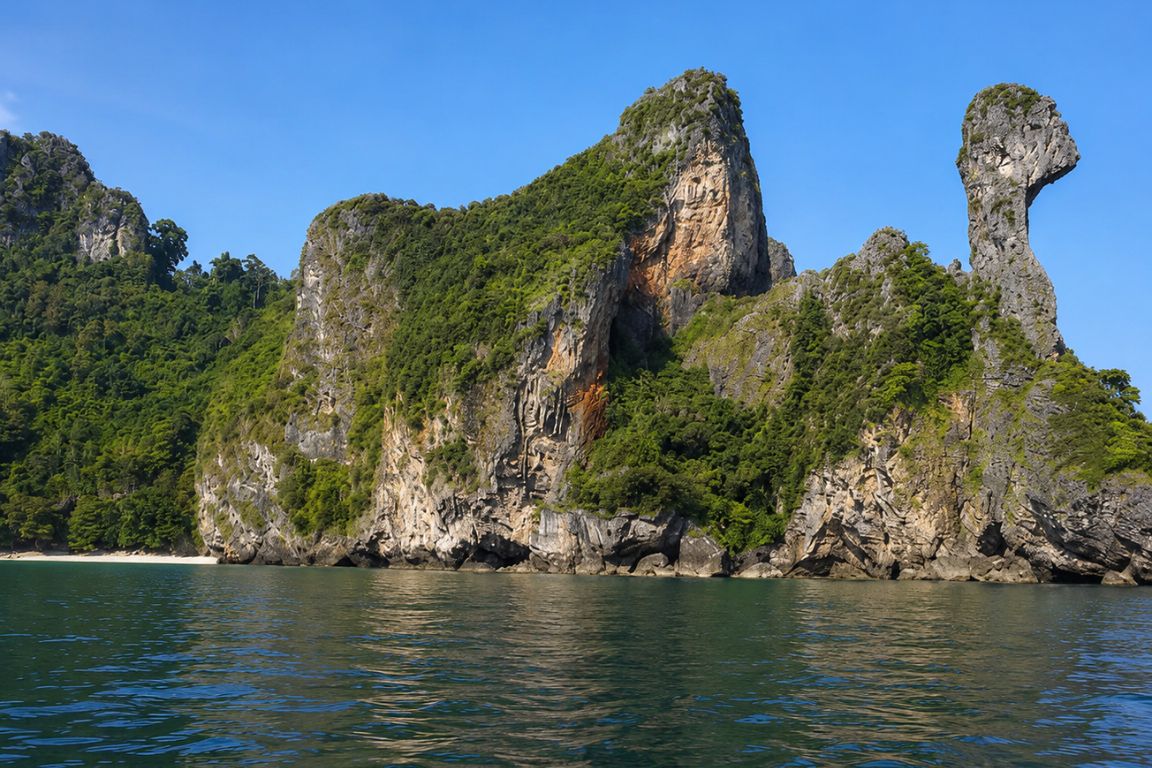 The inner circuit (Chicken Island, Koh Poda, Hong Island) is accessible on standard boat tours and reliably produces reef fish, clownfish, parrotfish, and occasional blacktip sharks. The outer circuit (Koh Rok, Koh Haa) has richer coral and better biodiversity including sea turtles and occasional whale sharks. The deep sites (Hin Daeng, Hin Muang) are diving only and represent the best chance of manta rays and whale sharks in the broader Krabi region. Each tier requires more distance and more planning than the last.
Chicken Island on the 4 Islands circuit is the inner-circuit benchmark for snorkeling quality. The reef runs close to the surface, the water stays clear in the dry season, and the fish concentration is high enough that a thirty-minute swim with average conditions will produce sightings of ten or more species without effort. The section of reef that runs northeast of the main beach, away from where most boats anchor, holds the most active coral and the most fish. A guide who has run this route for years knows which side of Chicken Island to put people in based on the tide direction on a given day.
Koh Rok (two islands, Rok Nok and Rok Yai) sits roughly 60 kilometres south of Ao Nang in the outer Mu Ko Lanta National Park. The reef systems here are among the healthiest accessible to day-trip snorkelers from the Krabi region: vibrant coral gardens, anemonefish in multiple anemone species, moray eels in the crevices, and sea turtles grazing the seagrass beds in the channels between islands. Visibility runs 10-15 metres on a good day. Check each Koh Rok or Koh Haa itinerary individually for its listed stops and departure base.
Hin Daeng (Red Rock) and Hin Muang (Purple Rock) are the two underwater seamounts south of Koh Lanta that represent the highest probability of manta ray and whale shark encounters in the broader Krabi region. These are diving sites primarily, accessible to divers from operators on Koh Lanta. They sit in open water and are not part of standard island-hopping itineraries. Hin Daeng’s walls are covered in gorgonian sea fans and soft corals at a density that gives the site its red appearance when viewed from above. The whale shark and manta ray sightings that define Hin Daeng’s reputation happen primarily from February through April, when pelagic species move through the area following plankton blooms.
First time booking a boat tour in Krabi and not sure where to start beyond the pier? Here’s our Krabi boat tours guide so you don’t end up on the wrong boat heading to the wrong islands.
| Chicken Island (Koh Gai) | 8 km | Any boat tour | Reef fish, blacktip sharks, clownfish | Year-round (Nov-Mar best) |
| Koh Poda | 12 km | Any boat tour | Parrotfish, butterflyfish, coral gardens | Year-round |
| Hong Island (outer reefs) | 20 km | Hong Island tour | Clownfish, reef fish, occasional turtle | Nov-Apr |
| Koh Bida Nok (Phi Phi) | 45 km | Phi Phi day trip | Leopard sharks, blacktip sharks, turtles | Nov-Apr |
| Koh Rok (Rok Nok / Rok Yai) | 60 km | Outer day trip | Sea turtles, moray eels, diverse coral | Nov-Apr |
| Koh Haa (Five Islands) | 65 km | Dive or outer snorkel trip | Whale shark, manta ray, reef fish | Nov-May |
| Hin Daeng / Hin Muang | 90 km | Diving only (Koh Lanta based) | Manta ray, whale shark, gorgonians | Feb-Apr peak |
What Fish and Reef Species Are Common on Krabi’s Snorkeling Stops?
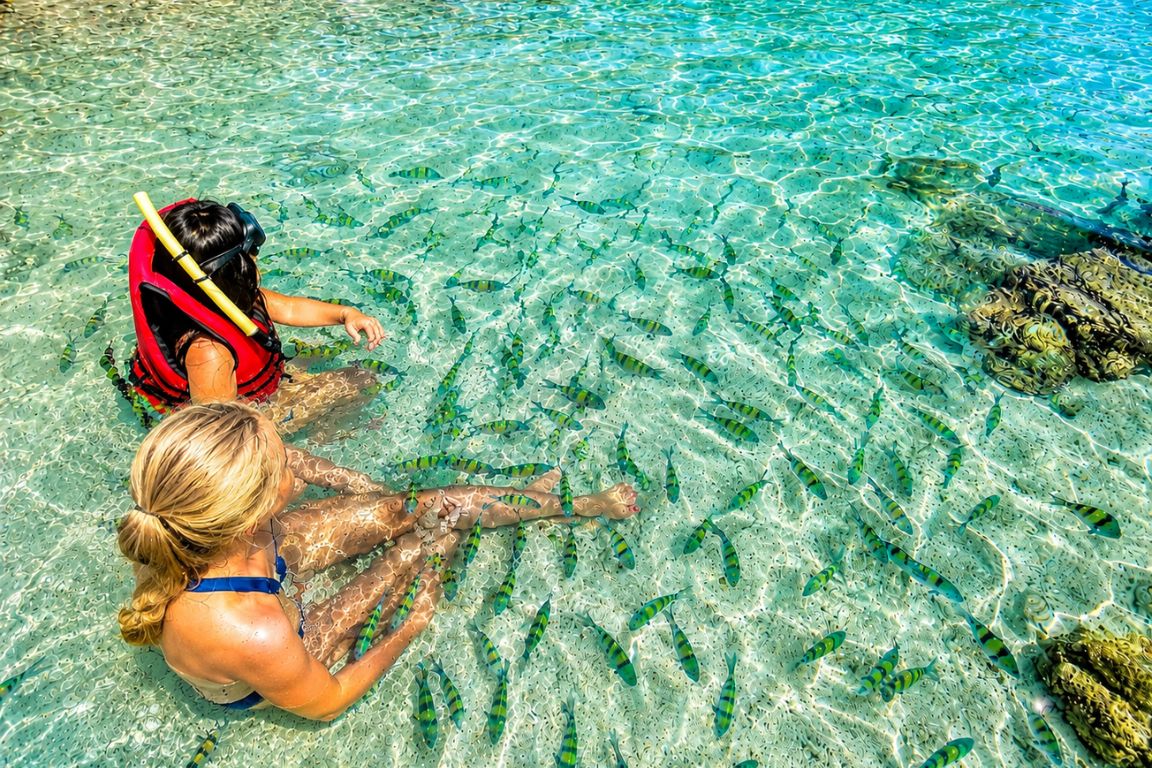 On any standard snorkeling stop at the inner Krabi islands in dry season, expect: parrotfish (multiple species, various sizes), clownfish in anemones, butterflyfish darting between coral heads, damselfish holding territory aggressively at the reef edge, angelfish in pairs, sergeant major fish in silver-and-black schools near the surface, pufferfish inflated or deflated depending on how recently they were disturbed, and moorish idols with their distinctive white, black, and yellow banding. With a guide who knows the reef, add moray eels in crevices, lionfish tucked under overhangs, and trumpetfish hovering vertically in the water column.
Damselfish are the most aggressive thing you will encounter on Krabi’s inner reefs, which is useful to know upfront. They are two to five centimetres long, neon-coloured, and they defend their small territory of coral algae with genuine commitment. A damselfish charging a snorkeler is not a safety concern: it will stop well short and dart away, then return. They make themselves known. The fact that this is the most aggressive marine encounter a standard Krabi snorkeler is likely to have says something reassuring about the general temperament of the reef’s residents.
Parrotfish deserve more attention than they typically receive on boat tours. There are at least six species present in Krabi’s waters, ranging from the small blue-green initial phase fish that look generically tropical to the large terminal phase males in full blue, green, and pink coloration that look like something a graphic designer invented. The terminal phase males are the most memorable: 50-70 centimetres of chromatic excess moving purposefully across the reef. They graze coral by scraping algae from the surface, not eating the coral itself, and the crunching sound of their beaks on limestone is audible underwater. That sound is the reef being maintained.
Moray eels are the species that consistently produces the strongest reactions from first-time snorkelers. They sit in reef crevices with their heads protruding, opening and closing their mouths rhythmically. The mouth movement is breathing, not aggression: morays need to circulate water over their gills and they do so by this motion rather than by moving water with their gill covers like most fish. They are not preparing to bite. A moray eel that feels threatened will retreat deeper into the crevice. One that feels entirely non-threatened will stay in position and allow a very close approach, which is when they become one of the most photogenic things on the reef.
Not all snorkeling sites near Krabi are created equal in terms of visibility, coral health, and marine life density – our best islands for snorkeling near Krabi guide breaks down which spots consistently deliver and which ones have suffered from too much boat traffic.
Can You See Sharks, Turtles, and Rays in Krabi?
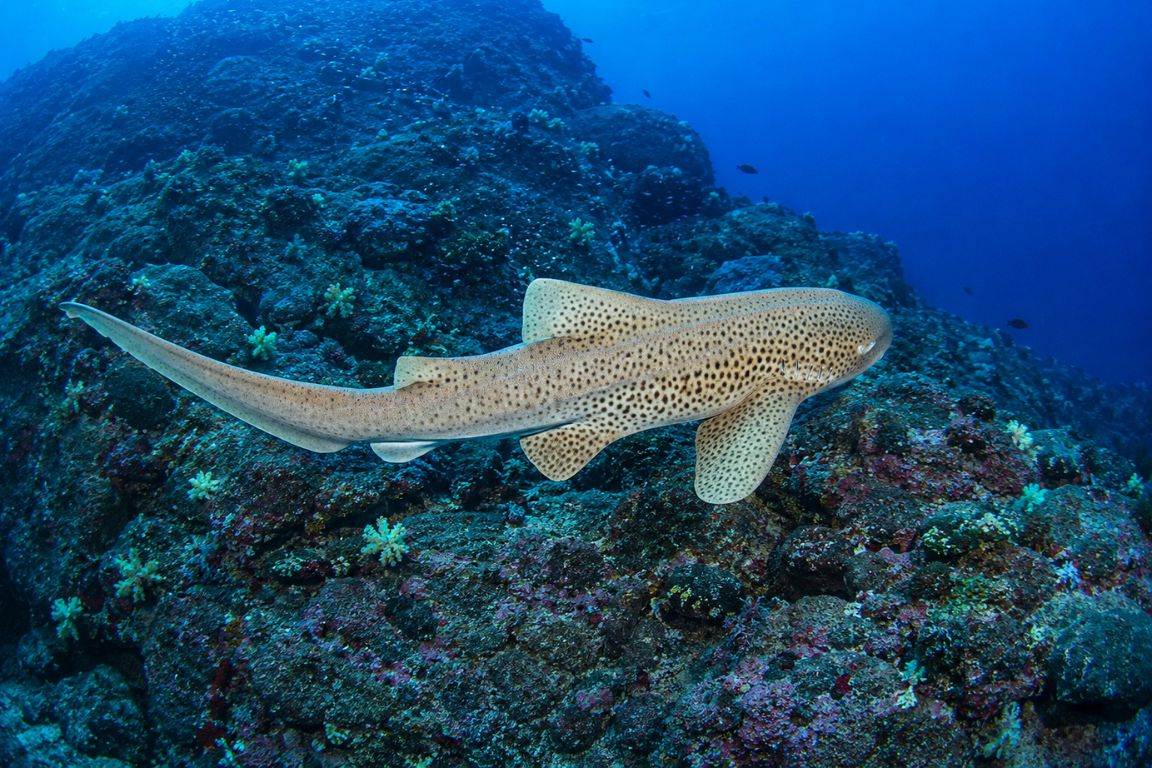 Yes to all three, with different probabilities depending on where you go and when. Blacktip reef sharks are the most reliably seen: present year-round at Chicken Island and Koh Bida Nok, usually under a metre long, harmless. Sea turtles (green and hawksbill) are sighted regularly at Hong Island, Koh Rok, and Koh Haa; more frequently November through March when nesting season draws them to Krabi’s coasts. Whale sharks are real but rare at inner spots; genuinely possible at Koh Haa from February to April and at Hin Daeng through the dry season. Manta rays occur at Hin Daeng and Hin Muang, primarily for divers rather than snorkelers.
Blacktip reef sharks are the shark most Krabi visitors actually see, and the reactions they generate bear no relationship to the danger they represent, which is approximately zero. These are coastal reef sharks, typically 70-120 centimetres long, that feed on fish and small invertebrates. They are visually distinctive – all fins tipped in black – and they move with a fluid efficiency that makes them look purposeful even when they’re simply patrolling their territory. Maya Bay at Phi Phi Leh has been documented as a breeding ground for blacktips, which is part of why swimming restrictions there are enforced. Their presence varies with natural conditions and should not be treated as an expected encounter.
Leopard sharks (also called zebra sharks when juvenile) are the other shark species reliably seen in Krabi’s waters. They are benthic: they rest on sandy patches on the seabed rather than swimming continuously. A leopard shark at rest on a sandy bottom at 4-6 metres depth is approachable to a snorkeler with good buoyancy control. They are distinctively patterned with spots and rosettes on a pale background, and they do not move as snorkelers approach unless contact is made. Do not touch or approach them; keep your distance and follow local guide instructions. They can grow to over two metres and still behave identically: slow, resting, indifferent to nearby humans.
Whale sharks are plankton feeders – they are filter feeders that swim slowly at or near the surface consuming zooplankton, fish eggs, and small schooling fish. The largest fish in the ocean, reaching up to 12 metres, and entirely harmless. Sightings near Krabi’s inner islands are occasional and seasonal; sightings at Koh Haa and Hin Daeng from February through April are reported regularly enough that dive operators time specific trips around them. A whale shark encounter, if it happens, tends to be what people in the boat talk about for the rest of the trip.
| Clownfish (anemonefish) | High | High | Year-round |
| Parrotfish | Very High | Very High | Year-round |
| Butterflyfish / Angelfish | High | High | Year-round |
| Blacktip reef shark | Medium (Chicken Island, Koh Bida) | High | Year-round |
| Leopard / zebra shark | Low-Medium | Medium | Year-round |
| Green / hawksbill sea turtle | Low (Hong Island best) | High (Koh Rok, Koh Haa) | Nov-Mar |
| Blue-spotted stingray | Medium (sandy bottoms) | Medium-High | Year-round |
| Moray eel | Medium (reef crevices) | High | Year-round |
| Whale shark | Very Low-Rare | Medium (Koh Haa Feb-Apr) | Feb-Apr |
| Manta ray | Very Low | Medium (Hin Daeng, diving) | Nov-Apr |
| Bioluminescent plankton | High (near Phra Nang, after dark) | Variable | Nov-May, new moon |
When Is the Best Time of Year to See Marine Life in Krabi?
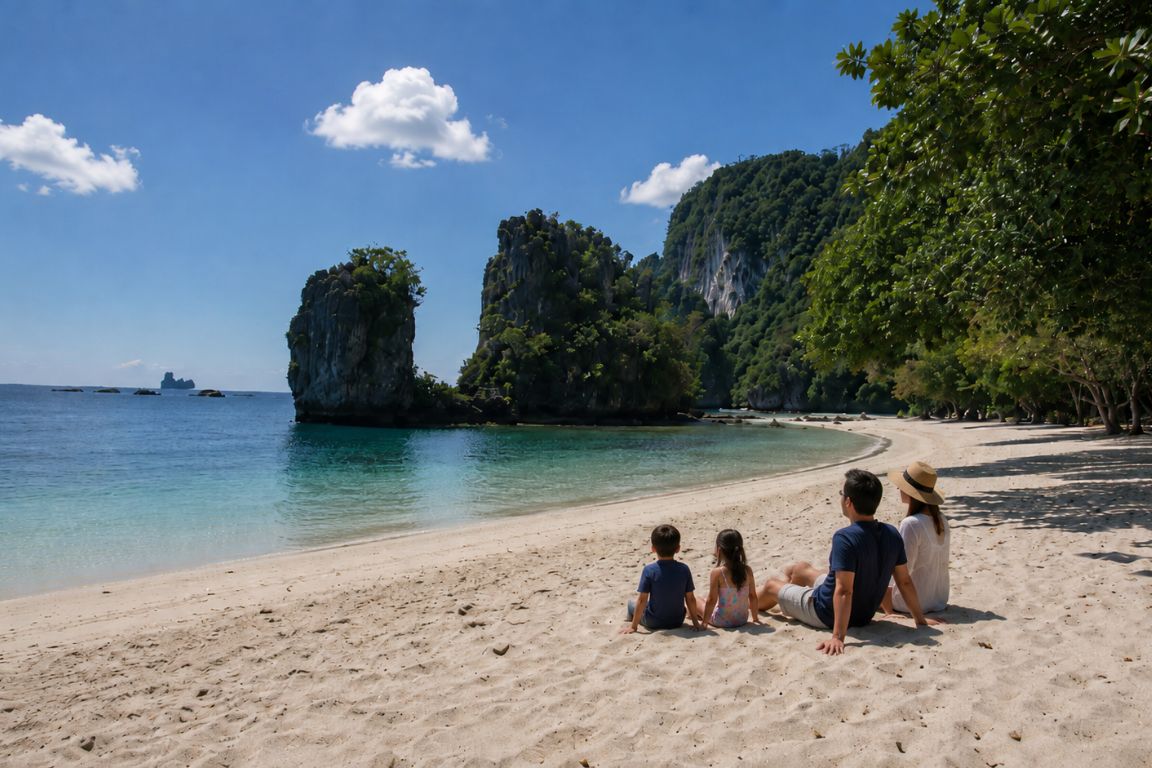 December through March produces the clearest water, best visibility, and the highest probability of encountering sea turtles, blacktip sharks, and seasonal pelagics. Whale shark and manta ray encounters at outer sites peak from February to April. The inner reef fish population is consistent year-round but visibility drops from May through October as monsoon conditions bring plankton blooms and sediment that reduce underwater clarity. For bioluminescent plankton specifically, the dark nights around a new moon from November through May are the optimal window.
The visibility difference between December and July in Krabi’s waters is significant enough to affect which species you can see and how satisfying the encounter is. In December through March, the Andaman Sea settles into the conditions it’s renowned for: water temperatures between 27 and 30 degrees Celsius, visibility of 10-20 metres at inner reefs and sometimes exceeding 20 metres at outer sites, plankton concentration low enough that the water reads clear blue rather than green. In these conditions, a snorkeler can see a blacktip shark at 6 metres depth from the surface without difficulty, follow a turtle’s trajectory across the reef for thirty seconds, and observe the full colour range of coral that murkier water reduces to washed-out approximations.
From May through October, the southwest monsoon brings conditions that vary from day to day but average toward reduced visibility and rougher surface water. The reef fish are still there. The sharks are still there. The water is warmer rather than cooler. But visibility drops to 3-8 metres at inner sites, the plankton blooms that reduce clarity also reduce the visual contrast needed to spot animals at any distance, and choppy surface conditions make the snorkeling experience physically more demanding. Tours still run in the wet season, and good days occur regularly; they just can’t be predicted the way they can in the dry season.
The specific pattern for sea turtle sightings: green and hawksbill turtles are present in Krabi’s waters year-round but become more frequently sighted in the dry season months of November through March, when nesting activity brings them closer to the coast. Koh Haa and Hong Island are the most reliable inner-region sighting spots. Turtle encounters at Koh Rok remain dependent on natural conditions and are never guaranteed.
Want to know which season delivers the most out of a Krabi island-hopping day without the monsoon cancellations or peak season overcrowding? Here’s our best time for boat tours in Krabi guide so you don’t book the wrong time of year.
What Marine Life Can You See on a Krabi Boat Tour Specifically?
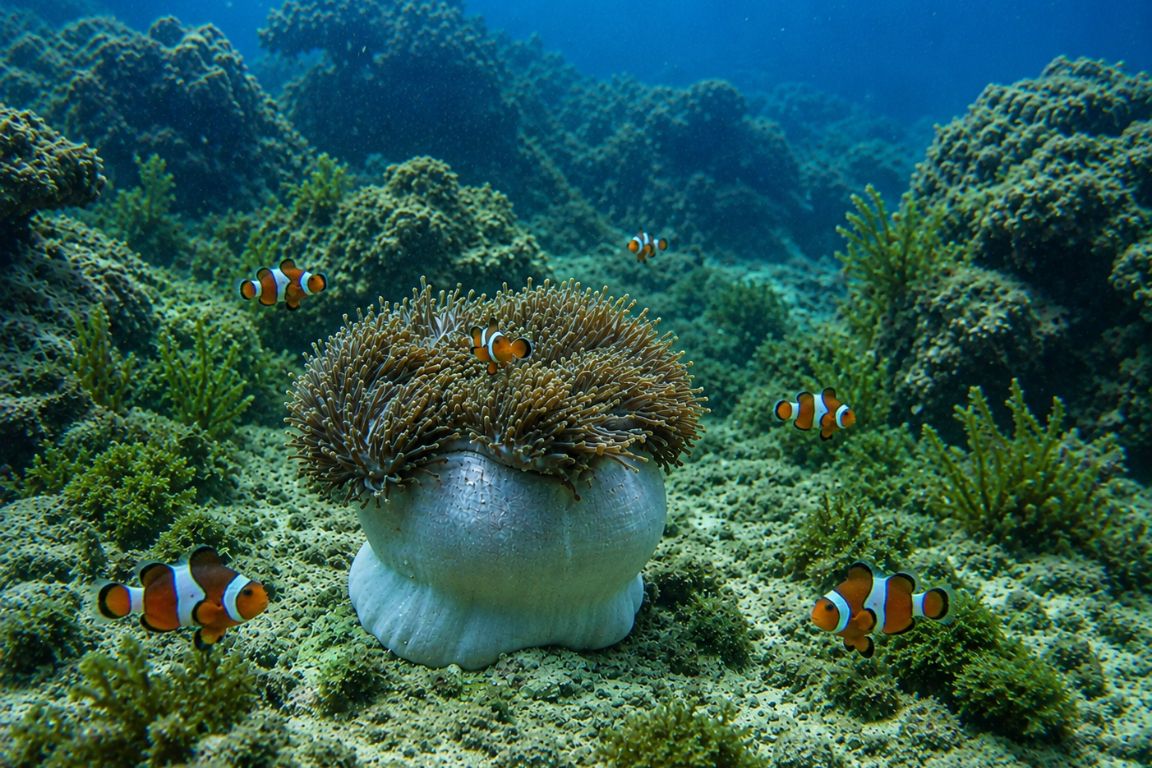 On a standard 4 Islands or Hong Island boat tour, snorkeling stops typically produce: parrotfish, butterflyfish, angelfish, clownfish in anemones, sergeant major schools, damselfish, the occasional pufferfish or trumpetfish, and – with a guide who knows the reef – moray eels and blacktip sharks. An early-bird Phi Phi and 4 Islands tour starts before regular excursions, while visibility and wildlife remain variable. The guide’s ability to position you at the right section of reef, not just the nearest accessible point, determines the upper end of what the stop produces.
The boat tour context matters for marine life expectations because snorkeling from a tour boat operates within constraints that affect what you see. The tour anchors where it has always anchored, not necessarily where the best reef section is on a given day. Snorkeling time varies by itinerary, weather, tide, and operating conditions. A guide who jumps in and leads the group to the active sections of coral rather than letting everyone disperse randomly produces a fundamentally different snorkeling experience using the same stop.
The early departure advantage applies directly to marine life quality. Earlier departures can begin before regular excursions, but water clarity and fish behavior still depend on natural conditions. Boat traffic may vary, and no supplied evidence establishes fixed boat counts, swimmer totals, or resulting changes in fish activity. An early start does not guarantee clearer water or more wildlife. For an earlier start, choose a Phi Phi early-bird tour and confirm the date-specific pickup or meeting details.
A private Phi Phi and 4 Islands speedboat cruise offers selected snorkeling hotspots, a fish-ID briefing, lunch, and sunset; wildlife sightings remain unguaranteed.
Trying to figure out which four islands the tour actually visits and whether the stops are worth a full day of your Krabi trip? Check out our Krabi 4 Islands tour guide before you commit to anything.
How Does Krabi’s Marine Life Compare to Phi Phi and the Similan Islands?
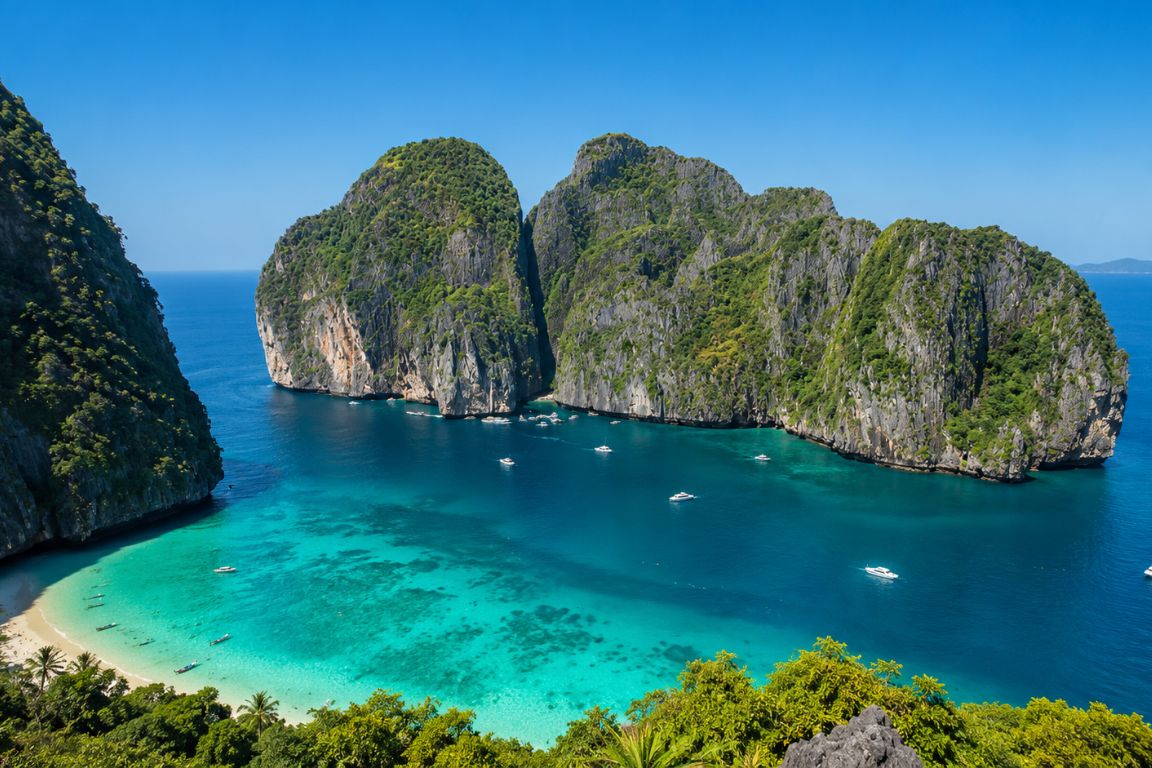 Krabi’s inner circuit offers accessible, reliable snorkeling with strong reef fish diversity but less pristine coral than the outer Andaman. Phi Phi’s reefs have recovered significantly from the 2024 bleaching event and closure, and Koh Bida Nok remains one of the better shark and turtle sites accessible on a day trip from either Krabi or Phuket. The Similan Islands, when open from November to May, represent the gold standard for Andaman snorkeling and diving: visibility above 30 metres, coral cover among the healthiest in the region, and the highest probability of encounters with large pelagic species.
The honest comparison: Krabi’s inner islands (4 Islands circuit, Hong Island) are excellent for snorkeling access and consistent fish sightings, but they should not be the benchmark against which the broader Andaman is measured. For first-timers snorkeling anywhere tropical for the first time, these reefs are stunning. For experienced snorkelers who have been in the water at Koh Rok or the Similans, the inner Krabi circuit is a pleasant morning in the water that belongs in the broader itinerary rather than being its centrepiece.
Want an honest comparison between Krabi’s two most popular island-hopping routes before you spend a full day on the water? Here’s our Hong Islands vs 4 Islands guide so you choose wisely.
Phi Phi’s reef situation improved significantly after the 2024 coral bleaching forced the closure of 10 snorkeling and diving sites within Hat Noppharat Thara National Park in May 2024. Park officials confirmed in April 2025 that coral was showing strong recovery with vibrant colours returning, and all 10 sites were reopened. This is meaningful: Phi Phi’s reefs in 2026 are in better condition than they were before the closure because the enforced recovery period produced measurable regeneration. The sites on the east coast of Koh Phi Phi Don and around Koh Bida Nok are currently the most active reef zones in the immediate Krabi day-trip range.
The Similan Islands are a different category of experience entirely. Open only from November 15 to May 15 each year (closed for ecosystem recovery during monsoon season), they require either a multi-day liveaboard charter or a day trip from Khao Lak. The visibility regularly exceeds 30 metres, the coral coverage is among the highest in the Andaman, and the marine life density at the best dive sites (Christmas Point, Fantasy Reef, Elephant Head) is what the rest of the Andaman aspires to. For travelers with enough days in southern Thailand to include the Similans, the comparison with Krabi’s inner circuit is not close. They are different experiences of the same ocean.
Not sure how to sequence the four Krabi tour routes across your available days without overlapping too much or missing the best stops? Check out our Krabi island hopping itinerary guide before you start booking.
How Do You Protect Krabi’s Marine Life While You’re in It?
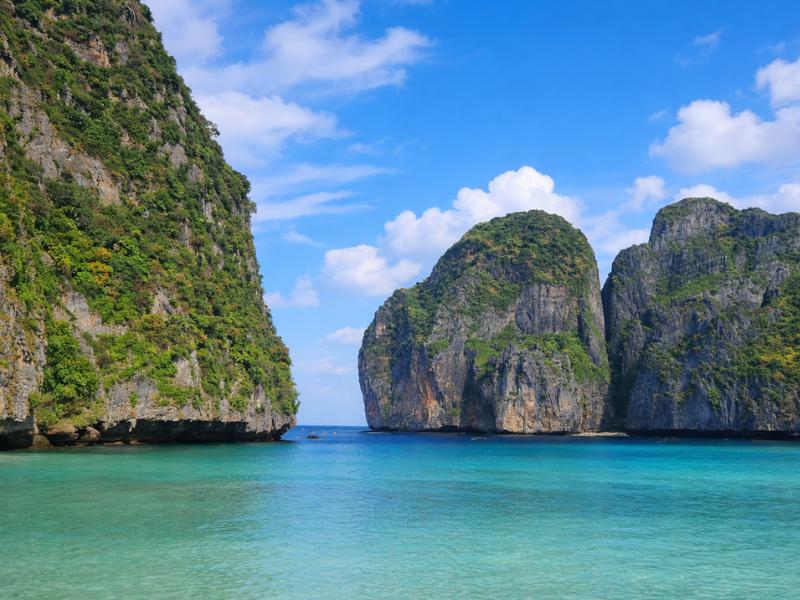
The four non-negotiables for marine life protection in Krabi’s national park waters: reef-safe sunscreen only (violations carry fines up to 100,000 THB), no touching coral or marine animals, no feeding fish (banned since 2025, fines up to 100,000 THB or imprisonment up to one year), and maintain enough buoyancy to avoid contact with the reef. Beyond legal requirements: choose operators who brief guests on behaviour in the water, support the guide-to-guest ratio rules introduced in coral zones, and leave no plastics on any beach or in any water.
The sunscreen law is the one that catches most foreign visitors unprepared. Thailand’s Department of National Parks banned four specific chemicals from all marine national parks in 2021 and strengthened enforcement in 2025: oxybenzone, octinoxate, 4-methylbenzylidene camphor (4-MBC), and butylparaben. These compounds cause coral bleaching within 16-48 hours of exposure, even at low concentrations. They are present in most conventional SPF products sold globally. The fine for using prohibited sunscreen in a Thai national marine park is up to 100,000 THB. Check the ingredients list on your sunscreen before your tour, not at the pier. Look for mineral-based formulations using zinc oxide or titanium dioxide.
In April 2025, the Tourism Authority of Thailand partnered with Coral Care, an RPF-certified reef-safe sunscreen, and launched a Sunscreen Amnesty campaign in Krabi specifically, where travelers could swap their conventional sunscreen for the reef-safe version. This reflects the degree of institutional seriousness with which Thai marine park authorities are now enforcing protection measures. The fine structure is real and enforced.
Buoyancy is the marine life protection skill that snorkelers can develop. A snorkeler who can hold position horizontally in the water without using fin kicks to maintain depth avoids the contact with coral that fin kicks produce. This is not a technical skill requiring certification: it’s a matter of using the life jacket or buoyancy aid correctly and moving slowly. Knee contact with a coral head destroys decades of growth in a second. The reef does not distinguish between accidental contact and intentional damage.
The feeding fish ban reflects ecological understanding that took years to implement in Thai marine parks. Fish fed by tourists develop dependencies on handouts, congregate unnaturally at feeding areas, and become vulnerable to collection by poachers who exploit their aggregations. Tourism feeding also alters species balance on the reef by selectively advantaging the species that are bold enough to take food from humans. Reef ecology calibrated over thousands of years does not benefit from tourist-driven nutrition supplements.
Marine Life Encounters Planning Checks
Early departure does not guarantee more marine-life sightings
Plankton glow is a natural phenomenon and is not guaranteed
Guide support is a useful factor when comparing snorkeling trips
Sunscreen ingredients are worth checking before departure
Sea turtle sightings vary by route and natural conditions
Blacktip reef shark sightings vary by route and natural conditions
Check sunscreen ingredients before departure and follow current park and guide instructions at each site.
Frequently Asked Questions
Are There Dangerous Marine Animals in Krabi’s Waters?
Krabi’s waters contain no documented dangerous sharks in the areas used for snorkeling and swimming. Blacktip and leopard sharks are the species most encountered and both are non-aggressive to humans. The species that cause the most actual harm to tourists in Krabi are sea urchins (step on one in shallow water and the spines break off in your foot) and, on specific seasonal occasions near the shore, jellyfish including Portuguese Man o’ War. The latter prompted an official swimming ban in Hat Noppharat Thara National Park in June 2026. Check local conditions and follow flag warnings before entering the water at any beach.
What Sunscreen Can I Use When Snorkeling in Krabi?
Reef-safe mineral-based sunscreens using zinc oxide or titanium dioxide as the active ingredient. Avoid any product containing oxybenzone, octinoxate, 4-methylbenzylidene camphor (4-MBC), or butylparaben. These are banned in all Thai national marine parks and carry fines up to 100,000 THB. Check the ingredients before travel, not at the pier. A rash guard covers most of the skin that needs protection and requires no sunscreen.
Can You See Whale Sharks Snorkeling in Krabi?
Possible but not reliable at inner circuit stops. Whale sharks are filter feeders that follow plankton blooms and are genuinely present in Krabi’s outer waters from November through April. Koh Haa and the waters around Hin Daeng see regular sightings. Some inner-circuit snorkelers do encounter juvenile whale sharks, but this is an exceptional sighting rather than an expectation. For the highest probability of a whale shark encounter, join a dive or snorkel trip to Koh Haa or Koh Rok from a Koh Lanta-based operator in February to April.
What Happened to Krabi’s Coral Reefs After the 2024 Bleaching?
Hat Noppharat Thara-Mu Ko Phi Phi National Park closed 10 snorkeling and diving sites in May 2024 following severe coral bleaching caused by elevated sea temperatures. Park officials confirmed in April 2025 that coral was showing strong recovery with vibrant colors returning, and all 10 sites were reopened. The 2026 season is operating with full site access restored. Some damage from the bleaching event remains, particularly at shallow inner reef areas, but the recovery rate was faster than expected and current conditions are significantly better than mid-2024.
Is It True You Can’t Feed Fish in Krabi?
Yes. Feeding fish in Thai national marine parks is banned and carries fines up to 100,000 THB or up to one year imprisonment. This applies everywhere within Hat Noppharat Thara-Mu Ko Phi Phi National Park, Than Bok Khorani National Park, and Mu Ko Lanta National Park. No exceptions, including bread, crackers, or anything marketed as fish food sold near the parks. The ban exists because tourist feeding disrupts reef ecology and creates fish aggregations exploited by poachers.
When Is the Best Time to See Sea Turtles in Krabi?
November through March, when nesting season increases coastal activity and dry-season visibility makes sightings more likely. Hong Island, Koh Rok, and Koh Haa are the most reliably productive spots within reach of Krabi boat tours. Hawksbill turtles are more commonly seen at reef heads grazing on sponges; green turtles are more likely on seagrass beds in channel areas. Neither species is guaranteed, but in good conditions with an experienced guide, sightings remain dependent on natural conditions.
Written by Ryan Supakorn
Thai tour guide since 2011 · Founder, Krabi Boat Tours
Ryan has guided over 11,700 travelers through Krabi’s islands, lagoons, and coastline since founding the agency.
Check your actual travel date before arranging hotels or transfers
Match the outing to your plans
Blank fields keep the initial suggestion. Age pricing alone does not confirm suitability; if eligibility is unverified, the tool will not recommend a match. Check pickup and restrictions for your selected package.
Compare two total quotes
Use current quotes in the same currency, including park fees, transfers and option extras.
Initial recommendation. Adjust the optional choices to match your plans.
Private Phi Phi & 4 Islands Sunset Cruise by Speedboat - from Krabi
The private cruise includes park fees, guided snorkeling, lunch, and sunset; pickup charges and extra-guest terms vary by party and location.
8h 30m · English guide listed · Private speedboat, park fees, lunch and sunset snack; confirm the quoted group size and transfer coverage. · Confirm your selected option’s pickup, inclusions, fees and participant restrictions before booking.
Choose a date to view the published schedule. Confirm availability and final price on Viator.
No reviewed option matches these choices.