What Is the Best Time to Visit Phi Phi Island?
Phi Phi runs on the Andaman's two seasons. From mid-November to April the crossing is flat and every stop is open. From May to October the sea decides your itinerary on the morning of, and September and October decide it against you.
See how a nine-hour early-bird speedboat day combines Phi Phi and Four Islands with snorkeling, lunch and hotel transfers. Explore Early-Bird Phi Phi & 4 Islands.
The best time to visit Phi Phi Island is the dry season, mid-November through April, with December to February often favored for conditions; actual sea state, visibility and operation remain weather-dependent. January has the best water of the year. April is the value month. September and October are the two to avoid.
That is the short version and it holds up. The longer answer is that Phi Phi runs on two clocks. The seasonal one decides whether your crossing is glass or chop. The daily one decides whether you see Maya Bay with forty people on the sand or four hundred. Most visitors plan around the first and never think about the second, which is why departure time is worth comparing when choosing a Phi Phi tour. Related reading: boat tours from Krabi
Booking choice: Compare your date with a nine-hour early-bird Phi Phi and Four Islands speedboat trip including snorkeling, lunch and hotel transfers. Check dates for Early-Bird Phi Phi & 4 Islands.
Which Months Actually Deliver a Calm Crossing?
Mid-November to April. The northeast monsoon pushes dry, cooler air across the Andaman Sea and suppresses the swell that the southwest monsoon drives through from May to October. Crossing time and motion vary by vessel, route and sea conditions.
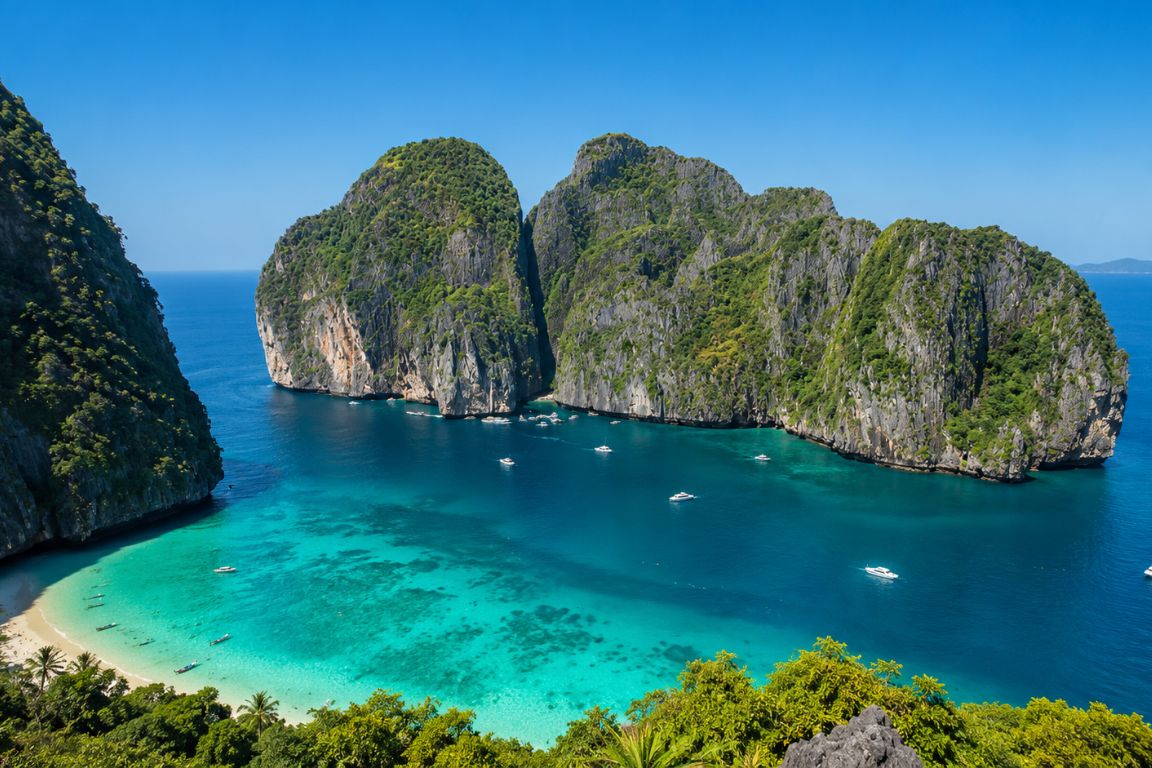
Sea temperature is not the variable here. The water sits between 27 and 30 degrees Celsius all year, so nobody needs a wetsuit in August any more than in January. What changes is sea state and clarity. Reef visibility can improve during favorable conditions; in the monsoon months, runoff and chop cut that sharply and some snorkel stops get swapped out mid-day for sheltered alternatives.
The season has phases rather than a switch. Late November is the transition: conditions improve week by week and by mid-December the Andaman has settled. March and April keep the calm sea but add heat, with afternoon thunderstorms becoming more frequent from mid-March. Our page on the best time for boat tours in Krabi breaks the same window down by priority rather than by month.
What Does Phi Phi Look Like Month by Month?
December through February is peak in every sense: best conditions, highest prices, most people. November and March are the shoulder trade. April keeps the weather and drops the price. June through August is workable if you accept morning-only plans, and September and October are genuinely difficult.
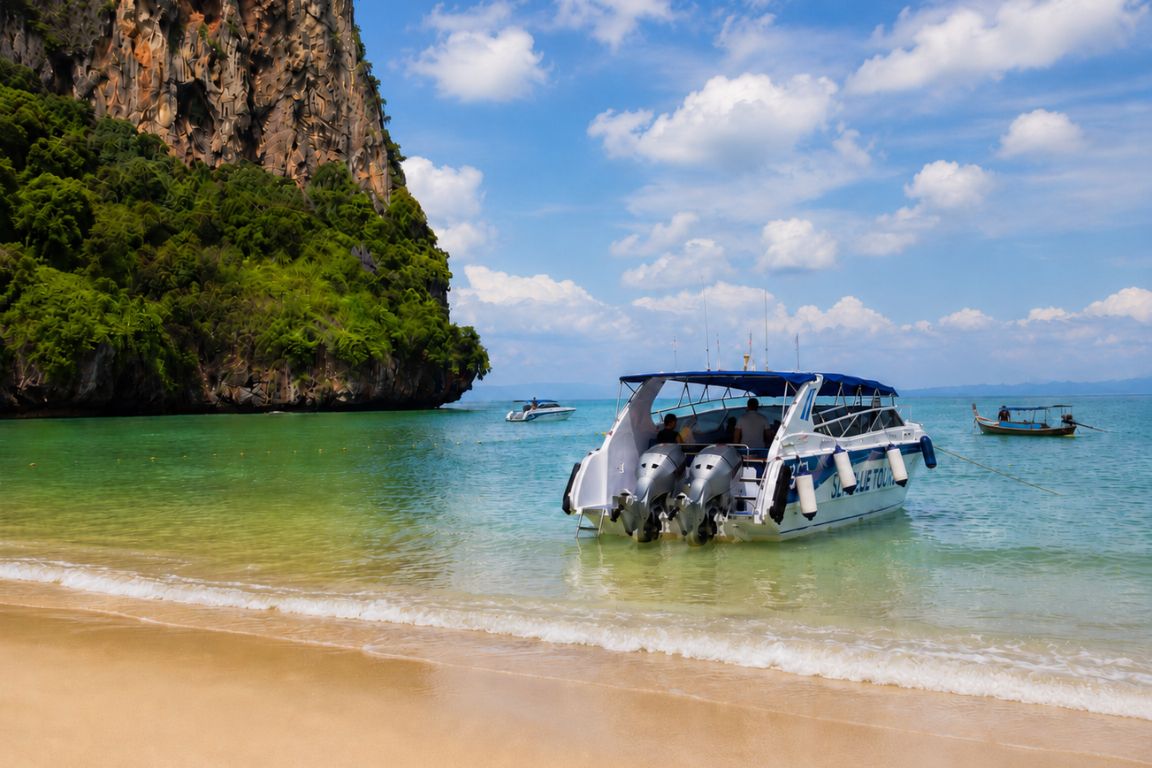
| Month | Sea and sky | Crowds | Cost vs peak | What defines it |
|---|---|---|---|---|
| Late November | Good, settling fast | Low to medium | Medium | The season starting; Loy Krathong falls on 25 November 2026 |
| December | Excellent | Very high | At peak | Christmas and New Year; book weeks ahead |
| January | Outstanding | High | At peak | Best on-water conditions of the year |
| February | Outstanding | Medium to high | At peak | Lowest humidity; slightly calmer on the beaches than December |
| March | Very good | Medium | Compare live dates | Heat building; morning departures matter more |
| April | Good | Low to medium | Compare live dates | The value month; Songkran runs 13 to 15 April |
| May | Transitional, unpredictable | Low | Compare live dates | Outer national parks start closing mid-month |
| June to August | Clear mornings, heavy afternoon showers | Low | 30 to 40% cheaper | Phi Phi crossings cancel more often than the inner islands |
| September and October | Sustained rain, rough sea | Lowest | Compare live dates | High cancellation rate; the worst pairing for a Phi Phi day |
One nuance the month grid hides: Phi Phi is a longer, more exposed crossing than the inner circuit, so it is the first route operators pull when the forecast turns. A June morning that comfortably runs a 4 Islands trip out of Ao Nang can still be a no-go for Phi Phi.
Does the Time of Day Matter More Than the Month?
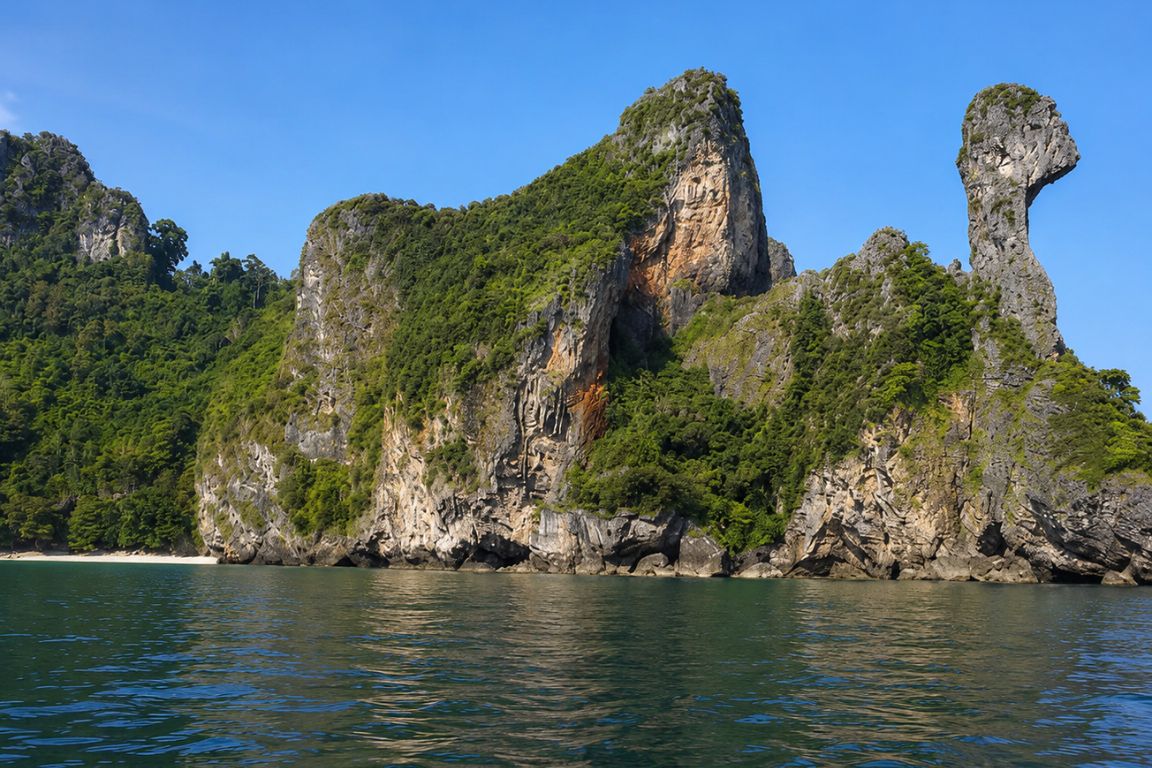
In peak season, close to it. Tour convoys reach the Phi Phi anchorages around 10am, so an 8am arrival and an 11am arrival are two different islands. The early-bird tour uses location-dependent pickups from 05:20 to 07:00, while its program remains subject to weather and tides.
| When you arrive | What Maya Bay and Pileh Lagoon feel like | The trade-off |
|---|---|---|
| Around 8 to 9am | Light boat traffic, clean water, unobstructed photos | Hotel pickup between roughly 05:20 and 06:30 |
| 10am to midday | Peak convoy window; queues at the moorings | A civilised breakfast, and much less of the bay |
| Mid to late afternoon | Thinning out again, warmer light, softer sea | Sunset formats skip some morning snorkel stops |
The site's nine-hour early-bird speedboat tour uses pickups from 05:20 to 07:00 depending on location and includes lunch, snorkeling gear and eligible round-trip transfers. It is an unglamorous alarm clock for a genuinely different day.
What Actually Happens in the Monsoon Months?
June through August usually means a clear or partly cloudy morning, one or two hours of heavy afternoon rain, and an evening that clears. September and October break that rhythm, averaging around 355mm and 338mm of rain respectively, with October seeing roughly 22 rainy days.
Those are the numbers behind the reputation the whole six-month window unfairly carries. A rainy day in the tropics is usually a day on which serious rain fell at some point, not a day of constant drizzle, which is fine for a temple or a jungle pool and much less fine for a two-hour open-water transit. Our guide to Krabi in rainy season lays out which routes keep running and which stop. For the forecast itself, the Thai Meteorological Department publishes daily marine outlooks at weather.tmd.go.th.
When Is Maya Bay Closed?
Maya Bay sits inside Hat Noppharat Thara-Mu Ko Phi Phi National Park and closes annually so the reef can recover, most recently across August and September. Swimming off the beach is not permitted at any time of year, and the early-bird tour lists the park fee as excluded and payable in cash on the spot.
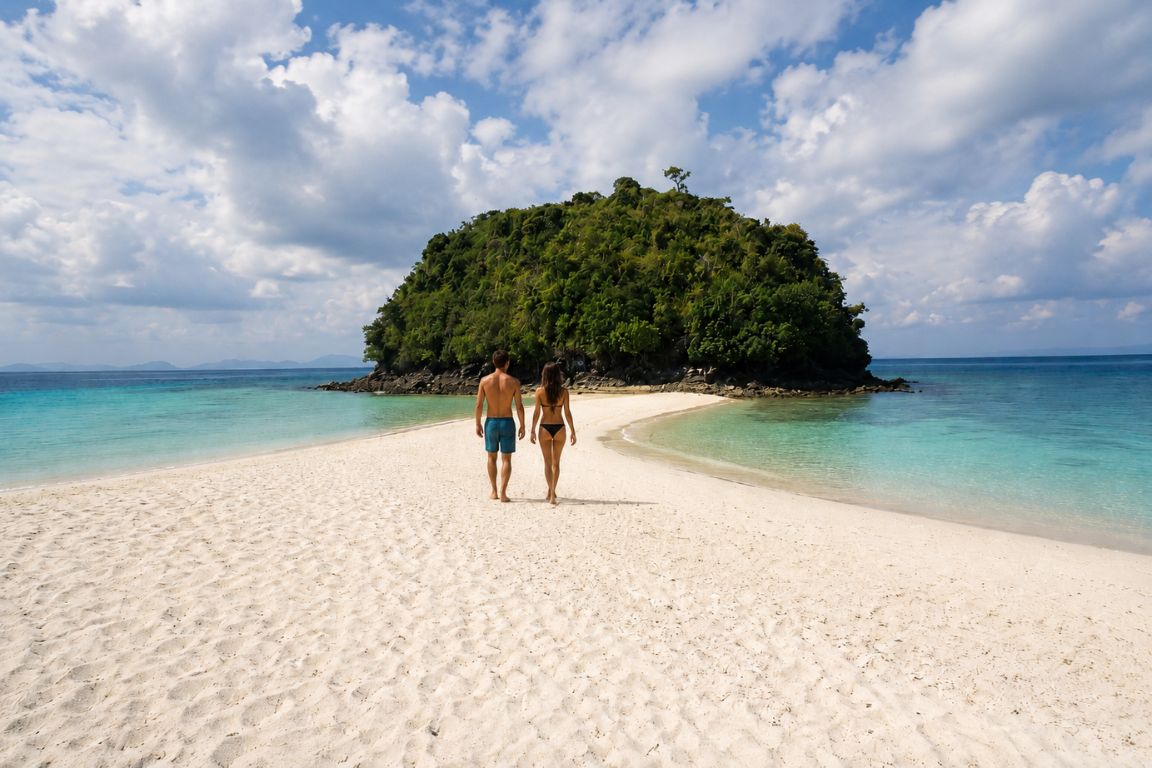
Closure dates are set by the park authority and have shifted between years since the bay reopened after its long 2018 shutdown, so treat any published window as provisional and check the current notice on the Department of National Parks portal before you commit to dates. Tour routes may change with park access, weather and tides. Bring cash for the excluded park fee on the early-bird tour.
Which Month Gives the Best Value?
April. Compare live accommodation and trip totals for your April dates; sea conditions and visitor levels still vary. Late November is the second-best value, with conditions still improving rather than fading.
| Date block | Why it matters | Booking lead time |
|---|---|---|
| Christmas and New Year | The single busiest stretch of the year | Weeks, not days |
| Chinese New Year, late January | Second demand spike inside peak season | Two weeks or more |
| Songkran, 13 to 15 April | Thai new year; town is busier than the water | One to two weeks |
| Any dry-season morning departure | Compare early departure availability for your date | At least a week ahead |
Day Trip From Krabi, or Stay on the Island?
For most people a day trip wins. The listed ferry takes about two hours to Ton Sai Pier, while the nine-hour early-bird speedboat combines Phi Phi and Four Islands.
Staying overnight makes sense if you want the island after the day boats leave, which is a real and specific pleasure. If that is you, start with which Phi Phi island to stay on, because only one of them takes guests. If not, the practical mechanics of the crossing, the stops and the timing sit in our Phi Phi day trip from Krabi guide.
Frequently Asked Questions
What is the rainiest month on Phi Phi?
September is the wettest, averaging around 355mm, with October close behind at roughly 338mm across about 22 rainy days. Both months carry a high boat-tour cancellation rate on the Phi Phi crossing specifically, since it is longer and more exposed than the inner-island circuit out of Ao Nang.
Is one day enough for Phi Phi?
For the headline sights, yes. The listed nine-hour early-bird speedboat combines Phi Phi and Four Islands with snorkeling equipment, lunch and eligible hotel transfers. What a day trip cannot give you is the island in the evening, once the day boats have gone and Tonsai quietens down.
Can you swim at Maya Bay?
No. Swimming off Maya Bay's beach is prohibited under the park's restoration rules, and rangers enforce it. You can swim at other stops on the same day, including Pileh Lagoon on itineraries that include it and the snorkeling sites around Koh Bida Nok and Bamboo Island.
How much is the Phi Phi national park fee?
The early-bird tour excludes the national park fee and instructs travelers to pay it in cash on the spot. Carry cash for the excluded park fee and confirm the current amount before departure.
Is Phi Phi worth visiting in low season?
In June through August, yes, if you book a morning departure and keep the day flexible. Visitor levels and prices vary, so compare live conditions and quotes for your dates. In September and October the answer is usually no for a boat-based trip, since cancellations are frequent and the sea state is the reason.
Check your actual travel date before arranging the rest of Krabi
Match the outing to your plans
Seasonal service limits can change the suggestion. A month is not confirmation of weather or available seats.
Blank fields keep the initial suggestion. Age pricing alone does not confirm suitability; if eligibility is unverified, the tool will not recommend a match. Check pickup and restrictions for your selected package.
Compare two total quotes
Use current quotes in the same currency, including park fees, transfers and option extras.
Initial recommendation. Adjust the optional choices to match your plans.
Phi Phi Early Bird & 4 Islands - Day Tour by Speedboat From Krabi
Spend nine hours combining Phi Phi and Four Islands with snorkeling equipment, lunch, refreshments, a guide and eligible hotel transfers.
9h · English guide listed · Early pickup, lunch and snorkeling gear; park fees extra. Maya Bay is closed August–September under the listing’s seasonal policy. · Confirm your selected option’s pickup, inclusions, fees and participant restrictions before booking.
Choose a date to view the published schedule. Confirm availability and final price on Viator.
No reviewed option matches these choices.