Ao Nang Beach Guide: Town, Sand and Boat Departures
Ao Nang is a working beach before it is a swimming beach. Longtails sit bow-in along the sand all morning, the shore road behind it runs on restaurants and dive shops, and almost every island day in Krabi starts with a minivan collecting you from a hotel here. Understanding the town means understanding its three piers, because which one your boat uses changes your morning more than the price does.
See how an early Ao Nang pickup becomes a nine-hour Phi Phi and four-island day. Explore Early-Bird Phi Phi & 4 Islands.
Booking choice: Compare the early speedboat with private longtail, sunset, and mangrove-kayaking alternatives. Check dates for Early-Bird Phi Phi & 4 Islands.
What Is Ao Nang Beach Actually Like?
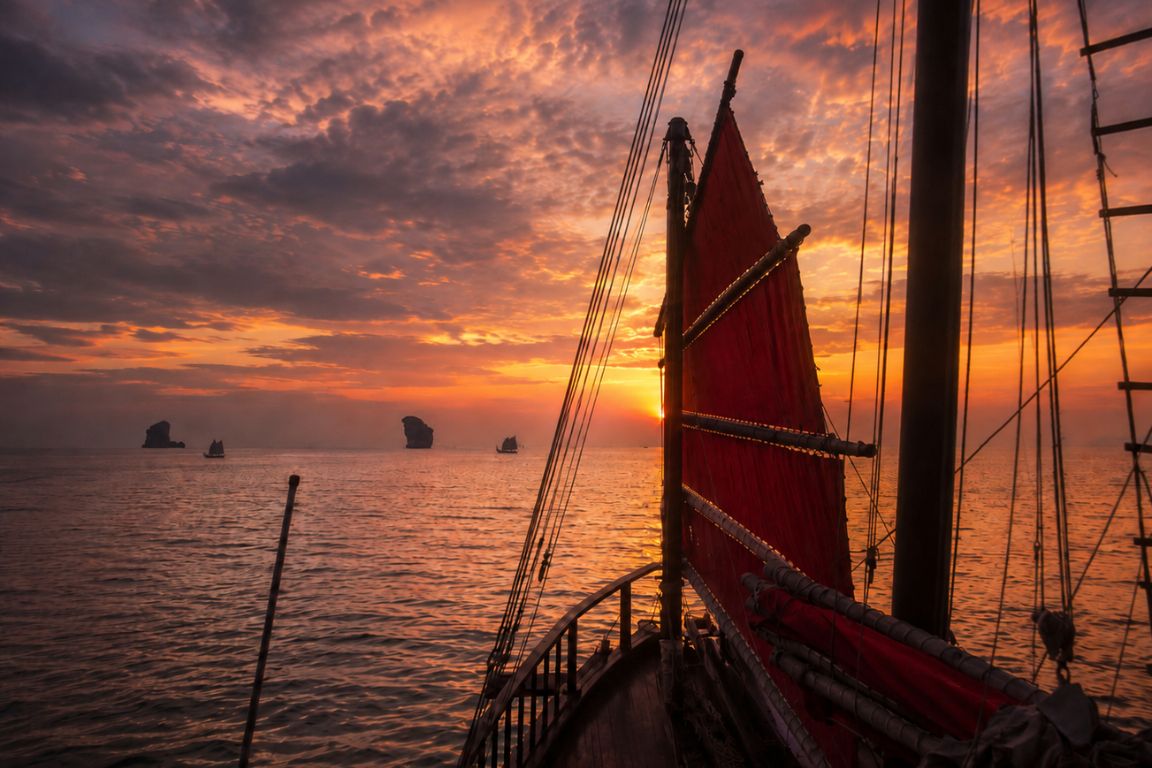
It is a long west-facing strip of coarse gold sand with limestone islands on the skyline and a permanent line of longtail boats moored along it. The view is superb and the sunsets are the best on this stretch of coast. As a place to swim it is average, and at high tide the usable sand narrows to a thin band in front of the road.
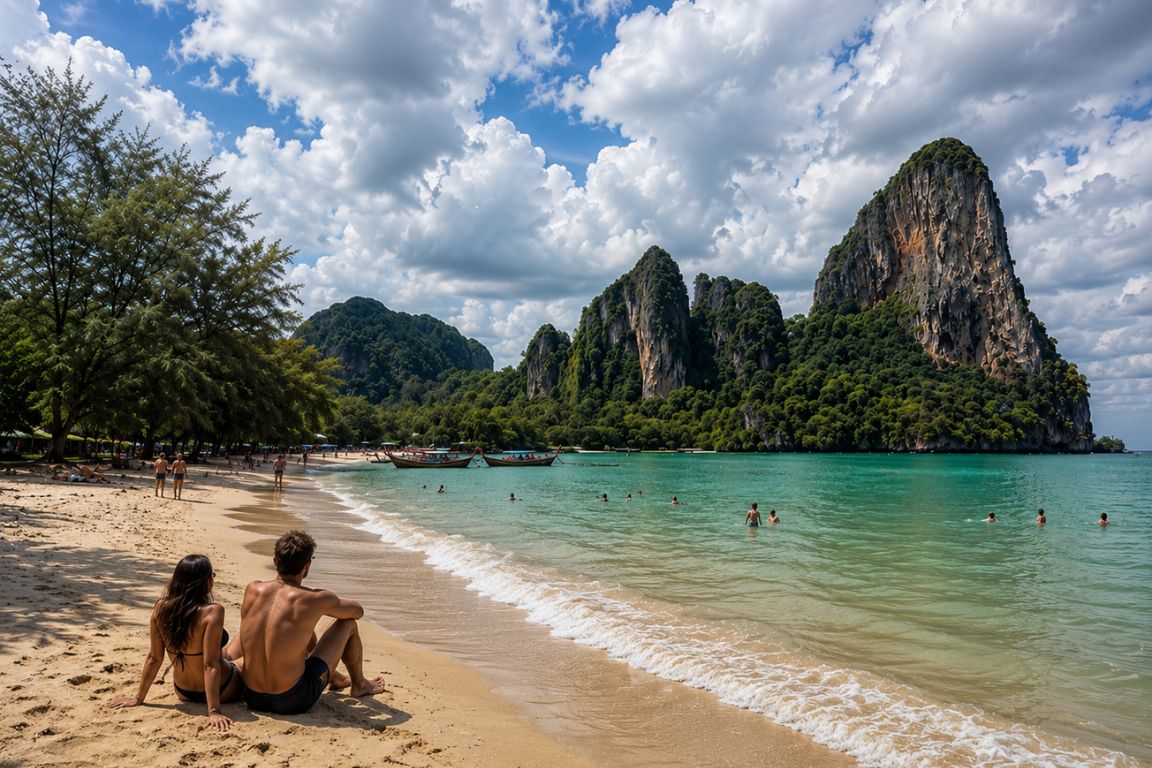
People arrive expecting a postcard and get a port. That is not a complaint once you understand what the place is for. The boats moored along the waterline are the same boats that take you to Poda, Railay and Chicken Island, so the clutter on the sand is the reason the town exists. Swimming happens either side of the mooring lines, the water is warm and calm through the dry season, and the bottom shelves gently, which suits families who want a paddle rather than a proper swim.
Walk fifteen minutes west, past the headland, and Nopparat Thara opens up: longer, quieter, backed by casuarina trees instead of shopfronts, with far fewer boats. Locals treat it as the actual beach. Ao Nang is where the infrastructure lives.
| Beach | Getting there from Ao Nang centre | Character | Swimming | Best for |
|---|---|---|---|---|
| Ao Nang beach | You are on it | Busy, boats moored along the sand, road right behind | Fine, calm, thin at high tide | Sunset, convenience, watching the fleet come in |
| Nopparat Thara | 10 to 15 minutes on foot or a short songthaew hop west | Long, tree-backed, far quieter | Better, shallow and wide at low tide | A real beach afternoon without a boat |
| Phra Nang Cave Beach (Railay) | About 15 minutes by longtail | The famous one, cliffs on three sides | Excellent, sheltered | The day trip everyone photographs |
| Railay West | About 15 minutes by longtail | Resort strip under vertical limestone | Good, deeper | Sunset drinks off the mainland |
| Koh Poda | About 25 minutes by longtail on a tour | Island sand, coral gardens offshore | Very good | The lunch stop on the 4 Islands run |
| Klong Muang and Tubkaak | 20 to 30 minutes by road, north | Resort coast, almost no nightlife | Calm, shallow, muddy at the lowest tides | Quiet stays, families avoiding the strip |
If beaches are the whole point of your trip rather than a backdrop to boat days, the wider roundup in our Krabi beaches guide ranks them properly. This section is about what is within reach of a hotel in town.
Which Pier Does Your Boat Actually Leave From?
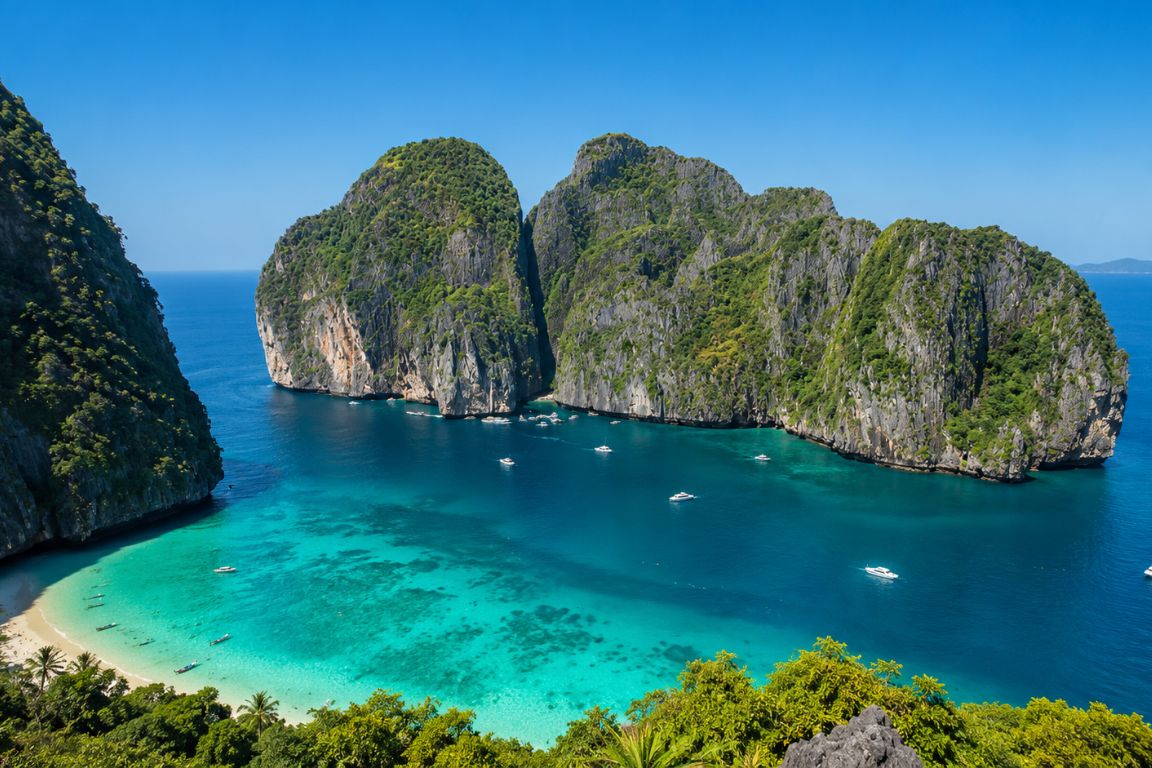
Three, and they are not interchangeable. Ao Nang beach itself functions as a pier for longtails, Nopparat Thara Pier sits about 15 minutes west and gives a more sheltered departure, and Ao Nam Mao Pier lies southeast of town and handles most speedboat day trips including Phi Phi. Your booking confirmation names one of them. Read it.
This matters because pickup time and departure time are two different things, and the gap between them is the pier transfer. One listed four-island speedboat collects in Ao Nang from 08:00 to 08:30 before departing around 09:00. Guests who plan for a 07:45 departure spend forty-five minutes wondering why the minivan is still collecting people from other hotels.
| Pier | Where it is | Mainly used by | Sea conditions on departure | Notes |
|---|---|---|---|---|
| Ao Nang beach | The town beach itself | Railay shuttle longtails, private longtail charters | Open section towards the 4 Islands picks up moderate swell in the transition months | Wet boarding: you wade a few steps |
| Nopparat Thara Pier | About 15 minutes west of Ao Nang | Longtail island days, several private charters, some group departures | Slightly more sheltered on some routes | Also written as Noppharat Thara and Nopparat Park Pier on listings |
| Ao Nam Mao Pier | Southeast of Ao Nang, past the headland | Selected boat departures; confirm the pier on your booking | Sheltered bay, easiest boarding of the three | Small pier docking fee, around 10 baht per person, cash |
One practical consequence: boarding a longtail from the beach or from a shallow mooring means stepping across a wet deck, sometimes through ankle-deep water. Grippy sandals or water shoes beat flip-flops, and a dry bag for the phone costs a couple of hundred baht at any shop on the strip. Our comparison of longtail boats and speedboats covers what the hull choice does to your crossing times and comfort.
How Do You Get to Railay From Ao Nang?
By longtail, from Ao Nang beach, and only by longtail. Railay is a peninsula walled off from the mainland by limestone, so no road reaches it. Boats run from a beachfront ticket booth on a fixed fare, and they leave when eight passengers are aboard rather than on a timetable.
That eight-seat rule is the thing to plan around. In high season at ten in the morning a boat fills in minutes. At eight in the evening in June it may not fill at all, at which point you either wait, or pay for the empty seats and go anyway. Crossing time is about fifteen minutes and lands you at Railay West or Phra Nang depending on the service and the tide. Fares are set by the boatmen's co-operative, posted at the booth, and higher after dark, so check the board rather than negotiating on the sand.
Landings are wet at low tide: the boat noses in, you swing your legs over the side and walk the last few metres through shallow water. Dry bags again. The full picture of what is over there, the four beaches, the caves and the climbing, sits in our Railay Beach guide.
| Question | The practical answer |
|---|---|
| Where do you buy the ticket? | The boatmen's co-operative booth on Ao Nang beach, cash, posted fares |
| When does the boat go? | When eight seats are taken, not on a schedule |
| How long is the crossing? | About 15 minutes each way |
| What if there are only two of you late in the day? | Pay for the remaining seats and the boat runs, or wait for others |
| Is it more expensive at night? | Yes, evening and late-night crossings carry a higher posted fare |
| Can you take luggage? | Yes, but it goes on an open deck, so waterproof it |
| Does a tour include this? | Some tours meeting at Ao Nam Mao list the Railay longtail transfer as not included, so Railay guests pay their own way to the meeting point |
Which Day Trips Leave From Ao Nang, and When?
Almost all of them. Ao Nang is the pickup zone written into nearly every operator's included list, which is why staying here removes a transfer surcharge that guests in Krabi Town, Klong Muang and Tubkaak usually pay. Departure times range from a 05:20 early-bird collection to a 13:00 boarding for the sunset boats.
The table below is built from the actual pickup windows on the trips we list, so you can line up a week without double-booking a morning. If you want the sequencing logic rather than the raw times, the Krabi island hopping itinerary sets out which order produces the best version of each stop.
| Trip | Pickup window | Departs from | Back by | Length | Suits |
|---|---|---|---|---|---|
| Bor Thor mangrove and sea cave kayaking | 08:00 to 08:30 | Bor Thor pier, inland northeast | Afternoon | 7 hours | Caves and paddling instead of open sea |
| Deep mangroves and limestone canyon kayak | 07:30 to 08:30 by minivan | The kayak pier | Around midday | 4 hours | A half day that leaves the afternoon free |
| Full-day jungle tour, Emerald Pool and Tiger Cave Temple | 08:00 | Road transfer, no boat | Late afternoon | 9 hours | The inland day when the sea is rough |
| 7 Islands luxury longtail cruise | 07:00 morning or 13:00 sunset | The pier, Ao Nang or town pickup | 5 hours later | 5 hours | A shorter island run than the full circuit |
7 Islands sunset cruise with beach BBQ 12:30 to 13:30 in Ao Nang Pier confirmed by operator 7 to 8 hours Sunset, BBQ dinner and plankton-swim activity
Crystal Lake kayaking at Klong Root Morning pickup around 08:30 Road transfer Allow about 3.5 hours with transfers Kayaking and a swim stop
Hong Islands speedboat day 08:00 to 08:30 in Ao Nang Departure point confirmed by operator 6 hours Swimming, snorkeling, relaxation and sightseeing
Early Bird Phi Phi and 4 Islands speedboat 05:50 to 06:30 in Ao Nang Pier confirmed by operator 9 hours Swimming, snorkeling and island stops
Two patterns worth reading out of that table. Mornings are crowded because standard group boats leave the piers between 08:30 and 09:30, so the first wave hits Chicken Island and Koh Poda around 10:00 and by 11:00 you can have half a dozen boats anchored at one site. Early and afternoon departures change the timing, but crowd conditions vary by date and route. Second, the inland trips exist for a reason: when the sea turns, the jungle and the kayak rivers still run, which is the standard salvage plan for a rough week.
Is Ao Nang a Good Base for Krabi?
For most first visits, yes, and mainly for logistics rather than charm. Free hotel pickup on most tours, three piers within reach, the widest choice of restaurants in the province and the only real evening scene outside Krabi Town. The trade is noise, tailors, and a beach that is a transport hub first.
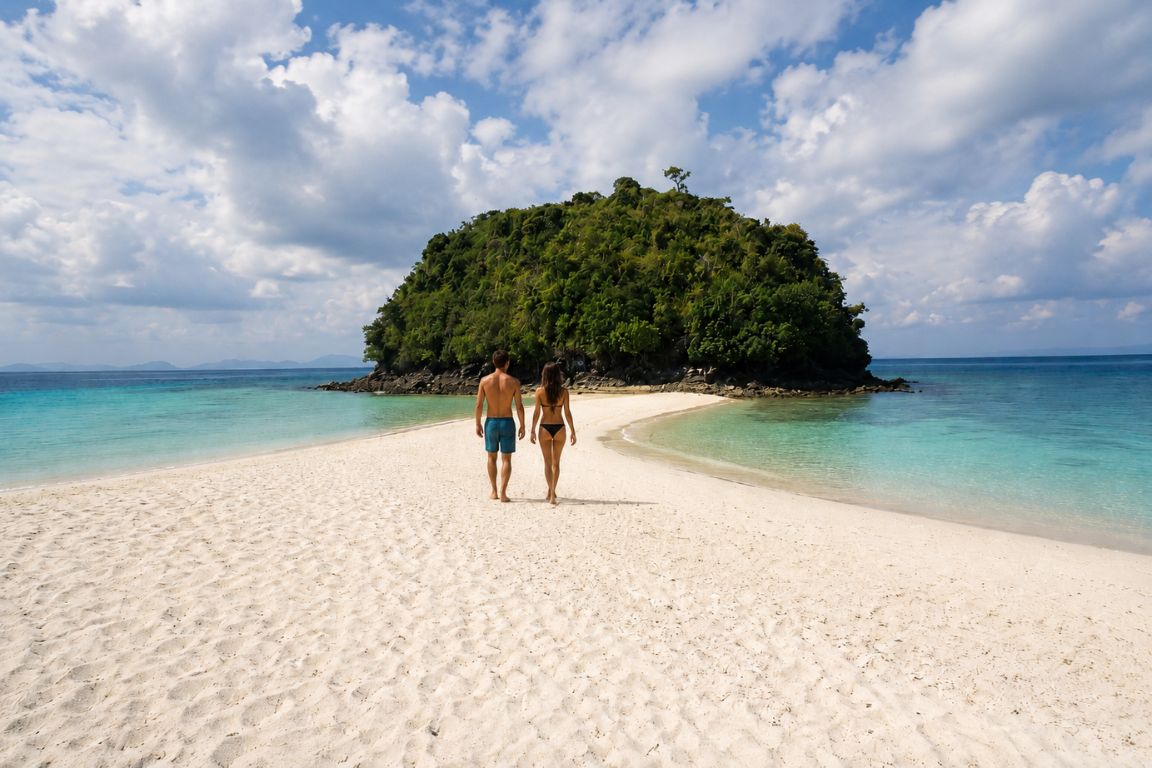
The alternatives split cleanly. Krabi Town is cheaper, more Thai and has the night markets, but it sits up a river estuary about 20 to 30 minutes inland, which means a transfer surcharge on many tours, with transfer charges that vary by product, accommodation area, and party size. Railay is the most spectacular place to sleep in the province and the most isolated, with every arrival and departure by longtail. Klong Muang and Tubkaak are the quiet resort coast to the north with almost nothing to walk to.
| Base | Tour pickup | Evening options | Beach quality | Best for |
|---|---|---|---|---|
| Nopparat Thara | Usually included, edge of the zone | Limited, a short hop from Ao Nang | Better and quieter | Families who want the beach without the strip |
| Krabi Town | Often a surcharge | Night markets, riverside, local food | No beach | Budget stays, food, longer trips |
| Railay | Longtail transfer to the meeting point, often at your cost | A handful of bars, early nights | Outstanding | Climbers, honeymoons, people who want out |
| Klong Muang and Tubkaak | Surcharge on many tours | Hotel restaurants only | Calm, shallow | Resort holidays, minimal moving around |
Ao Nang Included on many listings; check the selected product Widest choice, bar strip, late food Average but convenient First visits, short trips, anyone doing several boat days
The full comparison, including how the areas price out across seasons, sits in our guide to where to stay in Krabi. If your plan already involves three or more island days, the arithmetic usually settles it: Ao Nang can reduce transfer costs or road time when each selected tour includes the traveler’s hotel.
Where Do You Eat in Ao Nang?
The strip behind the beach and the sois running off it carry everything from 60-baht noodle plates to seafood weighed at the door. The pattern is straightforward: the closer to the sand, the higher the price and the more international the menu. Walk two streets back and the food gets better and cheaper.
Beachfront places sell the view, and on a first evening that is a fair trade. Behind them, the side streets hold family-run Thai kitchens, the Muslim-Thai restaurants that serve some of the best roti and curry in town, and the Italian and Scandinavian places that reflect who has been holidaying here for thirty years. Seafood restaurants display the catch on ice and price by weight, which is honest but adds up quickly if you point at the biggest thing on the tray.
| Type | Where it clusters | Rough spend per person | Worth knowing |
|---|---|---|---|
| Beachfront restaurants | Ao Nang Beach Road | Higher end for the area | You are paying for the sunset, and it is a good sunset |
| Thai family kitchens | The sois one or two streets back | Cheapest sit-down option | Better cooking than the strip, often no English menu |
| Seafood by weight | Along the main road and towards Nopparat Thara | Varies wildly with what you choose | Confirm the price per kilo before it goes on the grill |
| Muslim-Thai and roti stalls | Scattered through town | Very low | Breakfast roti before an early pickup |
| International and European | Centre of the strip | Mid to high | The reason long-stay visitors keep coming back |
| Market and street food | Small evening markets in town, larger ones in Krabi Town | Lowest | The Krabi Town walking street is the bigger event, covered in our nightlife guide |
For what happens after dinner, the honest scope of the evening scene, the markets and the boats that turn sunset into the main event, see Krabi nightlife.
What Does a Day Based in Ao Nang Cost?
Check each live tour for its current price, included fees, and any park charges payable on the day. Add only the meals, drinks, transfers, and fees excluded by your selected listing.
| Item | Typical cost | Notes |
|---|---|---|
| National park fee, adult foreigner | 200 baht for the 4 Islands, up to 400 baht around Phi Phi | Cash, collected on arrival, children roughly half |
| Ao Nam Mao pier fee | Around 10 baht per person | Small, cash, easy to forget |
| Dry bag or waterproof phone pouch | 100 to 200 baht | Any shop on the strip, buy it on day one |
| Dinner on the strip | Wide range, cheapest one street back | Seafood by weight is the variable |
Transfer outside Ao Nang Check selected listing Charges and coverage vary by area, product and party size
Private longtail charter Check live listing Capacity, duration, transfers, meals and fees vary by product
Group island tour, per person Check live listing Lunch and park-fee treatment vary by product
Check the live listing for the booking total, included items, transfer terms, and any separately payable park fees. The Department of National Parks is the source of record for those. The wider cost breakdown across tour types sits in the Krabi boat tours guide.
When Is Ao Nang at Its Busiest?
December and January, with two sharp spikes on top: New Year, and Chinese New Year, which falls in late January or early February depending on the year and produces a four to five day surge in visitor numbers. Songkran in mid-April fills the town again, this time with a street-level water festival.
What changes with the crowd is not really boat schedules, which vary by product and travel date, but the pricing and the booking lead time. Room rates and private-charter availability vary by property, product, and exact travel date. April is the quiet arbitrage: dry-season water, near-shoulder-season crowds, and heat as the price of admission.
The town itself thins out fast from May, and by August a good share of the strip closes or shortens its hours. That is not a reason to write the low season off, but it does change what Ao Nang is: a smaller, cheaper, wetter town where your boat day may be called off on the morning. Thailand's official tourism board keeps a general Krabi overview at tourismthailand.org, and our page on Krabi in the dry season goes into the water quality side of the calendar.
Who Should Not Base in Ao Nang?
Anyone chasing quiet, anyone whose trip is one long beach day, and anyone who wants Thailand to feel un-touristed. Ao Nang is a purpose-built tourist town with a working boat beach, and it does not pretend otherwise.
Three honest mismatches come up repeatedly. Travellers who booked Ao Nang expecting Railay's scenery are disappointed on arrival, because the karsts here are on the horizon rather than overhead. Couples looking for a quiet week find a strip with bars, tailors and touts. And anyone planning a single boat day out of a seven-night trip does not need the logistics advantage that justifies the town, so Klong Muang or Railay would serve them better.
Everyone else, and that is most first visits, gets the trade they came for. You sleep ten minutes from three piers, you pay no transfer surcharge, and the boat is at your hotel door before breakfast. That convenience is the entire argument, and it is a strong one when your week includes several of our Krabi island tours.
A Working Day in Ao Nang, Hour by Hour
The version that goes right starts before the convoy and ends on the water. Early pickup, first at the snorkel site, back mid-afternoon with time to swim off the town beach, then sunset with your feet in the sand.
Roti and coffee from a stall by 06:00 if you have an early-bird boat. The listed early-bird speedboat collects in Ao Nang between 05:50 and 06:30; the operator confirms the exact pickup and departure details. Snorkelling before 10:00 is a different activity from snorkelling at 11:00, when six to eight hulls are swinging on the same anchorage, a point our guide to the best islands for snorkelling near Krabi makes in more detail.
You are back at the hotel by mid-afternoon. Shower, then walk west along the sand towards Nopparat Thara while the light drops. Eat one street back from the beach rather than on it, and if you have an evening free, take the longtail across to Railay for a drink and come back on a late boat with the fare confirmed at the booth first. That is Ao Nang working the way it is supposed to.
Frequently Asked Questions
Is Ao Nang beach good for swimming?
It is fine rather than excellent. The water is calm and warm through the dry season and the bottom shelves gently, but longtails moor along the sand all day and the usable beach narrows at high tide. Nopparat Thara, a short walk west, is longer, quieter and better for an actual swim.
Which pier do Krabi boat tours leave from?
Three serve Ao Nang. The beach itself handles Railay longtails and private charters, Nopparat Thara Pier sits about 15 minutes west, and Ao Nam Mao Pier southeast of town takes most speedboat day trips including Phi Phi. Your confirmation names one, and pickup time is not departure time.
How do you get from Ao Nang to Railay Beach?
Longtail only, from the co-operative booth on Ao Nang beach, at a posted fixed fare. Boats leave when eight passengers are aboard rather than on a schedule, the crossing takes about 15 minutes, and evening fares are higher. Landings can be wet, so waterproof anything you are carrying.
Is Ao Nang a good base for Krabi?
For most first visits, yes. Nearly every tour includes free pickup inside the Ao Nang zone, three piers are close, and the restaurant choice is the widest in the province. Transfer coverage and surcharges for Krabi Town, Klong Muang, and Tubkaak vary by the selected tour.
How far is Ao Nang from Krabi airport?
Roughly 30 to 40 minutes by road depending on traffic and where in town you are staying. Shared minibuses, metered taxis and pre-booked hotel transfers all run the route, and most island tours will not collect you from the airport, so plan an arrival night before an early boat day.
What time do island tours leave Ao Nang?
Standard group boats leave the piers between 08:30 and 09:30 after hotel pickups from around 07:45. One early-bird speedboat collects in Ao Nang from 05:50, while one sunset-and-BBQ longtail collects there from 12:30 to 13:30. Departure timing changes the day’s sequence, but arrival order and crowd levels vary.
Does Ao Nang shut down in low season?
It quietens sharply rather than closing. From May through the southwest monsoon a share of the strip shortens hours or shuts, rooms get much cheaper, and boat days are more likely to be cancelled on the morning for sea conditions. Inland trips like the jungle and kayak days keep running.
Check your travel date before arranging the rest of your Ao Nang plans
Match the outing to your plans
Blank fields keep the initial suggestion. Age pricing alone does not confirm suitability; if eligibility is unverified, the tool will not recommend a match. Check pickup and restrictions for your selected package.
Compare two total quotes
Use current quotes in the same currency, including park fees, transfers and option extras.
Initial recommendation. Adjust the optional choices to match your plans.
Phi Phi Early Bird & 4 Islands - Day Tour by Speedboat From Krabi
The early speedboat includes Ao Nang transfers, Phi Phi and four-island stops, swimming, snorkeling, lunch, and equipment across nine hours.
9h · English guide listed · Early pickup, lunch and snorkeling gear; park fees extra. Maya Bay is closed August–September under the listing’s seasonal policy. · Confirm your selected option’s pickup, inclusions, fees and participant restrictions before booking.
Choose a date to view the published schedule. Confirm availability and final price on Viator.
No reviewed option matches these choices.