Best Time for Boat Tours in Krabi
The best overall time for boat tours in Krabi is December through February, when calm seas, excellent visibility, and reliable weather create the strongest island hopping conditions of the year.
See what an early pickup changes on a Phi Phi and 4 Islands speedboat day. Explore Early-Bird Phi Phi & 4 Islands.
Last updated: June 17, 2026
December through February is the best time for Krabi boat tours: flat seas, 15 to 20-metre visibility, all routes running, and whale sharks at Koh Haa from February through April. January is the single best month for pure on-water conditions. February is the best month for balancing conditions with slightly lower crowds than December peak. April is the best value month: dry-season weather, 30 to 40% cheaper accommodation, far fewer people on every island. The best time of day is an early departure, 7:30 to 8am, before tour convoys reach the islands by 10am. If you are going during the wet season, morning tours in June through August still run most days. September and October are the hardest months to plan boat tours around.
Booking choice: Compare the early-bird Phi Phi and 4 Islands speedboat schedule for your actual travel date. Check dates for Early-Bird Phi Phi & 4 Islands.
Best Time for Boat Tours in Krabi: Quick Reference
| Best overall conditions | January | Flat seas, lowest humidity, 15-20m visibility, all routes open |
| Best conditions with fewer crowds | February | Conditions match January; slightly less crowded, lowest humidity of year |
| Best value in dry season | April | Dry-season weather, 30–40% cheaper accommodation, far fewer visitors |
| Best shoulder month | November (late) or March | Good conditions, moderate prices, manageable crowds |
| Outer islands (Koh Rok, Koh Haa) | November to May | National parks closed May to mid-October |
| Whale shark probability | February to April | Peak pelagic season at Koh Haa and Hin Daeng |
| Best time of day (any season) | Depart 7:30-8am | Beat tour convoys; best snorkeling clarity; calmer morning seas |
| Worst months for boat tours | September and October | Roughest seas, highest cancellation rate, outer parks closed |
| Budget window | June to August | 30-50% lower prices; mornings often run; accept unpredictability |
What Is the Best Time of Year for Boat Tours in Krabi?
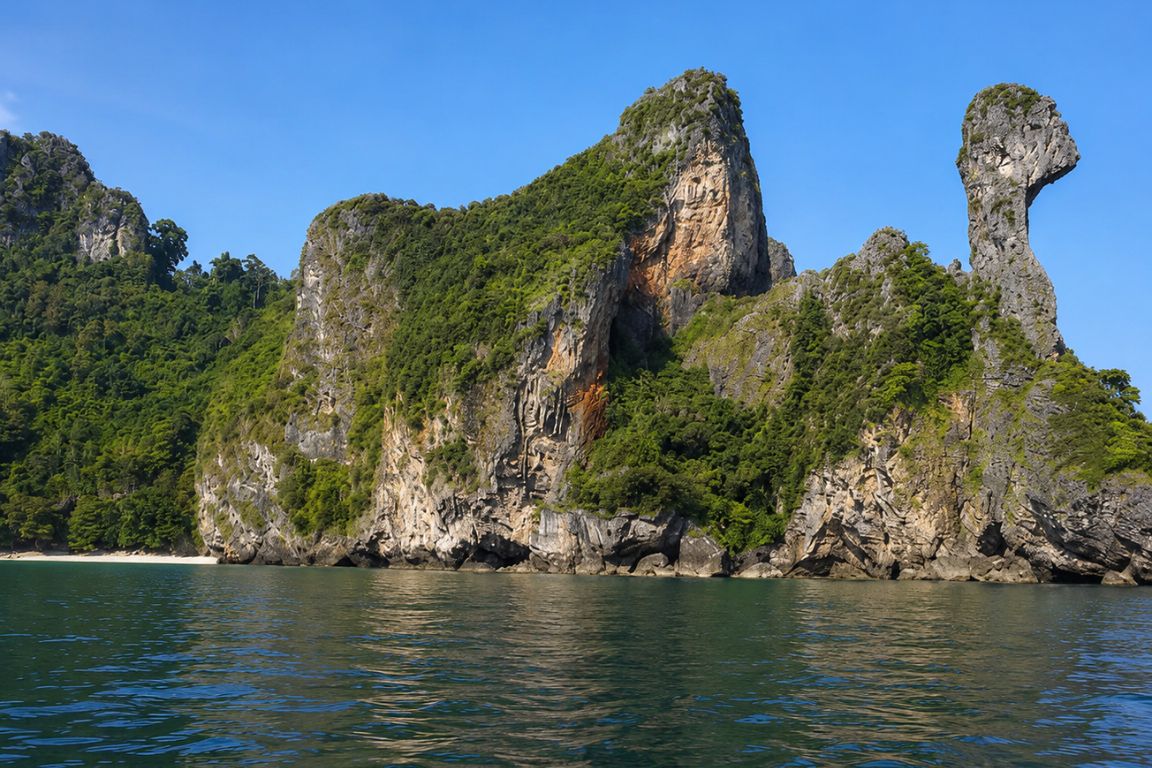 The best time of year for boat tours in Krabi is the dry season, running from mid-November through April. Within that window, December through February delivers the most reliable combination of flat seas, excellent underwater visibility, and consistent tour operations with fewer weather disruptions than wetter months, though conditions can still change or cancel trips. January sits at the peak: lowest humidity of the year, water transparency down to 15 to 20 metres at the inner islands, all routes and national parks open, and the outer reef sites at Koh Haa and Koh Rok accessible in conditions that produce their best snorkeling.
The dry season’s hold over Krabi’s boat tour calendar comes down to the northeast monsoon pattern. From November through April, the Andaman Sea sits under the influence of dry, cooler air flowing from the northeast, which suppresses the swell and wind that the southwest monsoon drives through from May to October. The result at water level is consistent: the sea at Ao Nang Pier on a January morning looks like glass. Longtail boats ride flat-bottomed across the passage to Chicken Island without pitching. Visibility at Koh Poda’s reef reaches depths that make the fish visible from the surface with unusual clarity. This is not an occasional ideal day; it is the typical January baseline.
The dry season spans about six months, but not uniformly. Late November through early December marks the transition from monsoon to dry: conditions improve steadily through this window and by mid-December the Andaman is settled into its best behaviour. March through April brings the dry season’s close: conditions remain good but the pre-monsoon heat builds, afternoon thunderstorms become more frequent from mid-March, and by late April the sea begins showing the first signs of the southwest monsoon building offshore. The quality window within the dry season runs most cleanly from mid-December through March, with January and February at the centre of it.
Krabi’s dry season covers several distinct phases that most travel blogs flatten into a single recommendation – our Krabi in dry season guide breaks down what each month actually delivers in terms of weather, crowds, and island-hopping conditions.
What Is the Best Month to Visit Krabi for Boat Tours?
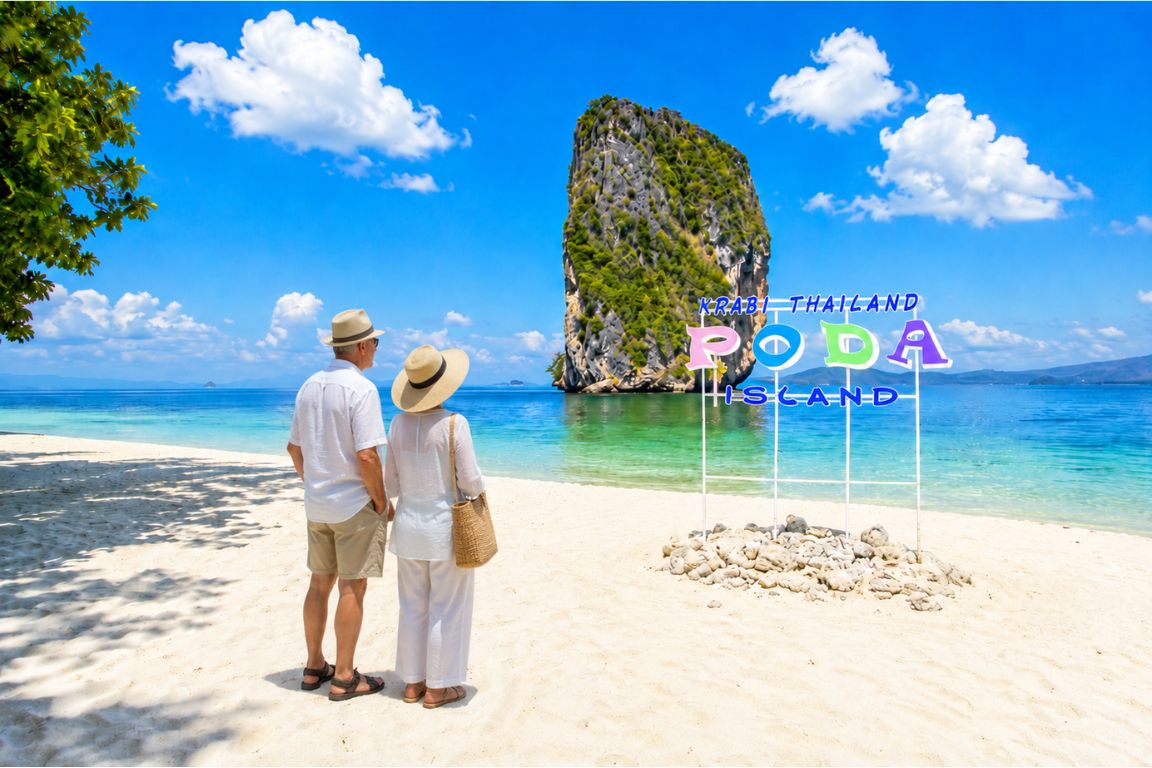 January is the best single month for Krabi boat tours on pure conditions. February is the best month for travelers who want excellent conditions with slightly lower crowds and the lowest humidity of the year. April is the best month for travelers who prioritise value without sacrificing dry-season weather: tours run reliably, accommodation costs 30 to 40% less than December peak, and the islands are substantially less crowded. Each answer is correct for a different set of priorities.
January’s case is straightforward. The northeast monsoon has fully retreated, the Andaman has settled, and the light on the water for the six hours between 8am and 2pm is exactly what Krabi’s boat tour photographs were taken in. Snorkeling visibility at Koh Poda and Chicken Island regularly reaches 15 metres. The outer islands are open. Whale shark season at Koh Haa is approaching its peak. The longtail transfer to Railay takes 15 minutes on a flat sea. Weather, access, and live availability can still change, so check your exact date and departure schedule before arranging other plans.
February earns a slightly different recommendation because it is the driest month of the year by measured humidity. The air is cleaner, the light is cleaner, and the water at snorkeling sites is marginally clearer. Chinese New Year varies by year and falls on February 17 in 2026, which produces a 4 to 5 day spike in visitor numbers in Ao Nang from mainland Chinese tour groups. Outside that window, February crowd levels are lower than December and January for equivalent weather. It is also the month with the highest probability of whale shark encounters at Koh Haa, as February through April is peak pelagic season across the outer Andaman reef system.
April requires a separate conversation because it is the most consistently underrated month in Krabi’s boat tour calendar. Weather conditions are still dry-season standard: the sea runs calm, many tours operate, subject to the day’s weather, sea, and tide conditions, and the snorkeling remains excellent. What changes is everything else. Hotel prices drop 30 to 40% from December peak. Tour groups are smaller. The islands that feel crowded in January feel spacious in April. Songkran (April 13 to 15) is Thailand’s New Year water festival and an extraordinary street-level experience in Ao Nang and Krabi Town. Travelers who choose April and structure their island days around early departures get dry-season water quality with near-shoulder-season crowds. The trade is heat: April middays reach 34 to 36 degrees Celsius and an hour on a boat deck at noon requires preparation.
| November (late) | Good, improving | Low-Medium | Medium | Loy Krathong festival (late Nov 2026); conditions settling |
| December | Excellent | High (Christmas/NYE peak) | High-Very High | Festive atmosphere; book 2+ weeks ahead |
| January | Outstanding | High | High | Best on-water conditions of the year; Chinese New Year falls February 17 in 2026 |
| February | Outstanding | Medium-High | High | Lowest humidity; best whale shark probability at Koh Haa |
| March | Very Good | Medium | Medium-High | Morning tours optimal; heat building; afternoon storms increasing |
| April | Good-Very Good | Low-Medium | Medium (30-40% drop) | Best value dry-season month; Songkran 13-15 April |
| May | Variable | Low | Low-Medium | Monsoon onset; some good days; Koh Rok/Koh Haa closing |
| June-August | Moderate | Medium (school holidays) | Low (30-50% below peak) | Morning tours often fine; afternoons rough; 20% low-season discounts some operators |
| September | Poor-Moderate | Low | Very Low | Highest cancellation rate; avoid if boat tours are priority |
| October | Poor-Moderate | Low | Very Low | Second wettest month; outer parks closed; improving late October |
What Is the Best Time of Day for a Krabi Boat Tour?
 The best time of day for a Krabi boat tour is an early departure, leaving the pier between 7:30 and 8am. This timing beats the first wave of tour boats that arrive at the inner islands around 9 to 10am, puts you at the snorkeling stops in undisturbed water when fish behaviour is most active, and extracts the clearest morning light over the karst formations before midday haze builds. In the wet season specifically, early departure exploits the morning calm before afternoon weather builds.
The tour convoy effect is real and predictable. Standard group tours depart Ao Nang pier between 8:30 and 9:30am. By 10am, the first wave of boats has arrived at Chicken Island and Koh Poda simultaneously. By 11am, six to eight boats are anchored at the main snorkeling points, and 80 to 150 people are in the water. The reef fish respond to this by retreating to deeper sections away from the surface activity. The water in the anchoring area becomes disturbed by fins and boat engines. Visibility through the water column drops as suspended particles increase. A snorkeler who entered the water at 9am at the same site with the same guide sees significantly less than one who entered at 8am before any other boat arrived.
Early departure also captures a specific quality of light that afternoon tours miss entirely. Between 8am and 10am in Krabi, the angle of the sun over the limestone karsts produces the warm, directional light that defines the visual atmosphere of the place. The water reads deep blue-green against white sand in a way that changes once the sun climbs overhead and the light becomes vertical and flatter. Photographers and casual observers both notice the difference. The choice between 8am and 10am departure is not just about crowds; it is about whether you experience the same islands in fundamentally different light.
For specific tour types, timing recommendations vary. Snorkeling-focused day tours: depart as early as possible. Sunset dinner cruises : departure time is fixed by the product, but within those parameters choosing an operator who departs earlier in the afternoon (around 1pm rather than 2:30pm) gives more time at island stops before dinner. Private longtail charters: one useful feature of a private 4 Islands longtail charter is route customization; confirm whether an early departure is offered and arrive at Hong Island or Koh Poda before any group tour boats. The first hour at Hong Island before the tour convoys arrive is described in reviews as a completely different experience to the same island at 11am.
We’ve put together a full comparison in our Hong Islands vs 4 Islands guide so you know exactly which route fits your priorities, group size, and what you actually want from a day on the Andaman Sea.
Which Season Offers the Best Value for Krabi Boat Tours?
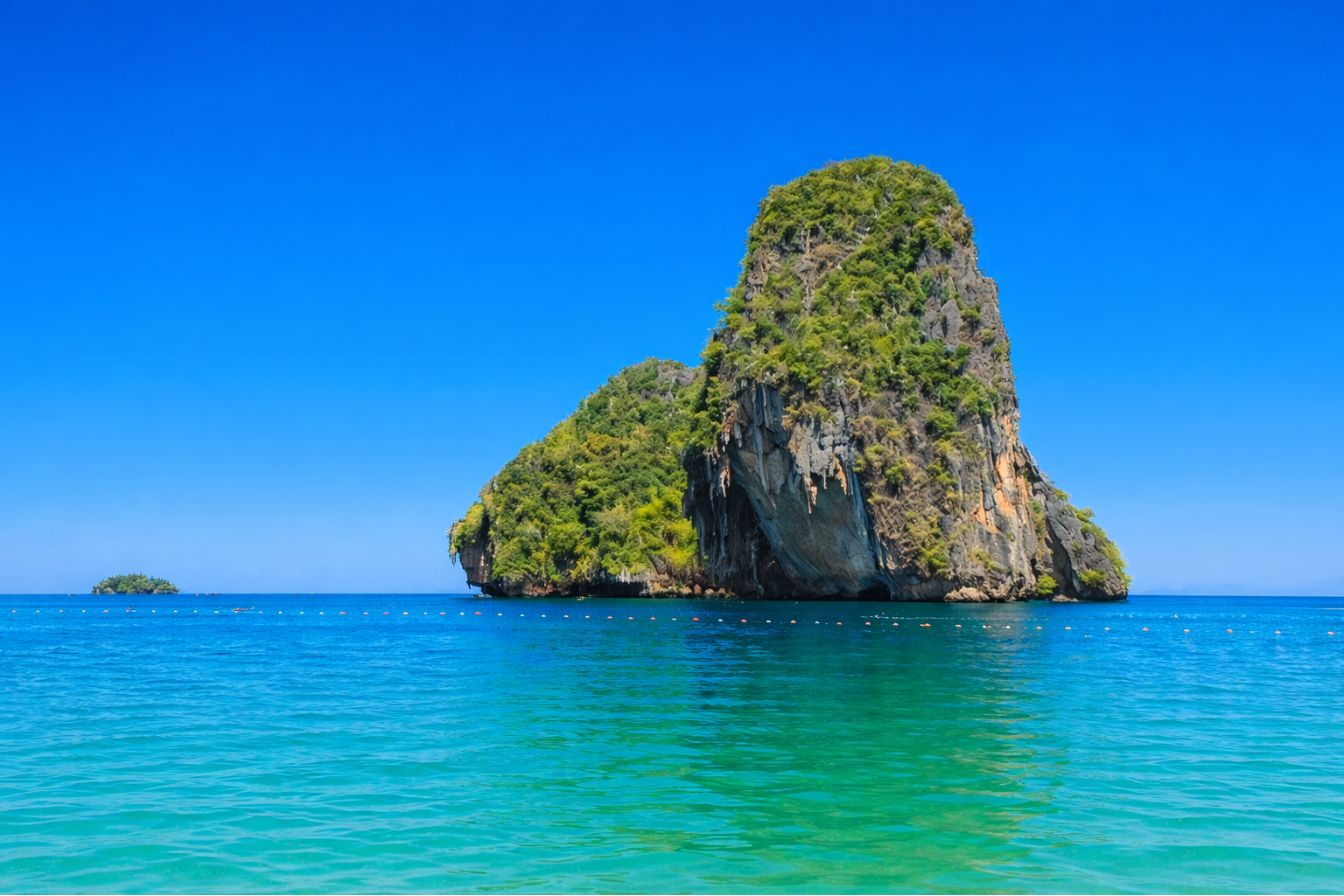 April offers the best value within the dry season: full dry-season tour operations, live accommodation rates that should be compared against the traveler’s exact December dates, smaller group sizes, and uncrowded islands. June through August offers the deepest price cuts (30 to 50% below peak) but with genuine weather risk and wet-season conditions that reduce snorkeling quality. The true sweet spot for value without compromise is late March through April, where conditions remain excellent and prices have dropped from peak without the unpredictability of the monsoon.
The cost structure of a Krabi boat tour trip breaks into accommodation, flights, tour costs, and incidentals. Tour prices themselves do not vary dramatically between seasons. A 4 Islands tour costs roughly the same in April as in January. What varies enormously is the accommodation, which in December and January at desirable Ao Nang properties runs 50 to 100% above April rates, and the flights, which track accommodation pricing patterns. A traveler who can shift their trip from January to April spends significantly less on everything that is not the boat tour itself while experiencing the same quality on the water.
Low-season boat tour pricing does occasionally offer direct discounts. Low-season tour and charter rates vary by operator and date; compare live totals, inclusions, park fees, and cancellation terms. These discounts are useful if the weather cooperates, but the value calculation for low-season tours also requires accounting for the probability that the tour will cancel and need to be rescheduled. A discounted tour that reschedules twice produces less value than a full-price tour that runs on the first booking.
The practical value comparison: a December to February trip to Krabi focused on boat tours will produce optimal on-water conditions but costs more in every category and requires earlier booking. An April trip produces nearly identical boat tour quality with lower costs in every category and shorter booking lead times. A June through August trip saves the most money but introduces meaningful weather risk specifically for the boat tour component of the trip. The recommendation depends on how much the boat tour experience is driving the trip decision relative to other activities.
How Do the Dry Season and Wet Season Compare for Boat Tours?
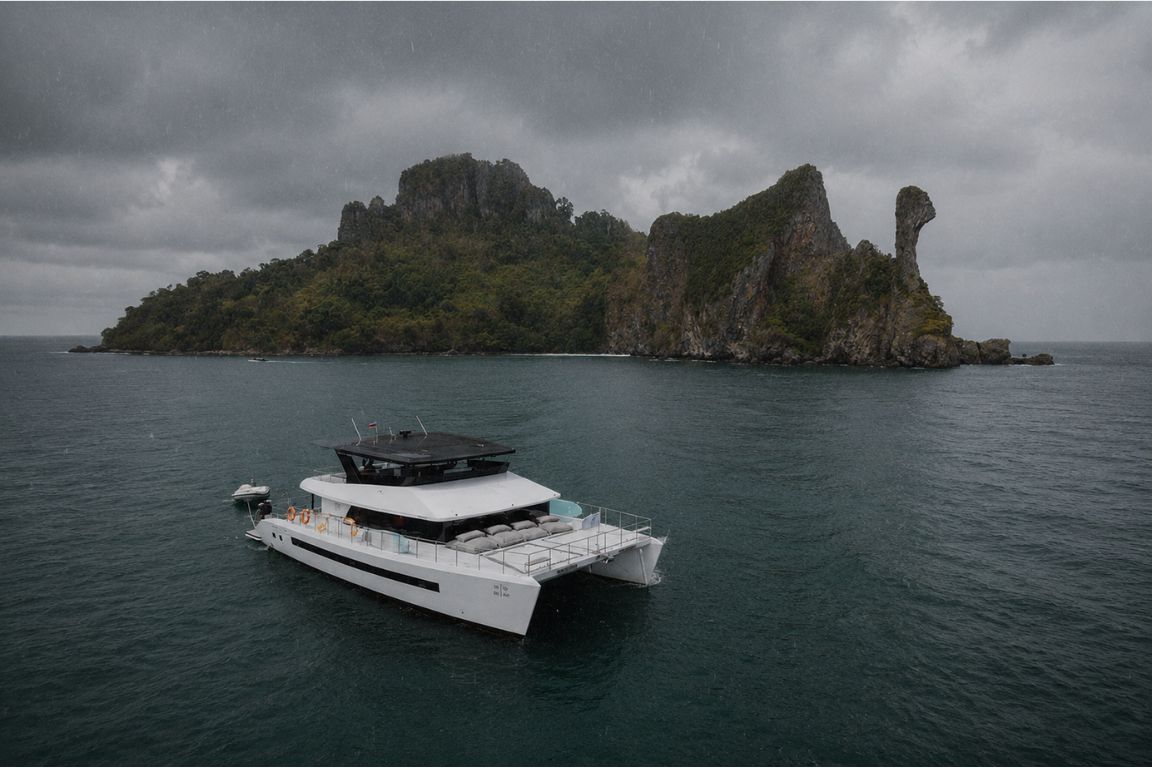 The dry season (November to April) delivers the version of Krabi boat tours that photographs show: calm blue water, full sun, 15-metre-plus visibility, broader route availability, still subject to weather, tides, park access, and operator decisions. The wet season (May to October) delivers the same destinations on the good days, at lower prices, with smaller groups, but with genuine cancellation risk that increases from May through to September and October. The experience on a good wet-season day is very close to a dry-season day. The uncertainty of whether that day will arrive is the real cost.
The dry season’s advantage is certainty. A traveler who books a boat tour in February can plan their week around that tour without building in contingency days. The tour may be easier to plan around, but departure, sea state, snorkeling conditions, and return time still depend on the day. The itinerary flows. This certainty has real value for travelers with limited days, fixed flights, and no flexibility to rebook. The premium charged by December to February accommodation reflects this certainty as much as the weather itself.
The wet season’s case rests on the experience available on its good days, which are genuinely frequent in the early months (May through July). On a clear June morning when the sea ran calm, the 4 Islands inner circuit delivers the same fish encounters, the same karst scenery, and the same boat ride as a January day. The beaches are emptier. The tour groups are smaller. The price paid is lower. The only addition is having needed to check the weather the night before and accept that there was a possibility the day would not have been this.
The distinction that most affects planning: dry-season boat tours are a reliable activity to anchor an itinerary around. Wet-season boat tours are a pleasant activity to include in an itinerary structured around flexibility. Travelers who treat wet-season boat tours as the primary reason for the trip and build fixed days around them face higher disappointment risk than travelers who include them as the best available day activity and have alternatives ready when conditions don’t cooperate.
Want to know what Krabi actually looks like during the wet season and whether it’s still worth visiting if the dates are fixed? Here’s our Krabi in rainy season guide so you plan around the conditions properly.
What Can You Expect Month by Month on a Krabi Boat Tour?
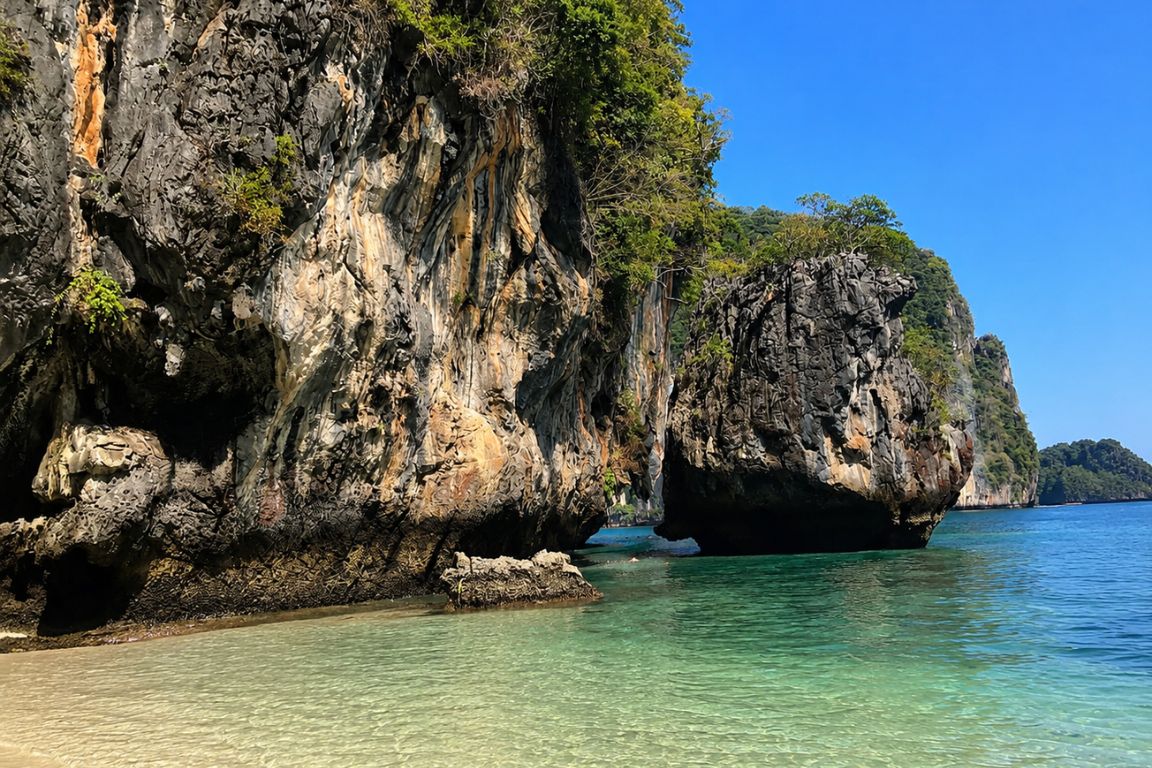 November through February: calm seas, excellent visibility, all islands accessible, peak crowds in December and January. March: still excellent but heat increasing, morning departures recommended. April: dry-season quality with 30 to 40% lower prices and smaller groups. May: variable, some excellent days and some cancellations, Koh Rok and Koh Haa closing mid-month. June through August: rougher, mornings better than afternoons, most inner-circuit tours still running, prices at low-season floor. September to October: roughest conditions, highest cancellation rate, outer parks closed, avoid if boat tours are the priority.
November deserves more nuance than the seasonal overview typically provides. Early November can still carry monsoon-tail conditions: occasional swell, reduced visibility, and the unpredictability of the transition period. By mid to late November, conditions have typically settled into dry-season territory, and the later weeks of November offer excellent touring conditions with lower crowds and prices than December. Late November is when the Loy Krathong festival of lights runs (in 2026, Loy Krathong falls on November 25), adding a genuinely memorable cultural experience to a Krabi visit that already has the boat tour conditions of peak season.
December and January are the most-visited months in Krabi and the conditions fully justify the popularity. The December holiday period between Christmas and New Year drives the single biggest accommodation price spike of the year. Travelers who arrive on January 6 rather than December 26 find essentially the same weather conditions at meaningfully lower cost, without the New Year crowd concentration. Chinese New Year (February 17 in 2026) produces a secondary spike that affects Ao Nang more than inland Krabi and creates a 4 to 5 day window of elevated demand.
March is the last fully reliable month before heat and pre-monsoon instability begin to accumulate. Afternoon thunderstorms start appearing from mid-March and become more frequent into April. Morning departures remain excellent; tours returning by 2pm avoid most of the afternoon weather. The heat at midday on a boat deck in March is real: 32 to 34 degrees with full sun and high humidity. Reef-safe sunscreen, a hat, and shade on the boat matter in March in a way they don’t in January.
The June through August window is worth understanding accurately rather than avoiding categorically. These months draw high visitor numbers partly because of European school holidays and partly because the early wet season in Krabi is genuinely not the sustained all-day rain that the term “monsoon season” implies. Morning weather in June through August is often clear enough to run tours successfully. Afternoons are less reliable. The pattern is consistent enough that operators who offer early-departure tours are deliberately exploiting it. Some operators may change low-season terms, so compare live sunset-cruise totals and cancellation policies for your date, reflecting the combination of lower demand and still-viable conditions.
Not all Krabi sunset cruises are equal in terms of route, boat quality, and what’s actually included – our Krabi sunset cruises guide breaks down which operators put you in the right spot at the right time for the most dramatic light.
What Do Travelers Consistently Get Wrong About Timing Krabi Boat Tours?
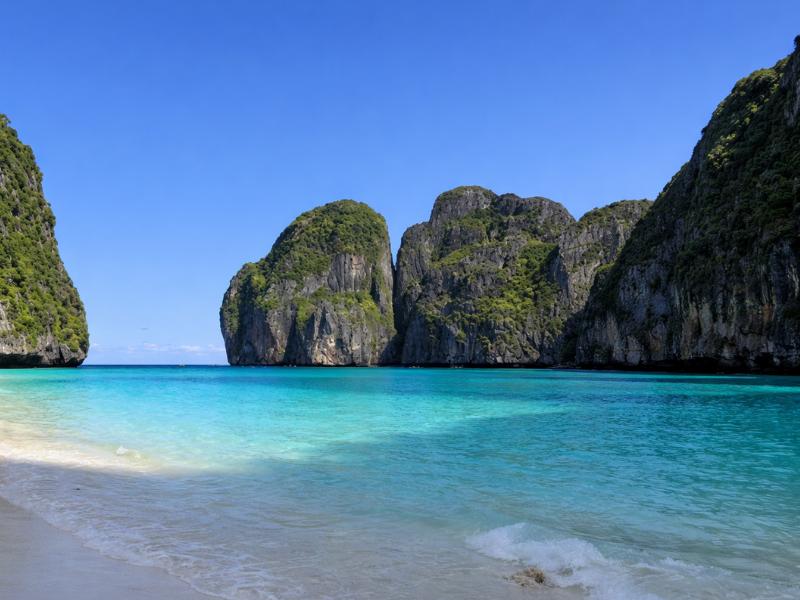
Four recurring mistakes: choosing December over January without understanding the crowd and price premium; visiting in October because it is cheap without understanding the boat tour cancellation probability; booking a wet-season tour without flexibility for a rescheduled day; and not accounting for time of day, which affects the quality of any tour in any season more than most travelers realise before they arrive.
The December versus January confusion is the most financially significant. Many travelers choose December because it is peak season and assume peak season means optimal conditions. December’s conditions are excellent, but so are January’s, and January’s crowds and prices are meaningfully lower outside the immediate Christmas to New Year window. The difference between arriving on December 26 (New Year peak) and January 6 (post-holiday, pre-Chinese New Year) is not reflected in the conditions on the water. It is reflected in the accommodation bill and the length of the queue at the Phi Phi ferry terminal.
The October budget trap catches travelers who choose the cheapest possible dates for Krabi without understanding what the savings come at the cost of. Accommodation in September and October runs 50 to 60% below peak. The actual boat tour probability in October is the lowest of the year. A traveler who saves 10,000 THB on accommodation over five days and spends three of those days watching cancelled tours and waiting for conditions to improve has not made a good trade. The budget calculation for Krabi only makes sense if the saved accommodation cost exceeds the value of the boat tours that will not run.
The wet-season flexibility problem is structural. Many booking platforms require payment at time of booking with 24-hour cancellation policies. A traveler who books a Monday 4 Islands tour in August and arrives to cancelled conditions, successfully rebooks for Tuesday, and then finds Tuesday also cancelled, has a Wednesday flight and no more chances. The wet-season trip planning framework requires either fully flexible booking policies from operator to operator, or a generous buffer of extra days built into the itinerary specifically to absorb weather postponements.
The time-of-day mistake is the most correctable and the least discussed. Every article about the best time of year for Krabi covers seasons and months. Very few address the fact that arriving at Chicken Island at 8am versus 10:30am is the difference between snorkeling an undisturbed reef with active fish and snorkeling the same reef after 100 people have been in it for two hours. The time of day variable is available to every traveler regardless of which month they visit. The benefit is real in every season. In the wet season, it is additionally the variable that extracts the calmer, clearer morning window before afternoon weather builds.
We’ve put together a full comparison in our snorkeling vs diving in Krabi guide so you know exactly which option fits your experience level, budget, and how seriously you want to explore what’s living beneath the Andaman Sea.
When Should You Book a Krabi Boat Tour Based on Your Priorities?
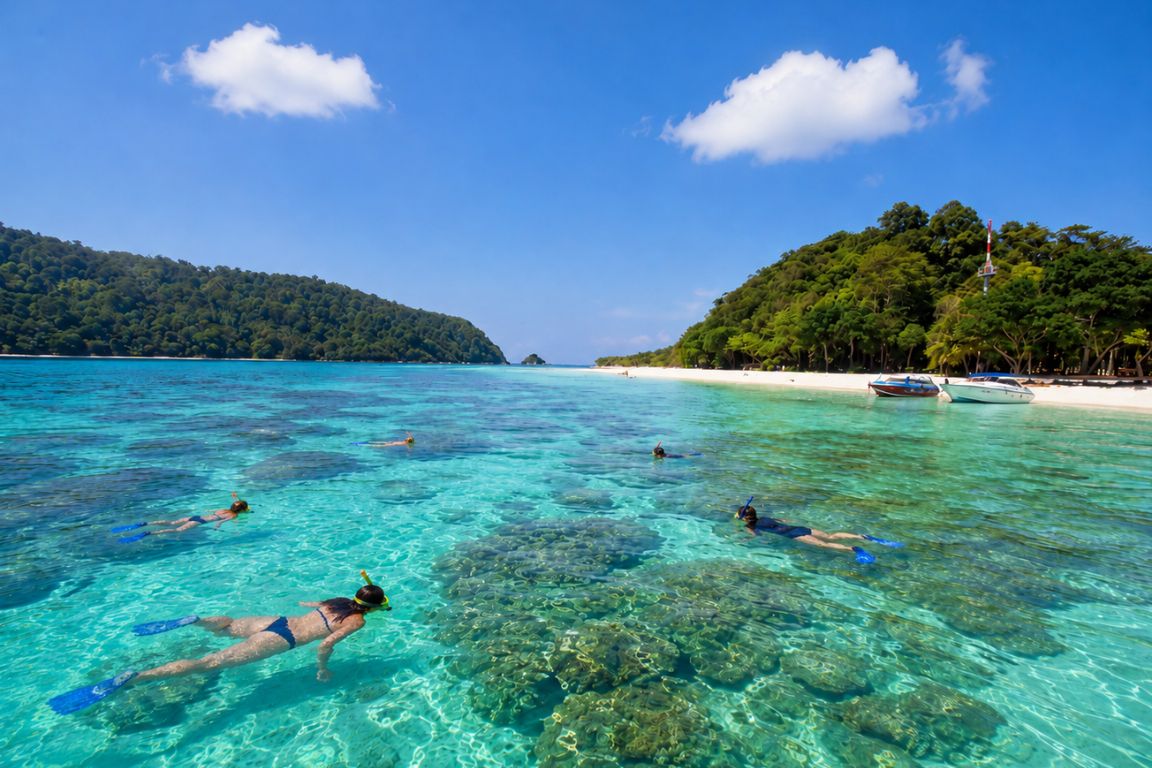 Best conditions without compromise: January or February, check live availability before arranging related plans. Potential dry-season value: compare April’s live tour and accommodation totals for your exact dates. Budget trip with weather flexibility: June through August, book with free cancellation and build two extra days into the itinerary. Wildlife priority (whale sharks): February through April, outer islands only, confirm park access dates. First-ever boat tour or snorkeling experience: any dry-season month, prioritise early departure time over specific month.
Travelers who have never snorkeled before and want their first experience to be unambiguously good should visit in any dry-season month and book any tour with an early departure. The specific month matters less than the departure time and the operator quality for a first-timer whose goal is to see fish on a healthy reef with calm water around them. January and February cannot guarantee sea state, visibility, wildlife, or departure. March and April provide it with slightly more heat to manage. Any of the four months is the right answer for a first-time snorkeler.
Travelers who are returning to Krabi and want to add the outer reef experience they missed last time need to plan within the national park calendar. Koh Rok and Koh Haa access is seasonal; confirm current park notices for your travel date. A trip specifically targeting these outer islands should be checked against current park notices because seasonal access dates can change. The best months within that window for the outer reef quality are January through March, when visibility at Koh Haa regularly exceeds 20 metres and whale shark probability at the site peaks from February through April.
Couples booking a romantic experience like a sunset junk cruise or a private 4 Islands longtail charter have the most flexibility, since these tour types run through much of the wet season on suitable days and do not require specific national park access. April and November offer the best combination of reliable conditions, lower prices, and intimate group sizes for a romantic boat experience. The sunset at Phra Nang Bay anchored on a junk in late April, dinner served on deck as the light goes orange over the limestone, is the same sunset as in January at lower cost and with fewer boats sharing the anchorage.
If route customization matters, compare a private longtail and confirm its available departure time for your date.
First time booking Krabi boat tours and worried about losing a day to bad weather? Here’s our weather impact on Krabi boat tours guide so you plan smarter and know exactly what your options are if conditions turn.
Timing Planning Checks
Travelers comparing December and January should check live conditions, availability, and total trip costs
Whale-shark sightings are unpredictable and should never be expected
Departure time is a meaningful planning factor for many travelers
Wet-season travelers should keep flexibility for weather-driven changes
April visitors should compare weather tolerance, live costs, and available routes
Travelers choosing dates often weigh expected sea conditions against flexibility
December and January comparisons should use live accommodation costs, tour availability, and date-specific forecasts. Most people booking Krabi for the first time default to December because it feels like the obvious choice. When we explain that conditions still vary by date and live post-New-Year prices should be compared directly, a significant proportion of them shift their booking. The conditions do not know which month you booked them in.
Frequently Asked Questions
What Is the Single Best Month for a Krabi Boat Tour?
January is the single best month for on-water conditions: flat seas, lowest humidity of the year, 15 to 20-metre visibility at inner reef sites, all routes open, and whale shark season approaching its peak at the outer reefs. If avoiding peak crowds matters as much as conditions, February delivers the same quality with slightly lower visitor numbers outside Chinese New Year week. If value matters most alongside good conditions, April offers dry-season touring at 30 to 40% lower accommodation cost.
Can You Do Boat Tours in Krabi in December?
Yes, and conditions are excellent. December is one of the best months on the water with flat seas and clear skies. The caveat is price and crowds: December, particularly the Christmas to New Year window, is Krabi’s most expensive period and the busiest. Check live accommodation and tour availability before arranging related plans. The Boek Fa Andaman Festival in early December marks the ceremonial opening of the Andaman sailing season and is worth experiencing if your dates align.
Is April a Good Time for Boat Tours in Krabi?
Yes. April is an underrated month that combines dry-season boat tour quality with 30 to 40% lower accommodation prices and significantly smaller crowds on the islands. The heat is real (34 to 36 degrees Celsius) and morning departures are recommended to avoid the midday sun on deck. Songkran, Thailand’s New Year water festival, falls on April 13 to 15 and is a genuinely memorable cultural experience in Ao Nang. April is the best value dry-season month for travelers who want reliable touring without peak-season pricing.
What Time of Day Should You Book a Krabi Boat Tour?
Book the earliest departure available, typically 7:30 to 8am from the pier. Early departures reach the inner islands before tour convoys arrive around 10am. Snorkeling in undisturbed water produces meaningfully better fish encounters. Morning light on the karsts is visually superior to midday. In the wet season, morning departures additionally exploit the calmer, clearer morning window before afternoon weather builds. The time of day variable is available in every season and affects experience quality more than most guides acknowledge.
Are Boat Tours Worth It in the Krabi Wet Season?
For the inner circuit (4 Islands, Hong Island) in June through August, yes, on most days. Morning tours run frequently and the experience is close to dry-season quality on good-weather mornings. Outer islands (Koh Rok, Koh Haa) are closed administratively from mid-May. Phi Phi day trips are subject to same-day cancellation with greater frequency. Book with free cancellation policies and build an extra day into the itinerary as a weather buffer. September and October are the months where the value calculation tips: high cancellation probability makes those months a poor choice if boat tours are the primary reason for the trip.
When Is the Best Time to See Whale Sharks Near Krabi?
February through April is the peak period for whale shark encounters at the outer Andaman reef sites accessible from Krabi. Koh Haa’s lagoon and the deeper sites at Hin Daeng and Hin Muang produce the most consistent reports during this window. These are pelagic sightings driven by plankton bloom patterns and cannot be guaranteed, but the February to April period represents the highest probability window of the year. Confirm current outer-park access for your exact travel date. Book with a dive or snorkel operator who specifically runs trips to Koh Haa during this period for the best chance of an encounter.
Written by Ryan Supakorn
Thai tour guide since 2011 · Founder, Krabi Boat Tours
Ryan has guided over 11,700 travelers through Krabi’s islands, lagoons, and coastline since founding the agency.
Check your travel date before arranging transfers and other island plans.
Match the outing to your plans
Seasonal service limits can change the suggestion. A month is not confirmation of weather or available seats.
Blank fields keep the initial suggestion. Age pricing alone does not confirm suitability; if eligibility is unverified, the tool will not recommend a match. Check pickup and restrictions for your selected package.
Compare two total quotes
Use current quotes in the same currency, including park fees, transfers and option extras.
Initial recommendation. Adjust the optional choices to match your plans.
Phi Phi Early Bird & 4 Islands - Day Tour by Speedboat From Krabi
The nine-hour speedboat day combines Phi Phi and 4 Islands with snorkeling, swimming, lunch, refreshments, and area-specific pickup.
9h · English guide listed · Early pickup, lunch and snorkeling gear; park fees extra. Maya Bay is closed August–September under the listing’s seasonal policy. · Confirm your selected option’s pickup, inclusions, fees and participant restrictions before booking.
Choose a date to view the published schedule. Confirm availability and final price on Viator.
No reviewed option matches these choices.