Emerald Pool and Hot Springs: Krabi's Inland Day Trip
The Emerald Pool and the Khlong Thom hot springs sit within a short drive of each other in the forest inland from Krabi Town, and almost every visitor sees them on the same day. One is a spring-fed swimming hole the colour of bottle glass. The other is warm water running over rock.
See how one guided jungle day connects the Emerald Pool, hot springs and Tiger Cave Temple. Explore Emerald Pool & Tiger Cave Day Trip.
The colour is the thing people question first. Photographs of the Emerald Pool look filtered, and they are not: the water arrives from an underground spring, filters through mineral-rich limestone on the way up, and comes out clear with a green cast that shifts through the day as the sun moves over the canopy. Late morning is when it looks most like the pictures. Early morning is when it feels best, because you can hear the forest instead of the queue.
Booking choice: A nine-hour small-group tour combines Krabi’s three named inland stops with transport, lunch and park fees. Check dates for Emerald Pool & Tiger Cave Day Trip.
What Is the Emerald Pool?
Sa Morakot, the Emerald Pool, is a natural spring-fed basin in the rainforest inland from Krabi Town. Mineral-laden water rises from underground and deposits travertine as it flows, which is what gives the pool its pale floor and its extraordinary clarity.
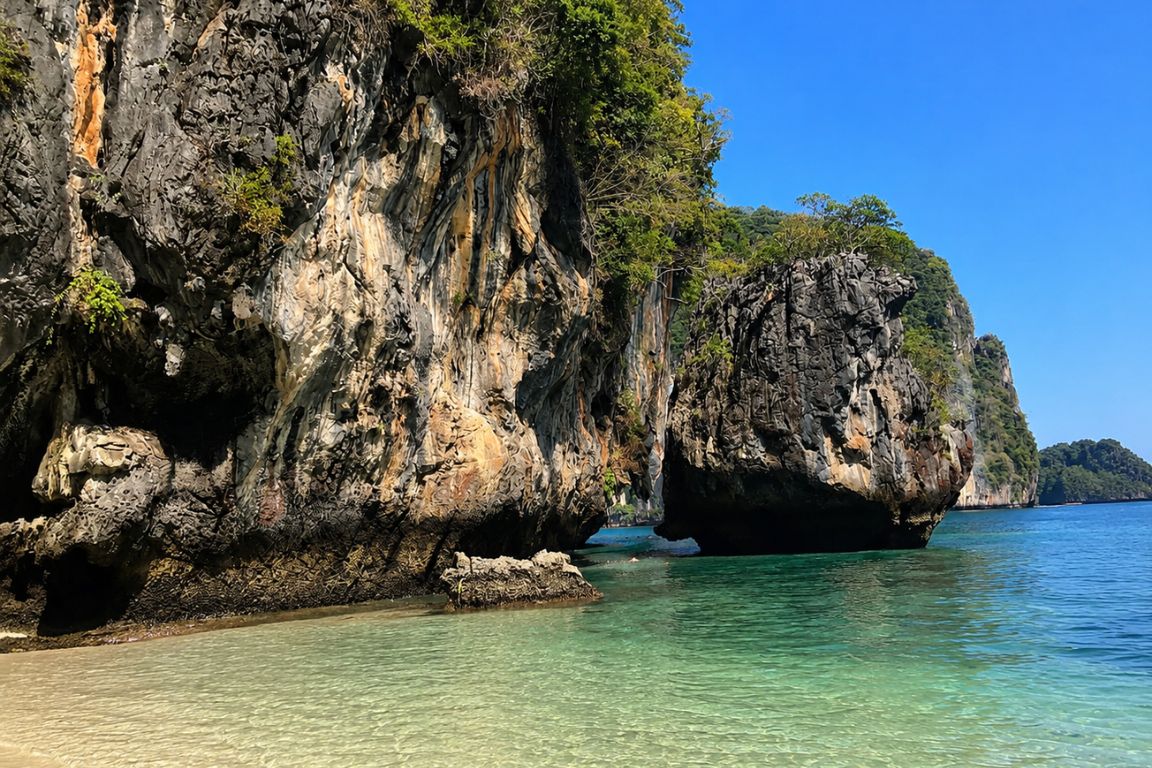
You reach it on a nature trail through proper lowland rainforest rather than a car park path. The walk is flat, boardwalked in places, and short enough that nobody needs hiking gear, but it does the useful job of separating the pool from the road. By the time the water appears through the trees you have been in the forest long enough for it to register.
The pool itself is a swimming hole rather than a lake. The water sits over a pale mineral shelf, which is exactly why it reads green: light passes through clear water, hits a light-coloured floor and comes back up. Nothing is dyed, nothing is dammed, and the colour changes with the light and with how much rain has recently fallen.
It is one of the two anchors of Krabi's inland day, the other being the hot springs. Together they make the case that this province is more than a boat departure point, which is a case worth hearing on a trip built around boat tours from Krabi. Our roundup of things to do in Krabi puts both in the wider list.
| Detail | Info |
|---|---|
| Thai name | Sa Morakot, the Emerald Pool |
| Where it is | Forest reserve inland from Krabi Town, in the Khlong Thom area |
| What it is | Spring-fed travertine pool, reached by a rainforest nature trail |
| Swimming | Yes, this is the main activity |
| Nearby | The Blue Pool, a short walk on, seasonal access |
| Usual pairing | Khlong Thom hot springs, then Tiger Cave Temple |
| Time on a guided day | About 1.5 hours at the pool |
Entry Foreigner entry fee at the gate; included on the listed jungle tour
Can You Swim in the Emerald Pool?
Yes. Swimming is the point, and the pool is set up for it with changing facilities and a designated area. The water is cool rather than cold, the floor is mineral rock rather than sand, and the busiest hours turn a quiet forest pool into a crowded one, so timing matters more than anything else.
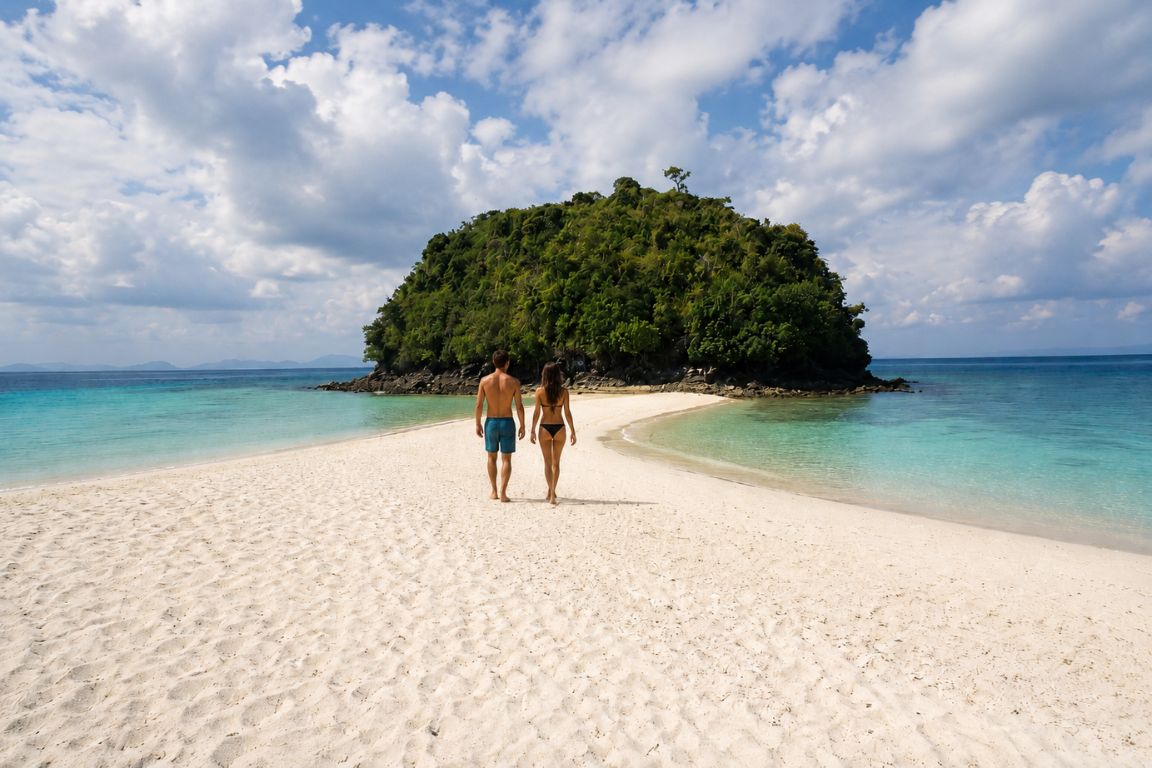
The etiquette is simple and locally enforced. Swimwear rather than street clothes, no soap or shampoo anywhere in the water, no climbing on the mineral formations, and no jumping in from the sides where the floor is shallow and hard. These are the rules that keep the pool looking the way it does, and the wardens are not shy about them.
Footing is the practical hazard. Travertine is smooth where water runs over it constantly, and the transition from boardwalk to pool edge catches people out. Water shoes or any sandal with grip make the whole visit easier, and they double for the hot springs later, where the same slick rock problem exists at a higher temperature.
Crowds concentrate between mid-morning and early afternoon, when the tour vans arrive. If you are travelling independently, being at the gate when it opens buys you the pool in near-silence. On a guided day you are inside that window, which is a fair trade for having the fees, the lunch and the driving handled.
What Is the Blue Pool, and Can You Visit It?
The Blue Pool is a separate spring a short walk beyond the Emerald Pool, more intensely coloured and far smaller. Swimming is not allowed there, and it is often closed through the rainy season, typically May to October, for ecological restoration. Treat it as a bonus rather than a plan.
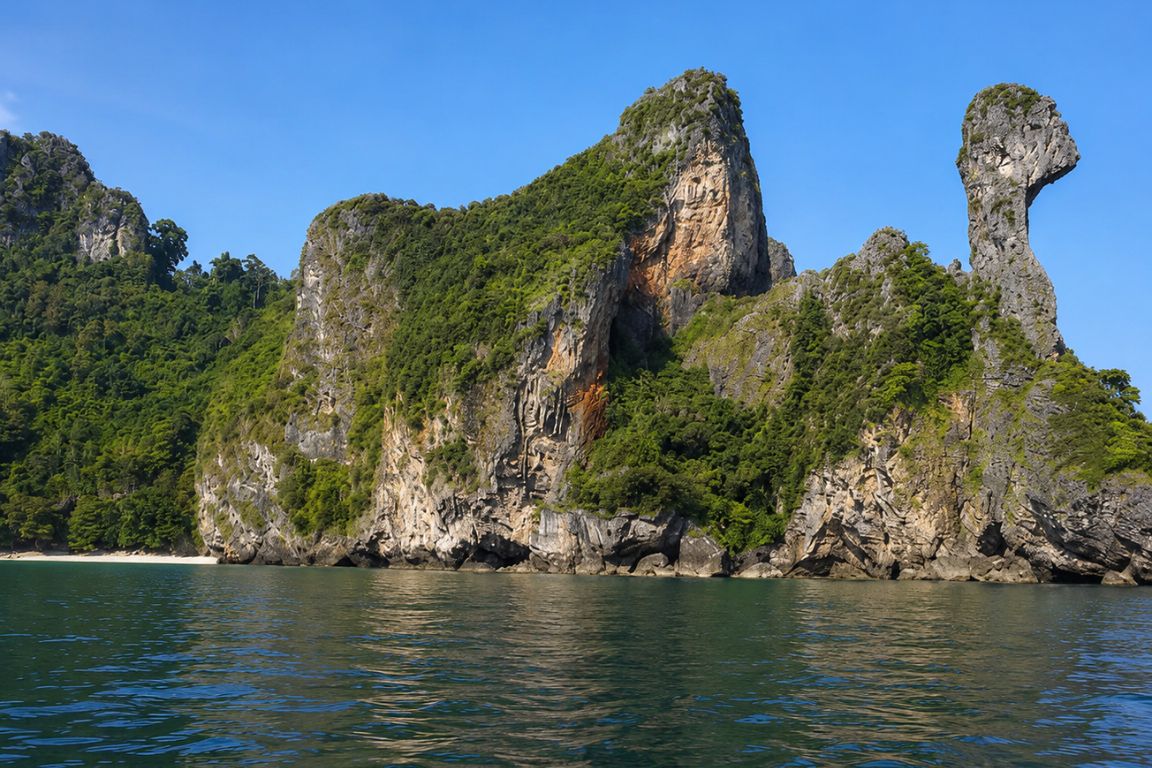
When it is open, the walk out to it is part of the appeal: deeper forest, less traffic, and a spring so saturated in colour that people assume something has been done to it. Nothing has. The mineral content and the depth of the vent do the work, and the reason swimming is banned is that the pool is fragile and small enough for visitors to change it.
The closure pattern is the single most useful thing to know before you go, because it turns up in a lot of disappointed reviews. Blue Pool access depends on current park conditions, while the listed jungle tour names only the Emerald Pool. If the Blue Pool is the reason you are making the trip, check the date first.
The rest of the year the two together make a satisfying loop: swim in one, look at the other, walk back through the forest. Allow an extra half hour beyond your Emerald Pool time if the trail is open.
| Stop | Swimming | Access | What it delivers |
|---|---|---|---|
| Emerald Pool | Yes, the main event | Open year-round | Clear green swimming hole, rainforest trail |
| Blue Pool | No, viewing only | Often closed May to October | Intensely coloured spring, quieter forest walk |
| Khlong Thom hot springs | Yes, soaking | Open year-round | Warm mineral water over smooth rock |
What Are the Khlong Thom Hot Springs Actually Like?
Thermally heated mineral water running down a rock face into a series of shallow, worn basins in the forest, warm enough that most people move between pools rather than settling in one. It is the gentler half of the inland day and it works in any weather, rain included.
The setup is a hot spring waterfall rather than a spa. Water arrives warm at the top and cools as it steps down the rock, so choosing a pool is really choosing a temperature. People shuffle down the sequence until they find the one they can sit in, and then stay there until the heat makes the decision for them.
An hour is about right, and it is the amount most guided itineraries allow. Longer than that in warm water in tropical humidity leaves people flat for the rest of the day, which matters if a staircase is scheduled for the afternoon. Drink more water than you think the stop warrants.
Rain does not spoil this stop, which is why it anchors so many wet-season days. Warm water and falling rain is a good combination, the forest is at its greenest, and the crowds that fill the site in high season are somewhere else entirely.
How Does the Full-day Jungle Tour Cover Both?
One nine-hour loop covering the hot springs, Emerald Pool and Tiger Cave Temple. The listing does not specify pickup time, stop order, lunch location or time at each attraction. Park fees and lunch are included.
The full-day jungle tour lists live prices and includes park fees, a Thai set lunch, an English-speaking guide, accident insurance and air-conditioned transport. Confirm pickup arrangements for your accommodation. Related reading: Ao Nang
Two practical gaps are worth knowing. Railay hotel transfer is not included, so guests must travel independently by boat to Ao Nam Mao Pier and confirm meeting details with the operator. And tissue is not supplied in the park bathrooms, which is the most repeated piece of traveller advice attached to this route.
The sequencing question people ask is whether the temple belongs on the same day at all. It does, but only if you pace the morning. Two hours of warm water and swimming before a long staircase is a real handicap, and our guide to Tiger Cave Temple sets out what the climb takes when it lands in afternoon heat.
| Stage | What happens | Roughly how long |
|---|---|---|
| 08:00 pickup | Hotel collection in Ao Nang, Krabi Town or Klong Muang | Transfer inland |
| Hot spring waterfall | Soaking through the stepped thermal pools | About an hour |
| Lunch | Thai set lunch, included in the price | Under an hour |
| Tiger Cave Temple | The 1,260 steps, or the forest complex below | 1.5 to 2 hours |
| Return | Hotel drop-off | Back around the 9-hour mark |
Emerald Pool Listed tour stop; confirm activity details and time allocation
Is the Water Better in Wet Season or Dry Season?
Dry season gives the clearest water and the firmest trails, with shorter queues in the shoulder months. Wet season gives fuller flow, deeper colour and far fewer people: the Emerald Pool runs at a more vivid green when fed by recent rain, and waterfalls that trickle in February are loud in August.
This is one of the few Krabi attractions where the monsoon has a genuine advantage. Inland stops including the pools, the hot springs and the temple are lusher, cooler and much quieter in the wet months, which is why they are the standard replacement day when a boat trip gets cancelled. Our page on Krabi in the rainy season covers that swap in detail, and how weather affects boat tours explains when you are likely to need it.
The dry-season case is clarity and access. From November through April the trails are firm, the queues move, and the Blue Pool is generally open, which is not true for much of the wet season. Water levels are lower and the pool is at its most transparent, and the whole picture sits in our guide to Krabi in the dry season.
The one caveat in either season is heavy rain in the hours before your visit, which lifts sediment and takes the edge off the clarity for a while. That is a same-day variable rather than a seasonal one, and it settles quickly.
| Months | Water and flow | Crowds and trails | Blue Pool |
|---|---|---|---|
| November to December | Clearing, still well fed by late rain | Building toward peak, trails drying | Generally open |
| January to February | Clearest water of the year | Busy, firm dry trails | Generally open |
| March to April | Clear, levels dropping with the heat | Thinning crowds, hot walking | Generally open |
| May to June | Rising flow, deepening colour | Quiet, trails wet in places | Often closed for restoration |
| July to August | Full flow, waterfalls at their loudest | Quietest of the usable months | Often closed for restoration |
| September to October | Highest water, most vivid green | Very quiet, wettest trails | Often closed for restoration |
Can the Inland Day Rescue a Cancelled Boat Day?
It is the standard rescue, and the best one Krabi has. When the sea shuts a trip down, the pools and the hot springs are unaffected: the water is already fresh, already sheltered, and rain makes the forest better rather than worse. Pairing each boat day with an inland alternative is the single most useful planning habit here.
The mechanism is simple. Boat cancellations in Krabi happen on the morning, on safety grounds, and they leave you with a free day and no plan. Travellers who already know what their replacement day looks like lose an afternoon of frustration; travellers who do not lose the whole day deciding. The Emerald Pool is the natural stand-in for a cancelled island run such as the 4 Islands tour guide route, and the temple is the stand-in for a cancelled Phi Phi crossing.
What makes the swap work is that the inland circuit is genuinely at its best in exactly the conditions that cancel boats. The forest is greener under cloud, the springs run fuller after rain, the stone stays warm in the hot pools whatever the sky is doing, and the tour vans that fill the car park in high season are thinner on a wet week. You are not settling for a worse day. You are taking a different one that happens to peak when the sea does not.
The practical version of this is to book flexibly and decide late. Check each booking’s cancellation deadline, pickup details and same-day availability before relying on a morning switch. In the wetter months, holding one spare day across a short trip does the same job with less admin.
One caution: the swap works in one direction more reliably than the other. A road-based jungle day can be an alternative, but either option still depends on weather, booking terms and availability for your date. If both are on your list and the forecast is unsettled, book the water day first and keep the inland loop as the movable piece.
What Should You Bring?
Swimwear worn under your clothes, a towel, water shoes or grip sandals, a dry bag for anything electronic, tissue for the bathrooms, and enough water for a full day in humidity. If the temple is on the same itinerary, add clothes that cover shoulders and knees.
Changing facilities exist at the Emerald Pool, but they are simple and busy at peak hours. Arriving already changed underneath removes the queue from your day entirely, and gives you the pool at the moment you reach it rather than fifteen minutes later.
The tissue point is not a joke. Park bathrooms in this area generally do not supply it, and travellers who have done this route flag it more often than anything else. A small pack in a bag solves it.
Leave the drone and the loud speaker behind. This is a protected forest site and a swimming area used by families, and the enforcement is more consistent than visitors expect.
| Item | Why it matters here |
|---|---|
| Swimwear under your clothes | Changing rooms are basic and busy at peak hours |
| Water shoes or grip sandals | Wet travertine and hot spring rock are both slick |
| Quick-dry towel | Two wet stops in one day, humid air, slow drying |
| Small pack of tissue | Park bathrooms rarely supply it |
| Dry bag or waterproof pouch | Phones near water at both stops |
| Shoulder and knee cover | Required if the temple is on the same day |
| Insect repellent | Forest trail, standing water, late afternoon |
| Cash in small notes | Gate fees and snacks if travelling independently |
How Do You Get There, and What Does It Cost?
Every route is a road route: a guided day tour with pickup, a private car or taxi, or a rented scooter. The guided loop is the efficient option because it bundles two or three widely spaced stops, the entry fees and lunch into one price. Independent visitors pay a foreigner entry fee at each gate.
Fees change from time to time and are set by the authorities rather than by tour operators, so check the current figure on the Department of National Parks pages or ask your operator before you travel, and carry cash either way. On the listed jungle tour, park entrance fees are included.
Independent travel makes most sense if you want the pool at opening time, which no group tour will deliver. It costs a full day of driving between stops that are not close to each other, and the saving over a tour that includes fees, lunch and a driver is smaller than people expect once fuel and entry fees are counted.
Where the inland day fits in a longer trip is the more useful question. Most people give Krabi one jungle day and the rest to the water, and our Krabi itinerary guide sets out where it lands in a three or four day plan, usually as the buffer day when the sea forecast looks unreliable.
| Option | What you pay for | Best for |
|---|---|---|
| Private car or taxi | Vehicle plus entry fees per person | Early starts, families, your own pace |
| Rented scooter | Cheapest, entry fees on top | Confident riders on a long inland route |
| Entry fees, independent | Foreigner rate at each gate, cash | Check the current figure before you go |
| Railay guests | Boat to Ao Nam Mao Pier, then meet the van | Coordinate 30 min before the tour start |
Full-day jungle tour Check live price; park fees and lunch included Seeing all three stops without planning anything
Who Is This Day For, and Who Should Skip It?
It suits families, non-swimmers, anyone who wants a break from salt water, and travellers whose boat day just got cancelled. Skip it if you have a single day in Krabi and came for the islands, or if you cannot tolerate a long drive between stops.
Families do particularly well here. The water is shallow and still, there is no boat, nobody gets seasick, and the forest trail is manageable for young legs. If your trip is otherwise built around the sea, the same thinking that shapes our advice on boat tours with kids applies: pick the version of the day where the youngest person is comfortable and everyone else follows.
The people who leave disappointed are usually the ones who came for solitude at midday in high season, or who booked expecting the Blue Pool during the restoration window. Both are fixable with timing rather than expectations, which is the whole argument for an early start.
If you want freshwater without the drive, there are closer alternatives. The Klong Root tour combines freshwater kayaking with swimming, while the Bor Thor tour explores mangroves, sea caves and ancient paintings.
| Traveller | Verdict |
|---|---|
| Families with young children | Strong fit, shallow water and no boat |
| Rained-off boat day | The standard replacement, and better in the wet |
| One day in Krabi, islands focus | Skip, take the water day |
| Photographers | Go early, the light and the crowds both change by ten |
| Anyone booking for the Blue Pool | Check the season first, it closes for restoration |
| Travellers with limited mobility | Manageable at the pools, harder if the temple is bundled |
| Long stays of a week or more | Easy yes, it is the best non-coastal day in the province |
Frequently Asked Questions
Can you swim in the Emerald Pool?
Yes, and swimming is the main activity. There is a designated swimming area with basic changing facilities. The rules are strict about soap, climbing on the mineral formations and jumping in, all of which protect the pool. Water shoes help, because the travertine floor and the pool edge are slippery underfoot.
Why is the Blue Pool closed?
It closes through much of the rainy season, typically May to October, for ecological restoration. Swimming is never permitted there in any month. Guided itineraries describe it as conditional, seen only if seasonal conditions allow, so check the date before you build a trip around seeing it.
How far are the Emerald Pool and hot springs from Ao Nang?
Both sit inland in the Khlong Thom area, well away from the beaches, and every route is by road. They are close enough to each other to pair in one morning but not close to the coast, which is why the guided loop exists: it handles the driving, the entry fees and lunch in one price.
Are the hot springs too hot to sit in?
The water arrives warm at the top of the rock face and cools as it steps down, so you pick a pool by temperature rather than sitting wherever there is room. Most people move down the sequence until they find one they can settle in. An hour is plenty, especially with more walking later.
Is it worth going in the rainy season?
Yes, and for these stops the wet months have real advantages. The forest is greener, the air is cooler, the crowds are a fraction of peak season, and the pool runs at a fuller, more vivid colour when fed by recent rain. The trade is muddier trails and a Blue Pool that is often closed.
What should you bring?
Swimwear under your clothes, a quick-dry towel, water shoes or grip sandals, a dry bag for your phone, insect repellent, cash in small notes, and a small pack of tissue because park bathrooms rarely supply it. If Tiger Cave Temple is on the same itinerary, add clothing that covers shoulders and knees.
Check your actual travel date before arranging the rest of Krabi
Match the outing to your plans
Blank fields keep the initial suggestion. Age pricing alone does not confirm suitability; if eligibility is unverified, the tool will not recommend a match. Check pickup and restrictions for your selected package.
Compare two total quotes
Use current quotes in the same currency, including park fees, transfers and option extras.
Initial recommendation. Adjust the optional choices to match your plans.
All day Krabi Jungle Tour (Hot Spring Water, Emerald Pool, Tiger Cave Temple)
Use this nine-hour circuit to connect the Emerald Pool, hot springs and Tiger Cave Temple in one guided day.
9h · English guide listed · Jungle day trip with lunch and listed entrance fees; temple steps are strenuous. Railay hotel pickup is not included. · Confirm your selected option’s pickup, inclusions, fees and participant restrictions before booking.
Choose a date to view the published schedule. Confirm availability and final price on Viator.
No reviewed option matches these choices.