James Bond Island From Krabi: Tours, Times and What You See
Khao Phing Kan sits roughly 60 kilometres from Krabi by a mix of road and sea, and the tour that gets you there runs eight to nine hours. You will spend 30 to 60 minutes standing on the island itself. What fills the other seven hours decides whether the day lands.
See how an eight-hour speedboat day reaches James Bond Island from Krabi entirely by sea. Explore James Bond & Hong Speedboat.
The rock does not look real on the approach. Ko Tapu stands 20 metres out of a shallow turquoise bay, about four metres wide where it meets the water and narrower further up, and almost every passenger checks whether it is leaning. It is. It has been for somewhere between 12,000 and 80,000 years depending on which geological estimate you trust. Then the boat lands, you walk a wooden causeway past keychain stalls, and the day becomes a more complicated thing to judge.
Booking choice: The eight-hour sea route includes James Bond Island, lunch, snorkeling equipment and national park fees. Check dates for James Bond & Hong Speedboat.
What Is James Bond Island, and What Are You Actually Looking at?
James Bond Island is the tourist name for Khao Phing Kan, a limestone island in Phang Nga Bay. The rock in every photograph is Ko Tapu, a 20-metre spike standing about 40 metres offshore. It appeared in the 1974 film The Man with the Golden Gun, the nickname stuck, and it has not loosened since.
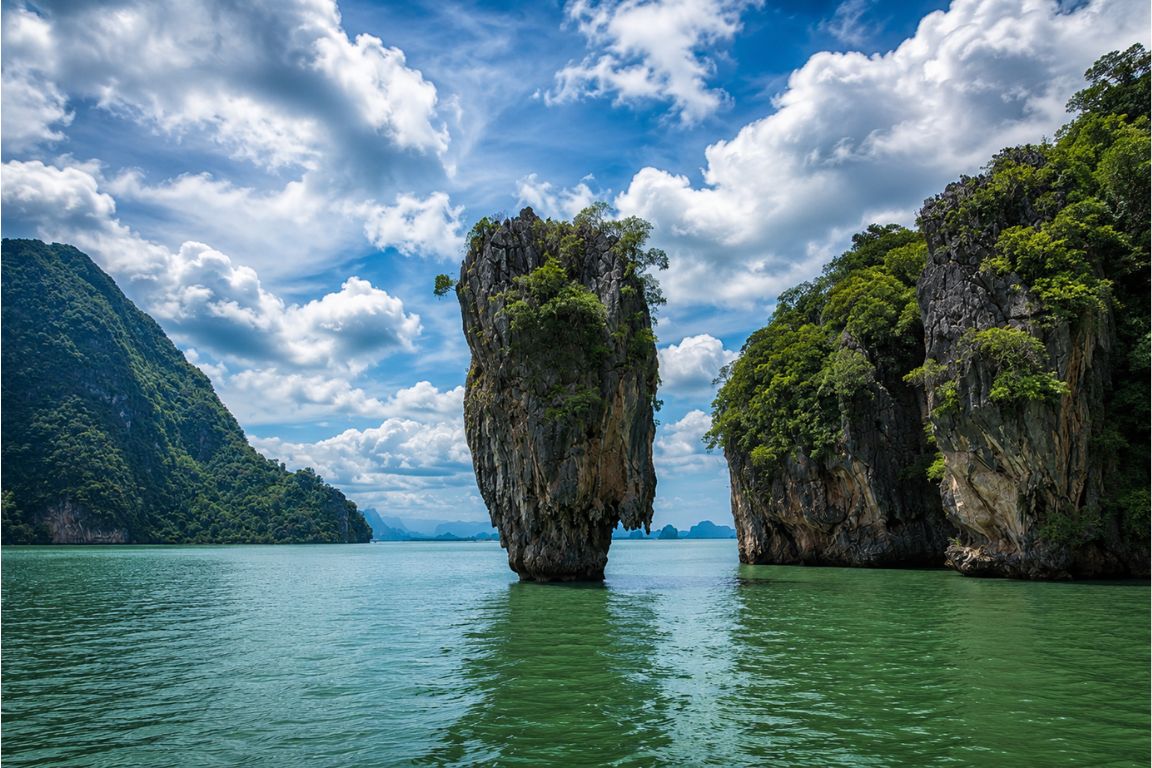
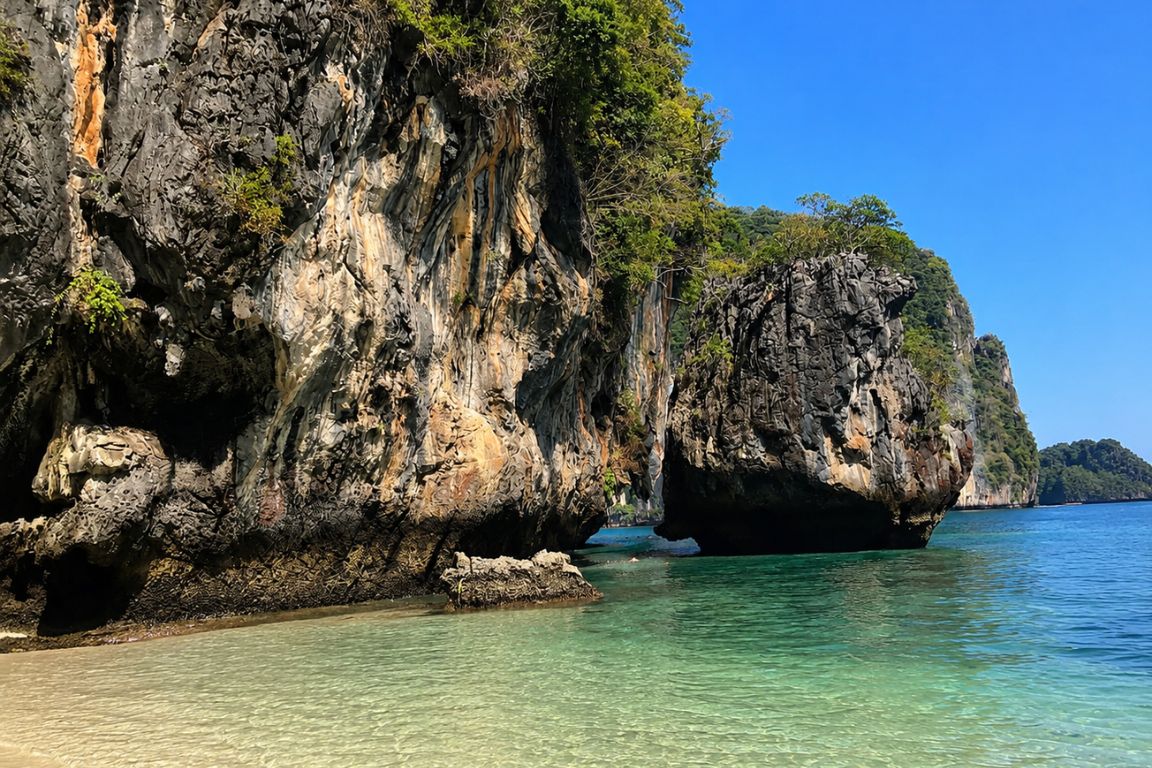
The Thai name describes the geology better than the film does. Khao Phing Kan means hills leaning against each other, and that is literally what you walk past on the landing beach: a cliff face split and tilted into its neighbour, with a narrow wedge of shade underneath. Ko Tapu, the spike offshore, translates as nail island. Both are what remains of a limestone platform laid down under a shallow sea, then eaten out from below across hundreds of thousands of years until only the hardest cores were left standing.
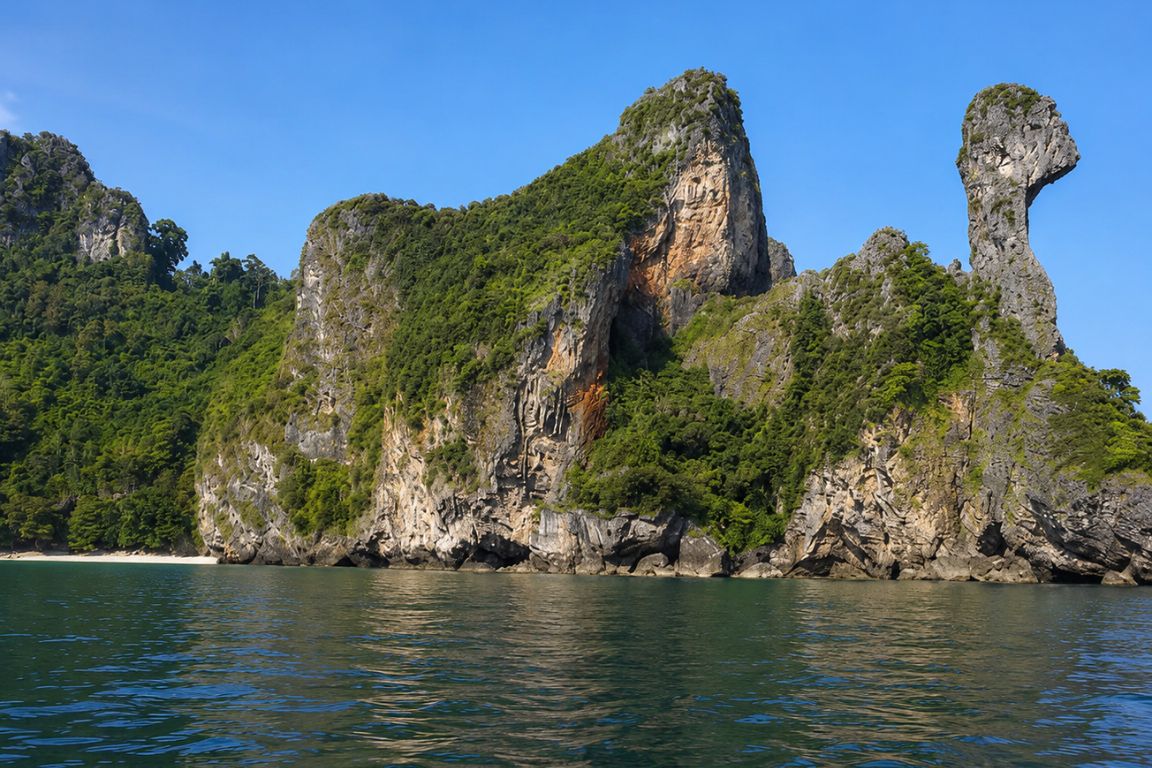
That process is the whole of Phang Nga Bay in miniature. The bay between Krabi and Phuket holds more than forty karst islands built the same way, many of them hollow inside, some with collapsed roofs that opened them to the sky. Khao Phing Kan is not the most dramatic of them. It is the one a film crew chose in 1974, and popularity in Thailand compounds.
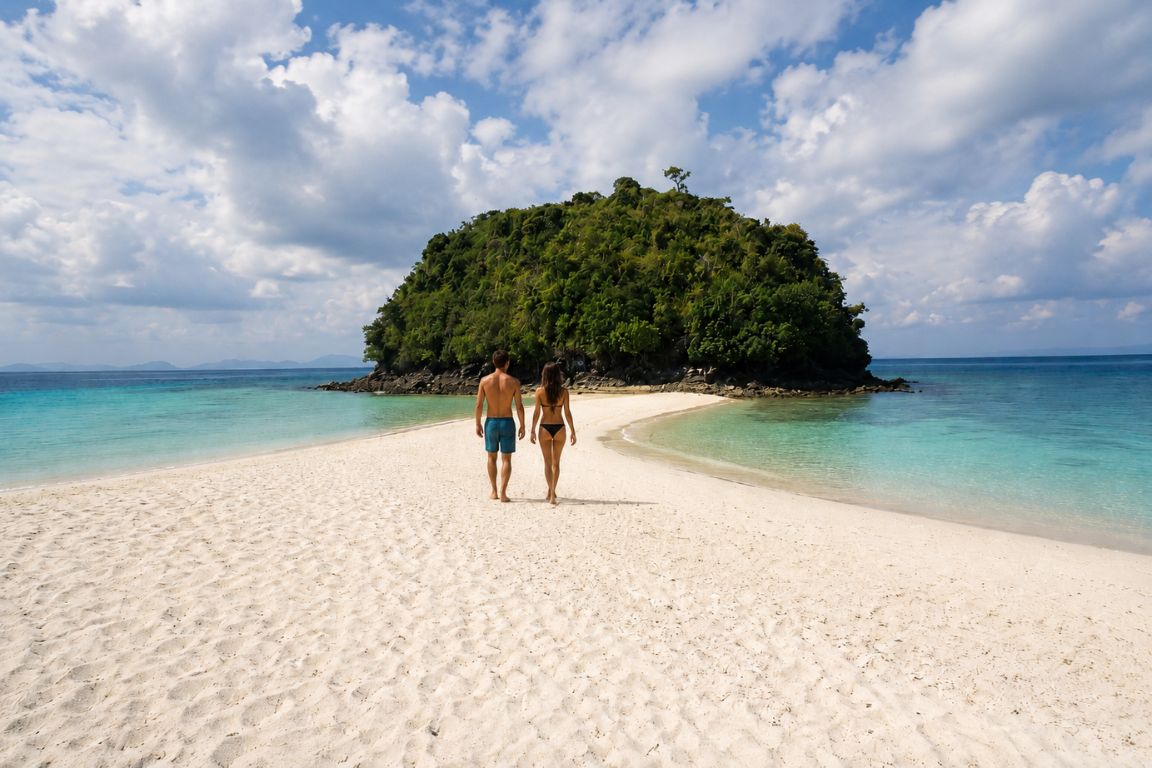
Nothing about the island rewards a long stay. The interior is small, the walkways are fixed, and the viewing beach on the western side is where everyone ends up taking the same photograph from roughly the same three metres of sand. That is not a criticism. It is a description of what you are buying: a landmark stop inside a much longer day on some of the most photogenic water in Southeast Asia.
| Detail | What it means for your day |
|---|---|
| Official name | Khao Phing Kan, with the offshore spike Ko Tapu |
| Where it sits | Ao Phang Nga National Park, in the bay between Krabi and Phuket |
| Film connection | The Man with the Golden Gun, 1974 |
| National park fee | 300 THB per adult foreigner, cash, not included in most tour prices |
| Distance from Ao Nang | About 60 km in total, by road then boat |
| Time actually on the island | 30 to 60 minutes on a standard tour |
| What you do there | Photograph Ko Tapu, walk a short causeway, pass souvenir stalls |
| Crowd pattern | Boats stacking at the pier from about 10am in peak season |
| Best suited to | Film fans, first-timers to the bay, anyone who wants the canoe legs |
Is James Bond Island Worth Visiting?
Yes, if you book it for the bay rather than for the island. Ko Tapu is genuinely extraordinary and the boat legs through Phang Nga are the strongest part of the day. The island itself is compact, souvenir-heavy and busy by mid-morning. Travellers who arrive with that expectation rate the trip very highly.
The gap between the photograph and the experience is where disappointment lives. What the photograph does not show is the row of stalls selling keychains and T-shirts along the walkway between the landing beach and the viewing beach, the short queue for the best Ko Tapu angle during peak hours, or the longtails jostling at the pier from mid-morning onward. People who arrive expecting solitude in a cinematic landscape describe something closer to a theme park than a national park.
People who arrive early, or who treat the island as one stop in a bay day rather than the point of it, describe something else entirely. They talk about the cave lagoons at Koh Panak, the buffet in the floating village, the way the karsts change colour as the light moves across them. The island becomes a good half hour inside a very good day. That framing can shape how a traveller judges the trip.
If you are choosing between this and a Krabi-side island day, the split is set out in our James Bond Island vs Hong Island comparison: one is a landmark, the other is a full day in the water. This page is about the landmark, and about doing it properly.
How Do You Get to James Bond Island From Krabi?
One listed speedboat route meets in Ao Nang and travels from Krabi to James Bond Island by sea. Tours from Krabi run a minivan transfer of roughly 90 minutes to a Phang Nga pier, then 30 to 45 minutes by longtail or speedboat through the bay. Listed Krabi tours run seven to eight hours, with transit varying by route and boat type.
That road leg is the part booking platforms understate. Ninety minutes is a good-traffic figure; peak season pushes it closer to two hours, and traveller reports consistently note the transfer running longer than advertised. The scenery on that stretch is ordinary Thai countryside, not Andaman karst. You are paying road time to reach water that Phuket-based boats reach directly.
From the Phuket side the arithmetic flips. A speedboat leaving a Phuket marina is roughly 40 kilometres of sea from the bay's cave islands and reaches the first stop in about 40 minutes, with no road transfer at all. The listed speedboat alternative meets in Ao Nang and travels from Krabi by sea, with other pickup arrangements depending on hotel location. If Phang Nga is a priority and your dates allow a night on that side, it is the better version of the day.
If you are Krabi-based and unwilling to move, the trip still works. It simply costs more hours than a Krabi-side island day. Weigh that honestly before committing, because the full range of boat tours from Krabi includes days that put six hours in the water for similar money.
| Route | Distance | Travel time | Mode |
|---|---|---|---|
| Ao Nang to Phang Nga pier | Road leg | 90 min, longer in peak season | Minivan |
| Phang Nga pier to Khao Phing Kan | Sea leg | 30 to 45 min | Longtail or speedboat |
| Phuket marina to the bay's cave islands | About 40 km by sea | About 40 min | Speedboat, no road leg |
| Full day from Krabi | About 60 km total | 8 to 9 hours | 4 to 5 hours in transit |
| Full day from the Phuket side | Sea only | About 8 hours | Most of it on or in the water |
What Does the Day Look Like, Stop by Stop?
Stop patterns vary by product. The listed routes combine James Bond Island with different places and activities, so compare the exact itinerary before booking.
Koh Panak usually comes first, and it is the stop that surprises people. The boat pulls up under a cliff, you transfer into a sea canoe with a paddler, and the guide takes you through a tunnel into an inner lagoon with no sight line from outside. The listed Krabi speedboat route does not specify Koh Panak cave chambers or a mangrove-lagoon canoe stop.
The supported longtail route lists James Bond Island, Panyee and Wat Suwan Kuha, while the sea-from-Krabi speedboat combines James Bond Island with Hong Islands and Koh Yao Noi.
The order shifts with the tide and with how many other boats are moving. A good guide reshuffles the sequence to keep you out of the mass-tour flotilla, which is a large part of what you are paying for. Itineraries are described as subject to change on tidal grounds, and that flexibility is a feature rather than a disclaimer.
| Stop | Roughly how long | What happens |
|---|---|---|
| Koh Panak caves | 45 to 60 min | Sea canoe through a tunnel into an inner lagoon and mangrove forest |
| Talu Island | 30 to 45 min | Guided canoe through a second cave system |
| Khao Phing Kan and Ko Tapu | 30 to 60 min | Landing, causeway walk, the photograph, souvenir stalls |
| Koh Panyi floating village | About 60 min | Buffet lunch over the water, short walk through the village |
| Naka Island | About 45 min | Swim and beach time before the return leg |
What Do the Canoe Legs Actually Add?
They are the difference between seeing the bay and getting inside it. The canoe takes you through limestone tunnels into hongs, open-sky chambers ringed by cliffs that are invisible from the water outside. A paddler handles the boat through the dark sections, so no experience is needed.
Hong is Thai for room, and that is exactly what a hong is. The tunnel ceiling drops as you enter, sometimes low enough that you lie flat while the paddler pulls the canoe forward by gripping the rock overhead. Then the passage opens into a chamber with walls rising thirty, fifty, occasionally a hundred metres, a circle of sky above, and water still enough to hold the reflection. The temperature drops. The noise of the tourist circuit outside stops existing.
Koh Panak alone holds several of these systems, with names guides use for the bat colony, the stalactite formations that catch light, the oyster chamber and the mangrove passage. The largest hongs have their own micro-ecosystems: macaques, water monitors, kingfishers, sea eagles. This is the part of a Phang Nga day people remember longest, and our full breakdown of sea-cave canoeing covers the tide mechanics that decide whether a given cave is open at a given hour.
Two Krabi-side alternatives cover similar ground with no road transfer. The Bor Thor sea-cave kayaking tour heads an hour north to cave rivers holding prehistoric paintings, and the deep-mangrove and limestone canyon kayak tour is a four-hour paddle at Ao Thalane, 20 minutes from Ao Nang. Neither has Ko Tapu. Both have the tunnels.
How Much Does a James Bond Island Day Cost?
Group tours from Krabi run 1,300 to 2,900 THB per person, with the spread reflecting the minivan transfer, boat type and number of stops. Park-fee treatment varies by tour: some listed options include entry, while another charges it separately. Check the listing for the live total on your date and confirm which transfers, fees, meals and activities are included.
Two things drive the price gap at the same destination: how many people share your boat, and how much of the day is spent moving rather than stopping. Compare group size, route, canoeing, lunch and transfer details directly because inclusions differ by product.
Budget the park fee separately and carry it in cash. It is collected at check-in or on landing, card is not an option, and guides cannot cover it for you. Children pay a reduced rate. Anything you buy on the island itself, from cold drinks to keychains, is cash as well.
Check whether gratuities are excluded on your selected tour and carry small notes if you plan to tip. Paddlers work the caves all day, know where the photographs are, and the difference between a good cave session and a great one is often the person sitting behind you.
| Line item | Typical figure | Notes |
|---|---|---|
| Group tour from Krabi | 1,300 to 2,900 THB per person | Includes the road transfer both ways |
| Speedboat tour with canoeing and lunch | Around $119 per person | Phuket-side departure, check live prices on the listing |
| National park fee | 300 THB adult, 150 THB child | Cash, collected on the day, outside the tour price |
| Paddler tip | Your call, small notes | Not included on any tour |
| Drinks and souvenirs on the island | Cash only | No card facilities at the stalls |
| Alcohol | Sold at the marina, not on board | Never part of an included package |
When Is the Best Time of Year to Go?
November through April is the reliable window. January to March gives the glassiest water and the clearest light for canoeing, April to June the calmest crossings and the worst heat, July to October the most dramatic cloud-wrapped karsts alongside real tide and weather disruption.
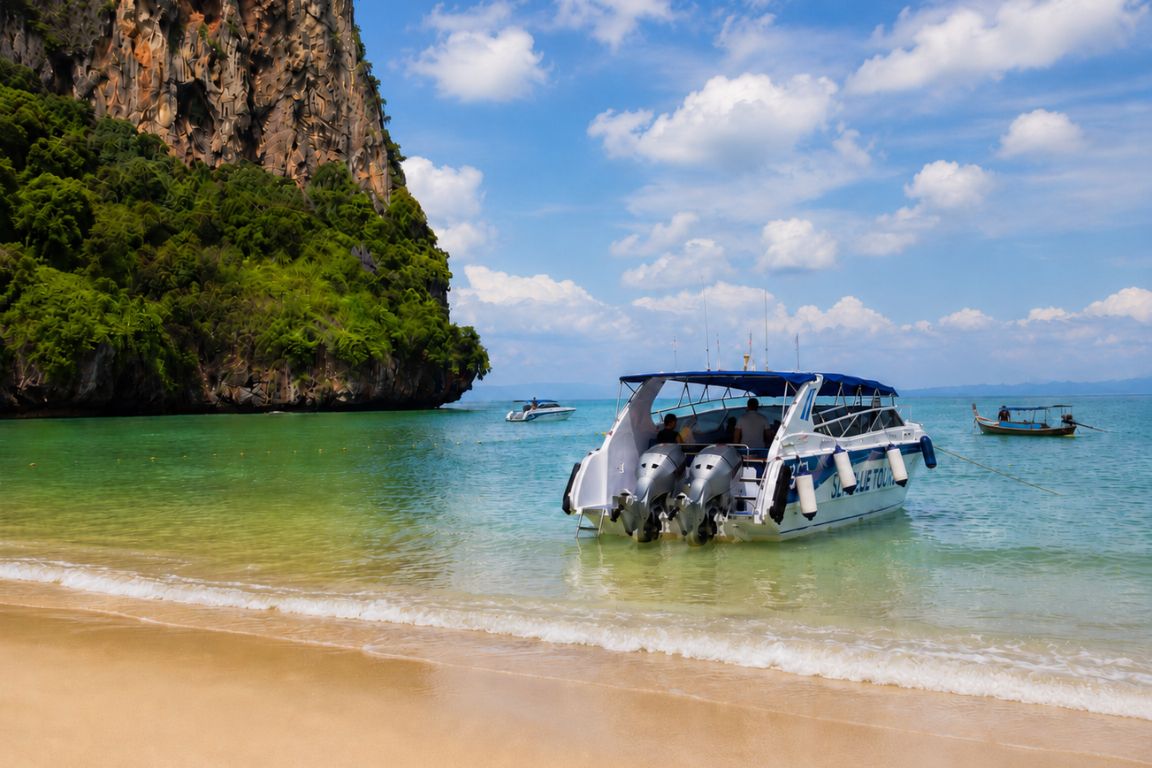
Phang Nga sits in more sheltered water than the open Phi Phi crossing, which means a bay day survives conditions that cancel other trips. That does not make it weatherproof. Cave access is a tide question before it is a rain question, and a heavy monsoon week changes the tide behaviour and the sea state on the run out.
Peak season brings a different problem, and it is boats rather than weather. December and January put the largest number of vessels in the bay at the same hours, which is when the pier at Khao Phing Kan gets genuinely congested. March and April thin that out while conditions stay good, which is why they are the value months for this particular trip. The wider month-by-month picture sits in our guide to Krabi in the dry season.
| Window | Water and light | The trade-off |
|---|---|---|
| January to March | Glassy emerald water, clearest visibility in the caves | Check live availability for your travel date |
| April to June | Calmest crossings of the year | Peak heat, shade and water discipline matter |
| July to October | Most dramatic karst scenery, cliffs in cloud | Higher rainfall, itinerary reshuffles on tide grounds |
| November to December | Conditions settling into the dry pattern | Late December is the busiest fortnight of the year |
What Should You Bring?
Cash for the park fee, sun protection you can reapply, swimwear under your clothes, a dry bag or waterproof pouch for your phone, and shoes you do not mind soaking. The canoe legs get you wet whether or not you plan to swim.
The most common regret on this trip is not carrying small notes. Park fee, drinks, souvenirs and tips all run on cash, and there is no machine anywhere useful. The second is a phone with no waterproofing taken into a canoe and then into a cave, which is exactly where you want to be photographing.
Dress for a boat rather than a temple. There is no dress code at Khao Phing Kan, but the floating village at Koh Panyi is a working Muslim community and covering your shoulders during the lunch stop is a courtesy that costs nothing. A light long-sleeve layer handles that and the sun at once.
| Item | Why it earns its space |
|---|---|
| Dry bag or waterproof phone pouch | Canoe legs, cave passages, spray on the crossing |
| Reef-safe sunscreen | Long exposure on open deck, little shade at the stops |
| Light long-sleeve layer | Sun cover on deck, modest cover at the village lunch |
| Swimwear worn under clothes | Changing facilities at the stops are minimal |
| Secure strap for sunglasses and cameras | Low ceilings in caves, wind on the crossing |
| Towel and a dry shirt | You come back damp regardless of plans |
Check your tour’s fee treatment and payment instructions before departure
Who Should Skip This Trip?
Pregnant travellers and anyone with back or neck problems should avoid the speedboat transit. Minimum ages vary: the speedboat route starts at age four, while the listed longtail accepts ages two and older, and the boat and canoe transfers make the day unsuitable for wheelchair users. Anyone with a single free day in Krabi is usually better served by an island day.
The speedboat point is not a formality. A fast hull crossing open water slams, and the impact travels up the spine of whoever sits at the front. If someone has a back condition, compare each operator’s restrictions before choosing any boat format, and the difference is set out in our comparison of longtail vs speedboat travel.
The one-free-day case is about return on hours. Four to five hours of transit inside a nine-hour day is a poor exchange for a traveller who came to Krabi for water time. Two free days changes the answer: one island day, one bay day, in either order.
| Traveller | Verdict |
|---|---|
| Film fan or first-timer to Phang Nga | Go, and go early in the morning |
| Sea-cave and kayak enthusiast | Go, the canoe legs are the reason |
| One free day, Krabi-based | Skip, take a Krabi-side island day instead |
| Family with a child under three | Not accepted on the speedboat tour |
| Back, neck or heart condition | Avoid fast hulls, consider a longtail itinerary |
| Wheelchair user | Not accessible, boat and canoe transfers throughout |
| Staying on the Phuket side | Go, the sea-only version is the better day |
How Does It Compare with a Krabi-side Island Day?
A bay day buys you caves, a film landmark and forty karst islands at the price of four hours in a van and on transit. A Krabi island day buys six hours of swimming, lagoons and beaches twenty minutes from the pier. Neither replaces the other, and two days covers both.
The clearest way to see the difference is time on target. On a Phang Nga day, destination time is split across five short stops. On a Krabi island day such as Hong Island's hidden lagoon, you get three to six hours in one place, with swimming, a viewpoint climb and water calm enough for children to wade. Different products, sold as though they were the same thing.
For a private Krabi-side alternative, listed charters let you customize Hong Islands or the 4 Islands rather than James Bond Island. For the wider planning picture, our Phang Nga Bay tours guide covers the bay as a whole rather than this one island.
Frequently Asked Questions
Why is it called James Bond Island?
The island is officially Khao Phing Kan. It appeared in the 1974 film The Man with the Golden Gun, and the nickname replaced the real name almost everywhere in the tourist trade. The rock in the photographs is Ko Tapu, the 20-metre limestone spike standing about 40 metres offshore from the main beach.
How long does a James Bond Island tour from Krabi take?
Eight to nine hours door to door. That breaks down as roughly 90 minutes by minivan to a Phang Nga pier, 30 to 45 minutes by boat into the bay, four or five stops including the island itself, then the same journey in reverse. Around four to five hours of the day is transit.
Can you swim at James Bond Island?
Not really. The beach is small and the water near the pier is busy with boat traffic, so swimming is not part of the stop. Most bay itineraries include a proper swim elsewhere, usually off a sand beach such as Naka Island on the return leg, plus the canoe sessions in the cave lagoons.
Do you need to pay a national park fee?
Yes. Fee treatment varies by tour. Some listed options include park entry, while another lists a separate entrance charge payable at entry. Bring small notes, because there is nowhere useful to change money once you have left your hotel.
Is it better to go from Krabi or from Phuket?
From Phuket, if your dates allow it. A Phuket departure reaches the bay by sea in about 40 minutes with no road leg, while a Krabi departure adds around 90 minutes of minivan each way. The Krabi version still works, it just spends more of the day off the water.
What is the best time of day to arrive at the island?
As early as your tour allows. Boats begin stacking at the pier around mid-morning and the queue for the best Ko Tapu angle forms with them. An earlier arrival may offer a different crowd experience, but timing depends on the itinerary and operating conditions.
Check your travel date before arranging the rest of Krabi
Match the outing to your plans
Blank fields keep the initial suggestion. Age pricing alone does not confirm suitability; if eligibility is unverified, the tool will not recommend a match. Check pickup and restrictions for your selected package.
Compare two total quotes
Use current quotes in the same currency, including park fees, transfers and option extras.
Initial recommendation. Adjust the optional choices to match your plans.
Krabi to James Bond and Hong Islands Offbeat Speedboat Tour
This eight-hour speedboat day combines James Bond Island with Hong Islands, Koh Yao Noi, beach lunch and snorkeling.
8h · English guide listed · · Confirm your selected option’s pickup, inclusions, fees and participant restrictions before booking.
Choose a date to view the published schedule. Confirm availability and final price on Viator.
No reviewed option matches these choices.