Krabi in Rainy Season
The rainy season in Krabi is far more usable than most first-time travelers expect, especially from June through August when mornings are often clear and many boat tours still operate normally.
Curious what a private 4 Islands longtail could add to a flexible rainy-season plan? Explore Private 4 Islands Longtail.
Last updated: June 17, 2026
Krabi’s rainy season runs May through October. It is not six months of non-stop rain. June through August typically delivers clear mornings with heavy afternoon showers. September and October are genuinely wet with real boat tour cancellation risk. Inner circuit boat tours (4 Islands, Hong Island) run most mornings in June through August. Outer island parks (Koh Rok, Koh Haa) close mid-May. Accommodation runs 30 to 50% cheaper than peak. The inland activities, Emerald Pool, Tiger Cave Temple, Khlong Thom hot springs, kayaking in Than Bok Khorani, are actually better in rainy season: lush, cool, fewer crowds. If boat tours are the primary reason for your trip, visit November through April. If you want Krabi on a budget with flexibility and an interest in more than islands, the early monsoon months have a real case.
Booking choice: Check your date for a private 4 Islands longtail before arranging the rest of your trip. Check dates for Private 4 Islands Longtail.
Krabi Rainy Season: Quick Reference
| May | ~160mm | Transitional; unpredictable mix | Variable; Koh Rok/Koh Haa closing mid-month | 15-25% cheaper |
| June | ~185mm | Afternoon showers; mornings often clear | Inner circuit runs most mornings | 30-40% cheaper |
| July | ~210mm | Afternoon showers; mornings variable | Inner circuit most mornings; Phi Phi cancels more | 30-40% cheaper |
| August | ~225mm | Afternoon showers; mornings variable | Similar to July; some operators offer 20% discount | 30-40% cheaper |
| September | ~355mm (peak) | Heavy rain; can persist multiple days | High cancellation rate; avoid for boat tours | 50-60% cheaper |
| October | ~338mm | Heavy rain; 22 rainy days average | High cancellation rate; outer parks closed | 50-60% cheaper |
Rainfall data from 30-year climate records (Thai Meteorological Department). Boat tour outlook based on operational experience from Krabi Boat Tours, 2011 to present.
What Is Krabi Like in Rainy Season?

Krabi in rainy season is not what the phrase implies. From June through August, the typical day delivers a clear or partly cloudy morning, sunshine from 7am to early afternoon, a heavy tropical downpour for one to two hours in the mid to late afternoon, and a clearing by evening. The landscape goes intensely green. The air cools after rain. The crowds on beaches and islands are a fraction of peak season. Accommodation costs 30 to 50% less. September and October shift the pattern toward genuine sustained rainfall and are the months that earn the reputation the whole six-month window gets assigned.
The southwest monsoon arrives in Krabi around May and drives the weather pattern through to October. What this produces at ground level depends strongly on which month you are in. May is transitional: some excellent days, some disrupted days, the outer island national parks beginning to close mid-month, and an unpredictability that makes it harder to plan than either a dry-season trip or a committed low-season trip. June, July, and August follow a more consistent daily rhythm that experienced Krabi visitors learn to work with. September and October break that rhythm and deliver the genuinely difficult conditions that define the worst version of a rainy-season Krabi trip.
The average annual rainfall in Krabi is 2,475mm, most of it falling between May and October. September averages 355mm across the month, distributed over roughly 20 rainy days. October averages 338mm across 22 rainy days. These are numbers that need context: 22 rainy days in a 31-day month still leaves nine dry days, and a rainy day in a tropical climate is not necessarily a day of constant rain. It is typically a day on which significant rain fell at some point, often in one or two concentrated bursts rather than as persistent drizzle. That distinction matters for planning activities, though it provides less comfort for boat tour scheduling, where a two-hour downpour at sea is a genuine safety consideration regardless of how the hours around it look.
The visual character of rainy-season Krabi is something the dry-season photographs don’t capture. The jungle behind Ao Nang is a deeper, more saturated green than it reaches in January. The limestone karsts reflect differently in overcast light than in full sun, picking up soft grey and silver tones that landscape photographers actively seek. The Emerald Pool runs at a fuller, more vivid colour when fed by recent rain. The waterfalls that are modest trickles in February flow properly and loudly in August. Krabi in rainy season looks more tropical, more alive, and more dramatic than Krabi in peak season. The weather that produces these conditions also complicates the boat tour that most visitors come for.
Which Boat Tours Still Run in Krabi During Rainy Season?
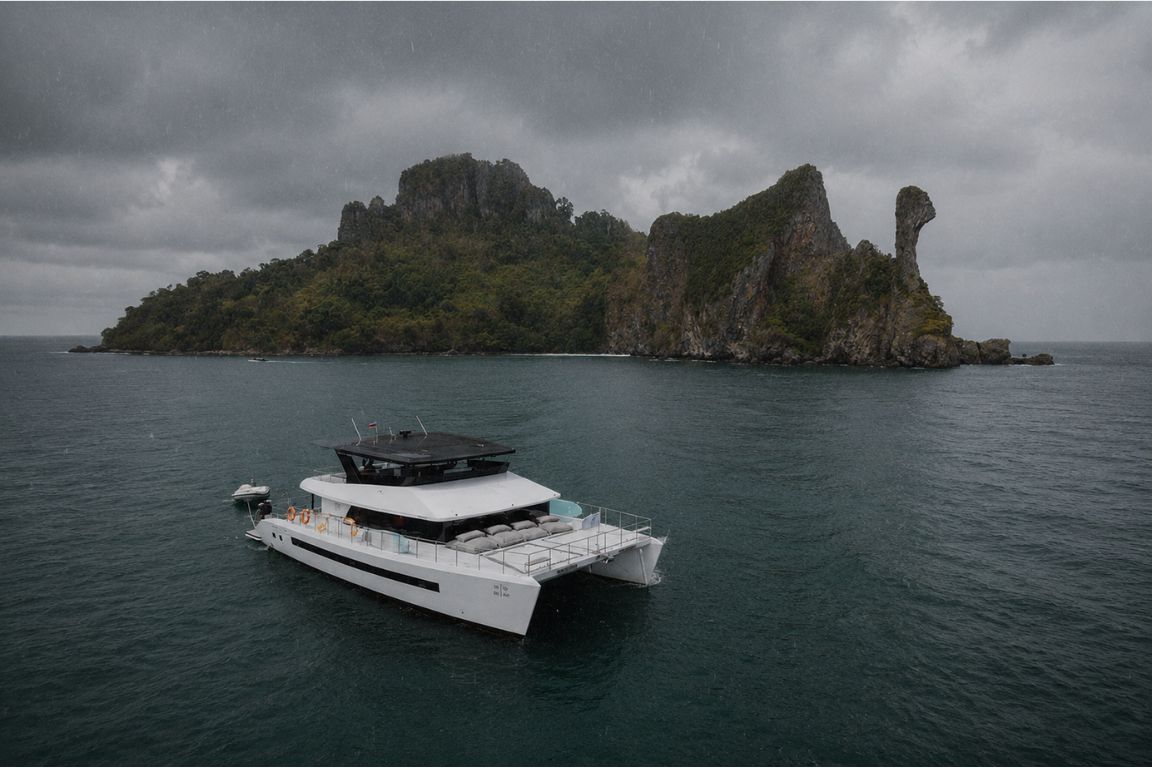 Inner circuit tours (4 Islands, Hong Island) continue operating through most of the rainy season on morning departures, with the highest reliability in June through August and the lowest in September and October. Sunset and dinner cruises run on suitable evenings throughout the season. Phi Phi day trips run but with significantly higher same-day cancellation probability on the open crossing. Koh Rok and Koh Haa are nationally closed from mid-May. private 4 Islands longtail charter on the inner circuit are the most flexible format in wet season because the captain can assess conditions and reroute on the day.
The 4 Islands route is the most weather-resilient boat tour in Krabi through the monsoon. The inner circuit sits in relatively sheltered water between the mainland and the outer karst formations, and on the calm mornings that June through August frequently delivers, the longtail crossing to Chicken Island and Koh Poda runs without difficulty. The snorkeling visibility drops in wet season from the 15-metre dry-season standard to roughly 6 to 10 metres at inner sites, but fish are still present and the reef sections at Koh Poda and Chicken Island still produce the encounters first-time snorkelers come for. What changes is the predictability: a June morning might be perfect and a July morning might see a 7am squall that delays or cancels the departure. Check conditions the night before and contact your operator by 7am on the morning of the tour.
Both routes cover stunning Andaman scenery but they deliver very different days on the water – our Hong Islands vs 4 Islands guide breaks down exactly what sets them apart and which one suits different types of travellers.
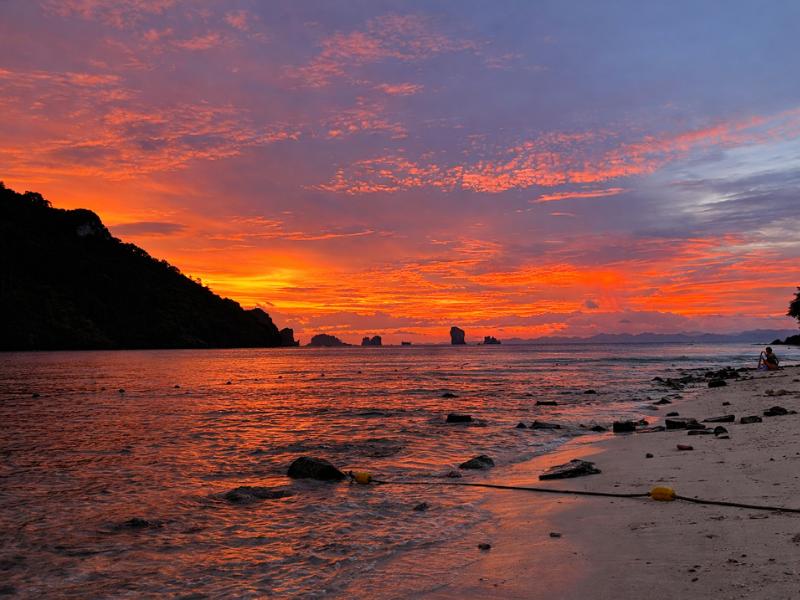
Sunset and dinner cruises on junk boats have a more specific operational window in wet season. Some operators close the cruise program during the core monsoon months, using the period for vessel maintenance and upgrades. Some cruises monitor low-season weather and cancel when conditions are unsuitable for sailing. A sunset cruise on a calm June evening, with dramatic monsoon cloud formations over the karsts and the western sky occasionally lit in extraordinary combinations of orange and grey, produces a different kind of visual experience to the postcard-blue dry-season version. Not better or worse, but genuinely distinctive.
Not sure which Krabi sunset cruise operators deliver a genuinely memorable evening versus just a boat ride with mediocre drinks and a disappointing view? Check out our Krabi sunset cruises guide before you book anything.
The Phi Phi day trip situation in wet season is the one most affected by open-water conditions. The 50-kilometre crossing to Koh Phi Phi requires a speedboat transit on open Andaman Sea that amplifies any swell present. In June and July on a calm morning, this crossing is manageable and the tour runs. In September on a day with sustained 1.5-metre swell, the crossing is rough, the landing at Tonsai pier is difficult, and the snorkeling visibility at Bida Nok drops to the point where the encounter quality is significantly reduced. Reputable Phi Phi operators make the cancellation decision at the pier on the morning based on current conditions, not in advance. Book with free cancellation and check conditions the night before.
Want to know which Krabi boat tour actually gets you to the best islands without spending half the day in transit? Here’s our Krabi boat tours guide so you book the right experience from the start.
What Are the Best Activities in Krabi During Rainy Season?
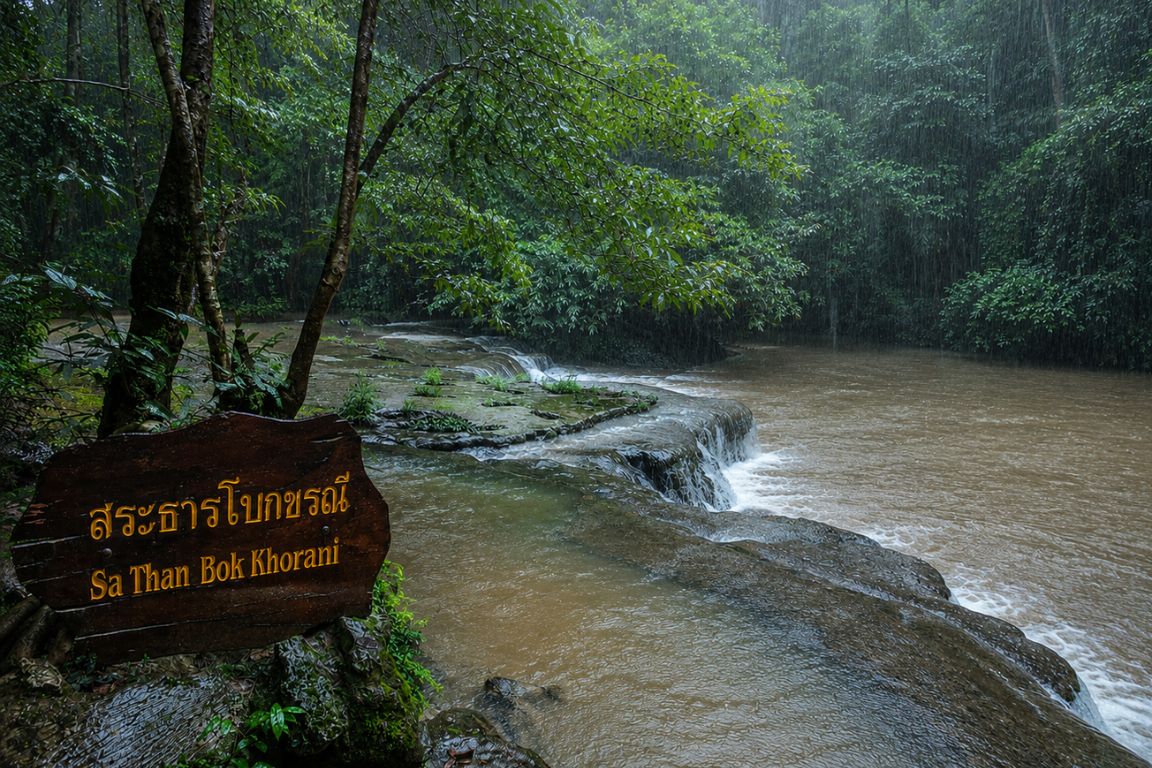 The five activities that are genuinely better or equally good in rainy season: the Emerald Pool and Khlong Thom hot springs (lush, cooler, less crowded), Tiger Cave Temple (quieter climb, dramatic cloud views from the summit), kayaking in Than Bok Khorani National Park (mangroves and sea caves are fully accessible regardless of weather), cooking classes in Ao Nang or Krabi Town, and night wildlife walks in Krabi’s rainforest (wet season produces the highest biodiversity in the forest at night). These are not consolation prizes for a failed beach holiday; they are experiences with no equivalent in peak season.
The Emerald Pool at Khao Pra Bang Khram Wildlife Sanctuary earns its name most fully in rainy season. The pool is a naturally warm mineral spring surrounded by lowland rainforest, and after weeks of rain the surrounding jungle reaches a density of green that the dry season photographs cannot approximate. The pool itself runs fuller and clearer after rain rather than after drought. The crowds that arrive by 10am in peak season are a fraction of their dry-season size in July and August. A visitor who arrives at opening time on a wet-season morning may have the pool largely to themselves for the first 30 to 45 minutes. The 200 THB entry fee is identical regardless of season.
The Khlong Thom hot springs (Namtok Ron) run better in wet season by the same logic as the Emerald Pool. The thermal water flows at consistent temperature year-round (approximately 35 to 40 degrees Celsius) but the approach, through jungle paths that are dry and dusty in February, is lush and shaded in August. The combination of arriving damp from a brief rain shower and then soaking in thermal water is an experience that dry-season visitors cannot access. The hot springs sit roughly 90 minutes by road from Ao Nang and are almost always combined with the Emerald Pool visit in a half-day or full-day jungle tour.
Tiger Cave Temple’s 1,260-step climb to the summit is physically demanding in any season but is most rewarding in rainy season for a specific reason: the views from the summit (360-degree panorama over Krabi Province, across to the Andaman Sea and the offshore islands) are framed by monsoon cloud formations rather than flat blue sky. The limestone karsts emerging from layers of cloud with green jungle below them is the version of that view that photographers who have done the climb multiple times in different seasons describe as the more dramatic one. Bring footwear with grip, expect wet steps, and climb early before the heat builds.
Kayaking schedules, routes, and cave access depend on current conditions and the chosen operator. Rain on a kayaking tour through a sea cave is a non-event; you are already wearing minimal clothing, already in contact with water, and the cave itself provides complete shelter. The mangrove channels in wet season carry more water and are paddled at higher tide levels that open sections sometimes impassable in dry season. The bioluminescent plankton in some of the cave passages actually peaks near the new moon in the early monsoon months when plankton concentrations are highest.
Want to explore Krabi’s hidden coastal world from water level rather than just from a boat deck? Here’s our sea cave canoeing in Krabi guide so you know exactly what you’re signing up for.
How Bad Is the Rain in Krabi During Monsoon Season?
June through August: not as bad as the word “monsoon” implies. Rain falls most days but usually as a heavy afternoon or evening shower lasting one to two hours, with clear or partly cloudy mornings. September and October are genuinely disruptive: September averages 355mm across roughly 20 rainy days, October averages 338mm across 22 rainy days. Multi-day weather systems during these months produce sustained conditions where boat tours cannot run for 48 to 72 hours at a stretch. These months are not impossible to visit Krabi but they carry real risk for plans built around boat tours.
The June through August rain pattern follows a diurnal rhythm familiar to anyone who has spent time in tropical regions. Solar heating through the morning drives moisture from the warm Andaman into the atmosphere, building cloud through mid-morning, producing the afternoon or early evening convective storm, and then clearing as the energy dissipates. The result is a predictable daily structure: mornings for boat tours and outdoor activities, afternoons for shelter and indoor alternatives. Travelers who understand this structure and plan around it get a functional Krabi experience at a significantly lower cost than peak season.
The September and October shift is more significant. The southwest monsoon reaches peak strength in these months, and the weather pattern changes from the diurnal convective cycle to sustained synoptic systems driven by larger pressure patterns. This produces multi-day rain events that don’t follow the morning-clear, afternoon-rain pattern. A Monday that looked manageable can lead into a Tuesday and Wednesday of sustained conditions that ground all boat tours. The 2025 southern Thailand floods, which affected Krabi, Phuket, and surrounding provinces in November 2025, were a reminder of how the tail end of the monsoon season can cascade into flooding that disrupts transport beyond just boat tours.
The honest characterisation of each month: May is like a coin that comes up heads (good day) slightly more often than tails but with enough uncertainty to require flexibility. June through August is more predictable in its structure; mornings are more often workable than not. September and October are genuinely the worst months for anyone whose Krabi trip depends on boat tours running. If you are visiting in these months by necessity rather than choice, build two backup days into the itinerary, book everything with free cancellation, and have a full inland day programme ready to deploy when conditions ground marine activities.
Want to know how the monsoon season actually affects island hopping in Krabi and whether tours still run when the sky looks threatening? Here’s our weather impact on Krabi boat tours guide so you plan with realistic expectations.
What Are the Pros and Cons of Visiting Krabi in Rainy Season?
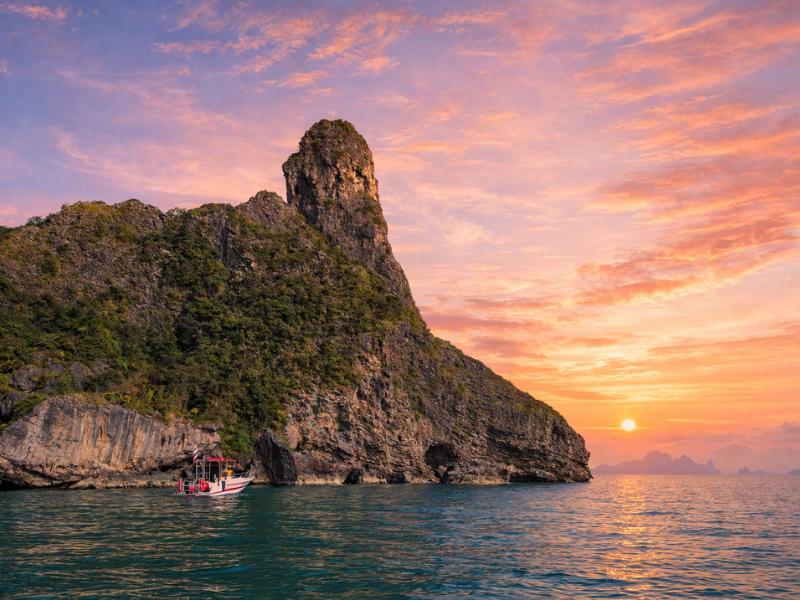
Pros: accommodation 30 to 50% cheaper than peak season, significantly fewer people on every beach and island on the days tours run, lush jungle and fuller waterfalls at inland sites, dramatic monsoon light and cloud formations for photography, smaller tour groups, and early-morning boat tours that feel like private charters because group sizes are a third of peak. Cons: real boat tour cancellation risk especially September and October, reduced snorkeling visibility at inner sites, outer island national parks closed from mid-May, and some tour operators reduce schedules or close entirely for maintenance.
The accommodation cost differential is the most concrete and consistent benefit. Accommodation prices vary by property and date; compare the same room category and cancellation terms for your travel window. The same quality of room, the same pool, the same breakfast, the same proximity to the pier, at roughly half the price. For a 7-night stay, that differential funds two or three extra boat tours, a day trip to the Emerald Pool and hot springs, several good dinners, and still shows a net saving. The beach and the islands on the mornings when conditions cooperate are the same beach and the same islands as in January. The rate card is not.
The crowd reduction on good weather days in the early monsoon months creates an experience that money cannot buy in peak season. A July morning at Koh Poda when the sea ran calm, two longtail boats at anchor instead of eight, the beach having space rather than towel-to-towel density, 20 minutes in the snorkeling zone without anyone else in the water: this is closer to what Krabi looked like before large-scale tourism arrived than anything available in December or January. The trade-off is that this experience is not guaranteed. It is the best version of a wet-season day, available on the days the weather delivers it.
The cons are specific rather than universal. Boat-tour disruption varies by date, route, sea conditions, and operator decisions, with no supplied month-by-month dataset establishing comparable cancellation rates. Snorkeling visibility reduction is real but not crippling on inner-circuit sites in the early monsoon months. The outer island closure is the sharpest concrete limitation: Koh Rok and Koh Haa close from mid-May and do not reopen until mid-October or November, and that closure is administrative rather than weather-dependent.
Not sure which Krabi snorkeling spots are worth the boat ride and which ones disappoint in person despite the photos? Check out our best islands for snorkeling near Krabi guide before you book anything.
What Do Travelers Consistently Get Wrong About Krabi Rainy Season?
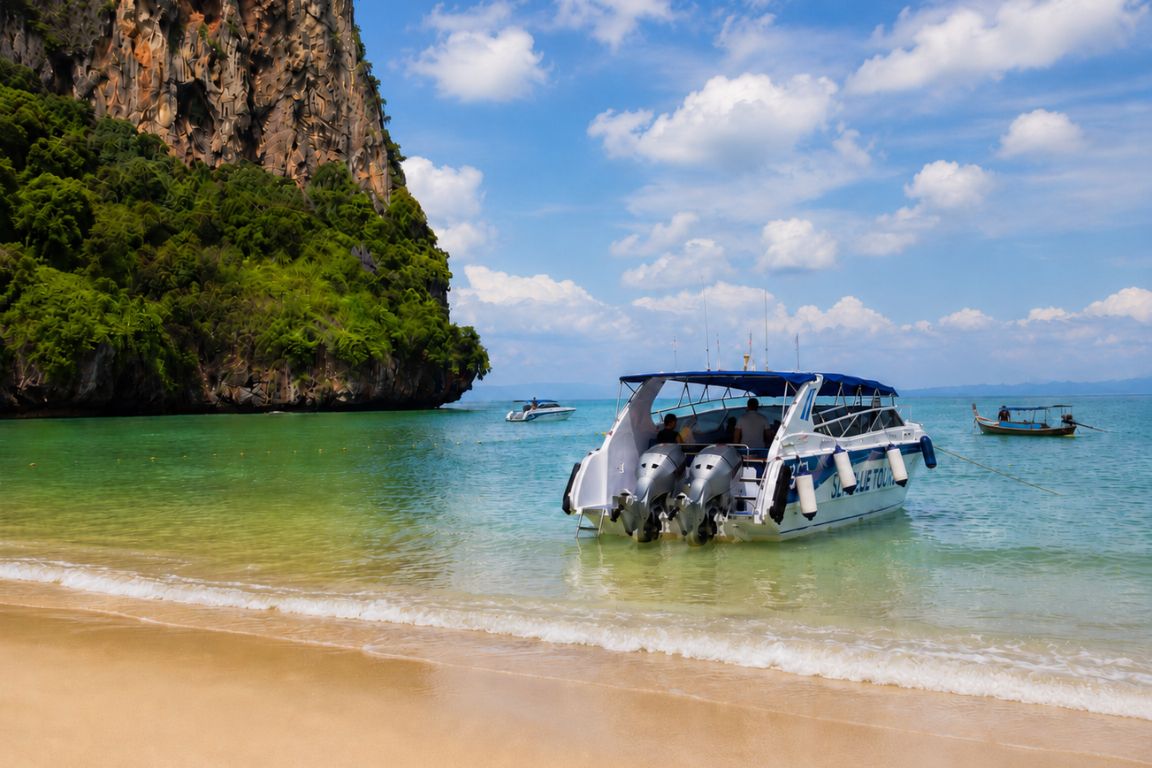 Three planning mistakes are treating every wet-season month as identical, choosing dates only for a lower hotel price, and relying on a fixed island-hopping itinerary. Keep room to change plans when the operator assesses weather and sea conditions.
A single rainy-season label hides day-to-day variation. A flexible itinerary can make use of suitable weather windows, but a clear morning or a particular month cannot guarantee that a boat tour will operate. Keep inland alternatives available and confirm the operator’s decision close to departure.
Low accommodation prices do not guarantee good value if the trip depends on boat tours that cannot operate. Compare the complete cost of your chosen dates, including cancellation and rescheduling terms, and keep enough flexibility for changing sea conditions.
The structural planning error is the most fixable. Rainy-season Krabi works well for travelers who restructure their itinerary around the conditions rather than imposing a dry-season itinerary onto a wet-season trip. This means booking morning boat tours rather than afternoon ones, identifying inland alternatives for each outdoor activity (Emerald Pool as the backup for a cancelled 4 Islands tour, Tiger Cave Temple as the backup for a cancelled Phi Phi day), using free cancellation booking policies throughout, and treating the one or two boat tour days as the centrepiece of a more diverse itinerary rather than the entire programme.
Want to make the most of Krabi’s best weather window without paying peak season prices for every boat tour and beach bar? Here’s our Krabi in dry season guide so you plan it right.
Which Months Are the Worst for Visiting Krabi in Rainy Season?
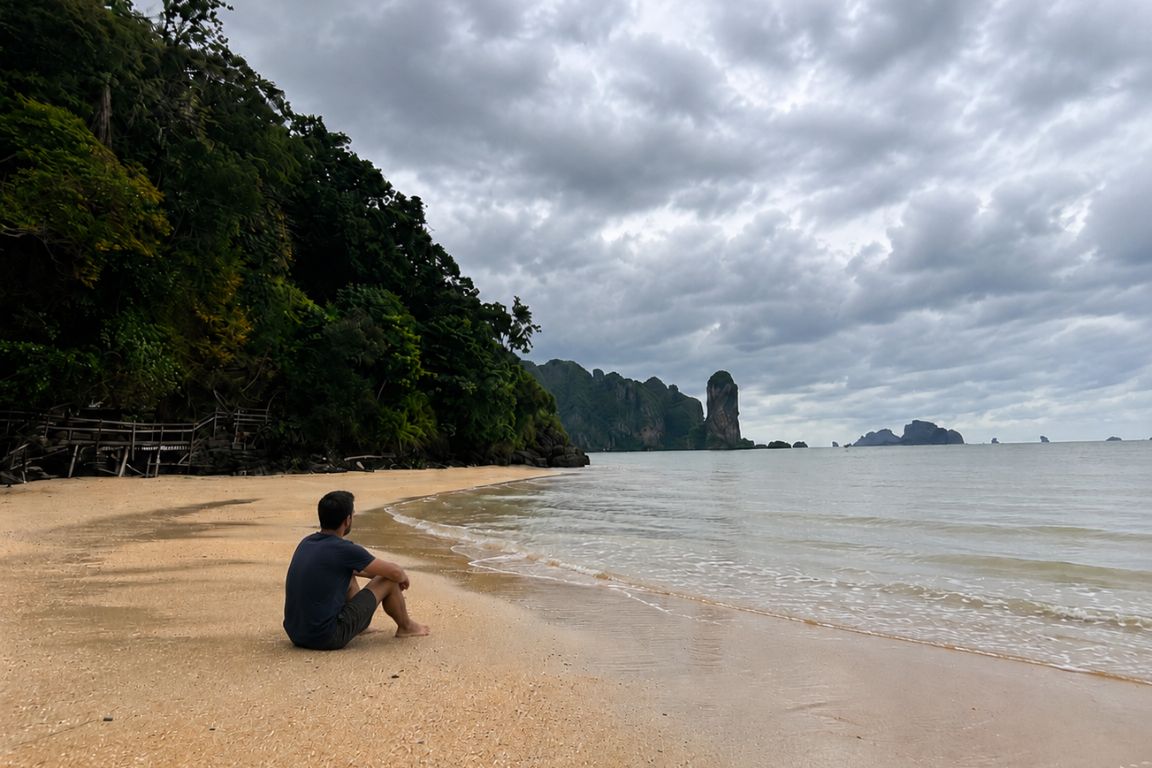 September is the worst month for boat tours in Krabi’s rainy season: highest average rainfall (355mm), roughly 20 rainy days, and multi-day weather systems that ground tours for 48 to 72 hours at a stretch. October is the second worst by rainfall (338mm, 22 rainy days) but sees improving conditions through the month as the monsoon begins to retreat. If boat tours are your primary goal, September is the month to avoid most firmly. If budget and inland activities are the priority and you accept boat tour uncertainty, October late in the month begins to show the transition toward dry season.
September’s specific difficulty is the sustained system problem. In June and July, most rain arrives as short convective afternoon showers that dissipate overnight. In September, the monsoon has enough energy to sustain weather patterns across multiple days without the morning clearance that makes early departures viable. Two consecutive days of cancelled tours in September is common enough to plan around. Three consecutive days is possible. A 7-day Krabi trip built around 4 or 5 boat tour days in September should plan for the real possibility that 2 or 3 of those days will not run.
October’s position is more nuanced. Average rainfall is slightly lower than September and the monsoon begins its retreat through the month, typically completing its withdrawal from Krabi by late October or early November. A trip to Krabi in the last week of October sits in a weather window that is beginning to improve: not reliably dry, but with better odds than September and with the knowledge that the following month will be the transition into excellent conditions. Late October in Krabi has a genuine case as a budget window for travelers who want to catch the tail of the low-season prices while the weather begins to work in their favour.
The July paradox is worth understanding: July is technically deep in the monsoon season, it draws the highest visitor numbers of any low-season month because of European school holidays, and yet it produces a meaningful proportion of good-weather morning boat tours. The accommodation savings are at their best (30 to 40% below peak), the islands on calm mornings are far less crowded than anything January produces, and the daily weather pattern is structured enough to plan around. July is arguably the best value month in the entire Krabi calendar for a traveler who builds the itinerary correctly.
Trying to figure out which months give you the best combination of good weather, flat water, and manageable crowds on Krabi’s most popular island routes? Check out our best time for boat tours in Krabi guide before you lock in your dates.
How Do You Plan a Krabi Trip Around Rainy Season?
 Four planning principles for a successful rainy-season Krabi trip: book all boat tours with free cancellation policies and contact operators the evening before each departure; build the itinerary with one inland backup activity for every boat tour day; choose June through August over September and October if you have date flexibility; and book morning departures for every water-based activity. A rainy-season Krabi trip that follows these principles produces, on most days, a version of the Krabi experience very close to the dry-season version at substantially lower cost.
The free cancellation requirement is non-negotiable for rainy-season bookings. A tour booked with a 24-hour non-refundable policy and cancelled by weather puts the refund decision in the operator’s hands under a policy designed for customer-initiated cancellations rather than weather events. Cancellation cutoffs and weather terms vary, so read the conditions attached to your selected departure. The price difference between free-cancellation and non-refundable bookings in Krabi is often minimal. The value difference in rainy season is substantial.
The inland backup structure is the planning element that converts a potentially frustrating rainy-season trip into a good one. For every boat tour day in the itinerary, identify the alternative inland activity that occupies the same day: Emerald Pool and hot springs as the jungle day, Tiger Cave Temple as the cultural day, kayaking in Than Bok Khorani as the water activity that runs regardless of sea conditions, cooking class as the rainy afternoon anchor. Pairing outdoor plans with suitable alternatives gives you more flexibility when conditions change.
Travel insurance covering weather-related activity cancellation is a sensible purchase for any rainy-season Krabi trip, particularly in September and October. Travel-insurance coverage varies; review weather exclusions, activity-cancellation terms, and claim requirements before purchase. The premium for a week’s travel insurance with weather coverage is typically small relative to the prepaid tour costs it protects. For a trip built significantly around boat tours in uncertain conditions, it converts an open-ended risk into a defined one.
For specific advice on which tours are running on your dates, current sea conditions, and how to structure a rainy-season itinerary that maximises the days that work, start with a private 4 Islands longtail offering a customizable four- or six-hour itinerary. We have been running tours through Krabi’s wet seasons since 2011 and understand which mornings are worth booking and which are not.
First time planning a Krabi trip around island hopping and not sure how to build it around everything else you want to do? Here’s our Krabi island hopping itinerary guide so the whole trip hangs together properly.
Rainy Season Planning Checks
Guest outcomes vary with travel dates, weather, rescheduling opportunities, chosen activities, and the cancellation terms attached to each booking.
Refund outcomes depend on the cancellation and weather terms attached to the selected booking. Before paying, compare the selected activity’s cancellation cutoff, operator-cancellation terms, and refund rules.
Frequently Asked Questions
Is It Worth Visiting Krabi in the Rainy Season?
Yes, with the right expectations and planning. June through August offers a workable version of Krabi at 30 to 40% lower prices: morning boat tours run most days, inland activities are actually better in wet season, and the islands on calm-weather mornings are significantly less crowded than peak season. September and October require more caution: boat tour cancellation probability is high and plans built around island hopping carry real risk. For travelers with flexibility and an interest in Krabi beyond just boat tours, the early monsoon months have a genuine case.
Do Boat Tours Run in Krabi During Rainy Season?
Inner circuit tours (4 Islands, Hong Island) run on most mornings in June through August when sea conditions allow. Departure decisions are made on the morning based on actual conditions, not in advance. Koh Rok and Koh Haa national parks close mid-May and reopen in October or November. Phi Phi day trips run but cancel more frequently on the open crossing. September and October have the highest cancellation rates of the year. Book with free cancellation and contact your operator the evening before every departure.
What Is the Weather Like in Krabi in July and August?
June through August follows a consistent tropical pattern: mornings are often clear or partly cloudy, heavy showers arrive mid to late afternoon and last one to two hours, then clear by evening. Average rainfall is 210 to 225mm per month, distributed across roughly 18 to 20 days. This is manageable with a morning-based activity structure. Departure times and durations vary; the supplied 4 Islands options run about five to six hours. July draws the highest visitor numbers of any low-season month because of European school holidays.
What Are the Best Activities in Krabi During Rainy Season?
The Emerald Pool and Khlong Thom hot springs are genuinely better in rainy season: lush, cooler, less crowded, with the pool running at fuller colour. Tiger Cave Temple’s 1,260-step summit offers dramatic monsoon cloud views over the karsts and Andaman Sea. Kayaking schedules and routes depend on current conditions and operator decisions. Thai cooking classes in Ao Nang or Krabi Town are perfect rainy-afternoon activities. Night wildlife walks in Krabi’s rainforest peak in wet season when biodiversity is highest.
Which Months Should You Avoid in Krabi for Boat Tours?
September and October carry the highest boat tour cancellation risk of the year. September averages 355mm of rainfall across roughly 20 rainy days; October averages 338mm across 22 days. Multi-day sustained weather systems are more common in these months than in the rest of the rainy season, and the outer island parks are closed administratively. If boat tours are your primary reason for visiting, September and October are the months to avoid. June through August is meaningfully better for morning tour reliability despite being technically part of the same rainy season.
How Much Cheaper Is Krabi in Rainy Season?
Accommodation runs 30 to 40% cheaper than peak season in June through August and 50 to 60% cheaper in September and October. Tour prices and booking terms vary by operator and travel date. Flights to Krabi International Airport (KBV) also trend cheaper in monsoon months. The total trip cost savings for a 7-night visit compared to a January equivalent can be substantial, running to thousands of baht across accommodation and flights, while the on-water experience on a good-weather morning is close to identical.
Written by Ryan Supakorn
Thai tour guide since 2011 · Founder, Krabi Boat Tours
Ryan has guided over 11,700 travelers through Krabi’s islands, lagoons, and coastline since founding the agency.
Check your actual travel date before making other Krabi arrangements
Match the outing to your plans
Seasonal service limits can change the suggestion. A month is not confirmation of weather or available seats.
Blank fields keep the initial suggestion. Age pricing alone does not confirm suitability; if eligibility is unverified, the tool will not recommend a match. Check pickup and restrictions for your selected package.
Compare two total quotes
Use current quotes in the same currency, including park fees, transfers and option extras.
Initial recommendation. Adjust the optional choices to match your plans.
Krabi 4 Island Tour: Private Long-tail Boat Charter
Choose a four- or six-hour private longtail with a mask, fruit, water, and Ao Nang-area pickup; park fees, meals, guides, and some transfers cost extra.
6h · Confirm guiding language · Private longtail and Ao Nang-area transfers; lunch, park fees and an English guide cost extra. · Confirm your selected option’s pickup, inclusions, fees and participant restrictions before booking.
Choose a date to view the published schedule. Confirm availability and final price on Viator.
No reviewed option matches these choices.