Krabi in Dry Season
The dry season in Krabi runs from mid-November through April and delivers the calm seas, blue skies, and clear water that make the region famous for island hopping and snorkeling.
See what an early-bird Phi Phi and Four Islands day adds to dry-season planning. Explore Early-Bird Phi Phi & 4 Islands.
Last updated: June 17, 2026
Krabi’s dry season runs mid-November through April. It is the version of Krabi that photographs show: flat Andaman Sea, electric blue skies, 15 to 20-metre snorkeling visibility, many boat routes available, subject to weather, tides, conservation closures, and operator schedules. December through February delivers peak conditions with peak prices and peak crowds. March and April extend the dry season at lower cost with fewer visitors at the expense of increasing heat. The single biggest dry-season mistake is arriving without advance bookings in December and January. The single biggest dry-season opportunity is April: generally favorable seasonal access, with accommodation value depending on live rates, and islands that feel genuinely spacious compared to the January crush.
Booking choice: Compare early-bird Phi Phi with private-island, sunset-cruise, and Railay climbing alternatives. Check dates for Early-Bird Phi Phi & 4 Islands.
Krabi Dry Season: Quick Reference
| November (late) | Good, settling | Low-Medium | Medium | Loy Krathong (25 Nov 2026); improving seas |
| December | Excellent | Very High (Christmas/NYE) | At peak | Book 2+ months ahead; festive atmosphere |
| January | Outstanding | High | At peak | Best on-water conditions; Chinese New Year late Jan |
| February | Outstanding | Medium-High | At peak | Lowest humidity; whale shark season at Koh Haa |
April Good Low-Medium Compare live rates Best value dry-season month; Songkran 13-15 April
March Very Good Medium Compare live rates Morning tours optimal; heat building
What Is Krabi Like in Dry Season?
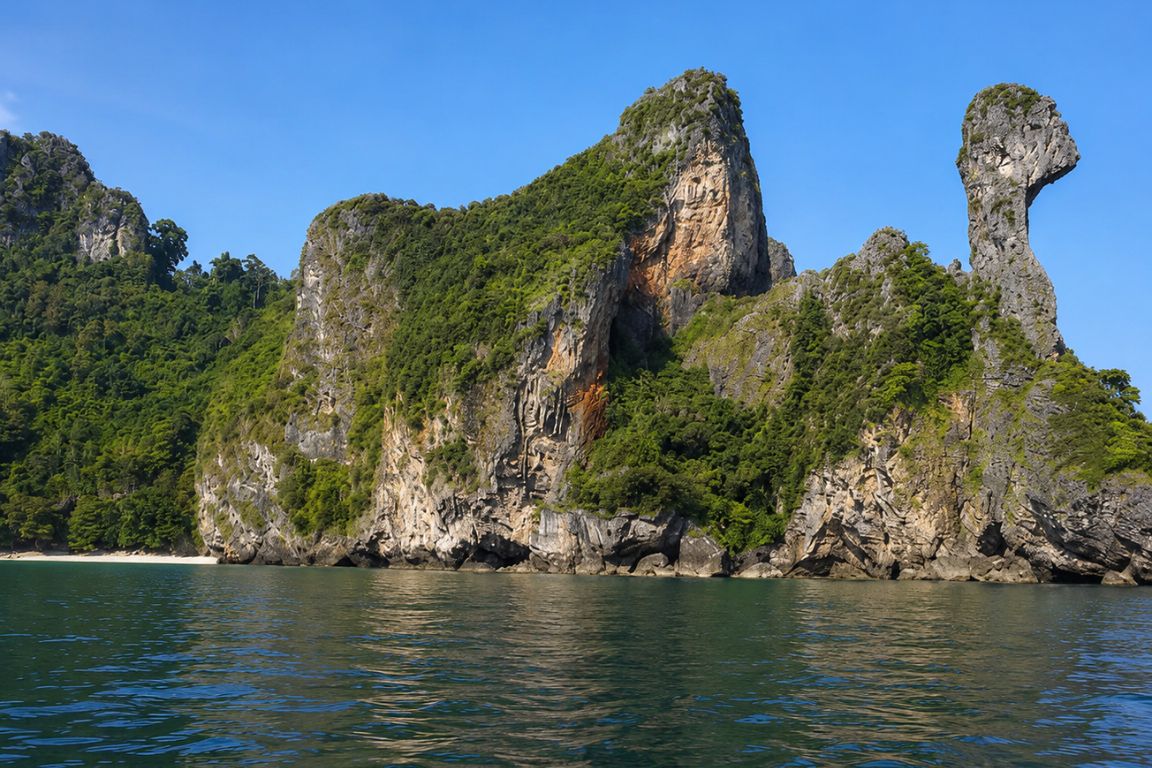 Krabi in dry season is the destination at full capacity: clear skies, flat Andaman Sea, many boat routes operating subject to weather, tides, closures, and schedules, snorkeling visibility at 15 to 20 metres, outer island national parks open, and rock climbing on Railay’s limestone in dry conditions. Air temperatures sit between 27 and 32 degrees Celsius from November through February, rising to 34 to 36 degrees by April. Humidity is at its lowest from December through February – the month that most consistently earns the descriptor “perfect.”
The northeast monsoon drives the dry season from its position over mainland Asia, pushing dry, cooler air southwest across the Gulf of Thailand and the Andaman Sea. This suppresses the southwest monsoon swell pattern entirely and leaves Krabi’s coastline in a sustained calm that runs from mid-November until the pattern reverses in May. On a January morning at Ao Nang, the water is genuinely flat. The limestone karsts reflect in it. The crossing to Chicken Island takes 20 minutes on a boat that barely pitches.
Dry season usually brings a wider choice, but routes and inventory still depend on weather, tides, closures, and operator schedules. Koh Rok and Koh Haa national parks, closed from mid-May through October, accept visitors. The Similan Islands liveaboard season runs from November through May. Every boat tour format, every dive operator, every charter option in Krabi is active simultaneously. The combination of best conditions and maximum availability makes the dry season the only window where a visitor can design a Krabi itinerary while still checking park closures, marine forecasts, and operator terms before committing.
Krabi’s weather can shut down boat tours with very little warning and the refund situation varies more than most operators admit upfront – our weather impact on Krabi boat tours guide breaks down what to expect and how to protect your plans.
What Are the Best Boat Tours to Do in Krabi Dry Season?
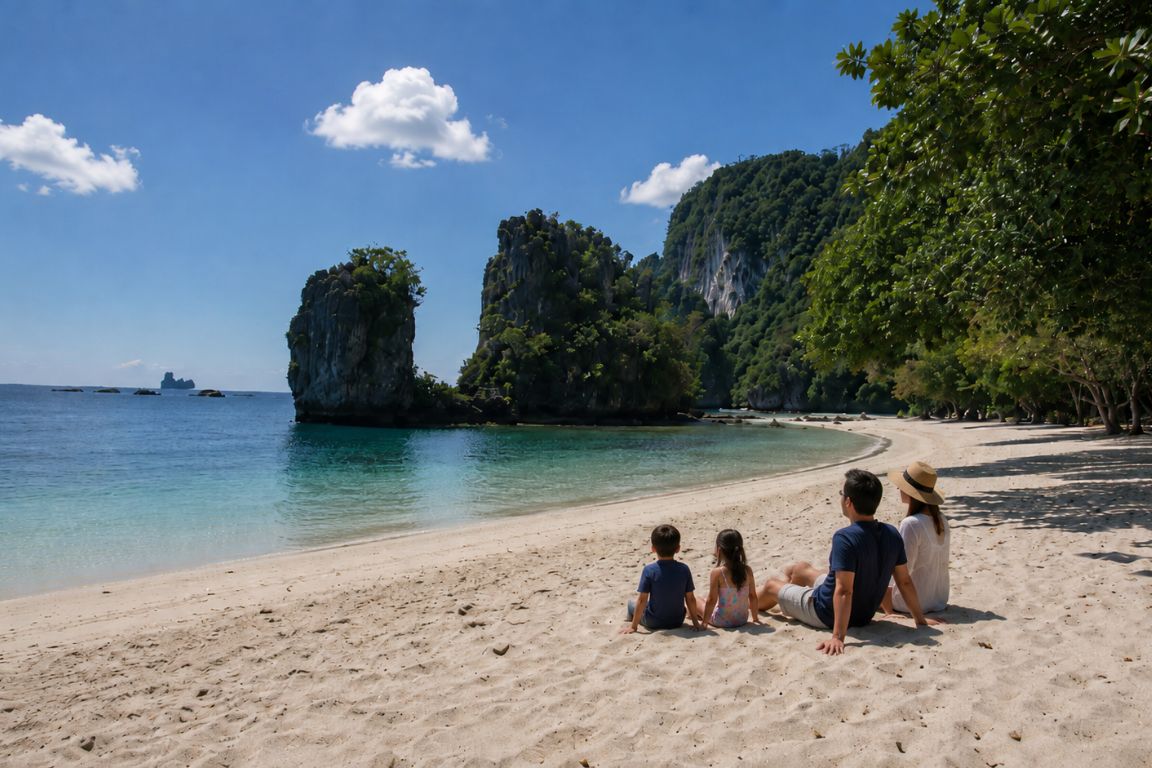 Dry season brings a broad range of Krabi boat tours, though conditions and operations remain date-specific. Koh Rok and Koh Haa access depends on current park schedules, departure base, weather, and operator availability. For the inner circuit, the 4 Islands tour and Hong Island tour run identically through the year but produce their best snorkeling clarity and least-crowded mornings in November and April, the shoulders of the peak window.
Koh Rok is the tour that most benefits from dry-season access. The channel between Rok Nok and Rok Nai holds dense, shallow coral at 1 to 5 metres, sea turtles in the seagrass beds, and visibility that regularly reaches 15 to 20 metres in the dry-season months. On a January day at Koh Rok, the water reads green-blue over the reef and the turtles are close enough that a snorkeler with moderate buoyancy control can observe them for 30 seconds before they drift away. This is not available in the wet season at all; the park is closed.
The sunset junk dinner cruise is the boat tour format most enhanced by dry-season skies specifically. The golden hour light over the Andaman karsts in December and January produces the visual environment these tours are built around. The sunset in dry season sits in a clear sky and delivers the full range of orange and gold over Phra Nang Bay without cloud interference. In wet season, the sunset is sometimes spectacular in a different way and sometimes obscured entirely. Actual sunset views still depend on cloud cover and conditions that day.
For private charters and luxury yacht tours, the dry season enables itineraries that wet-season conditions cannot support. No current supplied charter combines Krabi, an overnight Phi Phi stay, Maya Bay, and Phang Nga Bay in one two-day itinerary. Confirm any multi-day route directly for the actual dates before arranging related plans. It requires more careful weather monitoring from May onward. For specific charter routes and vessel availability on your dates, see the private 4 Islands longtail charter and the luxury yacht tours page.
A luxury yacht charter in Krabi is a completely different experience from anything else on the water – our luxury yacht tours Krabi guide breaks down what’s included, which operators deliver the real thing, and whether the cost reflects the experience.
How Crowded Does Krabi Get in Dry Season?
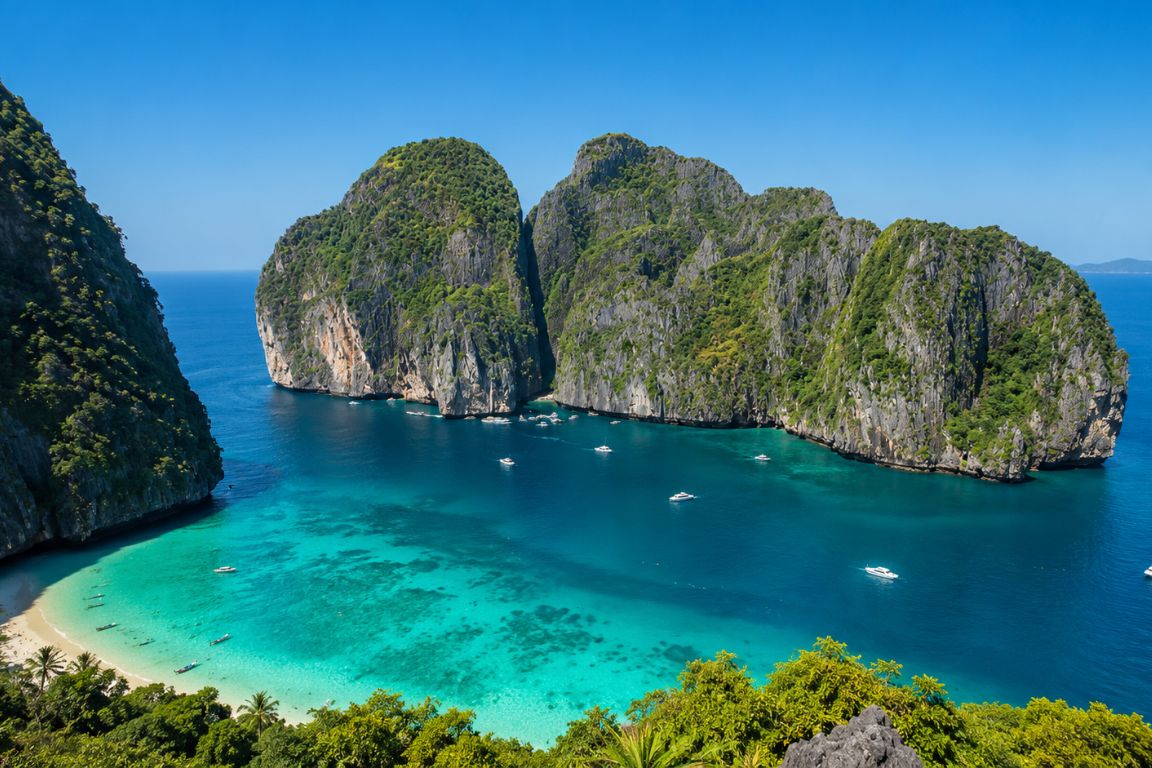 December and January are Krabi’s most crowded months. The Phi Phi ferry queue at Klong Jilad Pier in peak season runs long. Popular snorkeling stops on the 4 Islands circuit see six to ten boats anchored simultaneously by mid-morning. Accommodation at preferred Ao Nang properties books out weeks ahead for Christmas and New Year. The crowd problem is real and manageable with two strategies: early departure times and private or small-group tour formats.
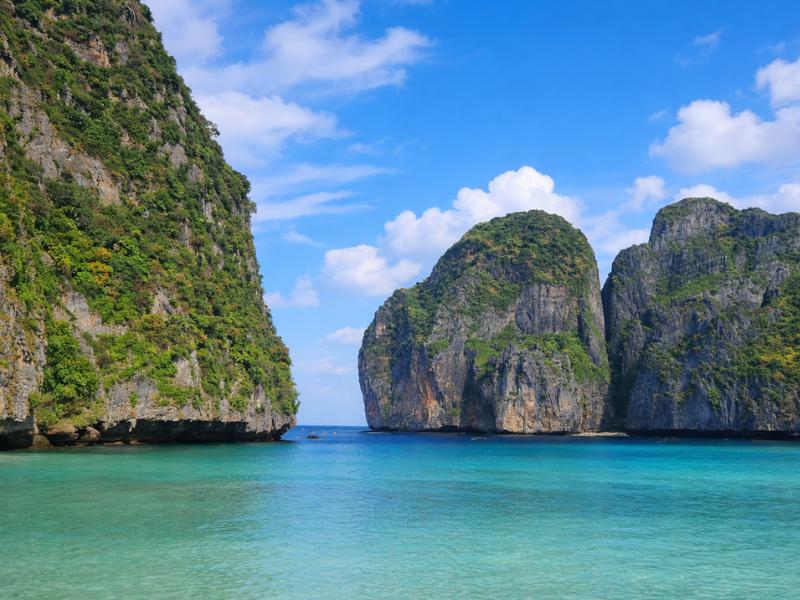
The crowd concentration follows a predictable pattern. Koh Phi Phi is the most affected destination: boats from Krabi, Phuket, and Koh Lanta all converge on Maya Bay and the Phi Phi Don beaches simultaneously in high season. A standard group speedboat tour arriving at Maya Bay at 11am in January finds it at near-capacity with other tour groups. The same bay at 7am, accessed by a private charter or an early-bird speedboat tour, is a different experience. The Bay opens at sunrise and the first hour is when the water is clearest and the beach least crowded.
On the inner 4 Islands circuit, crowd management is simpler. The snorkeling stops at Chicken Island and Koh Poda peak between 10am and 1pm when the standard group tour wave arrives. Booking a tour with an 8am departure and arriving at Chicken Island by 8:30am puts your group in the water before most other boats appear. The reef fish are more active, the water less disturbed, the anchoring area less congested. An earlier departure can change crowd exposure, but it cannot guarantee a quiet stop.
February is the sweet spot for crowd management within the core dry season. January’s Chinese New Year period (late January in 2026) drives a 4 to 5-day spike in Ao Nang visitor numbers. Outside that window, February crowds are consistently lower than January for equivalent weather conditions. The Andaman International Boat Festival in Krabi in early December adds a local cultural layer to the early dry season that is worth planning around rather than avoiding.
Not sure which Krabi snorkeling spots are worth the boat ride and which ones disappoint in person despite the photos? Check out our best islands for snorkeling near Krabi guide before you book anything.
What Is the Best Month in Krabi Dry Season for Boat Tours?
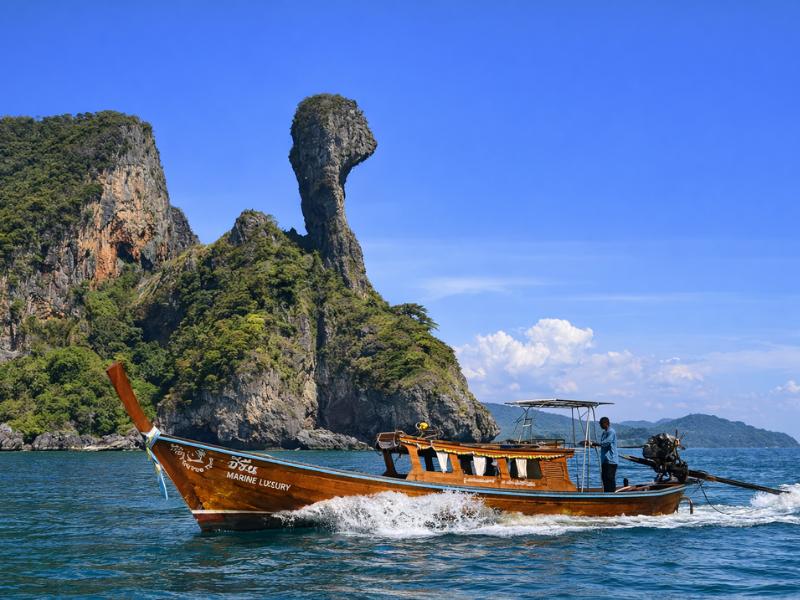
January delivers the best pure on-water conditions: flat seas, lowest humidity of the year at around 65%, water temperature at 29 to 30 degrees Celsius, and visibility at inner reef sites regularly reaching 15 metres. February matches January on conditions and beats it slightly on crowd levels outside Chinese New Year week. April is the best value month within the dry season: conditions remain good, accommodation rates that may differ from peak once live dates are compared, and the islands are measurably less crowded. Each is the correct answer for a different priority.
The case for late November and early March as underrated dry-season windows is worth making. Late November, after Loy Krathong (November 25 in 2026), delivers conditions close to peak-season quality at prices closer to low season. The northeast monsoon has settled in, seas are calm, outer parks are open, and the visitor numbers that define December have not yet arrived. Early March follows the same logic in reverse: peak conditions persist but the Christmas and New Year crowd has departed, and the heat and pre-monsoon storms that characterise April have not yet established themselves. Both windows deliver most of what January offers at lower cost and with more space on the islands.
Trying to figure out which months give you the best combination of good weather, flat water, and manageable crowds on Krabi’s most popular island routes? Check out our best time for boat tours in Krabi guide before you lock in your dates.
How Do Dry Season Conditions Affect Snorkeling and Marine Life?
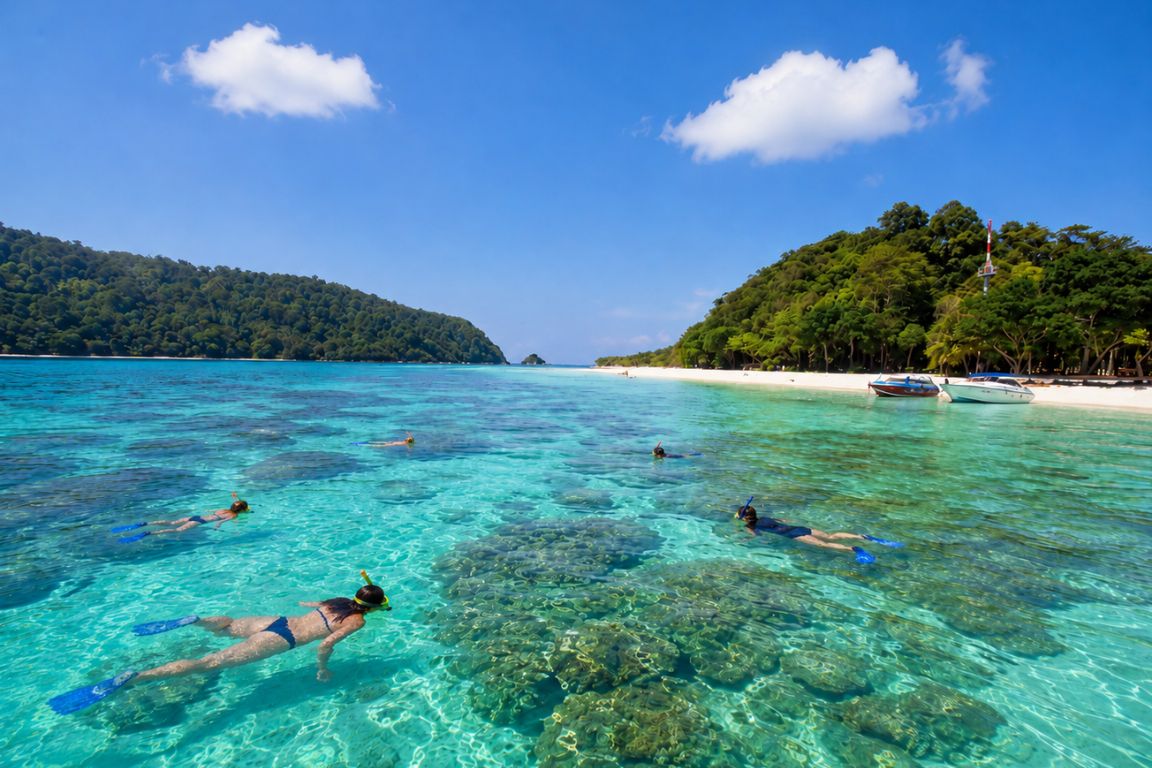 Dry season conditions produce the best snorkeling in Krabi across every metric: visibility 15 to 20 metres at inner sites and 20 to 30 metres at Koh Haa in peak months, water temperature 28 to 30 degrees Celsius, no wetsuit needed, and surface conditions that still require attention to weather, personal ability, and each operator’s restrictions. Marine life encounters improve with visibility: blacktip sharks are spotted at greater distances, sea turtles tracked for longer, and the full colour range of coral is visible rather than the washed-out approximation that murky water produces.
The visibility difference between January and August at the same snorkeling site is the single most impactful variable for the underwater experience. At Koh Poda‘s southeast reef face in January, a snorkeler can see a parrotfish at 6 metres depth from the surface without difficulty. In August, reduced visibility from suspended plankton and post-rain sediment cuts that to 3 to 4 metres. The fish are still there. The reef is still there. What changes is the quality of observation, which affects memory and photographs in proportion to the difference.
Wildlife sightings at outer sites vary and should never be treated as guaranteed or assigned a probability without supporting data. These are pelagic encounters driven by plankton blooms that the dry-season conditions support. The outer sites are accessible in dry season in both time and sea state; they are not reliably accessible at any other point in the year. Rock climbing on Railay’s limestone operates best in December through February when the rock is dry, temperatures are cooler, and grip is at its maximum. The overhanging routes at Railay and Tonsai that attract serious climbers remain climbable year-round due to their overhang geometry, but the broader route catalogue including face climbs requires dry limestone that only the core dry season delivers consistently.
Want to make underwater exploration a proper focus of your Krabi trip rather than just a bonus between island stops? Here’s our marine life in Krabi guide so you plan around the best sites.
| Blacktip reef shark | Medium-High (inner circuit) | Year-round; best visibility Jan-Mar |
| Sea turtle (hawksbill/green) | High (Koh Rok, Koh Haa) | November-March |
| Whale shark | Medium (Koh Haa, outer reefs) | February-April |
| Manta ray | Medium (Hin Daeng, diving) | November-April |
| Leopard shark | Medium (sandy bottoms, 4-8m) | Year-round |
| Parrotfish / reef fish | Very High | Year-round; clearest Jan-Feb |
| Bioluminescent plankton | High (new moon nights) | November-May |
What Are the Best Non-Boat Activities in Krabi Dry Season?
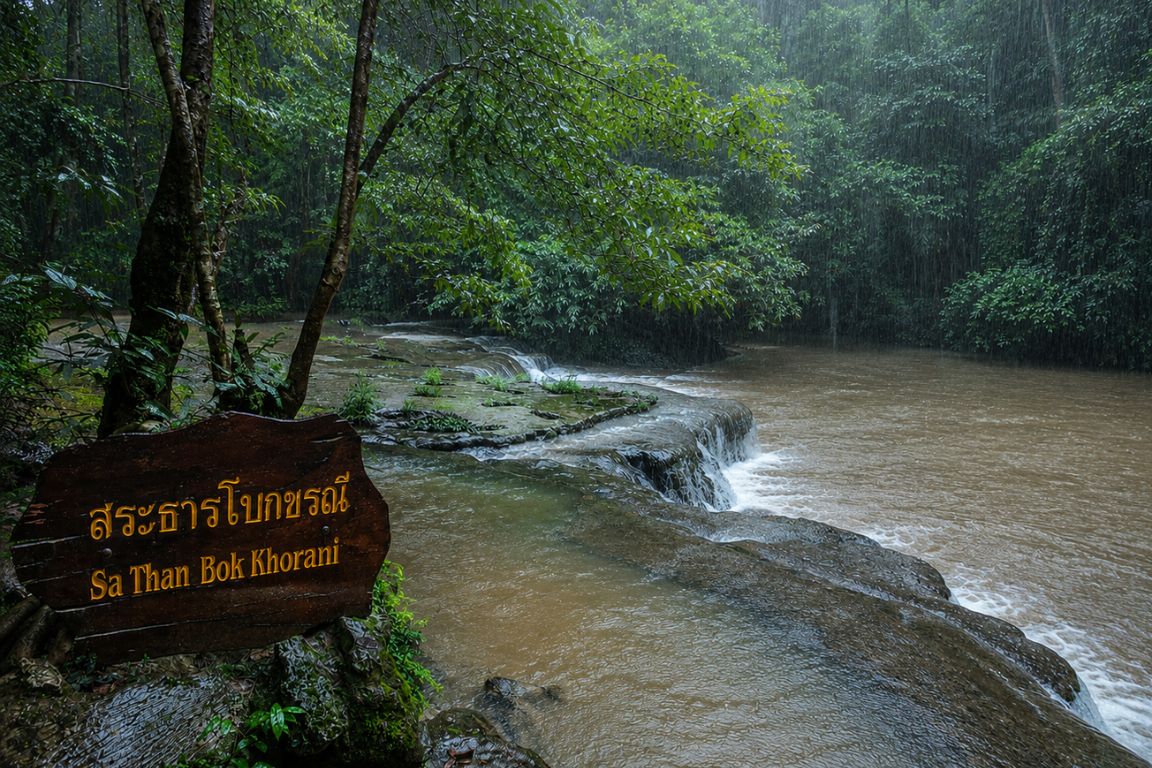
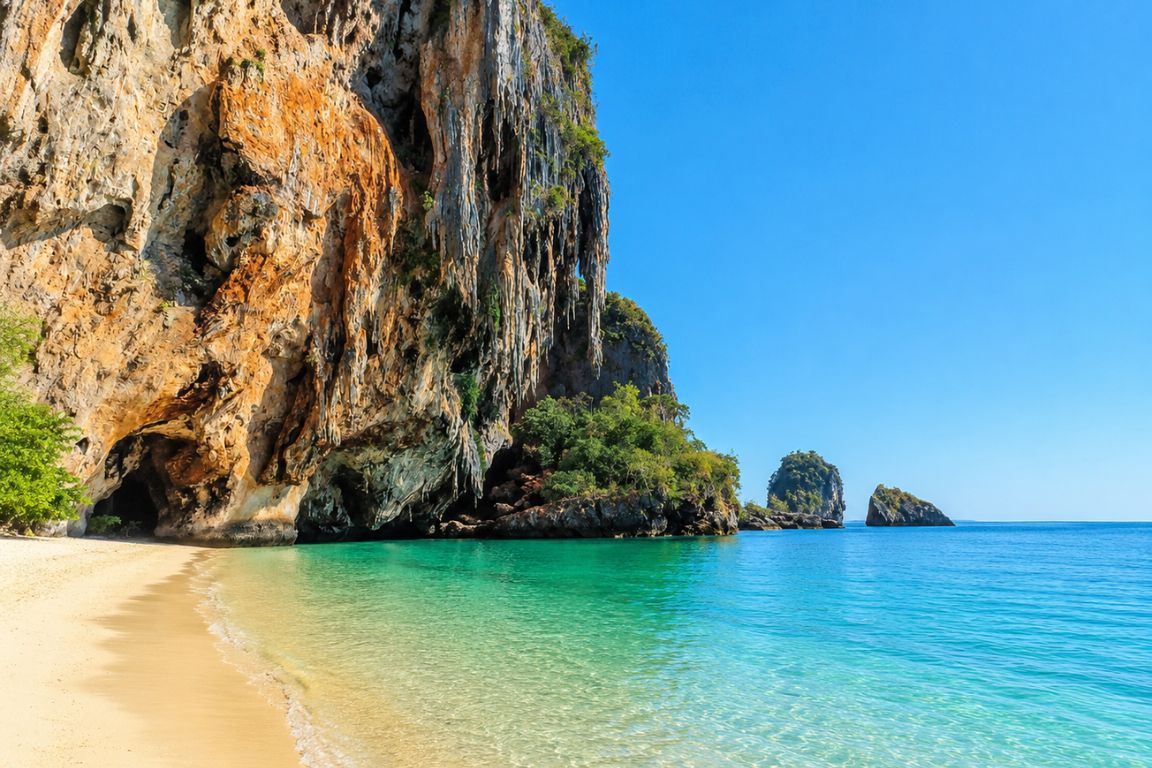 Rock climbing on Railay and Tonsai Beach is at its best from December through February: dry limestone, lower temperatures, and cooler mornings that make multi-pitch routes physically manageable. The Emerald Pool and Tiger Cave Temple run year-round but have shorter queues and clearer trails in the dry season. Kayaking in Than Bok Khorani National Park is excellent in any season but dry-season clarity makes the sea cave passages more visually rewarding. Krabi Town’s weekend night market and the Ao Nang beachfront are most lively from December through February.
Rock climbing deserves specific mention because Krabi is one of the premier sport climbing destinations in Southeast Asia, and the dry season is when the full route catalogue is accessible. Railay’s limestone karsts hold routes from beginner to advanced across Railay West, Railay East, and Phra Nang Cave Beach. The dry limestone in December through February provides the grip that wet-season humidity and occasional rain reduce. A beginner climbing lesson at Railay in January on a clear morning, with the Andaman visible between the karsts and the beach below, is one of those cross-activity experiences that Krabi produces in ways few other destinations can replicate.
The Tiger Cave Temple climb (1,260 steps to the summit) is most rewarding in the dry-season morning hours before heat accumulates. The panoramic view from the summit, covering Krabi Province, the Andaman Sea, and the offshore islands, is at its clearest in December through February when low humidity keeps the horizon sharp. The same climb in April produces the same view through haze and takes more physical effort in 35-degree heat. Early morning, before 9am, is the correct timing for the climb in any dry-season month.
Want to know what Krabi actually looks like during the wet season and whether it’s still worth visiting if the dates are fixed? Here’s our Krabi in rainy season guide so you plan around the conditions properly.
What Do Travelers Consistently Get Wrong About Krabi Dry Season?
 Three consistent mistakes: arriving in December or January without advance bookings and finding preferred hotels and tours fully committed; conflating “dry season” with “no rain ever” when December and March both see occasional showers; and not using the early morning window that separates a crowded dry-season tour experience from a quiet one. The dry season is not self-managing. The conditions are excellent; the crowds require active management.
The booking lead time problem is most acute in the Christmas to New Year window. A traveler who decides in early December to visit Krabi over Christmas finds that preferred Ao Nang hotels have been booked since October, a preferred sunset cruise may not have availability for the traveler’s date, and private longtail charters for the last week of December are either committed or priced at peak-demand rates. The dry season’s reliability is its best feature and its worst: everyone knows conditions will be good, so everyone books in advance. For December through February, book accommodation two to three months ahead and tours at least two weeks ahead.
The “dry season means no rain” assumption produces specific disappointment. December sees occasional intense showers, particularly in the first half of the month when the monsoon’s retreat is not fully complete. March builds toward the pre-monsoon pattern with afternoon thunderstorms that can be dramatic. April is technically still dry season in most classifications but brings enough pre-monsoon rainfall that some days resemble wet-season patterns by mid-afternoon. Morning departures can still change or cancel because of weather, tides, sea conditions, or operating requirements. All of them can affect a boat tour that departs at 11am or an afternoon activity that isn’t waterproofed in planning.
Krabi dinner cruises vary more than most booking platforms suggest in terms of food quality, route, and overall atmosphere – our Krabi dinner cruises guide breaks down which operators are worth the price and which ones disappoint once you’re on board.
How Do You Get the Most Out of Krabi in Dry Season?
Three principles: book accommodation and popular tours well ahead, particularly for December and January; use early departure times for every boat tour to beat the mid-morning convoy; and consider April as a deliberate choice rather than a fallback if the combination of dry-season conditions, 30 to 40% lower prices, and smaller crowds appeals. The dry season’s conditions are self-evident. The experience quality depends on how you use them.
The early departure principle applies throughout dry season but pays the highest dividend in December and January when the convoy effect is strongest. At 8am on a January morning, Chicken Island has one or two boats anchored. By 10am it has eight or ten. The snorkeling quality is not the same at both times, and the difference is not subtle. Every operator offering early departures in peak season is making a genuine quality argument, not just a convenience pitch. The willingness to be at the pier by 7:45am is the single most effective crowd management strategy available to a dry-season visitor.
April rewards deliberate planning rather than being treated as what remains when December and January are too expensive. The conditions from late March through April are genuinely dry-season standard for boat tours: calm seas, all parks open, full tour availability, outer island access. The heat is real and the Songkran festival on April 13 to 15 brings a very specific energy to Ao Nang’s streets that some travelers love and others prefer to avoid. Outside Songkran week, April crowd levels and prices should be compared using current occupancy and live accommodation rates. For a first-time visitor who is flexible on dates, it is often the best month in the calendar.
The outer island combination that dry season uniquely enables: a Koh Rok and Koh Haa day trip from Koh Lanta followed by a 4 Islands inner circuit day from Ao Nang covers the two best snorkeling tiers in the Krabi region within a two-day window. Current park calendars, departure bases, weather, and operator schedules determine whether each outing operates. Both are excellent in dry season. Stringing them together with a night on Koh Lanta between them is the most complete version of what Krabi’s marine environment offers above and below the water. For the inner 4 Islands circuit from Ao Nang, check the early-bird 4 Islands speedboat for your dates.
A well-planned Krabi island hopping itinerary looks very different from just booking tours back to back – our Krabi island hopping itinerary guide breaks down how to sequence the routes, pace the days, and build in the flexibility most rigid schedules don’t allow for.
Dry Season Planning Checks
Sea-turtle sightings at Koh Rok vary and are not guaranteed
Travelers should check actual December and January availability before arranging related plans
Compare April and January using live rates, current conditions, and your preferred experience
Departure time can influence crowd exposure, but snorkeling quality also depends on weather, tides, and site conditions
Crowds can affect peak-period outings, with exposure varying by route and timing
Weather can differ from guest expectations, so use current forecasts for planning
Current tour and accommodation availability should guide booking timing for December and January. The conditions are not the variable in dry season. The available spots are.
Frequently Asked Questions
When Does Krabi Dry Season Start and End?
Dry season in Krabi runs from mid-November through April. The core peak, with the most reliable conditions and lowest rainfall, runs December through February. March extends the dry season with increasing heat. April is the final dry-season month before the southwest monsoon establishes itself in May. Late November marks the transition from the monsoon retreat to the fully settled dry season, with conditions improving steadily through the month.
Is Krabi Worth Visiting in Dry Season Despite the Crowds?
Yes. The conditions justify the crowds for most travelers. The question is how you manage them. Early morning departures, private or small-group tours, and arriving outside the Christmas to New Year window reduce the crowd impact without reducing the conditions. February specifically offers dry-season quality with lower crowds than December and January for most of the month. April offers dry-season quality with a fraction of the peak-season visitor load at significantly lower accommodation prices.
How Far Ahead Should You Book for Krabi Dry Season?
For December, particularly the Christmas to New Year period, book accommodation two to three months ahead and tours at least two to three weeks ahead. For January, book accommodation four to six weeks ahead. For February through April, one to two weeks ahead is usually sufficient outside specific events like Chinese New Year and Songkran. Private charter vessels and luxury boat options in peak season book out earlier than group tours; check the vessel on your actual travel date before arranging related plans for a significant occasion.
Does It Rain in Krabi Dry Season?
Occasionally. December sees some intense showers, particularly in the first half of the month. March brings increasing afternoon thunderstorms as the pre-monsoon heat builds. April sees pre-monsoon instability that can deliver heavy rain by mid-afternoon. Morning boat tours can still change or cancel because of weather, tides, sea conditions, or operator requirements. The dry season does not mean zero rain; it means rain is infrequent, brief, and unlikely to disrupt a well-timed itinerary.
Which Dry-season Month Is Least Crowded in Krabi?
Late November and April are the least crowded dry-season months. Late November offers improving conditions before the December peak arrives. April offers full dry-season conditions after the main peak crowd has departed, with accommodation value determined by live rates for the traveler’s dates. February is the least crowded month within the core December to February peak window, particularly outside the Chinese New Year period. March sits between peak and shoulder with manageable crowds and still-excellent conditions.
Written by Ryan Supakorn
Thai tour guide since 2011 · Founder, Krabi Boat Tours
Ryan has guided over 11,700 travelers through Krabi’s islands, lagoons, and coastline since founding the agency.
Check your actual travel date before arranging the rest of Krabi
Match the outing to your plans
Seasonal service limits can change the suggestion. A month is not confirmation of weather or available seats.
Blank fields keep the initial suggestion. Age pricing alone does not confirm suitability; if eligibility is unverified, the tool will not recommend a match. Check pickup and restrictions for your selected package.
Compare two total quotes
Use current quotes in the same currency, including park fees, transfers and option extras.
Initial recommendation. Adjust the optional choices to match your plans.
Phi Phi Early Bird & 4 Islands - Day Tour by Speedboat From Krabi
Confirm the nine-hour early-bird Phi Phi and Four Islands speedboat before coordinating accommodation, transfers, and other island days.
9h · English guide listed · Early pickup, lunch and snorkeling gear; park fees extra. Maya Bay is closed August–September under the listing’s seasonal policy. · Confirm your selected option’s pickup, inclusions, fees and participant restrictions before booking.
Choose a date to view the published schedule. Confirm availability and final price on Viator.
No reviewed option matches these choices.