Weather Impact on Krabi Boat Tours
The best time for boat tours in Krabi is during the dry season from November through April, when calmer seas and stable weather make island hopping far more reliable.
See whether a customizable private 4 Islands charter fits your date before fixing the rest of your Krabi itinerary. Explore Private 4 Islands Longtail.
Last updated: June 17, 2026
Krabi has two practical seasons for boat tours: November through April (dry season, calm seas, tours run reliably) and May through October (southwest monsoon, tours often run but can cancel on short notice). September and October are the most disruptive months: seas are roughest, cancellations most frequent, and some operators reduce schedules significantly. June through August sees heavy afternoon rain but mornings are often clear and most standard tours still depart. A light rain shower does not cancel a Krabi boat tour. Sustained swell above 1.5 metres, sustained winds above 25 knots, or an official Thai Marine Department advisory will. Operators cancel for sea safety, not for rain.
Booking choice: Compare your date with a private 4 Islands charter, then leave room for weather-driven changes. Check dates for Private 4 Islands Longtail.
Weather and Krabi Boat Tours: Quick Reference
| November | Calming after monsoon; early Nov can be choppy | Good, improving through the month | Some early-Nov disruption possible; late Nov excellent |
| December | Calm, clear | Excellent | Peak season begins; book ahead |
| January | Calm, best visibility | Excellent | Best all-round month for boat tours |
| February | Calm, clear | Excellent | Peak whale shark season at outer reefs |
| March | Calm; afternoon thunderstorms increase | Very Good | Morning tours optimal; heat increases |
| April | Transitional; some afternoon swell | Good | Songkran festival 13-15 April; fewer tourists |
| May | Monsoon onset; unpredictable | Variable | Some good days, some cancellations; check morning forecast |
| June | Rougher; afternoon showers | Moderate | Mornings often fine; afternoon tours risky |
| July | Rough; heaviest tourist numbers despite conditions | Moderate | European school holidays; tours run but choppy |
| August | Rough | Moderate | Similar to July; promotions vary by operator and travel date |
| September | Very rough; rainiest stretch | Poor-Moderate | Highest cancellation rate; many operators reduce schedules |
| October | Very rough; second wettest month | Poor-Moderate | Koh Rok and Koh Haa closed; avoid if boat tours are priority |
How Does Weather Affect Boat Tours in Krabi?
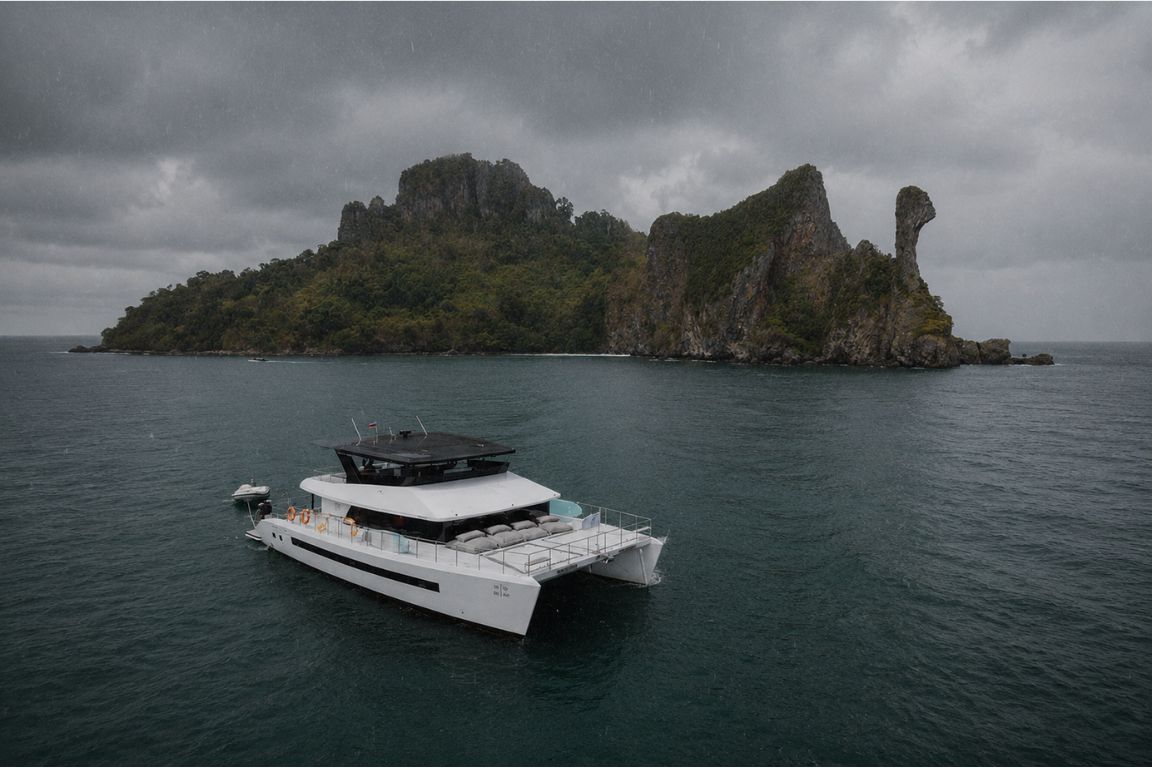 Weather affects Krabi boat tours through three variables: sea state (wave height and swell direction), wind speed, and visibility. Rain alone almost never cancels a tour. Swell above 1.5 metres and sustained winds above 25 knots are the thresholds where captains begin assessing whether the route is safe. Official Thai Marine Department advisories, when issued, override everything and operators are legally required to suspend departures for the affected period.
The confusion between rain and sea conditions drives most of the weather-related anxiety travelers bring to Krabi boat tour planning. These are different things. Rain is weather at the surface. Sea state is what is happening below the surface, driven by wind patterns and swell that may have built up over hundreds of kilometres of open Andaman Sea before arriving at Krabi’s coastline. A heavy tropical downpour with no wind and no swell produces a wet boat ride and perfectly calm water. Moderate cloud cover with sustained 20-knot winds and 1.2-metre swell produces no rain and a rough, uncomfortable crossing. Operators cancel for the second scenario, not the first.
The southwest monsoon drives Krabi’s wet season from May through October. It pushes warm, moisture-laden air from the Indian Ocean across the Andaman Sea, creating the wind and swell patterns that make the outer islands inaccessible and the inner circuit unpredictable. The critical thing to understand is that this is not a uniform six-month block of bad weather. June through August typically delivers heavy afternoon showers with clear mornings. May and November are transitional months with mixed conditions day by day. September and October are genuinely the worst months for boat operations, with swell and wind combining to produce multi-day stretches where tours cannot safely run.
Wave height is the single number that determines tour operation more than any other factor. For longtail boats, operators in Krabi generally assess anything above 1 metre as uncomfortable and above 1.5 metres as potentially unsafe for the vessel type. Speedboats handle swell better but create a harder, more physically demanding ride in chop above 1.2 metres. The route matters too: the inner 4 Islands circuit sits in more sheltered waters than the transit to Phi Phi or the outer run to Koh Rok and Koh Haa, so the threshold for cancellation on the outer routes is lower than on the inner circuit.
Trying to figure out which months are genuinely problematic for boat tours and beach time in Krabi versus which ones just get the occasional afternoon shower? Check out our Krabi in rainy season guide before you write off the whole period.
What Is the Best Season for Krabi Boat Tours?
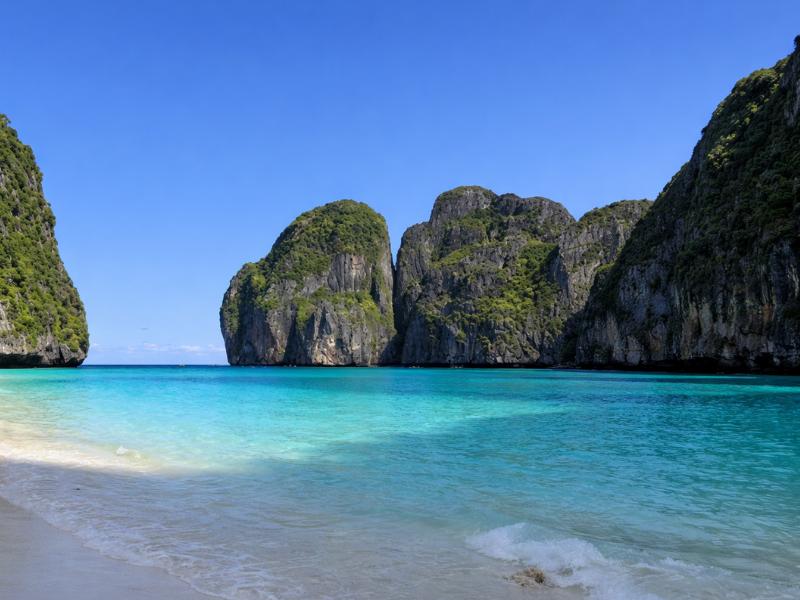
December through February is the best period for Krabi boat tours: sea conditions are calmest, visibility is highest both above and below water, although any departure can still be disrupted by changing sea conditions. January is the benchmark month: clear skies, water temperatures at 28-30 degrees Celsius, virtually no swell on the inner circuit, and the occasional afternoon shower that passes in twenty minutes and leaves everything cleaner and cooler than before.
The dry season runs from mid-November through April, with the core peak from December through March. What this means in practice for boat tours is consistent early morning departures on flat calm water, snorkeling visibility of 10-20 metres at the inner islands and sometimes 25 metres or more at Koh Haa, and afternoons that deliver the kind of light over Andaman limestone that makes Krabi’s islands famous. The conditions in January and February are what the photographs on tour operator websites were taken in.
March remains excellent for boat tours but marks the beginning of the heat increase and the slow buildup toward the pre-monsoon. Afternoon thunderstorms become more frequent from mid-March onward, and the heat at midday on a boat deck in March can feel more intense than earlier in the season. Morning departures are optimal. Tours that return by 2pm typically avoid the afternoon instability that builds through March into April.
April is the hot season shoulder: temperatures peak at 34-36 degrees Celsius, humidity climbs, and afternoon showers occur more frequently. Boat tours may run, subject to conditions, while deck comfort can differ between islands. The upside of April is the crowd reduction: hotel and tour availability can differ from the December peak, so compare live options for your dates. For travelers who are heat-tolerant and flexible about weather, April is a genuine value window that delivers most of the dry-season experience with far fewer people.
Want to know which season delivers the most out of a Krabi island-hopping day without the monsoon cancellations or peak season overcrowding? Here’s our best time for boat tours in Krabi guide so you don’t book the wrong time of year.
What Happens to Krabi Boat Tours During Monsoon Season?
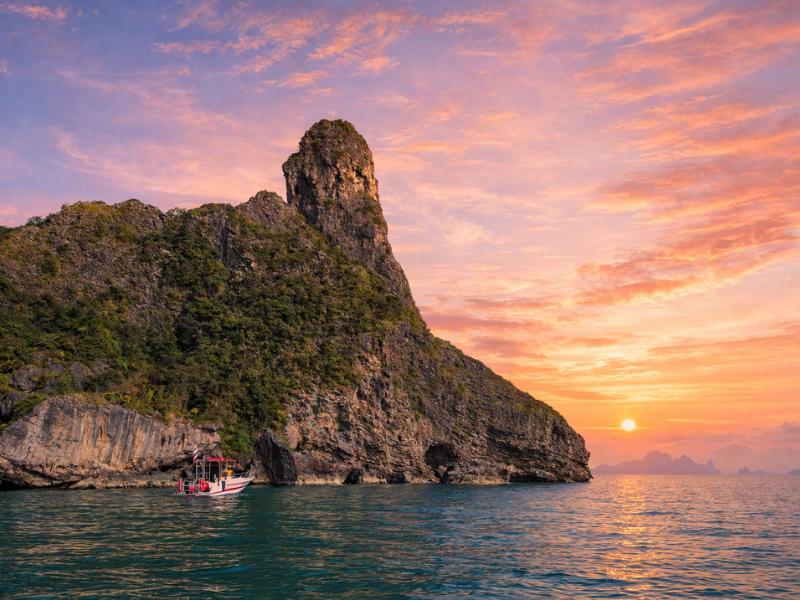
Monsoon season in Krabi runs May through October. Standard inner-circuit tours (4 Islands, Hong Island) continue operating through most of this period, with cancellations occurring mainly during multi-day weather systems rather than ordinary rain. Outer island tours to Koh Rok and Koh Haa close completely; those national parks operate November to May only. Phi Phi day trips run but are subject to same-day cancellation with more frequency. September and October see the highest cancellation rates and some operators reduce their schedules significantly.
The phrase “monsoon season” suggests a six-month period of unbroken rain that makes everything impossible. The reality in Krabi is more textured than that. June through August typically delivers mornings that are sunny or partly cloudy, with heavy afternoon showers hitting between 2pm and 5pm and clearing by evening. A morning June departure may encounter different conditions from an afternoon trip, so check the operator’s date-specific assessment. The sea conditions during these months are rougher than in the dry season but not routinely cancellation-level rough for the inner circuit.
The pattern shifts significantly in September and October. These are Krabi’s wettest months by measured rainfall and the months with the most sustained swell and wind. Rain falls on roughly half the days in September, and when it rains it is often not a brief tropical shower but a sustained system that keeps the sea rough for 24-48 hours. The Phi Phi route specifically becomes unreliable: a 50-kilometre open-water crossing in 1.5-metre swell on a speedboat is a physically demanding and occasionally risky experience that reputable operators will decline to run.
The November 2025 southern Thailand flooding is worth noting as context for how genuinely intense the monsoon tail can be. Severe flooding affected road infrastructure in multiple southern provinces and caused cancellations across boat tours, sightseeing, and ferry services. Krabi’s major tourist infrastructure (Ao Nang, Railay, Koh Phi Phi) remained accessible, but the episode illustrated that the monsoon’s impact is not limited to rain and sea conditions: it can cascade into transport disruptions, road closures, and multi-day suspension of marine operations. Travel insurance that covers weather-related disruption is not excessive caution for a Krabi trip planned in September or October.
First time booking a boat tour in Krabi and not sure which vessel type actually suits what you want from the day? Here’s our longtail boat vs speedboat in Krabi guide so you don’t default to the wrong option.
Which Krabi Boat Tours Run Year-Round and Which Don’t?
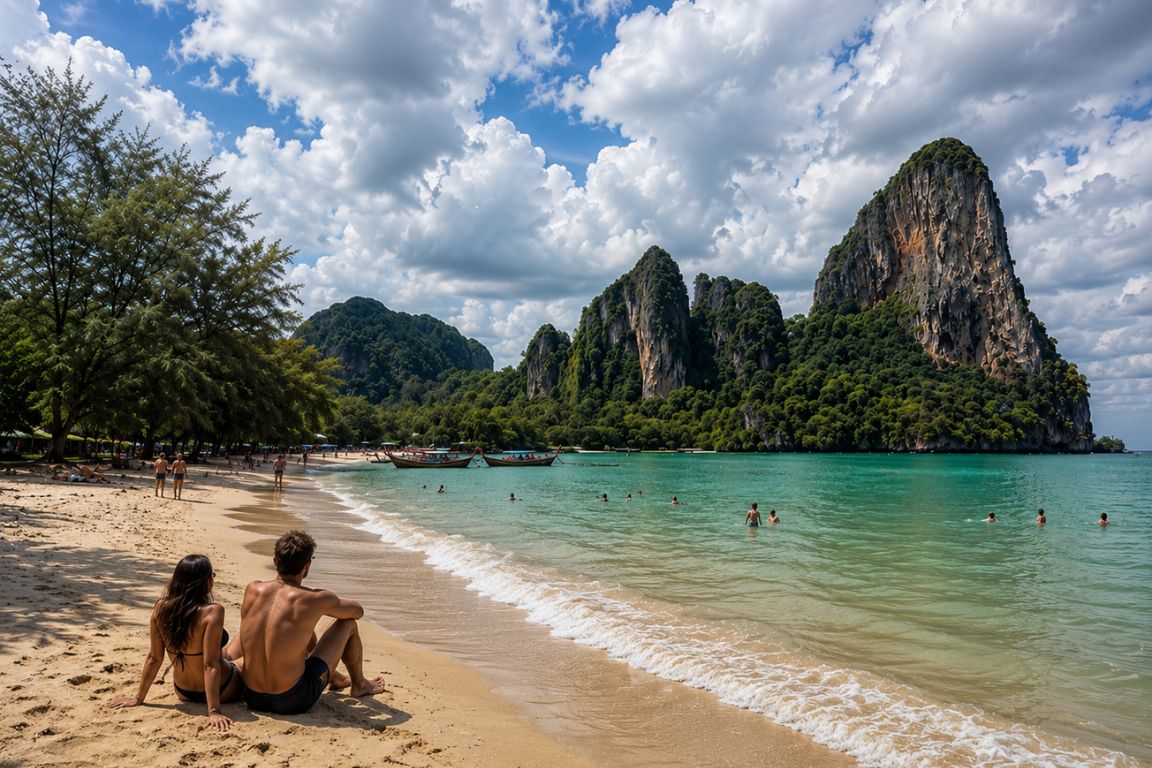 Year-round (weather permitting on the day): 4 Islands tour, Hong Island tour, Railay Beach longtail transfer, sunset and dinner cruises, private longtail charters on the inner circuit. Seasonal, typically November to May: Koh Rok and Koh Haa day trips (national park closure), Phi Phi day trips (run year-round but with significantly higher cancellation rates in September to October). Officially closed October to mid-November: Similan Islands liveaboard and day trips from Khao Lak.
The 4 Islands tour is the most weather-resilient product in Krabi’s market. The route sits in a relatively sheltered section of the Andaman, flanked by the mainland to the east and limestone karst formations that break swell from multiple directions. In conditions that would cancel a Phi Phi speedboat run, longtail operators on the 4 Islands circuit are often still assessing route feasibility and running on calmer days. This is why the 4 Islands tour persists through the wet season at higher frequency than any other island-hopping format.
Hong Island sits slightly further into open water than the 4 Islands group and involves a more exposed transit, but the destination itself is sheltered once you arrive. The lagoon entrance requires calm conditions for boat access; at high swell it can be too rough for boats to enter, and operators switch to anchoring outside and using kayaks or cancelling the lagoon component entirely. The beach stop at Lao Lading remains accessible in most conditions. Hong Island tours run through much of the wet season with a higher rate of partial modification than complete cancellation.
Not sure which Krabi island-hopping route actually delivers more for your time and money? Here’s our Hong Islands vs 4 Islands guide so you pick the right one before you book.
Koh Rok and Koh Haa are not weather-cancelled so much as nationally closed. Both sit within marine national parks that close mid-May through mid-October for ecosystem recovery. The closure is administrative rather than weather-driven, though the timing corresponds to the period when sea conditions would make those outer routes most challenging anyway. No amount of good weather forecasting opens these parks during their closure window. Operators planning trips to Koh Rok or Koh Haa for dates in October or November should confirm current park status directly before booking.
We’ve put together a full boat tour breakdown in our Krabi boat tours guide so you know exactly which experience fits your budget, group size, and how much of the Andaman coast you actually want to cover in a single day.
| 4 Islands (inner circuit) | Yes | September-October | Swell above 1.5m; advisory issued |
| Hong Island | Yes | September-October | Swell above 1.5m; lagoon access blocked |
| Sunset / dinner cruise (junk) | Yes | September-October | Swell above 1.2m (shallower threshold for larger vessel comfort) |
| Phi Phi day trip | Yes (reduced) | September-October | Swell above 1.2m on open crossing; advisory issued |
| Koh Rok / Koh Haa | No (Nov-May only) | May-October (closed) | National park closure; not weather-driven |
| Similan Islands | No (Nov-May only) | October-mid-November (closed) | National park closure |
| Railay longtail transfer | Yes | September-October | Only in extreme conditions; very short route |
| Private longtail inner circuit | Yes | September-October | Captain’s assessment; flexible rerouting possible |
What Are the Warning Signs That a Tour Will Be Cancelled or Degraded?
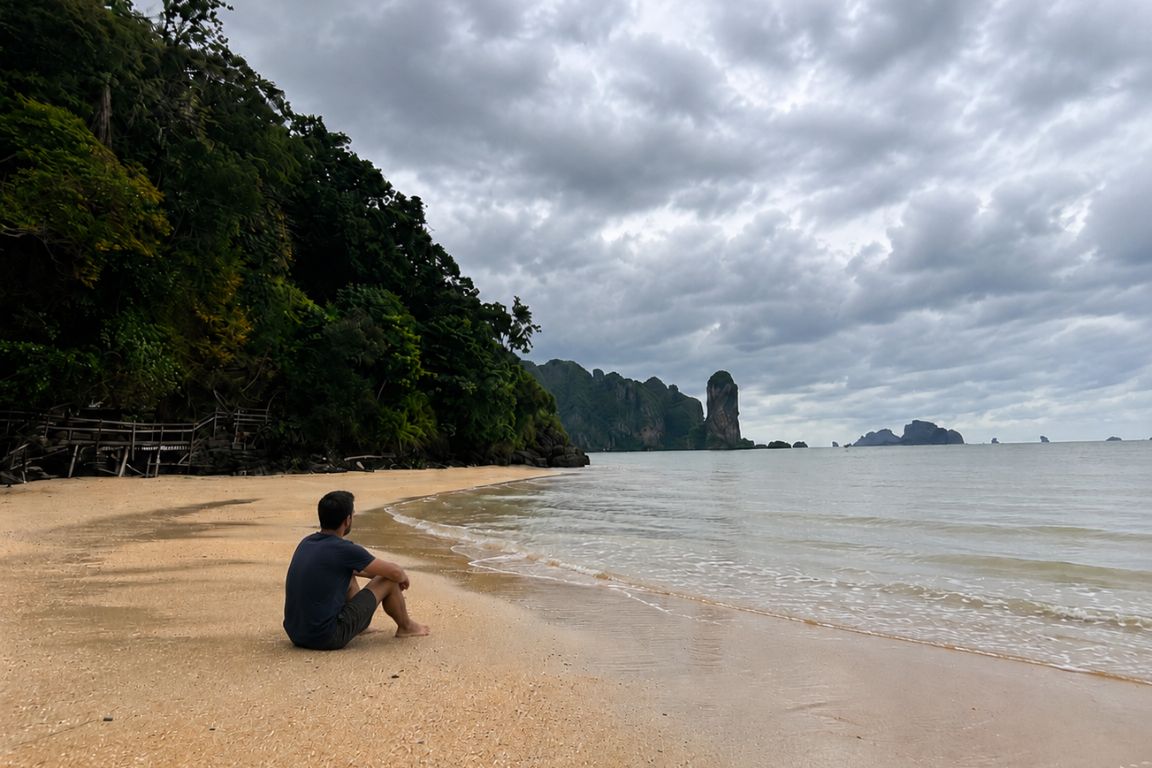 The clearest advance signals: a Thai Marine Department advisory covering Krabi’s coastal waters (check ddpm.go.th or weather.tmd.go.th the evening before), sustained swell forecast of 1.5 metres or above in the tour’s route window, or wind speed forecast above 25 knots. On the morning itself: red flags on Ao Nang or Noppharat Thara Beach, white-capped water visible from shore, and the absence of longtail boats in the water at the usual departure time are all reliable indicators that conditions are marginal or worse.
The red flag system on Thai beaches is the most visible on-the-ground signal. Red flags mean swimming is prohibited and marine activity is restricted. If the beach is flying red flags when you arrive for your morning pickup, the departure decision has either already been made or is being assessed at the pier. Orange flags indicate caution; swimming and boat activity proceed but conditions require attention. Green flags mean conditions are normal. A beach with red flags at 7:30am on a tour departure day should prompt a direct call to your operator before heading to the pier.
The evening-before weather check is the best habit a boat tour traveler in Krabi can develop. Thai Meteorological Department (weather.tmd.go.th) publishes marine forecasts for the Andaman Sea that include wave height, wind speed, and swell direction by zone. The Krabi coastal zone forecast for the following 24 hours, checked at 8pm the night before a tour, gives a reliable picture of whether the morning will be flat or rough. Apps like Windy, Magic Seaweed, and Windguru provide visualised swell and wind forecasts that are accurate enough for planning purposes 24-36 hours ahead.
On the morning itself, the physical signs are readable without any app. White caps visible on the water from Ao Nang Beach indicate sustained wind above roughly 12-15 knots. Debris or discolouration in the water following overnight rain suggests visibility will be reduced for snorkeling. An absence of longtail boats in the water at 8am when they are normally active is the most telling local signal: the pier operators and boat captains who live and work on this coastline are the most reliable judges of whether conditions are safe, and their absence communicates their assessment without a word being spoken.
We’ve put together a full comparison in our snorkeling vs diving in Krabi guide so you know exactly which option fits your experience level, budget, and how seriously you want to explore what’s living beneath the Andaman Sea.
How Do Tour Operators Decide Whether to Cancel a Krabi Boat Tour?
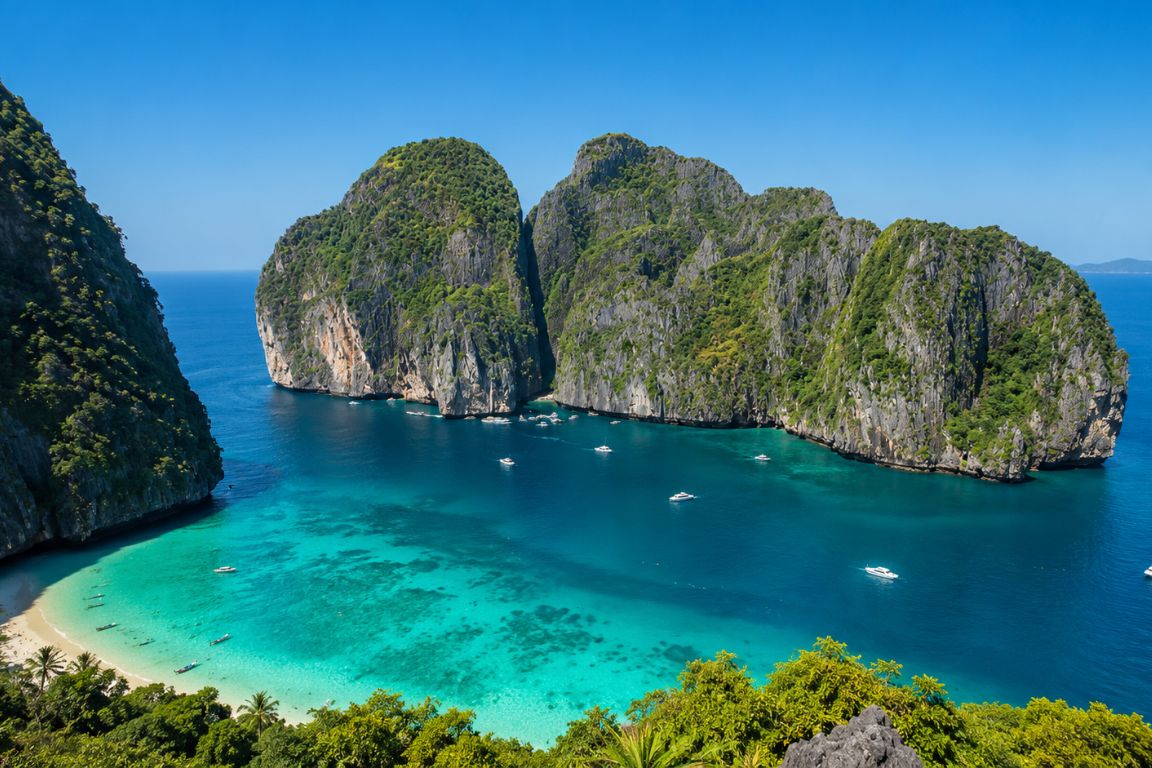 Reputable operators base cancellation decisions on three inputs: the Thai Marine Department official advisory, the captain’s direct assessment of sea state at departure time, and the specific route’s exposure to swell. For inner-circuit tours the threshold is higher because the route is more sheltered. For Phi Phi and outer routes the threshold is lower because the open crossing amplifies any swell. A light rain shower at departure time does not enter this calculation. If it’s raining but the sea is calm, the tour departs.
This is where the experience and integrity of the operator matter most. A captain who has worked Krabi’s waters for ten or fifteen years carries knowledge of how specific weather patterns affect specific routes that no forecast app replicates. He knows that a northeasterly swell at 1.2 metres on the Phi Phi crossing produces a rough ride but a manageable one. He knows that a southwesterly swell at the same height hits the inner 4 Islands group differently depending on the season. He knows at what point his vessel, with the specific passengers on board, requires him to turn back or reroute rather than push through. This judgment is not algorithmic. It is experience-based, and it is the primary safety mechanism in Krabi’s boat tour industry.
The Thai Department of Disaster Prevention and Mitigation (DDPM) issues formal marine advisories when conditions across the Andaman coastal zone reach levels that require suspension of marine activity. These advisories are binding on licensed operators. When an applicable official advisory affects a departure, consult the operator and the booking terms for the available remedy. The DDPM advisory is a hard stop, not a judgment call. The June 2026 monsoon advisory covering Phuket, Krabi, Phang Nga, Ranong, Trang, and Satun (issued June 3 for the period through June 8, 2026) is a recent example of how these advisories work in practice.
The distinction between operator-cancelled and guest-cancelled matters for refunds. If the operator cancels due to weather, reputable operators offer full refund or rebooking with no penalty. If the guest cancels within 24 hours of departure for weather that has not yet produced an official advisory or a captain’s decision to cancel, standard cancellation policies apply and refunds are not automatic. The practical implication: do not cancel a Krabi boat tour yourself based on your assessment of the weather forecast. Wait for the operator’s decision. If the operator cancels, the available refund or rebooking follows the terms of that booking.
What Do Travelers Consistently Get Wrong About Krabi Weather and Boat Tours?
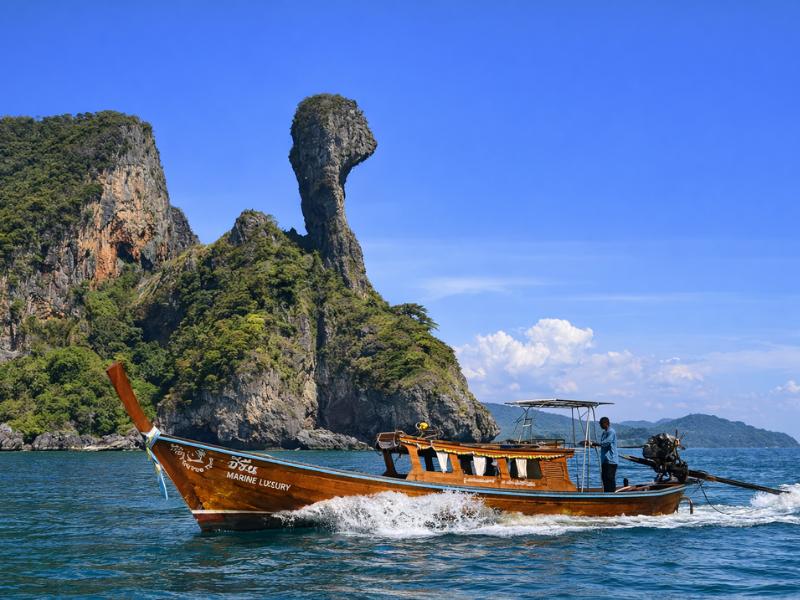
Four recurring mistakes: cancelling tours themselves based on rain forecasts and losing their money when the tour would have run; booking September or October as the only boat-tour window in their itinerary without understanding the cancellation risk; assuming all tours stop entirely during monsoon season when most inner-circuit tours continue on good days; and not checking the Thai Marine Department forecast the night before, which is the most reliable 24-hour predictor available.
Self-cancellation based on rain is the most expensive mistake in this list. Many travelers see a rain forecast for their tour day and cancel the night before, losing their payment under the 24-hour cancellation policy, while the tour departs as scheduled the next morning in light rain with calm seas and runs perfectly well. Rain and sea safety are different variables. A forecast of “heavy rain” on Windy or a weather app does not tell you anything about swell height or wind speed at the departure pier. Before cancelling a tour yourself, contact the operator and ask whether they are expecting to run. A reputable operator who knows conditions will tell you honestly.
The September-October window problem affects travelers who visit Krabi on fixed dates that happen to land in the worst weather months without knowing it. Krabi is marketed year-round and accommodation is cheap in low season, so the destination appears on itineraries without adequate weather context. The honest characterisation of September and October for boat tours is this: some days are fine, some days cancel, and multi-day stretches of sustained poor conditions are genuinely common. If your Krabi itinerary has one available day for a boat tour and it falls in late September, the probability that conditions will be acceptable is meaningfully lower than in any other month. Build in backup days or accept the risk explicitly.
The assumption that monsoon equals complete shutdown is the opposite error. June, July, and August see the highest visitor numbers in Krabi after the December to February peak, partly because European school holidays land there and partly because morning conditions are often clear enough to run tours effectively. The standard 4 Islands tour and sunset junk cruise continue operating through the monsoon on good-weather days with availability and group size varying by date. Low-season Krabi is not inaccessible. It is unpredictable, and unpredictability requires flexibility that peak-season Krabi does not.
First time visiting Krabi and genuinely torn between booking a tour and going it alone on the islands? Here’s our Krabi tour vs DIY island hopping guide so you don’t default to the wrong option.
How Do You Book a Krabi Boat Tour Around the Weather?
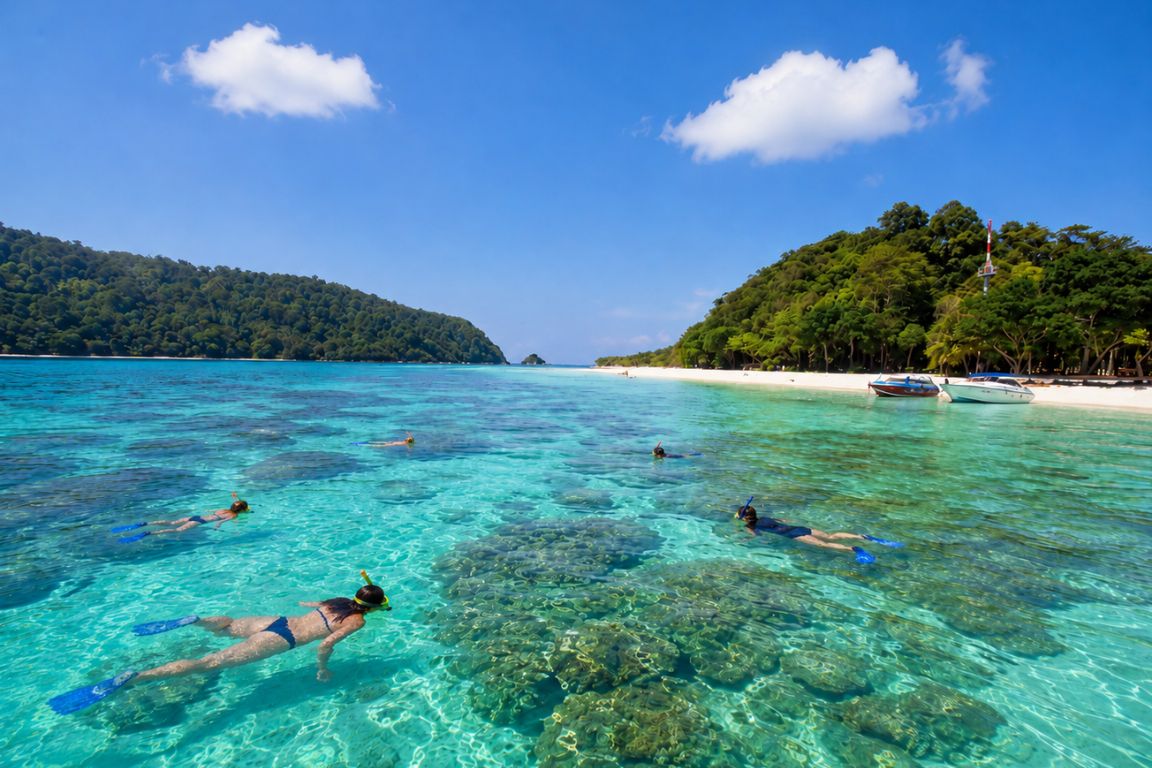 Three practical approaches: book in the dry season (November to April) and accept that weather is not a meaningful variable; book in the shoulder or wet season with a flexible itinerary that has backup land-based activities; or build lead time into any boat tour date so that a one-day postponement to a better-conditions window is possible without disrupting the rest of the trip. Travel insurance covering weather-related activity cancellation is worth buying for any Krabi trip planned between May and October.
For travelers whose primary Krabi goal is boat tours and snorkeling, the month selection is the most important booking decision they will make. December through February removes weather as a concern almost entirely. The booking question becomes which tours, which operator, and what time of day, none of which involve weather management. March extends this window into slightly hotter, still reliable conditions. April is the last dry-season month and the first month where building afternoon flexibility into the itinerary pays off.
For travelers who are visiting in May through August and want to maximise the probability of a successful boat tour, morning departures are the correct strategy. Weather in Krabi’s early monsoon period follows a fairly consistent daily pattern: mornings are clearer and calmer, with clouds building through the afternoon and heavy rain often arriving between 2pm and 5pm. A boat tour that departs at 7:30-8am and returns by 2pm extracts the calmest part of the day. Operators who offer early departures in this period are not just beating the crowds; they are using the diurnal weather pattern deliberately.
Flexible booking structures are worth the small price premium in low season. Weather cancellation and guest-initiated rescheduling terms differ by operator, product, and booking channel. Compare the activity’s cancellation terms with the insurance policy’s covered events, exclusions, excess, and reimbursement limits.
Want a practical island hopping plan that actually fits around your other Krabi activities and rest days? Here’s our Krabi island hopping itinerary guide so nothing clashes and nothing gets missed.
For a specific date, consult current official marine information and ask your chosen operator for its latest route assessment. We have been running tours on this coastline since 2011 and understand what the forecasts mean for a Hong Islands inner circuit versus a Phi Phi speedboat crossing . Related reading: our team at Krabi Boat Tours
Weather Impact Planning Checks
Past guest experiences varied by date, route, sea conditions, operator decisions, and individual booking terms.
Self-cancellation based only on a general rain forecast can conflict with the operator’s eventual departure decision. A traveler who cancels the night before because the forecast shows rain and then sees photos from the tour on social media the next day has lost their money and their experience. A quick message the evening before a Phi Phi speedboat day asking about conditions takes sixty seconds and gives a reliable answer based on what the pier is seeing, not from a general weather app.
Frequently Asked Questions
Does Rain Cancel Krabi Boat Tours?
Light to moderate rain does not cancel Krabi boat tours. Operators cancel based on sea state, not rainfall. A downpour with calm water is a wet boat ride that runs as scheduled. The cancellation triggers are wave height above 1.5 metres, sustained wind above 25 knots, and official Thai Marine Department advisories. If you are unsure whether your tour will run on a rainy day, contact the operator directly rather than cancelling yourself.
What Is the Worst Month for Krabi Boat Tours?
September and October are the worst months for boat tours. Both see the highest rainfall, roughest seas, and highest operator cancellation rates of the year. Some operators reduce their schedules significantly and some close outer-island routes entirely. Koh Rok and Koh Haa national parks are closed administratively during this period regardless of conditions. If boat tours are the primary reason for your trip, avoid September and October.
Can You Do Boat Tours in Krabi in July and August?
Yes. July and August are wet season months but most inner-circuit tours (4 Islands, Hong Island, sunset cruises) continue operating on most days. Mornings are typically clearer than afternoons. The Phi Phi day trip runs but is subject to same-day cancellation when swell on the open crossing is too high. Expect some disrupted days, lower prices, smaller groups, and the understanding that flexibility in your itinerary is worth more in these months than in the dry season.
How Do I Check Sea Conditions Before a Krabi Boat Tour?
Check the Thai Meteorological Department marine forecast at weather.tmd.go.th the evening before your tour. Apps like Windy and Windguru give visual swell and wind forecasts accurate to 24-36 hours ahead. On the morning of the tour, look at the water from Ao Nang Beach: white caps mean sustained wind, and an absence of boats in the water at normal departure time is a reliable local signal. Most importantly, contact your operator the evening before and ask directly whether they expect to run.
What Happens If My Krabi Boat Tour Is Cancelled by Weather?
Reputable operators offer a full refund or free rebooking on a future date when they cancel due to weather. This is standard practice and most booking platforms (Viator, GetYourGuide, direct operator sites) specify this in their weather cancellation policy. If you cancel yourself before the operator has made a cancellation decision, standard 24-hour cancellation policies apply and refunds are not automatic. Wait for the operator’s decision before initiating your own cancellation.
Is Travel Insurance Worth Buying for a Krabi Boat Tour in Low Season?
Yes, particularly for trips planned in September, October, or early November. Travel insurance covering weather-related activity cancellation provides a financial safety net when conditions prevent tours from running during periods of genuine risk. The November 2025 flooding that disrupted transport across southern Thailand is a recent example of how severe monsoon conditions can cascade beyond normal weather-related delays. For dry-season visitors, weather insurance is less critical but still reasonable given the cost relative to a multi-day boat tour package.
Written by Ryan Supakorn
Thai tour guide since 2011 · Founder, Krabi Boat Tours
Ryan has guided over 11,700 travelers through Krabi’s islands, lagoons, and coastline since founding the agency.
Check your travel date before arranging the rest of Krabi
Match the outing to your plans
Seasonal service limits can change the suggestion. A month is not confirmation of weather or available seats.
Blank fields keep the initial suggestion. Age pricing alone does not confirm suitability; if eligibility is unverified, the tool will not recommend a match. Check pickup and restrictions for your selected package.
Compare two total quotes
Use current quotes in the same currency, including park fees, transfers and option extras.
Initial recommendation. Adjust the optional choices to match your plans.
Krabi 4 Island Tour: Private Long-tail Boat Charter
View the private charter calendar before coordinating transfers, meals, and other activities around your four- or six-hour boat day.
6h · Confirm guiding language · Private longtail and Ao Nang-area transfers; lunch, park fees and an English guide cost extra. · Confirm your selected option’s pickup, inclusions, fees and participant restrictions before booking.
Choose a date to view the published schedule. Confirm availability and final price on Viator.
No reviewed option matches these choices.