What Is Krabi Best Known for?
Krabi's fame rests on four things that reinforce each other: vertical limestone, a cliff-locked beach called Railay, the longtail boats that reach it, and the islands you hop between on the way.
Curious how Krabi’s signature islands connect? A private Four Islands longtail links tidal sand, a natural cave, beach walks, swimming and snorkeling. Explore Private 4 Islands Longtail.
Krabi is best known for its limestone karsts, the towers of grey rock that rise straight out of the Andaman Sea and out of the rice fields inland. Everything else follows from them: Railay Beach, which they wall off from the road network, world-class rock climbing on their faces, island hopping between the hundred-plus islands they form, and the wooden longtail boats that carry you there.
Booking choice: See Krabi’s classic islands on a customizable private longtail with swimming and snorkeling. Check dates for Private 4 Islands Longtail.
The Limestone Karsts
The rock is the reason. Krabi sits on a stretch of Thailand's Andaman coast where eroded limestone leaves near-vertical towers standing in shallow sea, undercut at the waterline and topped with jungle. It is the same geology that makes Phang Nga Bay and Halong Bay look the way they do, but Krabi's version comes with beaches at the base.
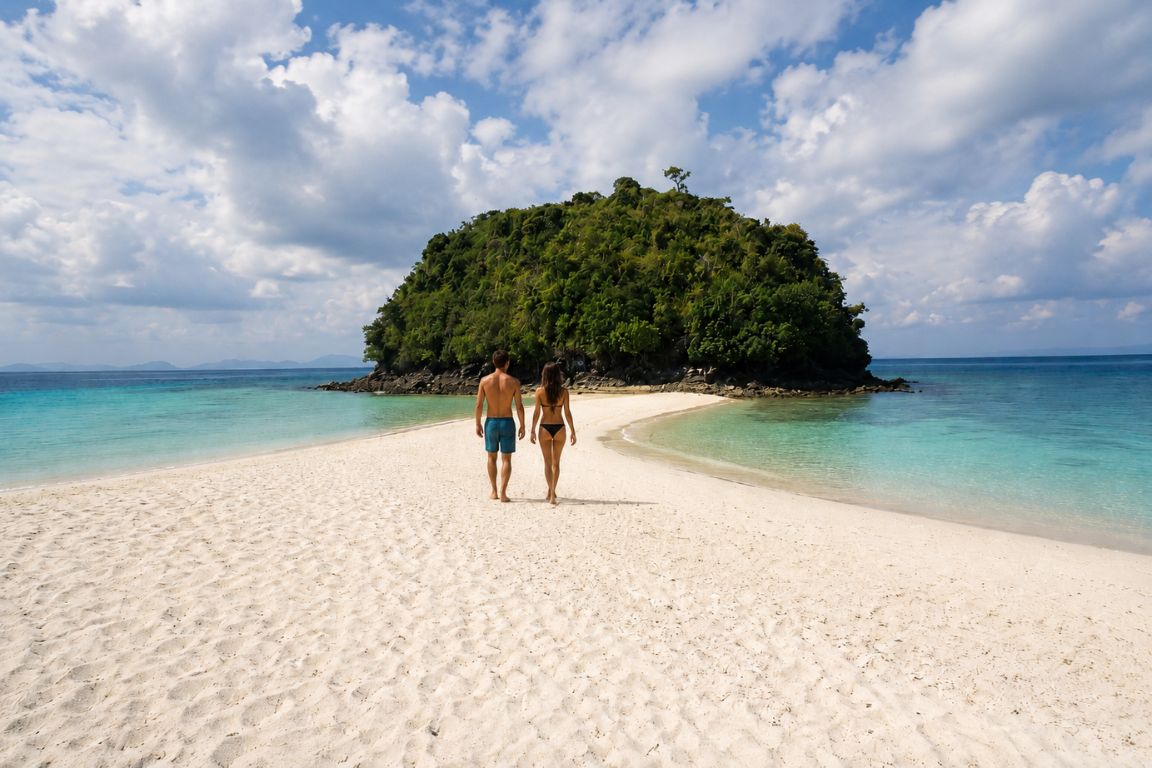
That shape does three useful things at once. It shelters the water between the islands, which is why the sea here is usually calm through the dry season. It creates hidden lagoons, the hongs, reachable through cave mouths at the right tide. And it gives every photograph a background that needs no editing.
Railay, and the Climbing
Railay is the single most recognisable place in the province. It is a peninsula rather than an island, but cliffs cut it off from the mainland completely, so there is no road: every arrival is by boat. Four beaches, a cave shrine at Phra Nang hung with offerings, and walls of limestone straight off the sand.
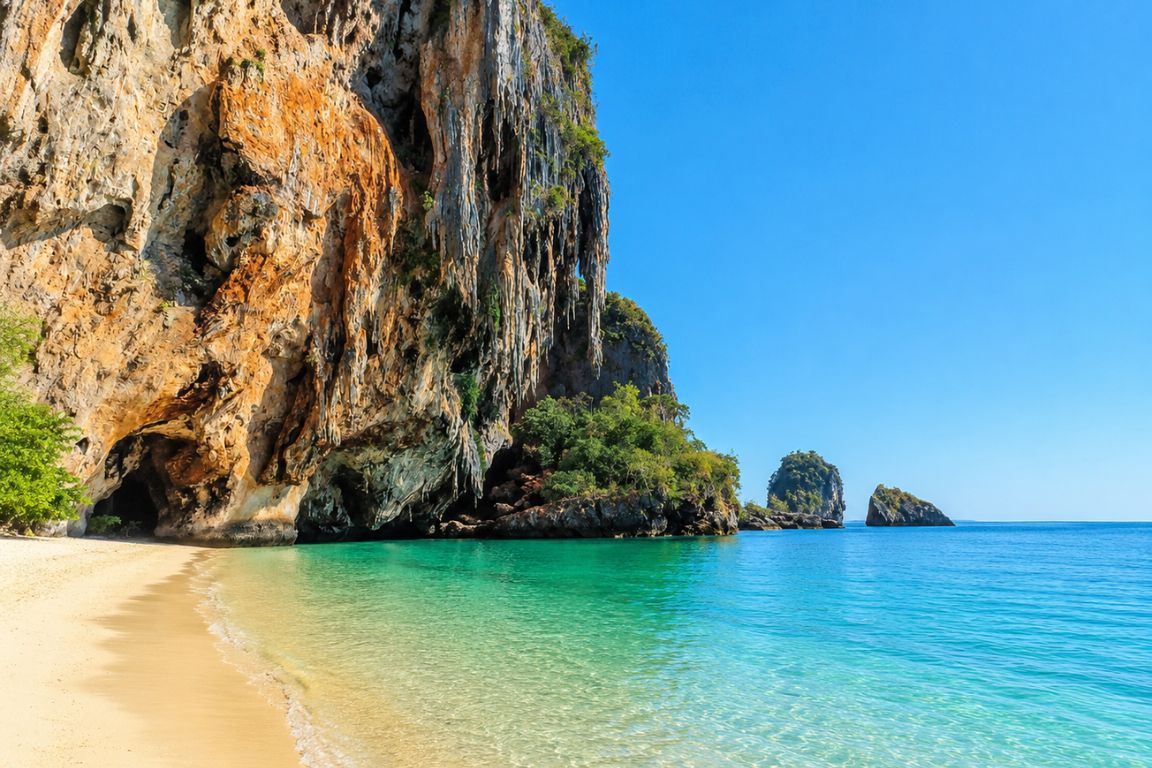
Those walls made Railay and neighbouring Tonsai a destination for climbers from the 1980s onward, with several hundred bolted sport routes across grades. Plenty of first-timers do their first ever climb here on a half-day course. Getting over is straightforward, a fifteen-minute longtail from Ao Nang beach on a posted fare, and the practicalities are set out in our Railay Beach guide.
Island Hopping and the Longtail Boat
The second thing Krabi is famous for is the day you spend moving between islands. The standard version is the 4 Islands circuit, close enough to Ao Nang that a longtail covers it comfortably, and its highlight is a tidal sandbar that appears at low water and joins two islands on foot.
| Place | Known for | From Ao Nang |
|---|---|---|
| Railay and Phra Nang | Cliffs, cave shrine, climbing, no road access | About 15 minutes by longtail |
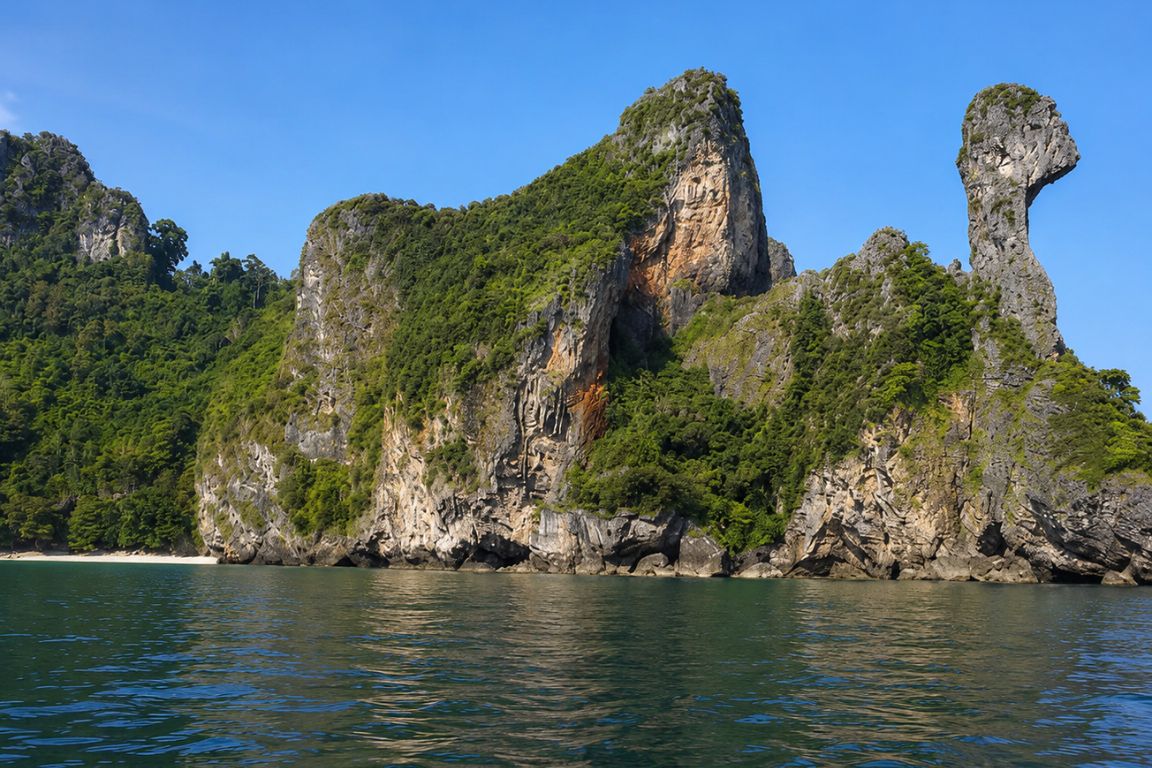
| Chicken Island (Koh Gai) | The rock shaped like a chicken head, reef fish | 8 km, about 20 minutes |
| Tup Island and Koh Mor | Thale Waek, the sandbar you walk at low tide | 10 km, about 20 minutes |
| Koh Poda | The beach and the coral gardens, the usual lunch stop | 12 km, about 25 minutes |
| Hong Island | The enclosed lagoon and the cliff viewpoint | 20 km, about 35 minutes by speedboat |
| Phi Phi Islands | Maya Bay, Pileh Lagoon, the snorkelling upgrade | 45 km, about 50 minutes by speedboat |
The boat itself is part of the fame. A longtail is a long wooden hull with a car or truck engine mounted on a pivot at the stern and a propeller on the end of a bare shaft, steered by swinging the whole assembly. It is loud, slow and completely specific to this part of the world, and for the inner islands it remains a traditional alternative to speedboats, a comparison we make properly in longtail boat versus speedboat. Most visitors meet the whole set on a single day out, which is what the 4 Islands tour guide covers.
Phi Phi, Maya Bay and the Film
Maya Bay is not in Krabi's inner islands, it is on Koh Phi Phi Leh about fifty minutes out by speedboat, but it sits on almost every Krabi itinerary and it carries the province's most famous image. The 2000 film The Beach put it on the global map, tourism then damaged the reef badly enough that the authorities closed the bay in 2018, and it reopened under strict rules on visitor numbers, boat access and where you may swim, with seasonal closures on top.
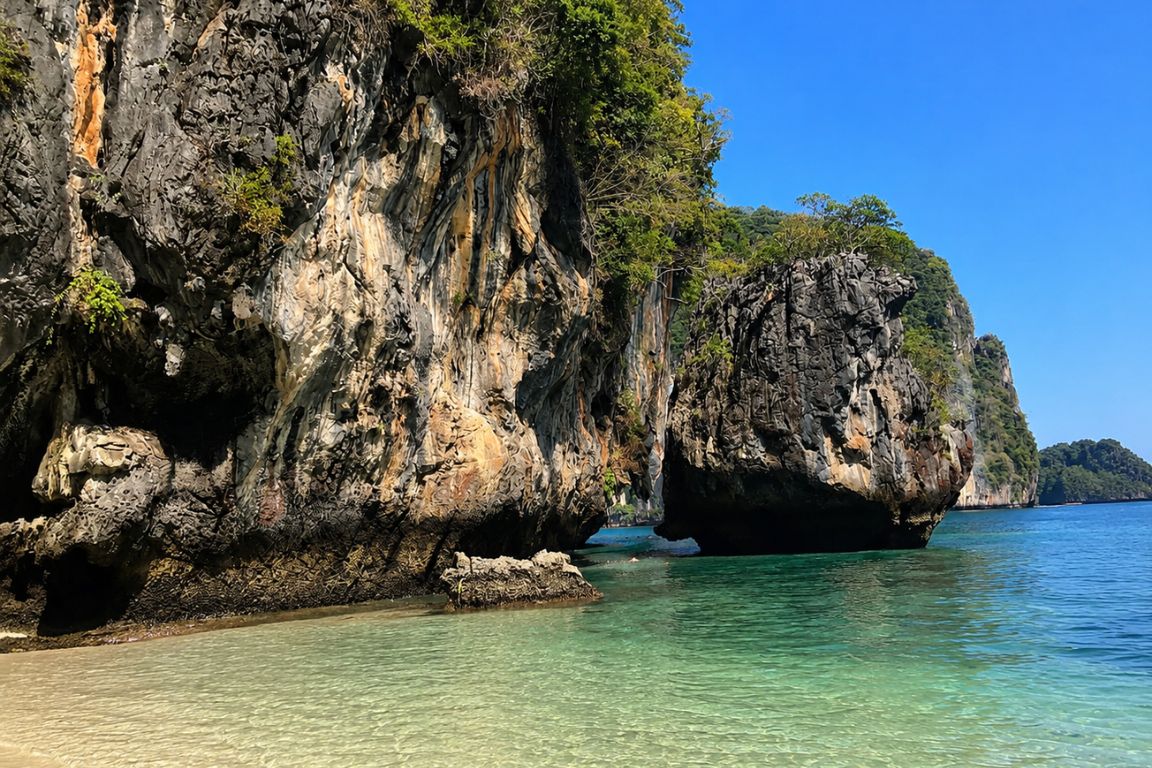
Go in knowing that the day is about seeing it, not about lounging on it. Our Phi Phi day trip guide sets out the current format and what an early-departure trip involves.
Why Is Krabi So Famous?
Because it delivers the postcard without much effort. The karsts are visible from the beach, the islands are twenty minutes away, and one day tour hits four of the images people came for. That accessibility, more than any single site, is what built the reputation.
What follows is the reality check most visitors work out on day two.
| The reputation | The reality |
|---|---|
| Empty turquoise beaches | Quieter outside peak excursion periods, busier when day tours overlap |
| Ao Nang is a beautiful beach town | Ao Nang is a working boat hub with an average beach and excellent logistics |
| Krabi is an island | Krabi is a mainland province with a town, an airport and more than a hundred offshore islands |
| Great nightlife | Low-key and early; the best evening here happens on a boat |
| Good all year | Weather and sea conditions can change or cancel boat itineraries |
What Else Krabi Is Known for
Away from the water the province has a second reputation. Tiger Cave Temple, above Krabi Town, is known for a staircase of more than a thousand steps to a summit shrine with a view across the karst plain, described honestly in our Tiger Cave Temple guide. Inland there is the Emerald Pool, a spring-fed pool in the rainforest, and hot springs that run through natural rock basins.
Then there is the one almost nobody arrives knowing about: the water glows. Plankton in the sheltered bays flash blue when disturbed, and some evening tours include a planned plankton swim, though visible glow depends on natural conditions. The odds, the months and the moon phases are in our guide to bioluminescent plankton in Krabi.
Put together, that is the province: rock, water, boats and an early night. Almost every version of a Krabi trip runs through a day on the water, which is why boat tours are a common way to experience Krabi’s islands. Thailand's tourism board keeps a regional overview at tourismthailand.org , and the geography is summarised in the Krabi province entry . Related reading: boat tours from Krabi
Frequently Asked Questions
Is Krabi an island?
No. Krabi is a mainland province on Thailand's Andaman coast, with its own airport and a provincial capital at Krabi Town. What people picture as Krabi is its offshore archipelago of more than a hundred limestone islands, plus Railay, a mainland peninsula cut off by cliffs and reachable only by boat.
What is Krabi most famous for?
Its limestone karsts and everything that follows from them: Railay Beach and its rock climbing, island hopping around the 4 Islands circuit, the Thale Waek sandbar, and the wooden longtail boats that run the route. Maya Bay on Phi Phi is the most photographed single site on the standard itinerary.
Why is Krabi so famous?
Accessibility. The scenery that other places make you work for sits twenty minutes offshore, and a single day tour covers four of the images that draw people to Thailand. Add cheap food, easy boats and a long dry season from November to April, and the reputation looks after itself.
Is Krabi better than Phuket?
Different rather than better. Krabi wins on scenery, calm and value; Phuket wins on nightlife, flight connections and the sheer number of hotels. Travellers who care about limestone, island days and quiet evenings tend to prefer Krabi, and it is an easy transfer between the two.
Check your actual travel date before arranging the rest of Krabi
Match the outing to your plans
Blank fields keep the initial suggestion. Age pricing alone does not confirm suitability; if eligibility is unverified, the tool will not recommend a match. Check pickup and restrictions for your selected package.
Compare two total quotes
Use current quotes in the same currency, including park fees, transfers and option extras.
Initial recommendation. Adjust the optional choices to match your plans.
Krabi 4 Island Tour: Private Long-tail Boat Charter
A customizable private longtail combines tidal connecting sand, a natural cave, beach walks, swimming and snorkeling in one Four Islands outing.
6h · Confirm guiding language · Private longtail and Ao Nang-area transfers; lunch, park fees and an English guide cost extra. · Confirm your selected option’s pickup, inclusions, fees and participant restrictions before booking.
Choose a date to view the published schedule. Confirm availability and final price on Viator.
No reviewed option matches these choices.