Phuket to Krabi: Ferry, Speedboat, Taxi and Bus Compared (2026)
Phuket and Krabi are about 165 km apart by road and a couple of islands apart by sea, which gives you four honest options: ferry, speedboat, private car or bus. The fastest is not always the quickest door to door, and the cheapest costs you a morning. Here is what each one really involves.
See whether the private transfer’s Phuket pickup zone fits before comparing options for your travel date. Explore Phuket to Krabi Private Transfer.
Booking choice: The private transfer lists a 1.45–2.15-hour estimate, year-round service and Krabi hotel drop-off; outer Phuket pickups may cost extra. Check dates for Phuket to Krabi Private Transfer.
Every Way Across, Side by Side
Four routes work: the ferry (scenic, slow, often via Phi Phi), a speedboat transfer (faster, pricier, weather-dependent), a private car over the Sarasin Bridge (around 1.45 to 2.15 hours, traffic permitting, door to door), and the bus or minivan (cheapest, longest). Most travelers with luggage and a hotel booking take the car. Most travelers with time take the boat.
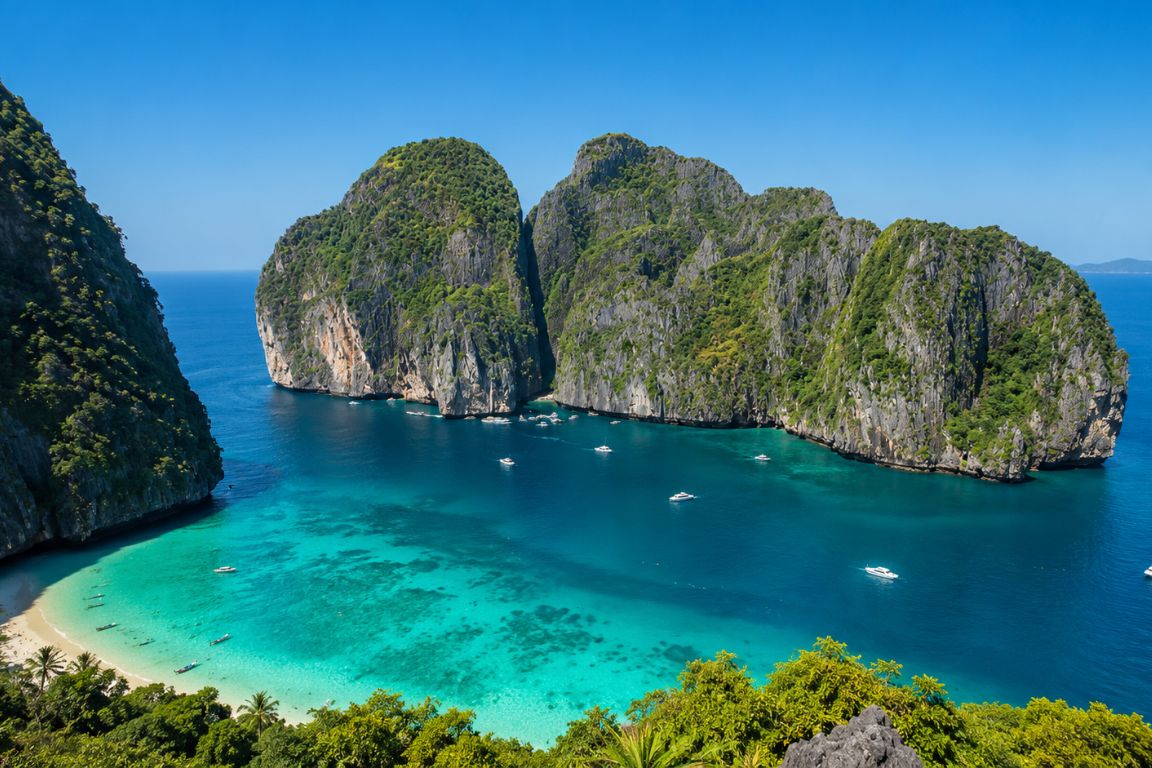
Start with the geography, because it explains every number below. Phuket is an island tied to the mainland by a single bridge in the north, so a road trip to Krabi goes up and around: north off the island, east along Highway 4, then south into Krabi Province. That is why 165 km takes about three hours rather than two. By sea, the two coasts face each other across open water with the Phi Phi group sitting roughly in the middle, which is why so many ferry timetables route through Tonsai.
Costs below are planning allowances, not quotes. Fares move with season, operator, fuel and how you book, so treat them as a budget line and confirm the current price on the operator's own timetable before you commit.
| Route | Time allowance | Cost allowance | Comfort | Best for |
|---|---|---|---|---|
| Ferry, direct where running | Around 2 to 2.5 hours on the water | Around 700 to 1,000 THB per person | Seats, deck, toilets, slow roll | Scenery on a budget |
| Ferry via Phi Phi | Most of a day with the change | Around 800 to 1,300 THB per person | Two boats, a wait in between | Stopping at Phi Phi anyway |
| Speedboat transfer | Around 2 hours, sea state permitting | Around 1,200 to 2,000 THB per person | Fast, bouncy, spray | Saving half a day |
| Private car or taxi | Around 3 hours plus stops | Around 2,500 to 3,500 THB per car | Air conditioning, your own schedule | Families, luggage, hotel to hotel |
| Public bus | Around 3.5 to 4 hours | Around 200 to 400 THB per person | Basic, station to station | Solo budget travel |
| Shared minivan | Around 3 to 3.5 hours | Around 300 to 600 THB per person | Cramped, frequent departures | Backpackers, light bags |
One planning rule cuts through all of it: count the legs, not the headline. A two-hour boat plus a taxi to the pier plus a taxi from the pier plus check-in time is a five-hour day. A three-hour car ride is a three-hour day.
How Long Is the Ferry Ride From Phuket to Krabi?
Allow around two to two and a half hours on the water for a direct sailing, and most of a day if your ticket routes through Phi Phi with a change at Tonsai. Add an hour on each end for the pier transfers and check-in. Direct services run mainly in the dry season, roughly November through April.
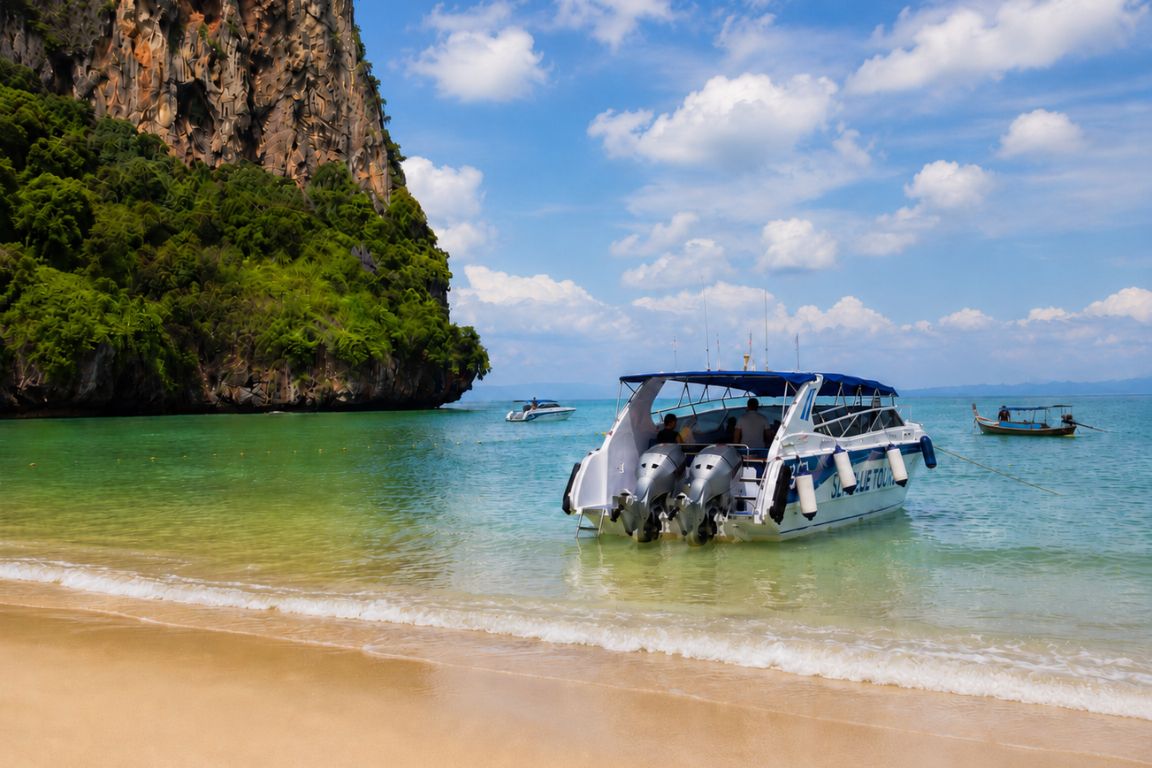
Ferries leave Phuket from Rassada Pier on the east side of the island, near Phuket Town, and arrive in Krabi at Klong Jilad Pier just outside Krabi Town, or at Nopparat Thara and Ao Nang on some services. The crossing runs through open Andaman water with the limestone islands rising ahead as you approach the Krabi coast, which is the reason plenty of people choose it over the road even when the road is faster.
The Phi Phi routing is the one that surprises people. Many timetables treat Tonsai as a hub: you sail Phuket to Phi Phi, wait somewhere between 30 minutes and a couple of hours, then continue to Krabi on a second boat. That can be a genuine bonus if you wanted to see the islands anyway, and a long, hot afternoon if you did not. Read the ticket carefully before buying, because the words direct and transfer are doing a lot of work.
Sailings thin out from May through October when the southwest monsoon builds, and direct services are the first to go. September and October are the roughest months on this coast, so if your dates land there, the road becomes the reliable option. Our notes on rainy-season boat conditions cover what the sea actually does in those months.
| Ferry option | From | To | Time on water | Season |
|---|---|---|---|---|
| Direct Phuket to Krabi | Rassada Pier | Klong Jilad Pier | Around 2 to 2.5 hours | Mainly Nov to Apr |
| Via Phi Phi, one ticket | Rassada Pier | Klong Jilad Pier | Around 4 to 6 hours with the change | Most of the year |
| Via Phi Phi, split tickets | Rassada Pier | Tonsai, then onward | Your choice of connection | Most of the year |
| Phuket to Ao Nang or Nopparat Thara | Rassada Pier | Ao Nang area piers | Around 2.5 to 3 hours | Dry season, limited sailings |
| Phuket to Koh Lanta | Rassada Pier | Saladan Pier | Most of a day, usually via Phi Phi | Roughly Nov to Apr |
If Phi Phi is on your list regardless, the smarter play is often to break the journey there for a night rather than sit out a connection. The alternative is to reach Krabi first and run the islands as a day out, which is what our early-bird Phi Phi and 4 Islands speedboat adventure is built for, with area-specific pickups from 5:20am and a 7am Railay pickup for an early start around Phi Phi and four islands.
How Much Is a Speedboat From Phuket to Krabi?
Budget around 1,200 to 2,000 THB per person for a shared speedboat transfer, and considerably more for a private charter. It cuts the water time to roughly two hours in decent conditions. Speedboats are the first service cancelled when the sea gets up, so they are a dry-season tool rather than a year-round one.
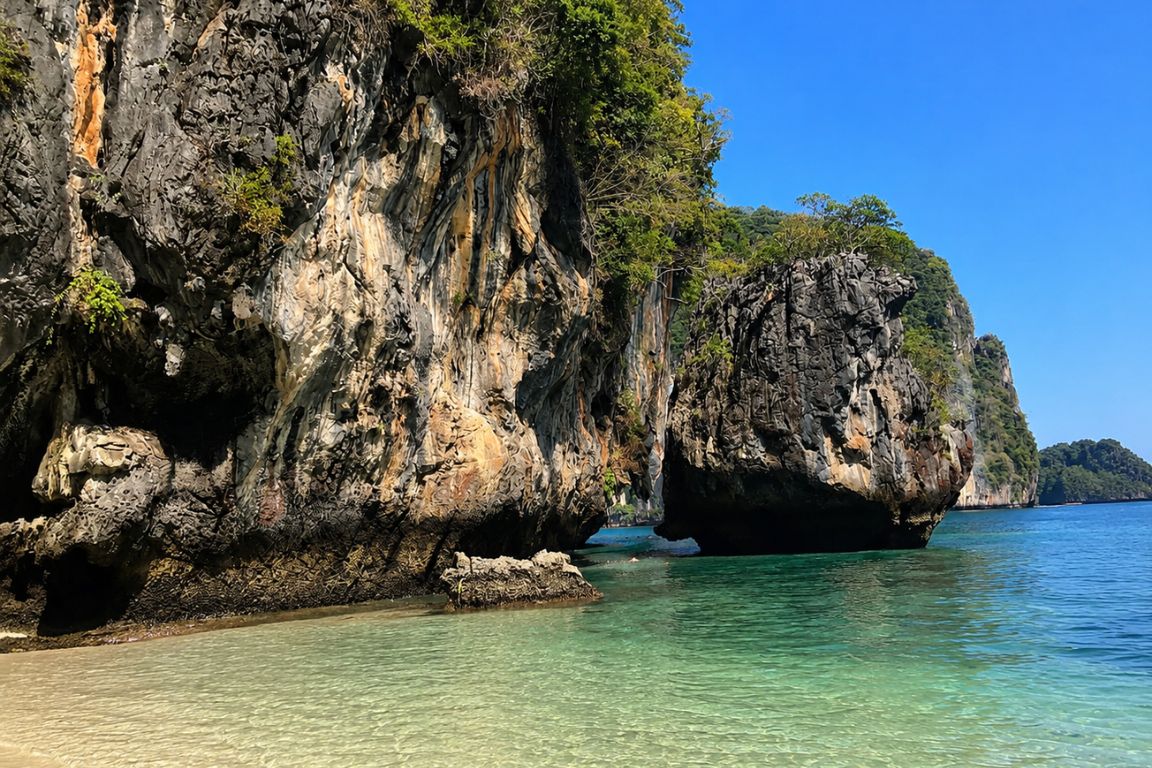
The trade against the ferry is simple: you pay roughly double to save a couple of hours, and you accept a rougher ride. Speedboats slam rather than roll, spray comes over the bow, and anyone prone to seasickness will have a worse time than they would on the slow boat. Families with small children usually prefer the ferry or the car for exactly that reason.
Private charter is a different product with a different price. It makes sense for a group of six or eight moving hotel to hotel with luggage, or for anyone who wants to stop at an island on the way, and it is quoted per boat rather than per seat. If that is the plan, ask what happens if the captain calls off the crossing, because the answer varies by operator.
Worth separating two things that sound alike: a speedboat transfer moves you and your bags from A to B, while a speedboat day tour takes you around islands and brings you back. If what you actually want is the islands, the tour is the better purchase, and it comes with lunch, gear and a guide. Pickup coverage, meeting points and transfer charges vary by tour. Related reading: Krabi island tours
How Much Is a Taxi From Phuket to Krabi?
Allow around 2,500 to 3,500 THB for a private car, hotel to hotel, with the listed private transfer estimating around 1.45 to 2.15 hours, depending on traffic. Minivans for larger groups sit higher, often 3,500 to 4,500 THB. It is the most expensive option for one person, while groups should compare the per-car cost with individual shared-transport fares.
The route runs north out of Phuket, over the Sarasin Bridge, then east and south along Highway 4 through Phang Nga. It is a decent road, mostly two lanes each way, with rubber plantations and limestone hills for the middle hour. Drivers usually stop once for fuel and a toilet break, and many will detour to a viewpoint or a market if you ask before setting off.
| Vehicle | Seats | Cost allowance | Notes |
|---|---|---|---|
| Sedan taxi | Up to 3 with modest luggage | Around 2,500 to 3,000 THB | Cheapest private option, tight boot space |
| SUV | Up to 4 with luggage | Around 3,000 to 3,500 THB | The common choice for couples with big bags |
| Minivan | Up to 8 to 10 | Around 3,500 to 4,500 THB | Best value for a group, plenty of bag room |
| Airport to airport | Either direction | Similar to hotel to hotel | Around 2.5 hours, the shortest road version |
| With a Phang Nga stop | Any | Add a few hundred baht per hour | Turns the transfer into a half day out |
Two things worth agreeing before you leave. First, fix the price in baht for the whole car, not per person, and confirm whether tolls and fuel are included. Second, confirm the drop-off point precisely: Ao Nang, Krabi Town, Klong Muang and Tubkaek are spread across a wide area, and a driver who expected Krabi Town may want more for the extra 40 minutes. Choosing your side of that map before you book the car is easier if you have read where to stay in Krabi first.
Is the Bus or Minivan Worth the Saving?
For solo travelers with light bags, yes. Buses run from Phuket Bus Terminal 2 to Krabi Bus Terminal for around 200 to 400 THB in roughly three and a half to four hours. Minivans are quicker and a little dearer. The catch is the last mile: both drop you outside town, well short of Ao Nang.
The saving is real, roughly a tenth of a private car for one person. What it costs you is flexibility and time at both ends: a ride to the terminal in Phuket, a wait for the departure, then a songthaew or taxi from Krabi Bus Terminal onward to the beach. Add those legs and a four-hour bus becomes a six-hour day.
Buses are the more comfortable of the two, with proper seats, luggage holds and air conditioning, and they run several times daily. Minivans leave more often and get there quicker, but they are cramped, the bags ride with you, and drivers keep a schedule that does not encourage stops. Neither is a problem for a young traveler with a backpack. Both are miserable with a toddler and two suitcases.
If you are heading further south afterwards, Krabi Bus Terminal is also the connection point for onward vans to Koh Lanta and Trang, which can make the bus the sensible link in a longer chain. Our guide to Koh Lanta from Krabi covers that leg and its seasonal ferry timings.
Which Route Suits Which Traveler?
Families and anyone with real luggage should take a private car. Couples on a scenic budget should take the ferry. Solo backpackers should take the bus. Groups of six or more get the best value from a minivan, and speedboat transfers only make sense in the dry season when saving two hours is worth the premium.
| Traveler | Route | Why |
|---|---|---|
| Family with young children | Private car or minivan | Door to door, seats, stops when you need them |
| Couple, scenery first | Ferry | Islands the whole way, the crossing is part of the trip |
| Solo budget traveler | Bus | Cheapest by far, luggage hold, frequent departures |
| Group of six or more | Minivan | Compare the per-vehicle minivan allowance with individual bus fares |
| Tight schedule, dry season | Speedboat transfer | Fastest on the water, weather permitting |
| Prone to seasickness | Private car | No sea motion or spray; road delays can still occur |
| Stopping at Phi Phi | Ferry with a night at Tonsai | Turns a connection into a destination |
| Travelling in September or October | Road, any form | Sailings thin out and cancellations spike |
Does the Season Change the Answer?
Yes, and mostly for the boats. Dry season, mid-November through April, is when direct ferries and speedboat transfers run at full frequency and the crossing is calm. From May the schedule thins, and in September and October, the roughest months here, the road becomes the dependable choice regardless of price.
| Window | Sea state | Boat options | What we would book |
|---|---|---|---|
| Mid-Nov to Dec | Settling, then flat | Full schedule returning | Ferry, or car on a tight timetable |
| Jan to Feb | Flattest of the year | Everything running, book ahead at peak | Ferry for the views, speedboat to save time |
| Mar to Apr | Good, hot | Full schedule, quieter boats after peak | Ferry, after comparing current April fares |
| May | Transitional | Direct sailings start dropping out | Car, unless the forecast is clean |
| Jun to Aug | Clear mornings, wet afternoons | Reduced, morning departures safest | Morning ferry or car |
| Sep to Oct | Roughest | Frequent cancellations | Car or bus, every time |
The same pattern governs what you can do once you arrive, which is why arrival timing matters more here than in most places. The month-by-month picture for the water sits in our guide to the best months for boat tours, and it is worth a read before you fix the transfer date.
Can You Day-trip From Phuket to Krabi?
Not usefully. A round trip eats five to seven hours of travel, and Krabi's island tours pick up in Ao Nang, Krabi Town, Klong Muang and Tubkaek, not in Phuket. If you want a boat day from a Phuket base, do Phang Nga Bay from a Phuket marina instead, and save the Krabi islands for when you move across.
The honest version of this question is usually about wanting the Krabi scenery without changing hotels. There is a good answer to that, and it is not a day trip. Phang Nga Bay tours from Phuket reach the same limestone country: Koh Panak's cave lagoons sit around 40 minutes from Royal Phuket Marina, and the James Bond longtail tour with optional canoeing in our own lineup runs that route from a Phuket marina; check the operator’s stated pickup coverage.
If it is the Krabi inner circuit you are after, Poda, Tup, Chicken Island and Hong, then you need to be sleeping on that side. Those crossings are 8 to 20 km from Ao Nang and the boats leave between 7am and 8:30am. Trying to make that from a Phuket hotel means leaving before 4am and losing the day either side.
Move the base instead, even for two nights. Three days of boats from Ao Nang gets you more water time than a week of long-distance day trips, and the difference in what you actually see is not close. The trade-offs between the two provinces are laid out in full in our Krabi vs Phuket comparison.
The Transfer Legs Nobody Counts
Every route has a first and last mile that never appears on the ticket. Rassada Pier is a 20 to 40 minute ride from most Phuket beaches. Klong Jilad Pier is 25 to 30 minutes from Ao Nang. Krabi Bus Terminal is further out again. Budget an hour at each end and the whole plan stops slipping.
| Leg | Allow | Notes |
|---|---|---|
| Phuket west-coast hotel to Rassada Pier | Around 30 to 45 minutes | Longer from Kamala or Bang Tao in traffic |
| Phuket airport to Rassada Pier | Around 45 to 60 minutes | Check-in for ferries closes early |
| Klong Jilad Pier to Krabi Town | Around 10 minutes | The closest base to the ferry |
| Klong Jilad Pier to Ao Nang | Around 25 to 30 minutes | Songthaew or taxi, agree the fare first |
| Krabi Bus Terminal to Ao Nang | Around 30 to 40 minutes | The bus saving shrinks here |
| Krabi airport to Ao Nang | Around 40 minutes | Around 20 minutes to Krabi Town |
| Ao Nang to Railay | Around 15 minutes by longtail | Boats thin out after dark, plan the last leg |
Railay deserves a specific warning. If your hotel is on the peninsula, your journey does not end at a pier or a bus terminal, it ends at a longtail with your bags going through the shallows. Arriving after dark makes that harder and occasionally impossible, so aim to be in Ao Nang by late afternoon. Background on both ends of the road sits on the Phuket International Airport and Krabi International Airport pages.
What to Do with the Arrival Day
Do not book a boat for it. Arrival days lose hours to traffic, ferry delays and check-in, and a missed 7am pickup the next morning is a worse outcome than a slow afternoon. Land, eat, walk the beach, and start the water on day two with a full night behind you.
If you arrive by lunchtime and cannot sit still, a half-day works better than a full one. The short kayaking trips run in both a morning and an afternoon session, and a sunset cruise can run six to seven hours from a 2pm departure, so choose it only if you are already settled and can reach the departure point.
Then front-load the big days. Put the long boat trip on your first full morning so a weather cancellation still leaves you a spare day to reschedule, which is the single most useful habit on this coast. That sequencing, and what to drop when a day disappears, is worked through in our Krabi itinerary guide.
One last practical note: carry baht. National park fee amounts, inclusion and payment points vary by outing; check your chosen tour’s details and carry baht when cash payment is specified. Arriving from Phuket with only a card is a common and avoidable start to a boat day.
Frequently Asked Questions
How long does it take to get from Phuket to Krabi?
By road, around three hours for the 165 km over the Sarasin Bridge and along Highway 4. By sea, allow two to two and a half hours on a direct ferry, or most of a day if the ticket routes through Phi Phi with a change. Add an hour at each end for transfers.
Is the ferry or the taxi better from Phuket to Krabi?
The taxi is faster, door to door and better with luggage or children, at around 2,500 to 3,500 THB per car. The ferry is cheaper per person and far more scenic, at roughly 700 to 1,000 THB. Groups of four usually find the car works out similar in cost.
Do ferries run from Phuket to Krabi all year?
Sailings run year-round, but frequency drops sharply from May as the southwest monsoon builds, and direct services are the first to be cut. September and October see the roughest seas and the most cancellations. In those months the road is the dependable option.
How much is a speedboat from Phuket to Krabi?
Budget around 1,200 to 2,000 THB per person for a shared speedboat transfer, with private charters quoted per boat and priced well above that. It saves a couple of hours over the ferry but delivers a bouncier ride and gets cancelled first when the sea gets up.
Can I do a Krabi day trip from Phuket?
Not in any way that pays off. The round trip alone eats five to seven hours, and Krabi island tours pick up in Ao Nang, Krabi Town, Klong Muang and Tubkaek rather than in Phuket. A Phang Nga Bay tour from a Phuket marina gives you a far better day for the same money.
Where do the ferries arrive in Krabi?
Most arrive at Klong Jilad Pier, about 10 minutes from Krabi Town and 25 to 30 minutes from Ao Nang. Some dry-season services run into Nopparat Thara or Ao Nang directly, which saves the road leg. Confirm the arrival pier on the timetable before booking a transfer.
Check your travel date before arranging Krabi check-in and onward plans
Match the outing to your plans
Blank fields keep the initial suggestion. Age pricing alone does not confirm suitability; if eligibility is unverified, the tool will not recommend a match. Check pickup and restrictions for your selected package.
Compare two total quotes
Use current quotes in the same currency, including park fees, transfers and option extras.
Initial recommendation. Adjust the optional choices to match your plans.
Phuket to Krabi Private Transfer – Direct Hotel-to-Hotel Service
Compare the private transfer’s pickup zone, approximate duration and luggage conditions before arranging hotels or onward connections.
Confirm duration for your selected option · English guide listed · One-way hotel-to-hotel transfer from Phuket to Krabi; confirm both addresses. · Confirm your selected option’s pickup, inclusions, fees and participant restrictions before booking.
Choose a date to view the published schedule. Confirm availability and final price on Viator.
No reviewed option matches these choices.