What Should You Be Careful of in Krabi?
Krabi is a low-drama place to travel, and the things that actually catch people out are dull ones: the sun, the sea state, and the gap between what a cheap tour price includes and what you still have to pay. Here is the honest watch list.
See what a shaded Four Islands sunset cruise includes before weighing Krabi’s practical boat-day trade-offs. Explore 4 Islands Sunset Snorkeling.
The things that actually go wrong in Krabi are the boring ones: sunburn from a day on open water, swimming when the beach is flying a red flag, sea urchins in shallow rocky water, and monsoon sea conditions in September and October. Violent crime is rare. Overpaying because you did not ask what a tour price includes is not.
Nothing on this list should stop anyone booking a trip. It is a list of the specific, repeatable ways a good day gets spoiled, drawn from what our crews see week after week on the Krabi island tours that leave Ao Nang every morning.
Booking choice: Compare shade, onboard facilities and included park fees on a six-to-seven-hour Four Islands sunset cruise. Check dates for 4 Islands Sunset Snorkeling.
What Is the Biggest Risk on a Krabi Boat Day?
The sun, by a wide margin. A UV index of 10 to 12 is standard through Andaman daylight hours, and reflected glare off flat tropical water adds to it. Cloud cover changes very little. Almost everyone who burns badly applied sunscreen once at the hotel and never reapplied after getting in the sea.
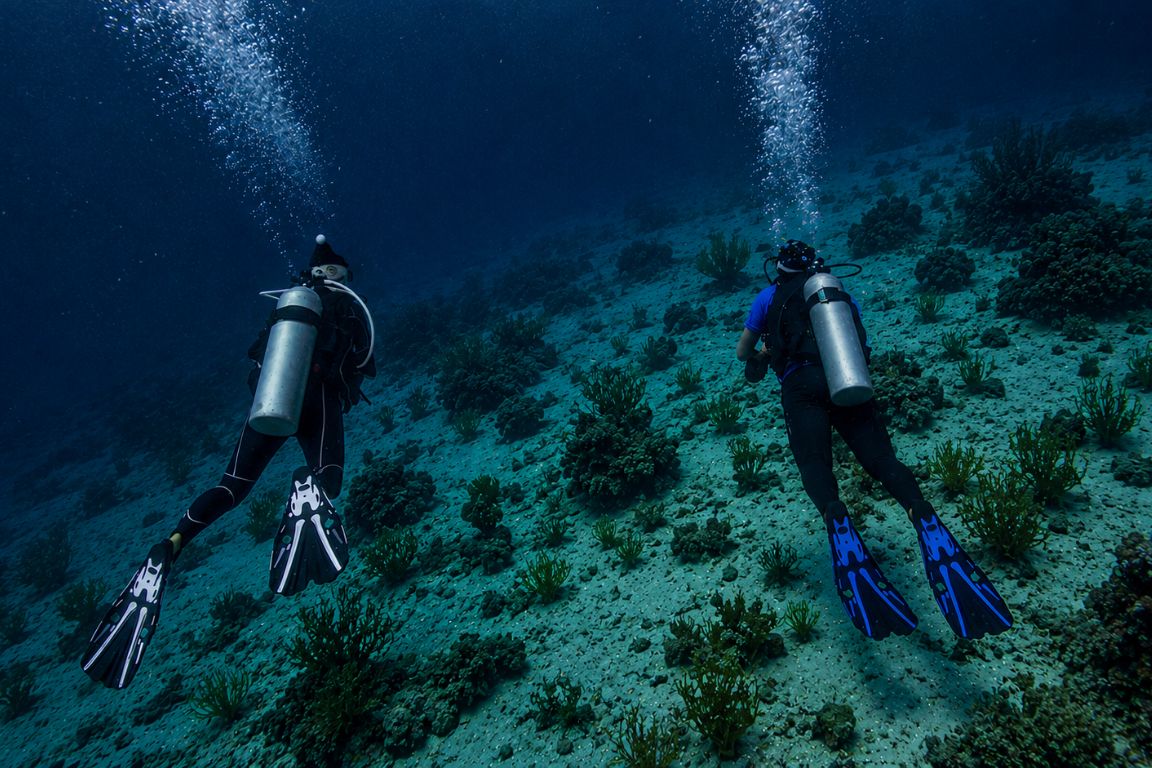
Useful sun precautions include: mineral reef-safe sunscreen on all exposed skin before boarding, SPF 50 reapplied at least twice during the day, a wide-brim hat with a chin strap that survives the boat wind, and a lightweight long-sleeved UV shirt over your swimsuit. The rash guard is the single highest-value item in the bag, because it covers the shoulders and upper back that nobody reaches properly with a spray.
Reef-safe is not a preference here. Conventional sunscreens containing oxybenzone and octinoxate damage coral, national park coral zones restrict them, and fines run to figures no holiday budget wants to meet. Bring your own mineral bottle rather than trusting what the hotel shop stocks.
How Do You Read the Beach Flags?
Thai beaches use a three-colour flag system and it is the most reliable on-the-ground signal you get. Red means swimming is prohibited and marine activity is restricted. Orange means conditions need attention. Green means normal. Red flags at your beach on a departure morning are worth a direct call to your operator.
| Flag | What it means | What to do |
|---|---|---|
| Green | Normal conditions | Swim, but still check where the drop-off is |
| Orange | Caution; swimming and boat activity continue | Stay shallow, stay near other people, skip it with young children |
| Red | Swimming prohibited, marine activity restricted | Do not enter the water, and confirm your tour before heading to the pier |
Flags respond to sea state and to specific hazards, including seasonal marine stingers. Lifeguard cover is not continuous on every Krabi beach, so a green flag on an empty beach is information rather than supervision.
Which Sea Creatures Actually Cause Problems?
Sea urchins cause the most real injuries: step on one in shallow rocky water and the spines break off inside your foot. Jellyfish, including Portuguese Man o' War, appear near shore on specific occasions, and one such event prompted an official swimming ban in Hat Noppharat Thara National Park in June 2026.
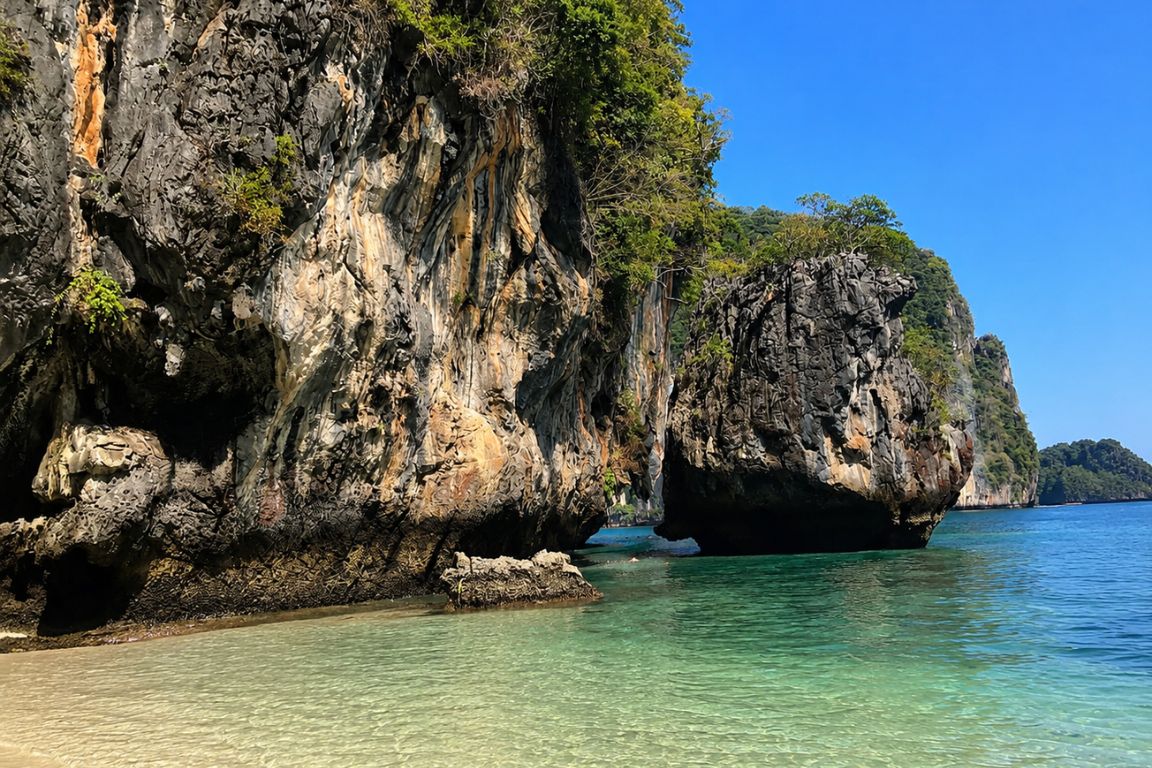
Water shoes solve the urchin problem almost entirely, and they earn their place twice over on rocky lagoon entries where flip-flops simply float away. For stings, follow the flags and local notices rather than a fixed calendar, since the appearances are event-driven rather than reliably seasonal.
The animals people worry about are mostly not the problem. The blacktip reef sharks seen regularly around Koh Bida Nok and Long Beach on Phi Phi Don run 70 to 120 centimetres, are harmless, and move through the reef rather than towards snorkelers. Our page on marine life around Krabi's reefs covers what you are actually likely to meet.
What Is Worth Knowing About Boarding and Small Boats?
Most Krabi island stops are wet landings: you step off the bow into knee-deep water onto sand or rock. Non-slip water sandals, both hands free, and a dry bag for anything electronic solve nearly all of it. Life-jacket sizes vary by operator; confirm the size you need before booking.
Boat choice matters more than people expect. Speedboats are fast and bouncy, and the forward seats punish anyone prone to motion sickness; longtails are slower with a gentler roll. The trade-offs are set out in our longtail boat versus speedboat comparison, and families travelling with small children will find the format notes in our guide to boat tours with kids.
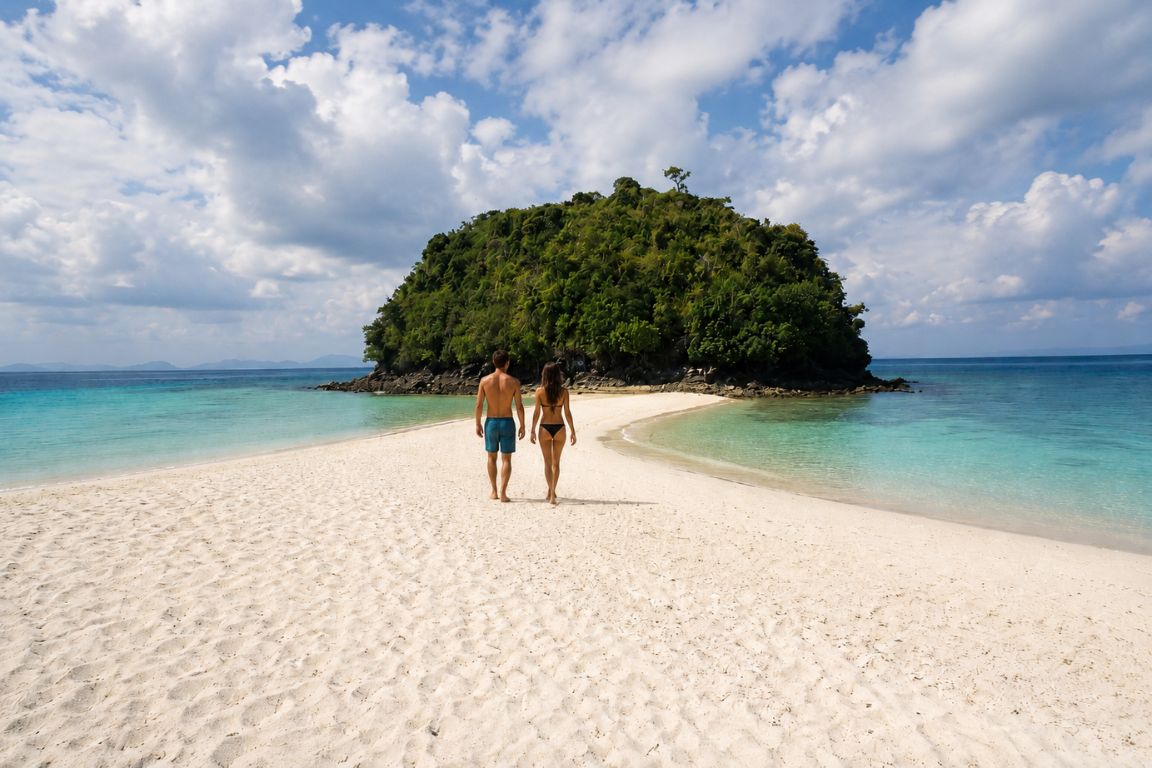
One tide-related trap: the white sandbar linking Tup Island, Koh Mor and Chicken Island only exists around low tide. It is a walkway for a couple of hours and open water for the rest of the day. Stay inside your boat's departure window and do not treat the sand under your feet as permanent.
When Does the Weather Become the Real Hazard?
From May to October, and sharply so in September and October, when rainfall averages roughly 355mm and 338mm and cancellations run high. The signals are readable the evening before: a swell forecast of 1.5 metres or more in your route window, or wind above 25 knots, means the day is in doubt.
| Signal | Where you see it | Read |
|---|---|---|
| Swell forecast 1.5m or above | Marine forecast the evening before | Expect a call from your operator |
| Wind above 25 knots | Marine forecast the evening before | Outer routes go first |
| White caps visible from shore | Ao Nang or Noppharat Thara at 7am | Conditions are marginal at best |
| No longtails in the water at the usual hour | The beach itself | The local fleet has already decided |
Take the cancellation when it comes. A cancelled or rearranged day beats an uncomfortable open-water transit in poor conditions, and operators make that call according to current conditions and their own policies. Our guide to weather impact on Krabi boat tours covers refunds and rebooking; the daily marine outlook is published by the Thai Meteorological Department at weather.tmd.go.th.
Are There Scams in Krabi?
Serious scams are not a defining feature of Krabi. The common money problem is softer: a headline tour price that excludes national park fees, then a ranger collecting 200 to 400 THB per adult foreigner in cash on arrival. That is a normal, official charge, but it should never be a surprise.
Three habits cover almost everything. Ask outright whether park fees are included before you pay. Get a written itinerary with pickup time and stops before departure. Carry cash in small notes for fees, since cards are not accepted at the islands. Some private charters list a separate Ao Nam Mao pier docking fee; check your chosen tour’s current inclusions. What tours genuinely cost, and where the extras sit, is laid out in our guide to Krabi boat tours.
The rest is standard travel sense that applies here no more than anywhere: agree the fare before a taxi pulls away, photograph any rented scooter before you ride it, and keep valuables off the beach towel while you swim. Thailand's official tourism service publishes current traveller advisories at tourismthailand.org.
What Should You Not Worry About?
Most of it. Krabi's serious-crime risk to visitors is low, tap-adjacent stomach trouble is uncommon at established restaurants, and the boat crews running the islands are, in the words that come back most often in reviews, safety conscious and helpful.
The realistic worst day is sunburn plus a missed departure, not danger. Book a morning slot, put on the rash guard, check your tour’s listed fees and payment method before departure, and check the flags before you swim. That covers the entire list.
Frequently Asked Questions
Is Krabi safe for solo female travellers?
Broadly yes, and it is a common choice. The usual precautions apply rather than special ones: keep to lit areas of Ao Nang at night, agree taxi fares in advance, and treat scooter rental with more caution than most people do. On the water, group boat tours share the outing with other travelers, while staffing varies by operator.
Do you need to worry about jellyfish in Krabi?
Not constantly, but do watch for notices. Stings near shore, including Portuguese Man o' War, occur on specific occasions rather than on a fixed schedule, and one such event led to an official swimming ban in Hat Noppharat Thara National Park in June 2026. Follow beach flags and posted warnings before entering the water.
What should you not do in Krabi?
Do not swim past a red flag, do not touch or stand on coral, and do not use sunscreen containing oxybenzone or octinoxate inside national park coral zones, where fines are severe. Do not assume the low-tide sandbar between Tup, Mor and Chicken islands will still be there when you walk back.
Is tap water safe to drink in Krabi?
Stick to bottled or filtered water, which is what residents largely do. Ice at established restaurants and bars is commercially produced and generally fine. Bring more water onto a boat than you think you need: a full day of sun, salt and swimming dehydrates people faster than the sea breeze suggests.
Which months should you avoid in Krabi?
September and October are the hardest, with the highest rainfall of the year and a high boat-tour cancellation rate. June through August is more workable than its reputation, since mornings are frequently clear and the afternoon rain arrives after most tours are already heading back.
Check your travel date before arranging the rest of your Krabi plans
Match the outing to your plans
Blank fields keep the initial suggestion. Age pricing alone does not confirm suitability; if eligibility is unverified, the tool will not recommend a match. Check pickup and restrictions for your selected package.
Compare two total quotes
Use current quotes in the same currency, including park fees, transfers and option extras.
Initial recommendation. Adjust the optional choices to match your plans.
Krabi 4 Island Sunset Snorkeling Cruise + Bioluminescent Swim
Cruise the Four Islands with shaded seating, snorkeling gear, a freshwater shower, dinner and national park fees included.
6h–7h · English guide listed · Wooden-junk cruise with snorkeling and dinner, followed by a night swim; wildlife and natural glow vary. · Confirm your selected option’s pickup, inclusions, fees and participant restrictions before booking.
Choose a date to view the published schedule. Confirm availability and final price on Viator.
No reviewed option matches these choices.