Koh Lanta From Krabi: Getting There and When to Go
Koh Lanta sits two to three hours south of Krabi Town, and every overland transfer still makes one short vehicle ferry crossing before a bridge carries you onto the main island. The island trades drama for space: long flat beaches, sunsets you can watch from the sand rather than from a viewpoint queue. November through April is the reliable window, and the deep monsoon is when half of Lanta quietly shuts.
Arriving at Krabi Airport? Compare a private Lanta hotel transfer with its daytime ferry crossing and after-hours charge. Explore Krabi Airport to Koh Lanta Transfer.
Booking choice: Check the private Krabi Airport-to-Lanta transfer against your arrival time and hotel location. Check dates for Krabi Airport to Koh Lanta Transfer.
How Do You Get From Krabi to Koh Lanta?
Two routes work. A shared minivan from Krabi Town or Krabi Airport runs south to the Ban Hua Hin pier, boards a vehicle ferry across to Koh Lanta Noi, then drives roughly nine kilometres to the Siri Lanta Bridge and onto Koh Lanta Yai. The passenger ferry from Klong Jilad Pier is the seasonal alternative, faster in feel and weather dependent.
Most people arrive on the minivan without ever choosing it. It is what hotels book, what the airport counters sell, and what the ferry agents fold into a through ticket. Check the current shared-minivan fare with the operator; total journey time depends on the service and ferry wait. The spread is not about distance. It is about the queue at Ban Hua Hin.
The ferry crossing itself is short, about ten to fifteen minutes of flat water with the van still loaded around you. In quiet months you drive on, cross, and drive off. In January and February, with a line of vans and pickup trucks ahead of you, loading and queuing can add twenty to forty minutes on its own. That single bottleneck is the difference between a two hour transfer and a four hour one, and no operator can promise you which one you will get.
Once you are on Koh Lanta Noi the road is straightforward, and the Siri Lanta Bridge takes care of the second crossing that used to need another ferry. From the bridge, Saladan at the northern tip of Koh Lanta Yai is close, and the west coast road runs south from there past every beach on the island.
The passenger ferry is the other option, leaving from Klong Jilad Pier near Krabi Town and running into Saladan. Check the live passenger-ferry fare for your travel date. It is a high season service rather than a year round one, so if you are travelling in the monsoon months the minivan is usually the only thing still moving. Check the sailing calendar before you build a day around it. If you are weighing the boat against the road more generally, how weather affects boat departures around Krabi applies just as much to this crossing as to a tour day.
| Route | Typical door to door | Rough cost per person | Runs when | Best for |
|---|---|---|---|---|
| Shared minivan plus vehicle ferry | 2 to 4 hours | 350 to 450 THB | Year round, ferry roughly 06:00 to 22:00 | Almost everyone, and the only reliable monsoon option |
| Passenger ferry from Klong Jilad Pier | 2 to 3 hours plus transfer to the pier | From around 300 THB | High season, weather dependent | Travelers who would rather be on water than in a van |
| Private car plus vehicle ferry | 2 to 3.5 hours | Quoted per vehicle, not per seat | Year round | Families with luggage, early flights, late arrivals |
| Speedboat transfer | Around 1.5 to 2 hours | Seasonal pricing, confirm on the live listing | High season only | Island hopping routes that continue to Phi Phi |
| Motorbike or hire car self drive | 2.5 to 4 hours | Fuel plus ferry fee for the vehicle | Year round | Long stays where you want wheels on the island |
One thing the booking pages rarely spell out: the ferry fee for a vehicle is separate from your seat, and on a shared minivan it is already inside the ticket price. If you self drive, budget for it at the pier in cash.
What Does the Transfer Day Actually Look Like, Hour by Hour?
Plan on a half day gone. A morning departure from Ao Nang means a hotel pickup around 08:00 or 09:00, a consolidation stop where vans redistribute passengers, the ferry queue in the middle, and arrival in Saladan or at your hotel between noon and mid afternoon. Nothing about it is difficult. It is simply longer than the map suggests.
The consolidation stop catches people out. Shared minivan networks in Krabi work like a hub and spoke system: your first van collects hotel by hotel, drops everyone at an office or a roadside depot, and a second van takes the Lanta passengers onward. It is efficient for the operator and mildly irritating for you, especially with children who have already been in a seat for forty minutes. Bring water and something to read for the wait.
Arrival is the part worth planning. Saladan is the ferry and business end of the island, and most west coast beaches are a further ten to forty minutes south by road. If your hotel is at Kantiang Bay near the southern end, the van ride after the bridge is longer than the ferry crossing was.
| Stage | Rough clock time | What happens | What to have ready |
|---|---|---|---|
| Hotel pickup, Ao Nang or Krabi Town | 08:00 to 09:00 | Van collects hotel by hotel across the area | Bags out and waiting ten minutes early |
| Consolidation stop | Roughly 45 minutes in | Passengers redistributed into route vans | Your voucher, and patience for 10 to 30 minutes |
| Run south to Ban Hua Hin pier | 60 to 80 minutes | Straight road run, one comfort stop on some services | Water; ask a clinician or pharmacist about medication suitability |
| Vehicle ferry crossing | 10 to 15 minutes on water | Van boards, you can usually step out on deck | Sun cover, camera, small cash |
| Ferry queue in peak weeks | 0 to 40 minutes | The single biggest variable in the whole trip | Nothing, this one is out of your hands |
| Koh Lanta Noi to Siri Lanta Bridge | About 15 minutes | Roughly nine kilometres of island road | Nothing |
| Bridge to Saladan | 10 to 15 minutes | Arrival at the northern tip of Koh Lanta Yai | Hotel name written down for the driver |
| Saladan to your beach | 10 to 40 minutes | West coast road south, drop offs by resort | Cash for the last leg if it is not included |
What Does Getting to Koh Lanta Cost?
Check live shared-minivan and passenger-ferry fares for your travel date, then convert the final baht totals. Add a small allowance for the last hop to a southern beach, and cash for national park fees if your days on the island include Mu Ko Lanta sites.
None of this is expensive by Thai standards, and the price gap between the cheapest and most comfortable option is small enough that comfort usually wins for families. What actually costs money on Lanta is the island itself: transport is cheap, but a resort at Kantiang Bay and a resort at Klong Khong are different budgets entirely.
Currency conversion moves, so treat the dollar column as an orientation rather than a quote. Thai piers, park gates and ferry offices all work in cash baht, and almost none of them take cards.
| Line item | Rough THB | Rough USD | Paid how | Notes |
|---|---|---|---|---|
| Private car transfer | Quoted per vehicle | Varies | Cash or prepaid | Get the quote in writing before you agree |
| Taxi or songthaew, Saladan to a south beach | Local rate, agree first | A few dollars | Cash | Many resorts include this, ask when booking |
| Scooter hire on the island | Daily rate, cash | Varies | Cash, passport sometimes requested | Check the brakes and take photos of existing damage |
| National park entry at Mu Ko Lanta sites | Foreigner rate, cash only | Varies | Cash at the gate | Check the official park page for current rates |
| Day boat trip from Lanta | Operator pricing | Varies | Prepaid | Park-fee inclusion varies by outing; check the selected listing |
Passenger ferry seat Check live fare Check live conversion Prepaid or at the pier High season service, confirm sailing days
Shared minivan seat, Krabi to Lanta Check live fare Check live conversion Prepaid or cash to the agent Vehicle ferry fee included in the ticket
Current fee schedules for the marine parks in this province are published by Thailand's park authority at portal.dnp.go.th, and they do change. Bring more cash than you think you need, because the gates do not have card machines and the nearest ATM is rarely near the pier.
When Should You Avoid Koh Lanta?
Avoid the deep monsoon, roughly mid May through October, when a large share of Lanta's west coast resorts, restaurants and dive shops close for the season and boat links thin out. Avoid the last ten days of December too, if peak pricing and full beaches bother you more than rain does.
Lanta closing down in low season is not a rumour, it is the island's business model. Many small hotels, beach bars and dive shops on the west coast simply shut for months, staff go home to other provinces, and the beaches that looked like postcards in February collect drift line debris pushed in by the southwest swell. Nothing is dangerous about it. It just stops being the island people describe.
The other end of the calendar has the opposite problem. Christmas week and New Year fill every good room on the island, transfer queues at Ban Hua Hin stretch, and the restaurants that were relaxed in November take an hour to feed you. Shoulder months are where the value sits: late October into November as everything reopens, and again through late April as the crowds thin but the sea stays flat.
If you are trying to line up a Lanta stay with boat days around Ao Nang, the same seasonal logic applies to the mainland. Our page on how the rainy season changes a Krabi trip covers what still runs when the weather turns, and the best months for Krabi boat tours lays out the calm water window in more detail.
| Month | Sea state | Rain | What is open | Crowds | Verdict |
|---|---|---|---|---|---|
| January | Flat, clear | Very low | Everything | High | Best conditions, highest prices |
| February | Flat, clear | Very low | Everything | High | The classic month |
| March | Calm, warm | Low | Everything | Moderate to high | Hot, still excellent |
| April | Calm, hottest water | Low, rising late | Everything, some early closures | Moderate, Songkran spike | Strong value in the second half |
| May | Turning, first swell | Rising | Closures begin | Low | Gamble, book flexible |
| June | Choppy | Frequent | Reduced | Very low | Avoid unless you want solitude |
| July | Choppy | Frequent | Reduced | Low, European holiday bump | Avoid for beach days |
| August | Choppy | Frequent | Reduced | Low to moderate | Avoid for beach days |
| September | Roughest of the year | Heaviest | Most closed | Lowest | The month to skip outright |
| October | Settling late in month | Easing | Reopening through the month | Low | Late October is a quiet bargain |
| November | Flattening | Occasional | Everything back | Rising | Best value to conditions ratio |
| December | Flat | Very low | Everything | Extreme in the final ten days | Superb early, chaotic late |
What Is the Nicest Beach on Koh Lanta?
Kantiang Bay is the one most travelers name: a deep half moon of sand between two headlands near the southern end, good for swimming and outstanding for sunset. Klong Dao is the easy family beach up north, and Long Beach, properly Phra Ae, is the compromise between sand quality and being able to walk to dinner.
Lanta's west coast is essentially one long ladder of beaches running north to south, and choosing between them is really a choice about how much you want around you. The north end has the shops, the pharmacies, the dive centres and the road traffic. The south end has the scenery and very little else, which is exactly why people who love Lanta love the south end.
Klong Dao, closest to Saladan, is wide, shallow and gently sloping, which makes it the default recommendation for families with small children. Phra Ae, known to nearly everyone as Long Beach, runs for kilometres with soft sand and a spread of beach bars behind it. Klong Khong is the backpacker heart of the island: rockier at low tide, thin on swimming, heavy on fire shows and cheap bungalows. Klong Nin is the sweet spot for a lot of couples, with real sand, a handful of good restaurants, and enough quiet to hear the water at night.
Then the road climbs and drops into Kantiang Bay, and the view coming over the hill is the one that ends up on people's phones. Further south again, Klong Jark and Ao Mai Phai, sometimes called Bamboo Bay, get progressively smaller, steeper and quieter, until the road runs out near the Mu Ko Lanta National Park headland with its lighthouse and resident monitor lizards.
| Beach | Position | Sand and swimming | What is around it | Best for |
|---|---|---|---|---|
| Klong Dao | Far north, near Saladan | Wide, shallow, gentle entry | Shops, dive centres, restaurants | Families with young children |
| Phra Ae (Long Beach) | North | Long, soft, good swimming | Beach bars, mid range resorts | First timers who want options |
| Klong Khong | Middle north | Rocky at low tide, limited swimming | Backpacker bars, bungalows | Budget stays and nightlife |
| Klong Nin | Middle south | Proper sand, good swimming | Small strip of restaurants | Couples wanting quiet with dinner nearby |
| Kantiang Bay | South | Deep bay, clear water, best sunsets | A few resorts and bars, little else | Scenery and slow days |
| Klong Jark | Far south | Small, quiet, swimmable | Almost nothing | Reading a book for four days |
| Ao Mai Phai (Bamboo Bay) | Southern tip | Steep, dramatic, swim with care | A handful of properties | Total seclusion, own transport advised |
A practical note that decides more holidays than the sand does: without a scooter or a hire car, a southern beach means paying for every dinner that is not at your resort. Northern beaches let you walk. Southern beaches make you plan.
Which Is Better, Koh Lanta or Krabi?
Krabi wins on boat access, dramatic limestone scenery and the sheer number of day trips leaving before breakfast. Koh Lanta wins on space, slower days, and beaches you can actually walk along for an hour. Most trips are better with Krabi first and Lanta second, not one or the other.
That is the short version, because the comparison deserves more room than a section inside a transfer guide. We break the two down properly, including which suits families, which suits long stays, and how to combine them without wasting a transfer day, in the full Koh Lanta or Krabi comparison.
Should You Day Trip to Koh Lanta, or Stay Over?
Stay over. A day trip means four to eight hours of transfer for a few hours on a beach that rewards nothing but slowness, and you will spend most of it watching the road. If you only have one spare day in Krabi, a boat day out of Ao Nang gives you far more sea for the same hours.
The arithmetic is unforgiving. Leave Ao Nang at 08:00, reach a west coast beach around noon, and you need to start back by mid afternoon to be home for dinner. Three hours of beach. Compare that to a five hour luxury longtail cruise to the 7 Islands, which puts you in the water at Chicken Island, past the Tup sandbar, and on Poda's sand without a single road transfer.
If the pull is the water rather than the island, a private 4 Islands longtail charter covers a similar clock and lets you decide where the boat lingers. For groups who want deck space and shade, the private catamaran day lets you choose Hong or 4 Islands and runs eight hours from Port Takola Marina. Compare each outing’s departure point and transfer terms before choosing your Krabi boat day. Related reading: island tours from Krabi
| Plan | Transfer time burned | Real beach time | Works for | Verdict |
|---|---|---|---|---|
| Day trip from Krabi | 4 to 8 hours return | 2 to 4 hours | Nobody, honestly | Skip it |
| One night | 4 to 8 hours return | One afternoon, one morning | Travelers passing through to Phi Phi or the south | Workable but rushed |
| Two to three nights | Same | Two full days | Couples adding a slow tail to a Krabi trip | The sensible minimum |
| Four to seven nights | Same | Enough to see the whole west coast | Families, divers, long stayers | Where Lanta starts to make sense |
Boat day from Krabi instead Pickup or meeting point varies 5 to 9 hours on the water Anyone short on days Better use of a single spare day
What Is There to Do on Koh Lanta Once You Land?
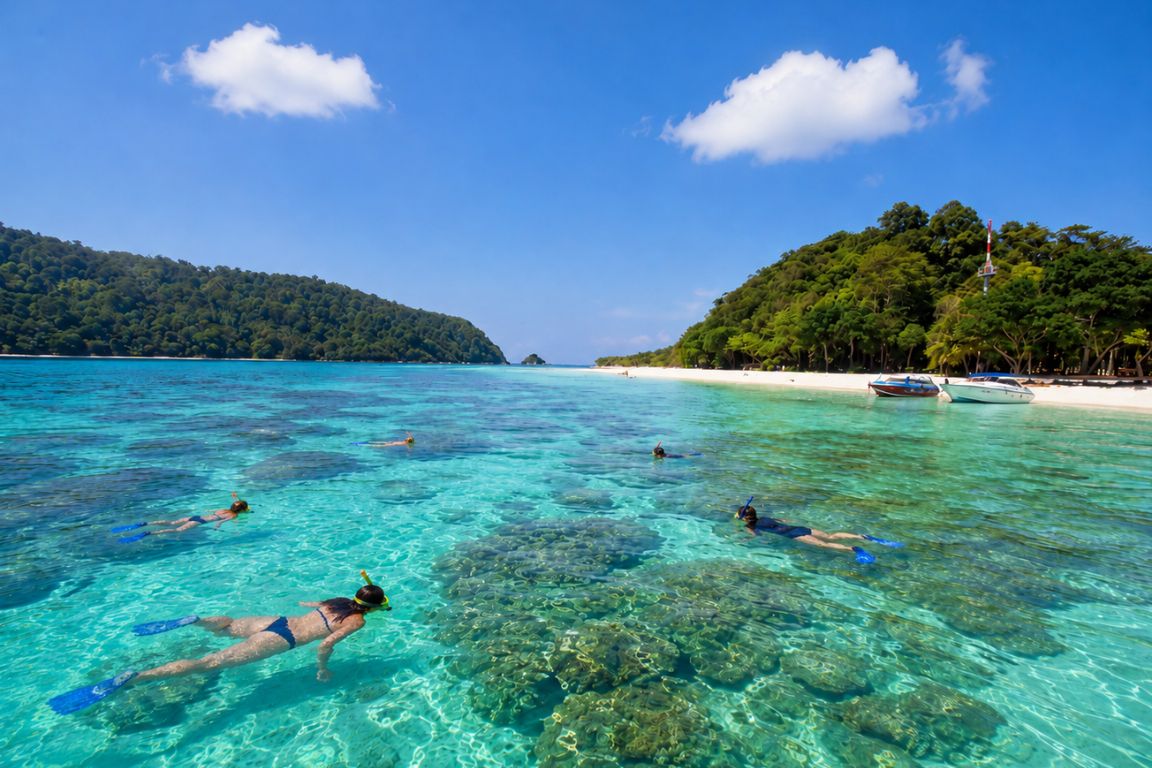
Lanta's headline days are on the water. Koh Rok and Koh Haa, two of the clearest snorkel and dive sites in the Andaman, sit 45 to 60 minutes from Lanta compared with 75 to 90 minutes from Ao Nang. On land, the southern national park headland and Lanta Old Town on the east coast are the two stops that reward a scooter.
That travel time gap is the strongest practical argument for staying on Lanta at all. Trips to Koh Rok and Koh Haa run out of Ao Nang, but they are less common and the transit eats into the day. From Saladan the same sites are close enough that you get the water time rather than the boat time, which is why serious snorkelers and divers base themselves here. We cover which sites hold their visibility and which have taken a beating from boat traffic in the best islands for snorkeling near Krabi.
On land, the road to the southern tip is the best half day on the island: the Mu Ko Lanta National Park headland has a small lighthouse, a short forest trail, big views over to the outer islands, and monitor lizards that treat the car park as theirs. Lanta Old Town on the east coast is the other side of the island's character, a strip of stilted wooden shophouses over the water, mostly seafood restaurants and small galleries, with a working pier at the end. The island's own background, including its Urak Lawoi sea gypsy community, is well summarised on the Ko Lanta Yai entry, and Thailand's tourism authority keeps a provincial overview at tourismthailand.org.
| What | Effort | Half day or full day | Season | Worth it if |
|---|---|---|---|---|
| Koh Rok snorkel trip | Boat day, early start | Full day | November to April | You care about water clarity above all |
| Koh Haa dive or snorkel | Boat day | Full day | November to April | You dive, or you snorkel confidently |
| Mu Ko Lanta headland and lighthouse | Scooter or taxi, short walk | Half day | Year round | You want one view worth the ride |
| Lanta Old Town | Easy road trip east | Half day, best late afternoon | Year round | You like seafood and old timber |
| West coast beach crawl by scooter | Easy, mind the hills | Half day | Year round, careful when wet | You want to find your own favourite beach |
| Four Islands and Emerald Cave trip | Boat day south | Full day | High season | You want a swim through a sea cave |
What Should You Bring for the Crossing and the Island?
Cash in baht above everything, because the ferry, the park gates, the songthaews and half the beach restaurants take nothing else. Then reef safe sunscreen, a dry bag, and shoes you can walk hills in if you are staying south.
Pack for the transfer separately from your main bag. The van is air conditioned and the ferry deck is not, so a light layer plus a hat covers both. Ask a clinician or pharmacist about medication suitability. Keep your passport and voucher accessible rather than buried, because agents check both at the consolidation stop.
For the island itself, the biggest packing mistake is assuming you will find everything in Saladan. You mostly will, but not at 21:00 and not near Kantiang Bay. Bring the medicines you actually rely on. If you plan on a snorkel day, your own mask beats the rental every time, a point we make in our one day island hopping itinerary as well.
Who Should Skip Koh Lanta?
Anyone with three days in Krabi and a list of things to see. Lanta is a low intensity island and it punishes short visits: the transfer is long, the attractions are diffuse, and the whole point is that nothing is scheduled. Travelers who want limestone towers rising straight out of the sea will find Ao Nang and Railay more spectacular, since Lanta's own coastline is comparatively low and green.
Skip it entirely between June and September unless you have a specific reason to be there. Skip it if you do not want to ride a scooter and cannot face paying for every trip to dinner. And skip it if nightlife matters, because outside a stretch of Klong Khong the island goes quiet early by design. What Lanta does better than anywhere else near Krabi is give you a week that feels longer than a week, and that is not something a rushed itinerary can use.
Frequently Asked Questions
How long does it take to get from Krabi to Koh Lanta?
Two to four hours door to door on the standard minivan and vehicle ferry route. The drive is predictable; the queue at the Ban Hua Hin ferry is not, and in January and February it can add half an hour on its own. Passenger ferries from Klong Jilad Pier run a similar clock once you add the transfer to the pier.
Do you still need a ferry to reach Koh Lanta?
Yes, one. The Siri Lanta Bridge links Koh Lanta Noi to Koh Lanta Yai, so the second crossing is gone, but every overland transfer still boards a vehicle ferry at Ban Hua Hin to reach Koh Lanta Noi. It is a short crossing, roughly ten to fifteen minutes on the water.
When should you avoid Koh Lanta?
Mid May through October, and September above all. Many west coast resorts, restaurants and dive shops close for the monsoon, boat trips to the outer islands stop running, and the beaches collect debris from the southwest swell. Late December is the other window to avoid, for crowds and peak pricing rather than weather.
What is the nicest beach on Koh Lanta?
Kantiang Bay for scenery and sunsets, Klong Dao for families with small children, and Phra Ae, better known as Long Beach, if you want good sand with restaurants you can walk to. The far southern beaches like Klong Jark and Ao Mai Phai are quieter still but need your own transport.
Can you visit Koh Lanta as a day trip from Krabi?
You can, but it is a poor trade: four to eight hours of transfer for two to four hours on a beach whose whole appeal is having time to do nothing. A boat day from Ao Nang gives you five to nine hours on the water for a single hotel pickup, which is a better use of one spare day.
Is Koh Lanta good for snorkeling?
The island's own beaches are better for swimming than snorkeling, but Lanta is the closest base to Koh Rok and Koh Haa, two of the clearest sites in the Andaman. From Saladan they are 45 to 60 minutes away compared with 75 to 90 minutes from Ao Nang, which is why divers and snorkelers stay here.
Check your travel date before arranging flights, ferry timing, or check-in
Match the outing to your plans
Seasonal service limits can change the suggestion. A month is not confirmation of weather or available seats.
Blank fields keep the initial suggestion. Age pricing alone does not confirm suitability; if eligibility is unverified, the tool will not recommend a match. Check pickup and restrictions for your selected package.
Compare two total quotes
Use current quotes in the same currency, including park fees, transfers and option extras.
Initial recommendation. Adjust the optional choices to match your plans.
Krabi airport to Koh lanta any hotel Private transfer
Travel privately from Krabi Airport to your Lanta hotel; arrivals between 22:00 and 06:00 carry a listed 1,500 THB ferry charge.
Confirm duration for your selected option · English guide listed · Private airport-to-hotel transport. Car-ferry crossing included 06:00–22:00; overnight crossing costs extra. · Confirm your selected option’s pickup, inclusions, fees and participant restrictions before booking.
Choose a date to view the published schedule. Confirm availability and final price on Viator.
No reviewed option matches these choices.