The Best Beaches in Krabi: Which to Visit and How
Krabi's best beaches are not on the mainland. Ao Nang and Klong Muang are where you sleep; Railay, Phra Nang, Poda, Tup and Lao Lading are where the photographs come from, and every one of them needs a boat. This guide sorts them by how you actually get there, what the water does at each tide, and which one suits the trip you are taking.
See what a customizable private longtail adds when mainland sand is not enough. Explore Private 4 Islands Longtail.
Booking choice: Compare private Four Islands, shared speedboat, Hong Islands, and sunset options by beaches, activities, timing, and inclusions. Check dates for Private 4 Islands Longtail.
Which Beach in Krabi Should You Actually Pick?
If you want one beach: Phra Nang Cave Beach at Railay, reached by a fifteen-minute longtail from Ao Nang. If you want one you can walk to: Nopparat Thara, north of the Ao Nang strip. If you want the classic white-sand island: Koh Poda, 25 minutes offshore. The mainland beaches are convenient. The island beaches are the reason people come.
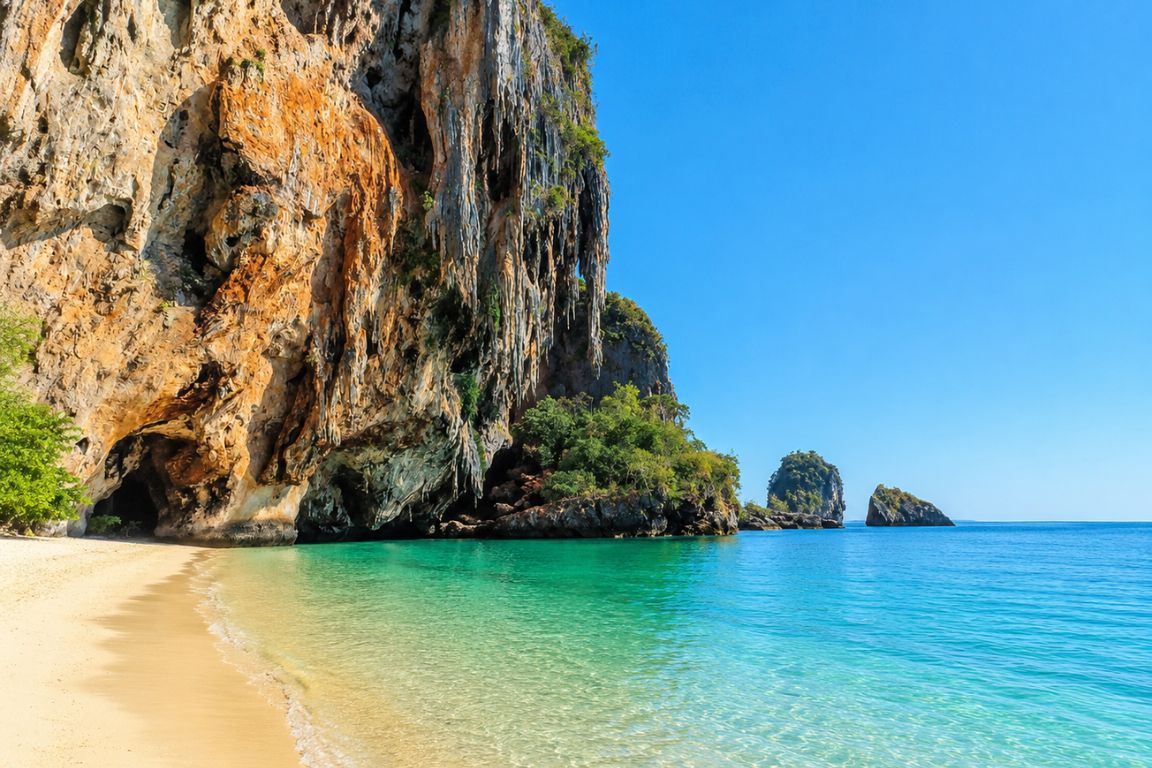
The province holds more than 150 islands, and the geology that makes Krabi photogenic, limestone towers standing straight out of the water, is arranged offshore rather than along the coast road. That is why the beach ranking here looks nothing like the accommodation ranking. The places with hotels are not the places with the sand, and the gap between them is a boat ride of somewhere between fifteen and sixty minutes.
Access is the honest sorting principle, so this guide uses it. Beaches split into three tiers: walk-to mainland beaches, longtail-access beaches on the Railay peninsula, and island beaches that come attached to a tour or a charter. The tier decides your day far more than the sand quality does.
| Beach | Tier | How you get there | Best for | Park fee |
|---|---|---|---|---|
| Phra Nang Cave Beach | Longtail only | 15 min from Ao Nang, or as a tour stop | The best water and the best scenery in the province | Covered by the island circuit fee on a tour |
| Railay West | Longtail only | 15 min from Ao Nang, wet landing | Swimming and sunset | None for an independent visit |
| Koh Poda | Island | 12 km, about 25 min by longtail | White sand, clear shallows, lunch stop | 200 THB adult |
| Tup and Mor sandbar | Island | 10 km, about 20 min | Walking between islands at low tide | 200 THB adult |
| Chicken Island | Island | 8 km, about 20 min | The best snorkeling on the inner circuit | 200 THB adult |
| Ko Lao Lading, Hong group | Island | About 20 km, 35 min by speedboat | Shaded cliffside bay, calm water | 200 THB adult |
| Nopparat Thara | Mainland | Walk or short ride from Ao Nang | Long, quiet, free, sunset | None |
| Ao Nang | Mainland | Walk from most hotels | Convenience, food, boats, sunset over the water | None |
| Klong Muang and Tubkaek | Mainland | 20 to 30 min north by road | Quiet resort stays and karst views | None |
| Bamboo Island | Island, far | 50 km, about 60 min by speedboat | Powdery sand and clownfish on a Phi Phi day | 400 THB adult |
Which Krabi Beaches Can You Reach Without a Boat?
Four, realistically: Ao Nang, Nopparat Thara, Klong Muang and Tubkaek. They run north along the coast in order of decreasing noise and increasing quiet. None of them is the best beach in the province, and all of them are perfectly good places to spend an afternoon between boat days.
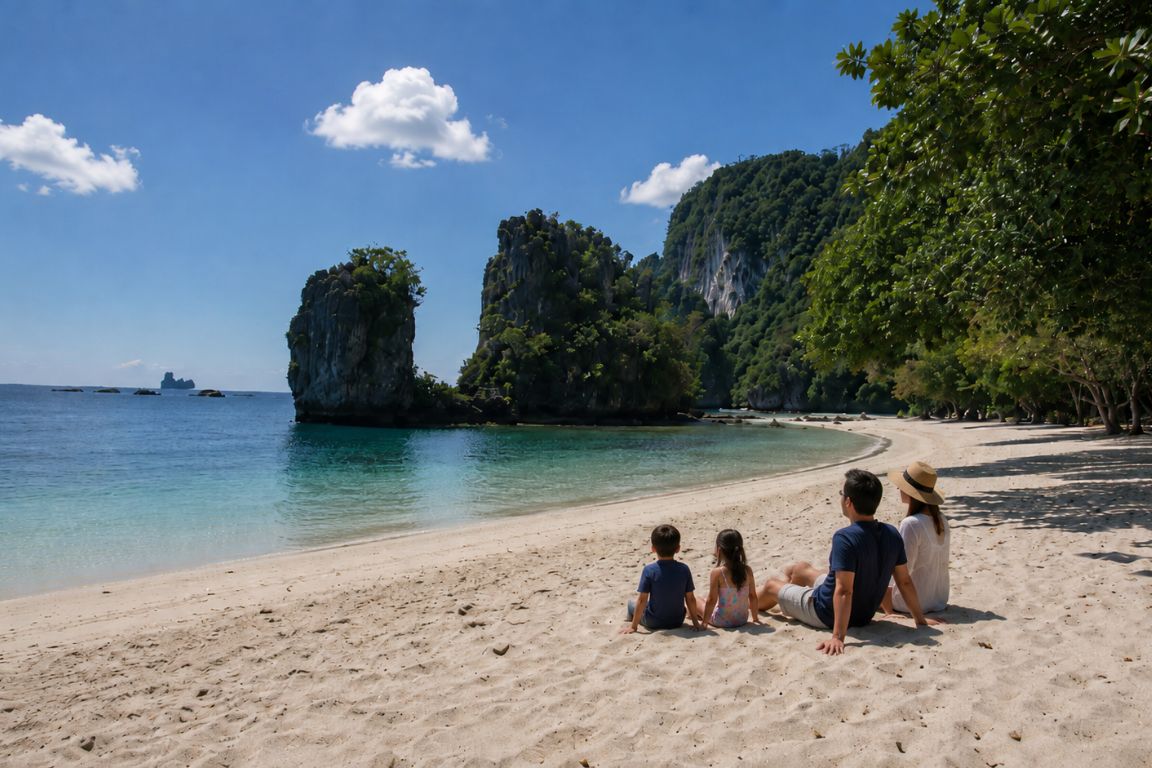
Ao Nang is the working beach. It is the main departure point for the vast majority of island hopping, 4 Islands, Hong Island, Phi Phi and Phang Nga trips, which means longtails are moored along the shore for most of the day and the water in front of the strip is a transport corridor as much as a swimming area. What it has going for it is convenience and light: the sun sets directly over the water from Ao Nang Beach, so the free version of a sunset cruise is a walk down the road with a drink. Our Ao Nang beach guide covers the town side of it in more detail.
Nopparat Thara is the underrated one. It runs north from the end of the Ao Nang beach road, past the main tour pier, and it is longer, quieter and considerably less commercial than the strip around the corner. Casuarina trees give real shade, which almost no other mainland beach here offers, and the sandbar-and-island view at low tide is the same karst horizon you pay to sail into.
Klong Muang and Tubkaek sit 20 to 30 minutes further north and trade activity for calm. The water is shallow and the sand darker, the resorts are spread out, and the karst islands sit right on the horizon. This is where to stay if the goal is quiet, and the cost is logistical: pickup availability and supplements vary by operator, location, party size, and selected tour. Behind Tubkaek, the Khao Ngon Nak ridge trail climbs to a viewpoint over the whole northern coastline, which is the best thing to do on a beach day when you cannot face another boat.
Krabi Town itself has no beach. It is a river town about 30 minutes inland from Ao Nang, with a night market and cheaper rooms, and every beach day from there begins with a transfer.
| Mainland beach | Distance from Ao Nang | Sand and water | Shade | Trade-off |
|---|---|---|---|---|
| Ao Nang | You are on it | Decent sand, boat traffic in the shallows | Limited | Busy and commercial; best at sunset |
| Nopparat Thara | 10 to 15 min walk or ride north | Long, clean, shallow, quiet | Good, casuarina trees | Fewer facilities, which is the point |
| Klong Muang | About 20 min by road | Calm and shallow, darker sand | Resort shade | Pickup supplements on tours |
| Tubkaek | 25 to 30 min by road | Quiet, karst views straight offshore | Resort shade | Furthest from the piers and the food |
| Ao Nam Mao | About 10 min east | A pier rather than a beach | None | Transport point, not a swim |
Which Krabi Beaches Need a Longtail?
The whole Railay peninsula. Railay West, Railay East, Phra Nang Cave Beach and Tonsai Bay are cut off from the road network by limestone, so every arrival is by boat, usually a shared longtail that leaves Ao Nang when a full load has paid. The crossing is about 15 minutes and it is the best value boat ride in the province.
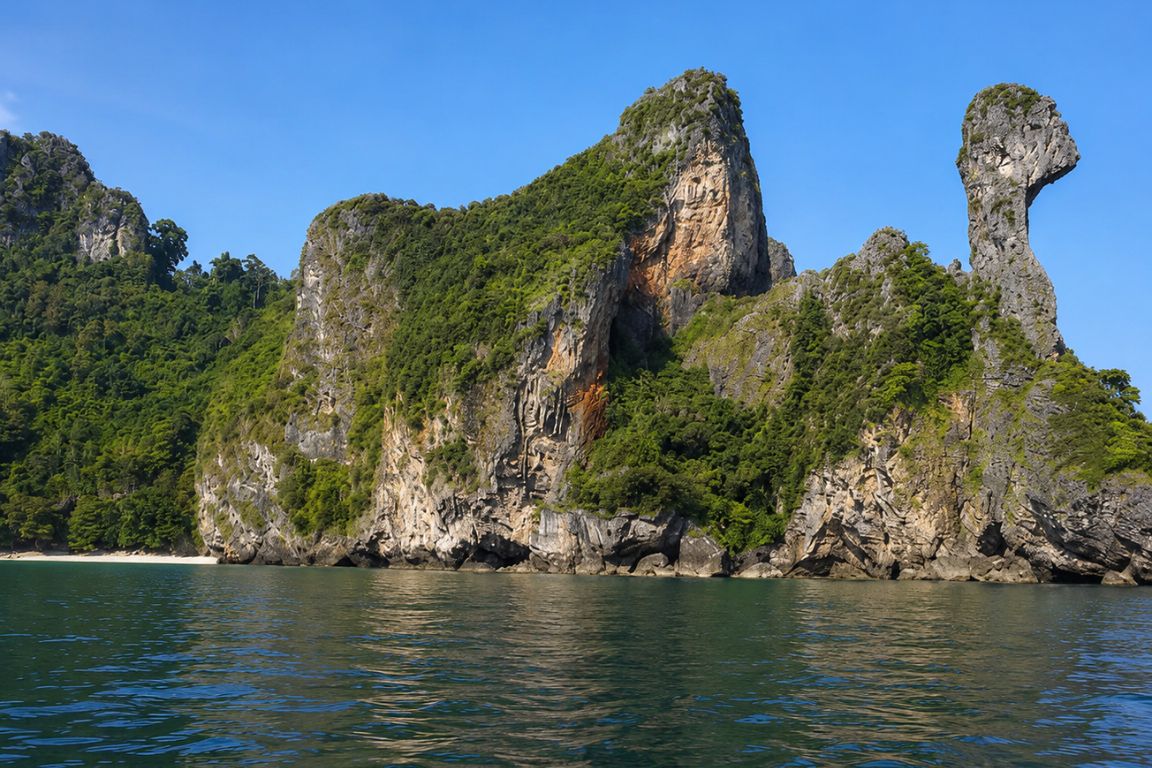
Phra Nang Cave Beach is the single best beach in Krabi that most visitors can reach, and it deserves the reputation. It sits on the western edge of the Railay peninsula, accessible only by boat, with cliffs rising directly from the sand, turquoise water, and a cave at the base of the limestone holding a shrine to the sea princess Phra Nang, filled with wooden offerings left by fishermen over generations. On a group island day it is usually the last stop and gets 45 to 60 minutes, which is roughly half of what it warrants.
Railay West is the swimming and sunset beach, wide and gently shelving, with the day-trip longtails running their bows straight onto the sand because there is no pier. Railay East is a mangrove and silt shoreline that empties out at low tide: it is the arrival pier, the budget rooms and the late bars, not a beach to swim at. Tonsai, around the northern headland, is rockier and belongs to the climbers. The full breakdown sits in our Railay Beach guide.
Because the boat is the only door, the peninsula folds naturally into a day on the water. A five-hour Seven Islands longtail visits Tup, Chicken and Poda, with Railay scenery also described in the itinerary, and a private Four Islands longtail offers a customizable six-hour itinerary, with the connecting sand dependent on low tide. If you would rather compare hulls first, our page on longtail versus speedboat shows why the faster boat saves you almost nothing on this particular route.
| Beach | Crossing | Landing | Swimming | What it is really for |
|---|---|---|---|---|
| Phra Nang Cave Beach | About 15 min from Ao Nang | Bow onto the sand, or walk from Railay | The best on the peninsula | Scenery, the shrine, clear water |
| Railay West | About 15 min from Ao Nang | Wet landing, no pier | Good through most of the tide | Swimming and sunset |
| Railay East | Short hop from Ao Nam Mao | Floating pier, tide dependent | Effectively none at low tide | Arrivals, cheap food, late bars |
| Tonsai Bay | Longtail, or a low-tide scramble | Rocky | Usable, awkward entry | Climbing and budget bungalows |
Is Railay the Best Beach in Krabi?
Phra Nang Cave Beach is, and Railay West is close behind it. The peninsula wins because it stacks three things almost nowhere else manages together: vertical limestone straight off the sand, water clean enough to swim in through most of the tide, and boat-only access that shapes how visitors arrive and leave.
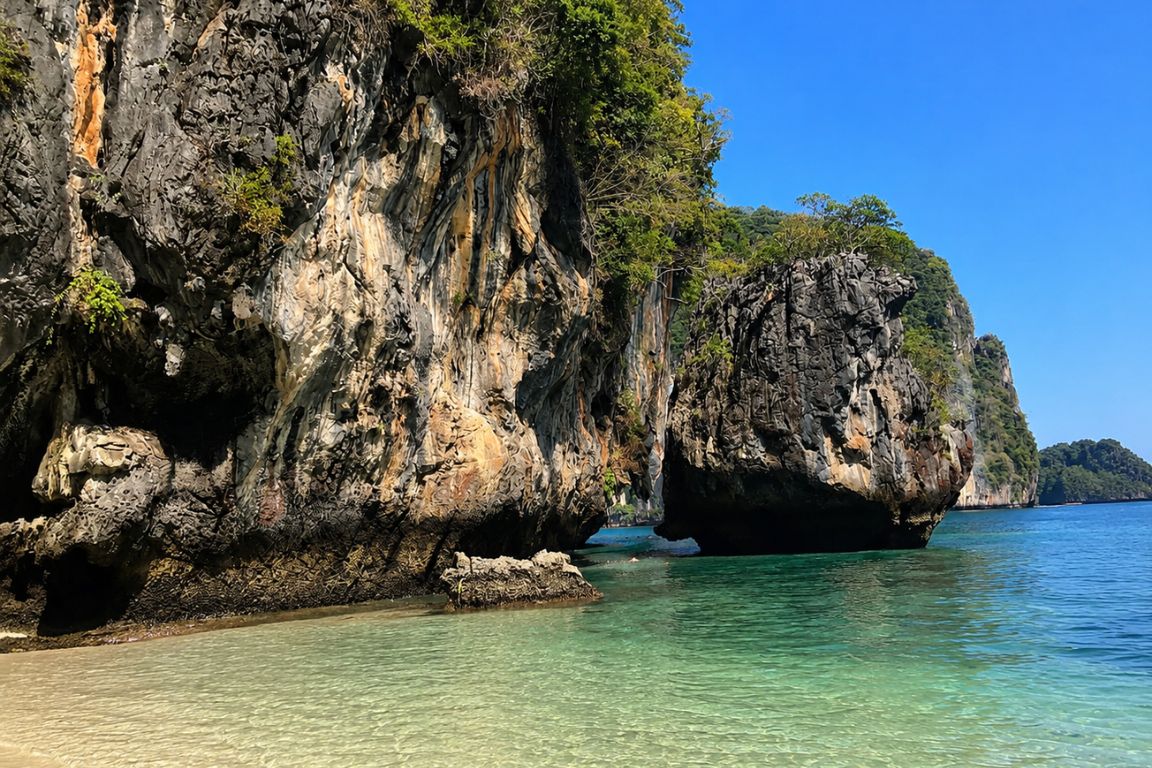
That last point is the quiet reason Railay still works. Railay Beach is reachable only by boat regardless of where you set off from, which is why it has retained a quality that the mainland strip has lost. Nobody drives in, so visitor levels change through the day as boats arrive and depart.
The honest caveat is timing rather than quality. Phra Nang fills from several directions at once between roughly 11am and 3pm: beach shuttles from Ao Nang, tour groups on the 4 Islands circuit, and walkers coming across from Railay. Arrive before ten or after half past three and it is a different beach. That single decision changes the experience more than which operator you booked with.
Where Railay loses is underwater. There is no reef of consequence off the peninsula, so if snorkeling is the priority the answer lies offshore at Chicken Island, Koh Poda and, further out, the Phi Phi reefs. Our ranking of the best snorkeling islands near Krabi sorts those properly by water quality rather than by sand.
Which Island Beaches Are Worth the Crossing?
Koh Poda for pure white sand and easy swimming, the Tup and Mor sandbar for the walk-between-islands trick at low tide, Chicken Island for the reef, and Ko Lao Lading in the Hong group for a shaded cliffside bay that stays calm when the open water does not. Bamboo Island is the best of the far ones, and it only comes attached to a Phi Phi day.
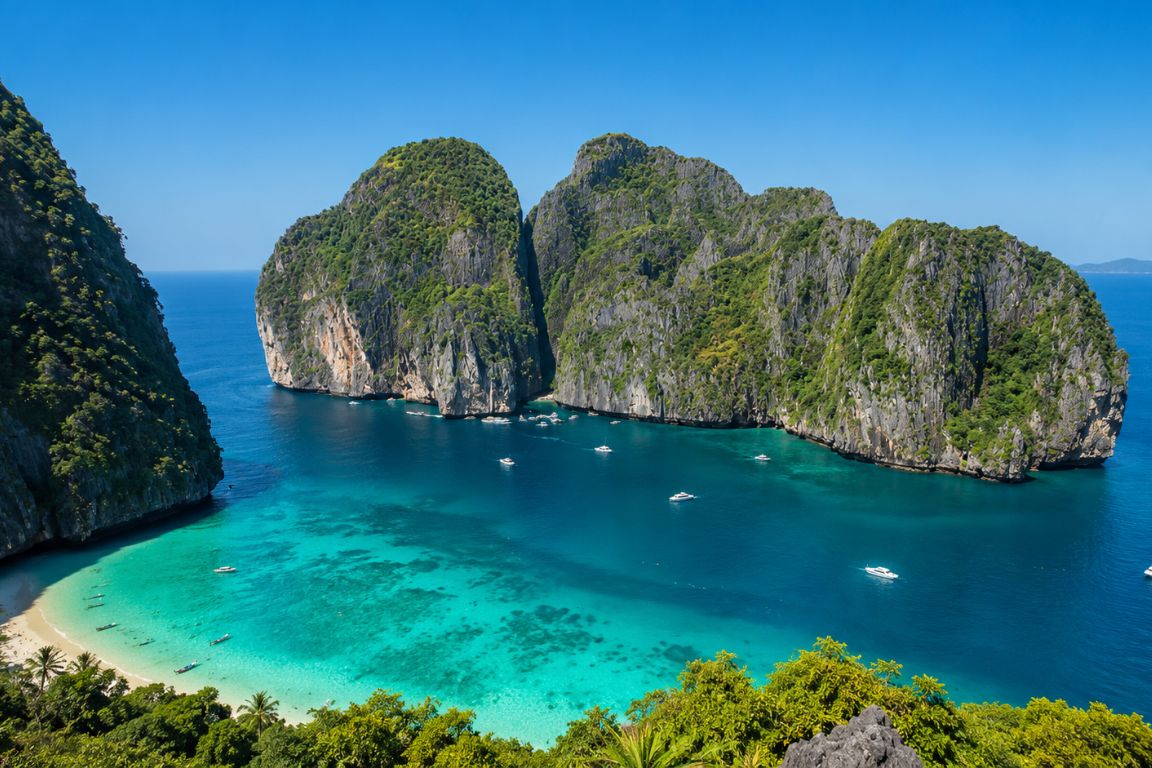
Koh Poda is the lunch stop on the standard 4 Islands circuit and the longest stay on most itineraries. It has white sand, shade from limestone-backed vegetation, clear water for swimming, and basic facilities including food stalls and toilets. The karsts visible from its beach are the ones that appear in a large share of Krabi's promotional imagery, and they earn it. Snorkelers should work the southeast face rather than the main anchorage, where the hard coral at two to five metres came through the 2024 bleaching in better condition than shallower sites.
The Tup sandbar is the one that depends entirely on your departure time. A strip of white sand emerges between Tup Island and neighbouring Mor Island at low tide, walkable, water on both sides, and it disappears under roughly two metres of sea when the tide rises. Whether you walk it or find it submerged comes down to what time your boat arrives, which is why timing matters more on the 4 Islands route than on almost any other tour here. The 4 Islands tour guide explains how to get an operator to schedule around it.
Ko Lao Lading is the pick in the Hong group, a small shaded bay under cliffs with protected water, and it pairs with the enclosed Hong Lagoon and the 109 metre treetop viewpoint on the Hong Islands speedboat tour from Ao Nang. Choosing between the two circuits is a real decision rather than a coin flip, and our comparison of Hong Islands versus the 4 Islands lays out which one suits which group.
| Island beach | Distance from Ao Nang | Sand | Water | Catch |
|---|---|---|---|---|
| Koh Poda | 12 km, about 25 min | White, wide, shaded at the back | Clear, shallow, easy entry | Busiest at lunchtime; food stalls and toilets on site |
| Tup and Mor sandbar | 10 km, about 20 min | Pure white strip between two islands | Shallow both sides | Only exists at low tide |
| Chicken Island | 8 km, about 20 min | Small, secondary to the reef | Best snorkeling on the inner circuit | Visibility drops once the boats arrive |
| Ko Lao Lading | About 20 km | Small, cliff-backed | Sheltered and calm | Comes as part of a Hong Island day |
| Hong Island beach | 20 km, 35 min by speedboat | White, framed by limestone | Calm; lagoon has limited coral | Scenery beats the snorkeling here |
| Bamboo Island | 50 km, about 60 min | Powdery, the best sand of the far group | Clear, clownfish on the eastern fringe | Phi Phi day only; 400 THB park fee |
| Koh Rok | 60 km, about 75 min | Bleached white, emerald shallows | Outstanding snorkeling | Open November to May only |
Which Beach Suits Which Traveler?
Match the beach to the constraint you actually have. Families need shallow water and short transits, so Hong Island and the Tup sandbar win. Couples want the light, so Railay West and a west-facing evening boat win. Snorkelers should ignore the sand entirely and follow the reef offshore.
Mobility is the constraint most guides skip. Nearly every island beach in Krabi involves a wet landing: the boat runs into shallow water and you step off into ankle to knee deep sea, sometimes over a wet gunwale. Railay Beach and Phra Nang are the friendliest of the boat-access options once you are ashore, with flat sand, level access and no steps from the longtail drop point. Our page on boat tours for seniors covers which formats manage the boarding problem best.
| You are | Go to | Skip | Why |
|---|---|---|---|
| A family with small children | Hong Island bays, Tup sandbar, Nopparat Thara | Long speedboat runs to Phi Phi | Shallow water, short transits, easy exits |
| A couple after the scenery | Phra Nang, Railay West at sunset | Ao Nang at midday | The cliffs frame the light; the strip does not |
| A snorkeler | Chicken Island, Koh Poda southeast face, Bamboo Island | Railay, Hong Lagoon | Reef quality and sand quality are not the same thing |
| Travelling on a budget | Nopparat Thara, Railay East as a base | Private charters | Free sand, cheap food, shared longtails |
| Limited mobility | Railay and Phra Nang, flat access once ashore | Tonsai, rocky island landings | Wet landings are the barrier, not the beach |
| Here for one day only | Phra Nang by longtail | Anything over an hour away | Highest scenery per minute of transit in the province |
| Staying a week | All three tiers, one per day type | Repeating the same circuit | Variety within a small radius is Krabi's real strength |
When Does a Krabi Beach Look Like the Photographs?
December through February, early in the morning, on a falling tide. Those three conditions together give flat water, clear visibility, sand rather than boat wake in the foreground, and the sandbars exposed. April can offer a different balance of weather, visitor levels, and current tour fares.
The seasonal half of this is monsoon-driven. From November through April the Andaman sits under dry northeast air that suppresses swell, and visibility at the inner islands runs to 15 metres and beyond in January. From May through October the southwest monsoon takes over, and while morning tours still run most days through June to August, September and October carry the highest cancellation rates of the year. For the full priority-by-priority calendar, see the best months for boat tours.
The tidal half is the one people underestimate. The Tup and Mor sandbar exists only at low tide. Railay East is a mudflat at low water and a functioning pier at high. Phra Nang holds usable depth across more of the cycle than anywhere else on the peninsula, which is part of why it is the safest single choice. Ask any operator to schedule the sandbar stop around the tide rather than around the lunch break, because that is the stop where an hour either way changes what you see.
| Month | Sea and visibility | Beach crowds | Price level | Note |
|---|---|---|---|---|
| Late November | Good and improving | Low to medium | Medium | Conditions settling after the monsoon |
| December | Excellent | High over the holidays | High to very high | Book boats two or more weeks ahead |
| January | Outstanding, 15 to 20 m visibility | High | High | Best on-water conditions of the year |
| February | Outstanding, lowest humidity | Medium to high | High | The cleanest light for photographs |
| March | Very good | Medium | Medium to high | Morning beach time beats the afternoon |
| April | Good to very good | Low to medium | 30 to 40 percent below peak | Best value; middays reach 34 to 36 degrees |
| May | Variable | Low | Low to medium | Monsoon onset; outer islands closing |
| June to August | Moderate, mornings usually fine | Medium | 30 to 50 percent below peak | Beaches to yourself on the days boats run |
| September | Poor to moderate | Low | Very low | Highest cancellation rate; plan inland days |
| October | Poor to moderate, improving late | Low | Very low | Second wettest month |
What Does a Beach Day Cost, and What Should You Carry?
A mainland beach day costs nothing but a drink. An island beach day costs the boat plus a cash national park fee of 200 THB per adult foreigner on the inner circuit, 100 THB for a child aged 3 to 14, and up to 400 THB in the Phi Phi area. Fee treatment varies: some tours include park admission, while others collect a route-specific amount separately.
The rest is small and easy to get wrong. There is a pier docking fee at Ao Nam Mao of about 10 THB per person. Getting to the pier under your own steam runs 100 to 250 THB each way by songthaew or ride app, while Ao Nang pickup may be included, limited to meeting points, or unavailable depending on the listing. Guests at Klong Muang, Tubkaek or Krabi Town pay a transfer supplement, typically 400 to 800 THB per car.
| Cost | Amount | How it is paid |
|---|---|---|
| Shared longtail to Railay | Per seat at the beach ticket booth | Cash, before boarding, leaves when full |
| National park fee, adult foreigner | 200 THB inner circuit, up to 400 THB Phi Phi area | Cash, on the boat or at the island |
| National park fee, child 3 to 14 | 100 to 200 THB | Cash |
| Pier docking fee | About 10 THB per person | Cash at Ao Nam Mao |
| Transfer supplement | 400 to 1,000 THB | Added by the operator for out-of-area pickup |
Private longtail, half day Current charter fare per boat Holds 8 to 10 people
Group boat day, inner circuit Current operator fare per person Booked ahead; lunch usually included
What to carry is short and non-negotiable. Reef-safe sunscreen, applied before you board, because conventional formulas containing oxybenzone and octinoxate degrade coral and choose sunscreen suitable for marine activities and follow current park guidance. Cash in small notes. A dry bag for the phone, since almost every island landing is through shallow water. Water shoes with grip for wet gunwales and rocky entries. A rash guard, because six hours of open-deck sun is the most underestimated part of a beach day here. And more drinking water than you think you need.
All of the island beaches above sit on one of a handful of standard circuits, so the practical way to plan is to pick the beaches you want and work backwards to the route that includes them. The boat tours from Krabi listed on this site show which stops each departure covers, with live prices and pickup areas on the operators' own listings.
Which Krabi Beaches Should You Skip?
Skip Railay East as a swimming beach, skip Ao Nang between eleven and three if crowds ruin sand for you, and skip any island beach at the exact hour the tour convoy lands. None of these places is bad. They are simply misread, usually because someone booked the beach without checking the timetable that governs it.
Railay East is the clearest case. It photographs badly, smells of warm mangrove mud at low tide, and the water pulls back a long way. It is also the cheapest place to stay and eat on the peninsula, has the floating pier, and is a five to ten minute walk from beaches that are genuinely excellent. Stay there, do not swim there.
Hong Lagoon gets misread in the other direction. It is one of the most photographed spots in the province and honest reviews of its snorkeling are mixed: the rocky-shore sections hold decent fish counts, the lagoon itself has limited coral. Go for the scenery, which is extraordinary, and put your snorkeling day somewhere else.
The convoy point applies everywhere. Boats reach the inner islands around ten in the morning and Phra Nang fills by eleven. An earlier departure or customizable private charter may change when you reach each stop, and it changes the beach more than the season does. For the geography behind the whole coastline, Ao Nang and its offshore island group is a useful orientation, and current park rules and fees sit with the Thai national parks authority.
Frequently Asked Questions
What is the most beautiful beach in Krabi?
Phra Nang Cave Beach on the Railay peninsula. Limestone cliffs rise straight from the sand, the water is the clearest on the peninsula, and a cave at the base holds a shrine to the sea princess Phra Nang. It is reachable only by boat, about 15 minutes from Ao Nang.
Which Krabi beaches can you reach without a boat?
Ao Nang, Nopparat Thara, Klong Muang and Tubkaek, running north along the coast in order of decreasing noise. Nopparat Thara is the pick of them: longer, quieter, properly shaded by casuarina trees, and free. Krabi Town itself has no beach.
Can you walk to Railay Beach from Ao Nang?
No. Limestone cliffs cut the Railay peninsula off from the road network, so every arrival is by boat. Shared longtails cross from Ao Nang beach in about 15 minutes and leave when a full load of passengers has paid at the ticket booth.
Which Krabi beach is best for families?
The Hong Island bays, particularly Lao Lading and Pakbia, for shallow protected water and short transits. On the mainland, Nopparat Thara has the shade and the calm shallows. The Tup and Mor sandbar is the one children remember, but only if your boat arrives at low tide.
Do you pay to visit Krabi's island beaches?
Yes. National park fees are 200 THB per adult foreigner and 100 THB per child aged 3 to 14 on the inner circuit, rising to around 400 THB per adult in the Phi Phi area. Some tours include park fees, while others list a separate payment due at check-in or during the outing.
When is the sandbar between Tup and Chicken Island visible?
Only at low tide. The strip of sand emerges between Tup Island and neighbouring Mor Island and disappears under roughly two metres of water as the tide rises. Ask your operator to schedule that stop around the tide rather than around lunch.
Which Krabi beach has the best snorkeling?
Chicken Island on the inner circuit, with Koh Poda's southeast face close behind. Further out, Bamboo Island and Koh Bida Nok on a Phi Phi day are meaningfully richer, and Koh Rok is the best of all, though it is open November to May only.
Is Ao Nang beach worth swimming at?
It is fine rather than remarkable. Longtails are moored along the shore for most of the day and the shallows double as a transport corridor, so it works better as a sunset walk than a swim. Ten minutes north, Nopparat Thara gives you the same water with fewer boats.
Check your travel date before arranging hotels, transfers, or other beach days.
Match the outing to your plans
Blank fields keep the initial suggestion. Age pricing alone does not confirm suitability; if eligibility is unverified, the tool will not recommend a match. Check pickup and restrictions for your selected package.
Compare two total quotes
Use current quotes in the same currency, including park fees, transfers and option extras.
Initial recommendation. Adjust the optional choices to match your plans.
Krabi 4 Island Tour: Private Long-tail Boat Charter
A private Four Islands longtail gives your group six hours for beach walks, swimming, snorkeling, a cave, and tide-dependent connecting sand.
6h · Confirm guiding language · Private longtail and Ao Nang-area transfers; lunch, park fees and an English guide cost extra. · Confirm your selected option’s pickup, inclusions, fees and participant restrictions before booking.
Choose a date to view the published schedule. Confirm availability and final price on Viator.
No reviewed option matches these choices.