Hong Island, Krabi: Lagoon, Viewpoint and How to Visit
Hong Island is the one people describe as a room with the roof taken off. A narrow gap in the limestone opens into a shallow emerald lagoon closed in on every side, and a stair climb behind the beach puts the whole archipelago under you. It sits inside a national park about 40 minutes north of Ao Nang, and the day works best if you arrive before the Phuket boats do.
See the six-hour shared Hong speedboat before comparing private longtails, catamarans and extended routes. Explore Hong Islands Speedboat.
Booking choice: Compare the shared Hong speedboat with private lagoon, catamaran and combined-island options. Check dates for Hong Islands Speedboat.
What Is Hong Island, and Why Do People Go?
Hong Island, or Koh Hong, is the main island of a small archipelago inside Than Bok Khorani National Park, roughly six kilometres off the Krabi coast. The name means room in Thai, and it refers to the enclosed lagoon at the island's heart. People go for that lagoon, for the viewpoint stairs, and for water that is calmer than anything on the outer routes.
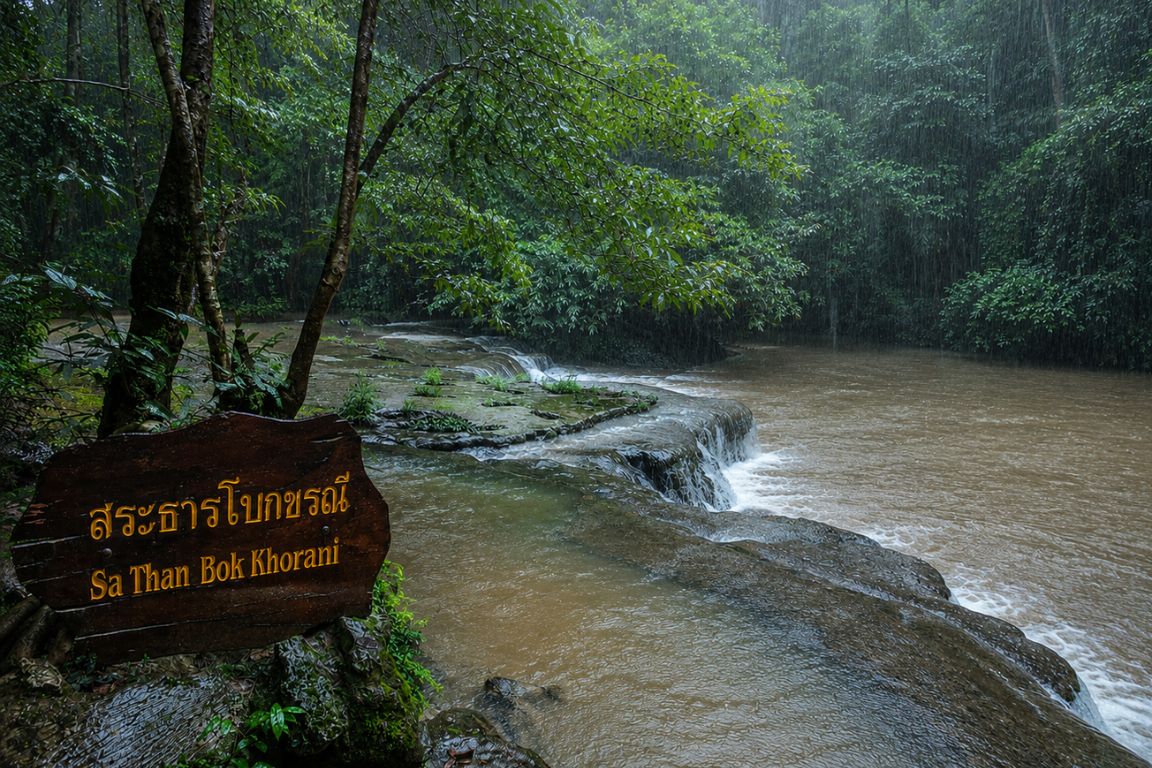
The group is more than one island, which is why tour listings talk about Hong Islands in the plural. Koh Hong itself carries the lagoon, the beach and the climb. Koh Lao Lading, a short hop away, is the shaded bay everyone photographs from the water. Koh Daeng sits on the route out from Ao Nang and is where most itineraries drop their first snorkel stop, among red limestone rocks. Koh Rai and Koh Pakbia round out the cluster, and private boats add them when the day allows.
What separates Hong from the busier southern circuit is the shape of the water. These islands sit tucked into the bay rather than out in the open Andaman, so the sea between them stays flat far more of the time. It is quieter in a literal sense too: with fewer engines running, you hear birds off the cliffs, which almost never happens on a crowded day route.
The park itself is administered by Thailand's Department of National Parks, and the fee you pay at the beach goes to it rather than to your operator. The park's own background sits on the Than Bok Khorani National Park entry, and current park information is published at portal.dnp.go.th.
| Island | What it is | Typical time there | Why it matters |
|---|---|---|---|
| Koh Hong | Main island: lagoon, Pelay Beach, viewpoint stairs | 2 to 3 hours | The reason the tour exists |
| Koh Lao Lading | Small island with a shaded cliffside bay | 30 to 45 minutes | Best shade and the classic photograph |
| Koh Daeng | Red limestone rocks with reef around them | 30 to 45 minutes | Usually the first snorkel stop of the day |
| Koh Pakbia | Sandbar island, tide dependent | 20 to 40 minutes | Added by private and longer itineraries |
| Koh Rai | Quiet outer island of the group | Varies | Private charters that want empty water |
How Do You Get to Hong Island From Krabi?
By boat only, on a tour or a charter. From Ao Nang it is roughly 40 to 45 minutes by longtail and around 20 minutes by speedboat. There is no scheduled ferry and no accommodation on the island, so confirm whether your day trip includes hotel pickup or starts at a designated meeting point.
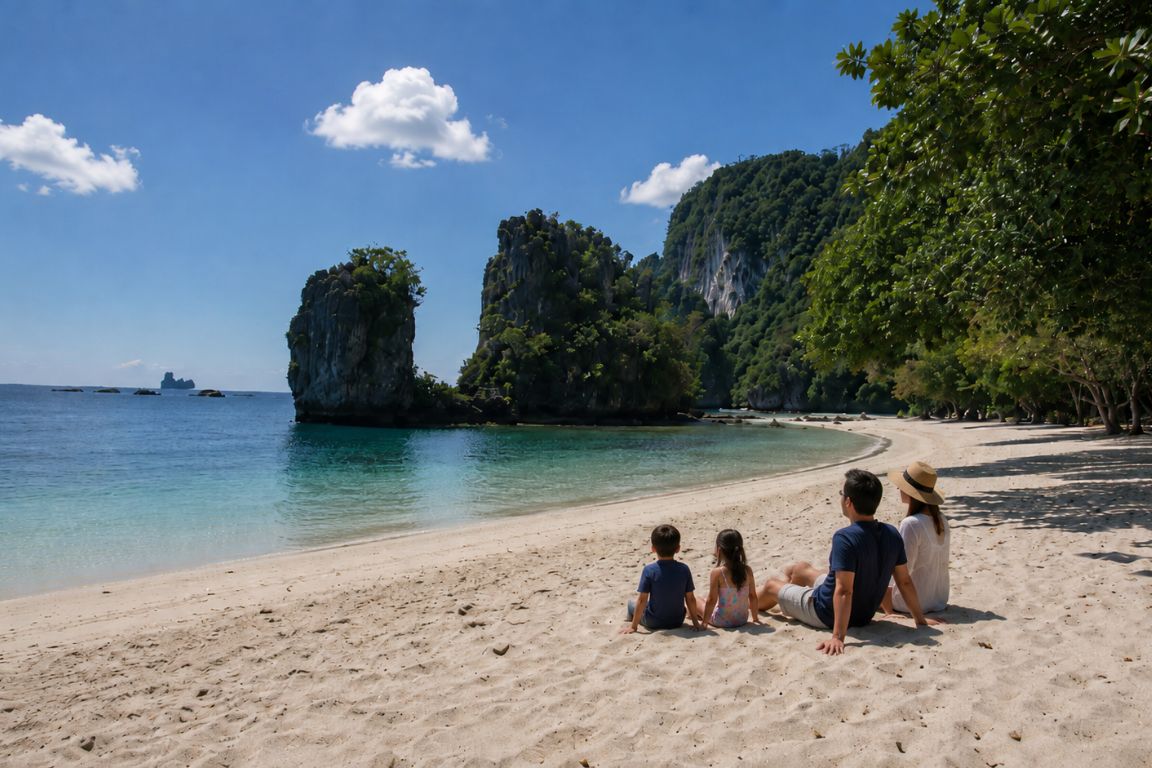
Most shared departures collect between about 07:45 and 08:30, run out through the morning, and have you back at your hotel between 15:30 and 16:00. That timing is not arbitrary. Boats from Phuket take considerably longer to reach this group, so they arrive around the middle of the day, and a Krabi departure that leaves on schedule gets the lagoon and the viewpoint before the numbers build.
The three hull types produce three different days. Longtails are slower, open, atmospheric and cheap, and they can slip into the lagoon gap where larger craft cannot. Speedboats trade the ride for time on the islands. Catamarans give you deck space, shade and a sailing day rather than an island hopping sprint, and they leave from the marina rather than the beach. We set out where each makes sense across the whole Krabi coast in our guide to the best months for Krabi boat tours.
| Departure | Hull | Time to Hong | Typical day | Suits |
|---|---|---|---|---|
| Ao Nang and Nopparat Thara | Speedboat, shared | Around 20 minutes | 6 hours door to door | Most travelers, best value |
| Ao Nang and Nopparat Thara | Longtail, shared or private | 40 to 45 minutes | 6 to 10 hours | Photographers, calm season, lagoon access |
| Port Takola Marina | Private catamaran | Under an hour | 8 hours | Groups wanting shade and deck space |
| Krabi Town hotels | Any, via road transfer | Add 20 to 30 minutes by road | Same on the water | Anyone not staying in Ao Nang |
| Railay | Any, via Ao Nam Mao Pier | Add a longtail hop first | Same on the water | Railay guests, coordinate the night before |
What Is Inside the Hong Lagoon, and When Can You Enter?
A shallow pool of green water, ringed by mangroves and cliffs, reached through a narrow gap in the rock. Entry depends on the tide: too low and the gap is impassable, too high and the boat cannot clear it. Captains plan the day around that window, which is why the lagoon sometimes comes first and sometimes last.
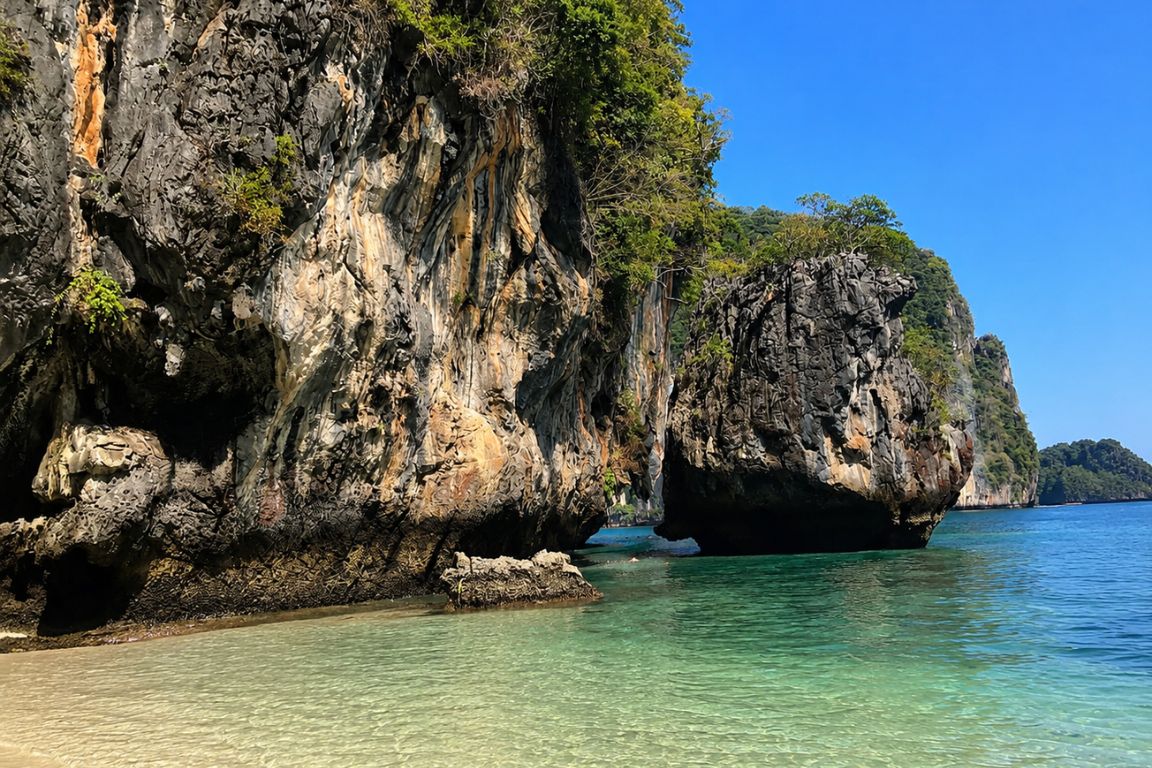
The lagoon is the reason for the island's name. Standing water enclosed on every side gives it a stillness that photographs badly and feels remarkable in person, because the acoustics change the moment you pass through the gap. The water is shallow enough over much of it to see the bottom, mangrove roots hold the edges, and the cliffs go straight up from the waterline.
How you enter matters. Longtails can ease through the opening under power. Lagoon access methods vary by boat and conditions; on the shared speedboat listing here, kayaking is a separately charged option. If the lagoon is the main thing you came for, book a format that gets you inside it rather than one that photographs the entrance.
Tides also decide whether the visit is a paddle or a wade. Nothing about it is difficult, but it is genuinely weather and tide dependent, and a captain who moves the running order around is doing their job rather than cutting corners. Paddling through enclosed limestone is the same skill set as the sea caves further up the coast, which we cover in Krabi sea cave canoeing.
How Hard Is the Hong Island Viewpoint Climb?
Steep but short. The stairway behind the beach runs to roughly 420 steps and tops out at a walkway around 109 metres above the sea, with a 360 degree view over the archipelago. Most reasonably fit people do it in 20 to 30 minutes each way. It is the single best thing on the island.
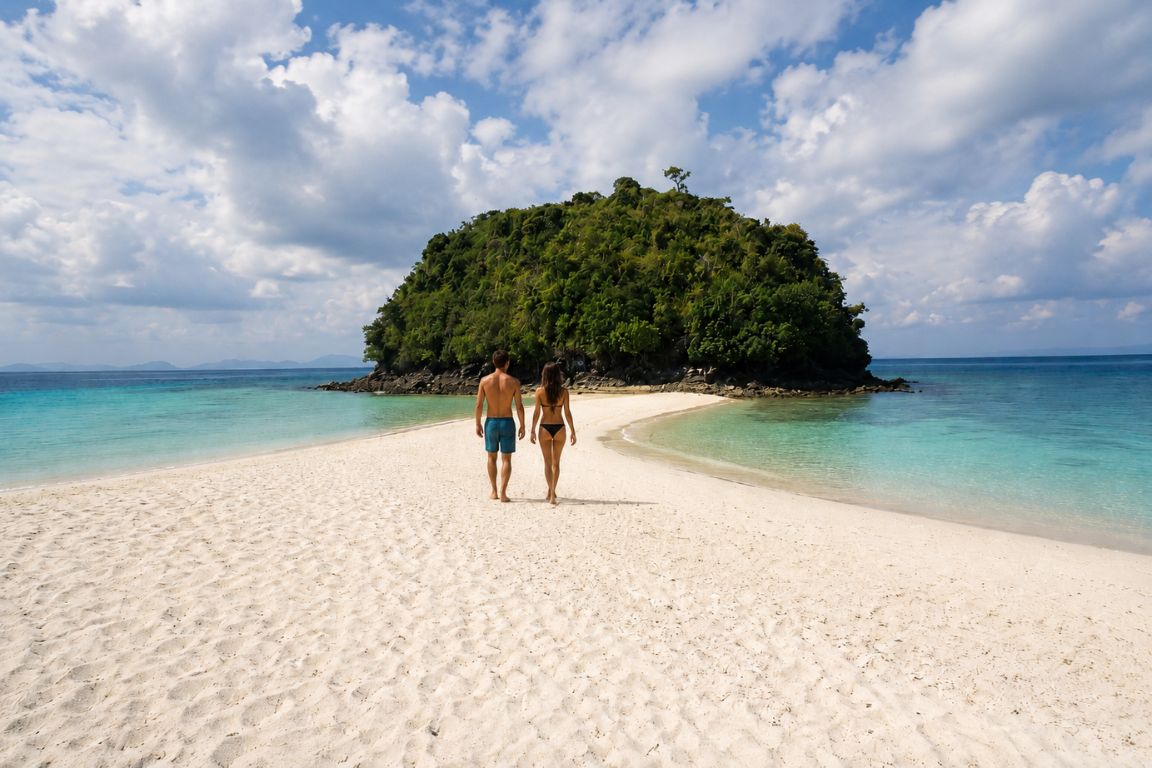
The climb starts in forest shade and stays there for most of the ascent, which helps more than it sounds like it should. The steps are proper constructed stairs rather than a scramble, with handrails on the steep sections. What makes it hard is not the gradient but the humidity: at 11:00 in April you will be soaked through by the top, and there is nowhere to buy water on the way up.
The reward is the only view like it in the bay. From the platform the lagoon reads as a hole punched through the island, the smaller islands of the group scatter out toward the horizon, and on a clear morning the mainland karsts stack up behind you. Go early in your time ashore rather than after lunch, and carry more water than you think the climb justifies.
People with knee problems, heart conditions or a genuine fear of heights should treat the stairs as optional and mean it. The beach and the lagoon are the reason most people book, and both work perfectly well for anyone who never leaves sea level. Our notes on Krabi boat tours for older travelers go into which stops stay comfortable when stairs are off the table.
| Hour | What is happening | Where to be |
|---|---|---|
| 07:45 to 08:30 | Hotel pickup across Ao Nang, Krabi Town and Klong Muang | Lobby, ten minutes early |
| Around 09:00 | Departure, run out past the mainland karsts | On the boat, sunscreen already on |
| 09:30 to 10:15 | First snorkel stop, usually Koh Daeng | In the water |
| 10:15 to 11:00 | Arrival at Koh Hong, park fee paid at the beach | Cash ready before you land |
| 11:00 to 12:00 | Viewpoint climb, or the lagoon if the tide favours it | Stairs first while it is cooler |
| 12:00 to 13:00 | Lunch on the island | Pelay Beach, in shade |
| 13:00 to 14:00 | Lagoon or swimming, kayaks if booked | Water |
| 14:00 to 15:00 | Koh Lao Lading, final swim in the shaded bay | Water |
| 15:30 to 16:00 | Back at your hotel | Done |
What Is Pelay Beach Like?
Pelay Beach is Koh Hong's main strip of sand, fine and pale, split visually by a large limestone karst standing just offshore. It shelves gently, the water is calm and shallow, and it is the practical centre of the island: lunch happens here, the park fee is collected here, and the viewpoint stairs start behind it.
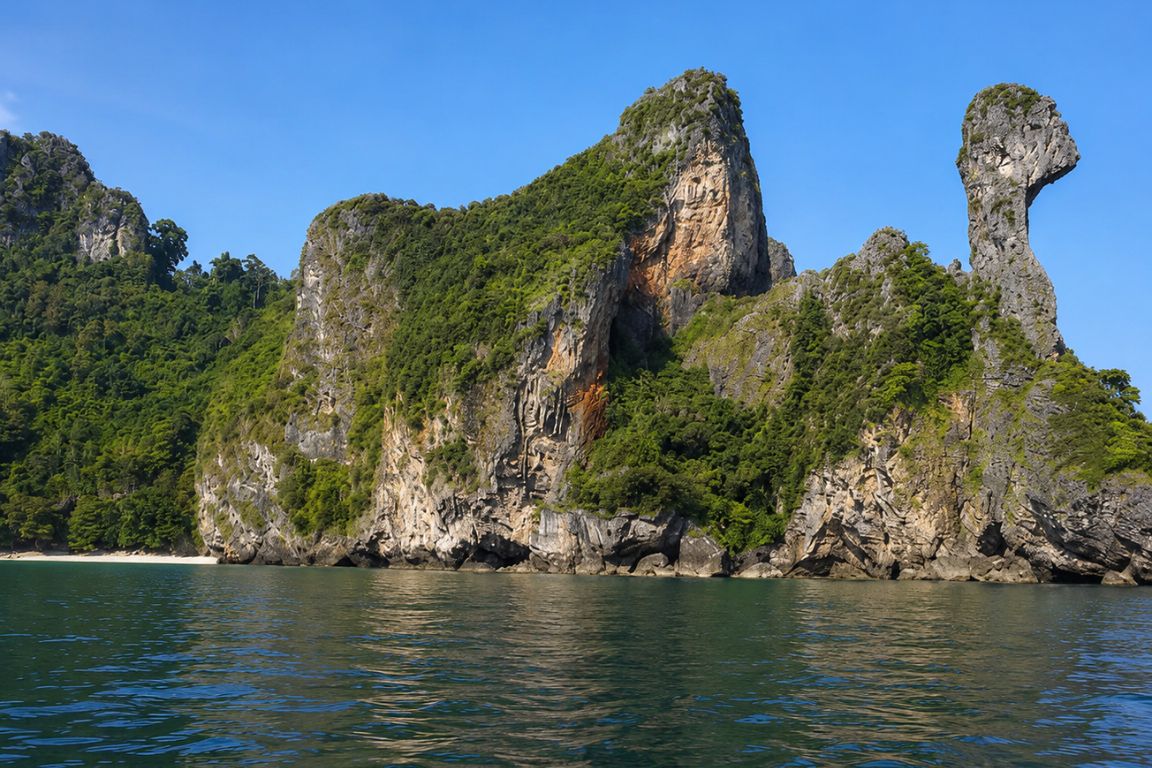
It is a small beach by Andaman standards and it works because of what surrounds it rather than its size. The karst offshore gives the swimming area a natural frame, and the shallow gradient makes it one of the easier beaches near Krabi for small children and nervous swimmers. There are basic facilities, meaning toilets and shade rather than a row of shops.
Snorkeling straight off the beach is pleasant rather than spectacular, one to four metres deep with scattered reef, sandy patches, clownfish and parrotfish. If underwater is your priority, the Koh Daeng stop on the way out delivers more, and the outer sites deliver more again, which we rank in the best islands for snorkeling near Krabi.
The one thing to plan around is crowding. Between roughly 11:00 and 14:00 the beach carries the day boats from both directions and it stops feeling remote. Early arrivals and late private charters get a genuinely different island, and that difference is worth more than any upgrade you can buy on the boat.
What Does the National Park Fee Cover, and What Does a Day Cost?
The park fee at Hong Island is around 300 THB per adult and roughly 100 THB per child, paid in cash on the beach and excluded from nearly every tour price by Thai park regulation. It is higher than the 200 THB charged on the 4 Islands circuit, because Hong sits in a different national park.
Fee inclusion varies by listing, so check whether park admission appears under inclusions or extra charges. Bring it in notes, per person, before you board. Some private tours include park fees explicitly, while other shared and private boats list them separately.
Beyond the fee, the cost of a Hong day is really the cost of exclusivity. Shared speedboats charge per traveler, while private boats are priced for the booked group. Private boats let the booked group choose among the route options documented by each listing, with inclusions and extra charges varying by product.
| Line item | Rough THB | Rough USD | Included? | Notes |
|---|---|---|---|---|
| National park fee, adult | Around 300 | Around 9 | Excluded on most listings | Cash only, collected at the beach |
| National park fee, child | Around 100 | Around 3 | Excluded on most listings | Bring exact notes |
| Shared speedboat day | Operator pricing | See the live listing | Lunch, gear, transfers usually in | Six hours door to door |
| Kayak upgrade for the lagoon | Around 500 per person | Around 15 | Usually an add on | Book at the pier, not on the beach |
| Private longtail charter | Per boat | See the live listing | Some include park fees | Best value at four or more people |
| Private catamaran day | Per boat | See the live listing | Land transfers often excluded | Shade, deck space, paddleboards |
| Tips for the crew | Your call | - | Never included | Cash, appreciated |
Which Hong Island Tour Format Suits Your Day?
Three formats cover almost everyone. A shared speedboat gets you the lagoon, the viewpoint and two swim stops in six hours for the lowest price. A private catamaran turns it into a slower sailing day. A private longtail can string Hong together with the 4 Islands, sunset at Railay and a bioluminescent night swim.
The shared Hong Islands speedboat lists pickups from 07:45 by area, an approximately 09:00 boat departure, a mini buffet lunch and a six-hour duration. Kayaking and park admission are charged separately, with the listing stating that park fees are paid during tour check-in before departure.
The eight-hour private catamaran leaves from Port Takola Marina with shaded seating and paddleboards, and travelers choose either Hong or the 4 Islands. It is the format families with mixed swimming ability tend to prefer, because there is somewhere comfortable to be when you are not in the water.
The longest version is the private Hong Islands, 4 Islands, sunset and bioluminescent snorkel charter, which starts late morning, takes in the quieter islands of the group, adds the southern circuit, puts you at Phra Nang for sunset and finishes with a night swim in glowing water. Park fees are inside that price. Any of these can be arranged through our Krabi island tours if you would rather have the dates matched to the tide than pick blind.
| Format | Length | Lagoon access | Crowd exposure | Suits |
|---|---|---|---|---|
| Shared speedboat | Around 6 hours | Kayak upgrade, usually extra | Moderate, arrives before Phuket boats | First timers, best value |
| Shared longtail | 6 to 8 hours | Often straight through the gap | Moderate | Travelers who want the classic boat |
| Private catamaran | 8 hours | By tender or kayak | Low | Families, groups, shade seekers |
| Private longtail, extended | 7 to 9 hours | Yes, timed to the tide | Lowest | Anyone combining Hong with sunset and night snorkel |
| Half day Hong only | 4 to 5 hours | Varies | Depends on departure hour | Short stays, families with small children |
When Is the Best Time of Day and Year for Hong Island?
Morning, and between November and April. Boats from Phuket reach this group around midday, so a Krabi departure that leaves on time has the lagoon and the viewpoint to a much smaller crowd. The island keeps daytime visiting hours, roughly 08:00 to 16:30, and closes to overnight stays entirely.
The seasonal pattern is the same one that governs every boat day on this coast. From November through April conditions are commonly favored for boat trips, but every departure remains subject to current weather and sea conditions. From May the southwest monsoon builds, and while the Hong group is more sheltered than the outer islands, a rough morning still cancels boats.
Within the dry season, the crowd curve is more useful to plan around than the weather. December's final ten days and the middle of February are the busiest periods on the island. Late October, November and the second half of April all give you the same water with noticeably fewer people on the beach.
| Month | Sea state | Water clarity | Crowds on the beach | Verdict |
|---|---|---|---|---|
| November | Flattening | Good and improving | Rising | Best value to conditions ratio |
| December | Flat | Excellent | Extreme in the final ten days | Superb early in the month |
| January | Flat | Excellent | High | Peak conditions, book ahead |
| February | Flat | Excellent | High | Peak conditions, book ahead |
| March | Calm, warm | Excellent | Moderate to high | Hot but reliable |
| April | Calm, hottest | Very good | Moderate, Songkran spike | Strong in the second half |
| May | Turning | Variable | Low | Sheltered enough to gamble |
| June to July | Choppy | Variable | Low | Cancellations become normal |
| August to September | Roughest | Poor | Lowest | Skip the boat days |
| October | Settling late | Improving | Low | Late October is a quiet bargain |
How Does Hong Island Compare with the 4 Islands or James Bond Island?
Hong goes deep into one place, the 4 Islands circuit spreads you across four, and James Bond Island is a different bay entirely with more sightseeing and less swimming. Hong wins on scenery and calm water. The 4 Islands wins on variety and snorkeling. Neither is a wasted day.
Both comparisons already have their own pages here and they go further than a summary should. Read Hong Islands versus the 4 Islands for stops, park fees, family suitability and crowd timing, and James Bond Island versus Hong Island for the Phang Nga side of the choice. If you are drawn to the southern circuit's beaches instead, the Koh Poda island guide covers the best known of them.
What Should You Bring to Hong Island?
Cash for the park fee above everything else, since there is no card machine on the sand. Then reef safe sunscreen, a dry bag, water, and shoes with grip if you intend to climb the stairs. Flip flops are survivable on the steps and unpleasant.
The climb changes the packing list more than anything else on the island. Trainers or proper sandals with a heel strap turn 420 steps from a chore into a walk, and a small daypack with water in it beats carrying a bottle in your hand. Everything else can stay on the boat.
| Item | Why | Skip it if |
|---|---|---|
| Cash in baht, small notes | Park fee is cash only, per person | Your charter states fees are included |
| Reef safe sunscreen or a rash guard | Marine park, plus nine hours of exposure | Never |
| Shoes with grip | 420 steps, damp in places | You are not doing the viewpoint |
| Dry bag | Speedboat spray, kayak transfers | Never, phones go in the sea daily |
| Own mask | Fits better than rental gear | You are not snorkeling |
| Water, more than you expect | Nothing is sold on the climb | Never |
| Hat that stays on | Speedboat wind takes the rest | You are on a longtail or catamaran |
| Light layer for the ride home | Wet plus wind gets cold at speed | Never on a speedboat |
General visitor information for the province is kept by Thailand's tourism authority at tourismthailand.org, though the operational detail on this island comes from the park rather than from tourism offices.
Who Should Skip Hong Island?
Serious snorkelers, if this is their only boat day. The water around Hong is calm and shallow rather than rich, and anyone whose trip is built around reef will get more out of the outer islands or the Phi Phi group. The same goes for travelers chasing variety: Hong is one island explored properly, not four ticked off.
Skip the viewpoint, not the island, if stairs are a problem. Skip the whole day between June and September, when the crossing gets unpleasant and cancellations are routine. And skip the midday shared departures if crowds are what ruin a beach for you, because arriving at 11:30 puts you ashore at exactly the same hour as everyone who left Phuket at dawn.
Frequently Asked Questions
How do you get to Hong Island from Krabi?
Only by boat, as a day trip. Speedboats take around 20 minutes from the Ao Nang piers and longtails 40 to 45 minutes. There is no scheduled ferry and no accommodation on the island, so confirm whether your tour or charter includes pickup or uses a meeting point.
How much is the Hong Island national park fee?
Around 300 THB per adult and roughly 100 THB per child, paid in cash on the beach. Park-fee treatment varies by listing, so check whether admission is included or charged separately for your group. A few private charters do include it, and those listings say so plainly.
How many steps is the Hong Island viewpoint?
Roughly 420 steps up a constructed stairway behind the beach, topping out at a walkway around 109 metres above the sea with a 360 degree view. Most people take 20 to 30 minutes each way. The climb is shaded for much of its length but genuinely humid, so carry water.
Can you swim in the Hong lagoon?
Access depends on the tide rather than a rule. The gap in the rock is passable only within a certain window, so captains move the lagoon around in the running order. Longtails often go straight through; speedboats usually anchor outside and send visitors in by kayak, often as a paid upgrade.
Is Hong Island good for families?
Yes. Pelay Beach shelves gently, the water inside the bay is calm and shallow, and the shorter crossing suits children better than the outer routes. The viewpoint stairs are optional, and plenty of families spend the whole visit at sea level without feeling they missed the island.
What is the best time of day to visit Hong Island?
Morning. Boats from Phuket reach this group around midday, so a Krabi departure leaving between 07:45 and 09:00 gets the lagoon and the viewpoint before the numbers build. The island keeps daytime hours only, roughly 08:00 to 16:30, and nobody stays overnight.
Check your Hong Islands date before arranging the rest of Krabi
Match the outing to your plans
Blank fields keep the initial suggestion. Age pricing alone does not confirm suitability; if eligibility is unverified, the tool will not recommend a match. Check pickup and restrictions for your selected package.
Compare two total quotes
Use current quotes in the same currency, including park fees, transfers and option extras.
Initial recommendation. Adjust the optional choices to match your plans.
Hong Islands One Day Tour by Speed Boat from Ao Nang, Krabi
Review a six-hour morning speedboat with listed Krabi pickups, lunch, snorkeling equipment and separately charged park admission and kayaking.
6h · English guide listed · Lunch, snorkeling gear and listed hotel transfers included; park fees and optional kayaking are extra. · Confirm your selected option’s pickup, inclusions, fees and participant restrictions before booking.
Choose a date to view the published schedule. Confirm availability and final price on Viator.
No reviewed option matches these choices.