Snorkeling vs Diving in Krabi
In Krabi, snorkeling is the easiest and best-value way to see marine life, while scuba diving unlocks deeper reefs, larger species, and some of Thailand’s most memorable underwater experiences.
Curious what lies below? Try two Phi Phi reef dives after staying overnight on Phi Phi Don. Explore Phi Phi Beginner Scuba — Two Dives.
Last updated: June 17, 2026
Snorkeling requires no certification, costs 1,900-2,500 THB on a group tour, and produces strong marine life encounters at shallow inner reefs year-round. Diving unlocks depth, richer species diversity, and the best sites – leopard sharks on sandy bottoms, Koh Haa Cathedral, wall diving at Phi Phi Leh. Fun dives run 3,300-4,500 THB for two dives. If you have one free day and no certification, Discover Scuba Diving (4,300-5,500 THB) is the answer most comparison articles skip: you dive with tanks, you go below the surface, you need no prior training. For families and first-timers with limited time, snorkeling delivers more per hour. For travelers with 3+ days and genuine curiosity, the PADI Open Water course (15,900 THB) is one of the most consistently life-changing things people do in Krabi.
Booking choice: Compare snorkeling with two beginner reef dives from Phi Phi Don, including equipment, e-learning, and close instructor supervision. Check dates for Phi Phi Beginner Scuba — Two Dives.
Snorkeling Vs. Diving Krabi: Quick Comparison
| Certification needed? | No | Yes (fun dives); No (Discover Scuba) |
| Depth range | Surface to ~2m | Up to 18m (OW); up to 30m (AOW) |
| Cost (group tour, local islands) | 1,900 THB | 3,300-4,300 THB (2 dives) |
| Cost (Phi Phi) | 2,500 THB | 4,500-5,500 THB (2 dives) |
| PADI Open Water Course | n/a | 15,900 THB / 3 days / 4 dives |
| PADI Advanced Open Water | n/a | 14,900 THB / 5 dives |
| Discover Scuba Diving (no cert) | n/a | 4,300 THB local / 5,500 THB Phi Phi |
| Time commitment (one day) | Included in any boat tour | Full day (2 dives + surface intervals) |
| Minimum age | Any (with adult supervision) | 10 (Junior OW, max 12m for ages 10–11); 15 for full OW |
| Water temperature | 27-30°C year-round | 27-30°C year-round |
| Best visibility months | Nov-Mar | Nov-Mar (up to 20m+ outer reefs) |
Prices and fees can change; check the selected activity and travel date for current totals. National park fee treatment varies by activity; check whether it is included and where any payment is collected.
What Is the Difference Between Snorkeling and Diving in Krabi?
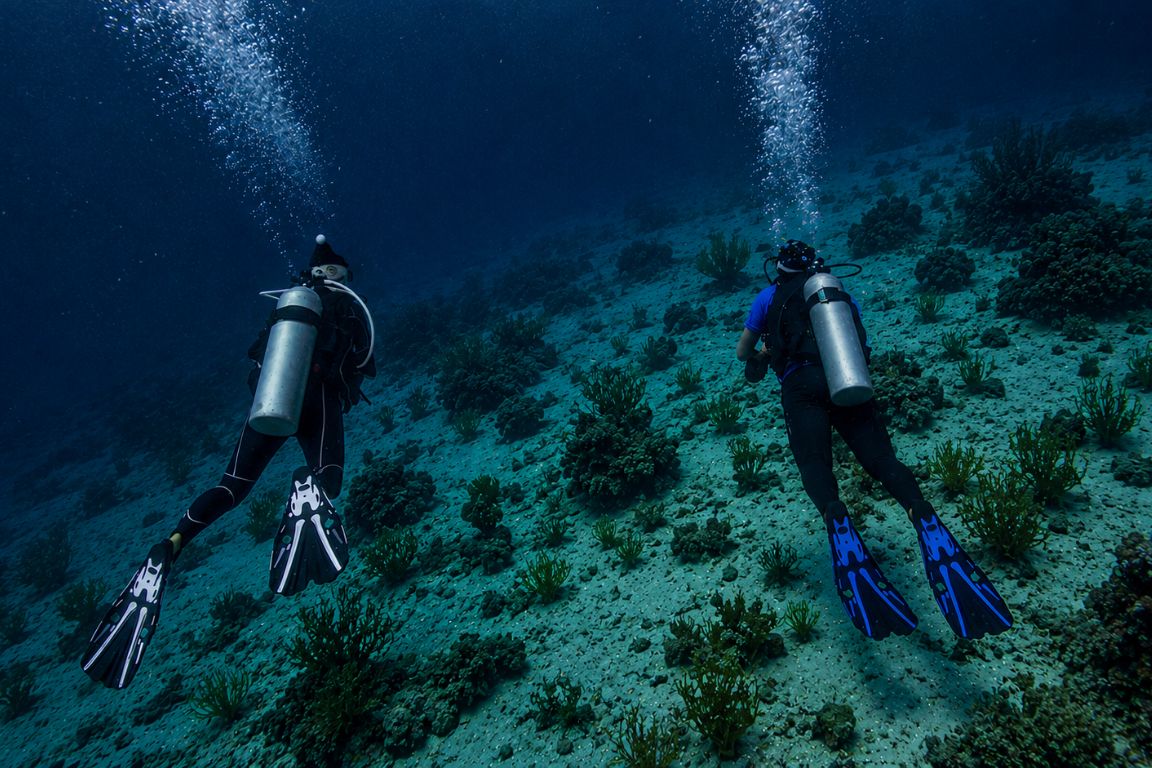 Snorkeling keeps you at the surface: mask, snorkel, fins, and a buoyancy aid or life jacket, watching the reef from above through clear water at depths of 0-2 metres. Diving takes you beneath the surface with scuba equipment – a tank on your back, a regulator to breathe from, and a buoyancy control device, and allows sustained time at depths of 5-30 metres depending on certification. The reef looks different from below than above, and the species that live at depth are different from those visible from the surface.
The practical distinction matters in Krabi specifically because the inner reef circuit – Chicken Island, Koh Poda, Tup Island, Hong Island – sits at depths that produce genuine snorkeling encounters without requiring a tank. The coral starts at 0.5 metres on some sections of Koh Poda’s reef, and the fish that live at 3-5 metres are visible from the surface on a calm day with good visibility. Snorkeling in Krabi is not looking down at a distant reef: at the right spots on the right day, you are floating a metre above active coral watching parrotfish graze it.
What diving adds is not just depth but duration and perspective. A snorkeler passes over a section of reef and moves on. A diver can hold position at 8 metres for twenty minutes, watching a single coral head, waiting for the moray eel to emerge fully from its crevice, tracking a leopard shark as it shifts position on the sandy bottom, seeing the full relief of a wall dive that looks like a flat surface from above. Depth also unlocks species that simply don’t come shallow: the Koh Haa Cathedral dive begins at 14 metres, gorgonian sea fans at Phi Phi Leh wall grow at 10-18 metres, and leopard sharks rest on sandy bottoms at 4-10 metres in spots that are above most snorkelers’ functional depth.
The third option – Discover Scuba Diving – sits between the two and gets less attention than it deserves in most comparisons. It requires no certification, takes one day, costs roughly 1,500-2,500 THB more than a snorkeling tour, and puts you underwater with a tank and an instructor within arm’s reach for two full dives. You are not snorkeling and you are not a certified diver. You are experiencing what diving actually feels like, at actual depth, without committing three days and 15,900 THB to a full course. For travelers who are curious about diving but not certain they want it, DSD is the correct next step, not a full certification course.
Both routes cover stunning Andaman scenery but they deliver very different days on the water – our Hong Islands vs 4 Islands guide breaks down exactly what sets them apart and which one suits different types of travellers.
Which Is Better for Seeing Marine Life: Snorkeling or Diving in Krabi?
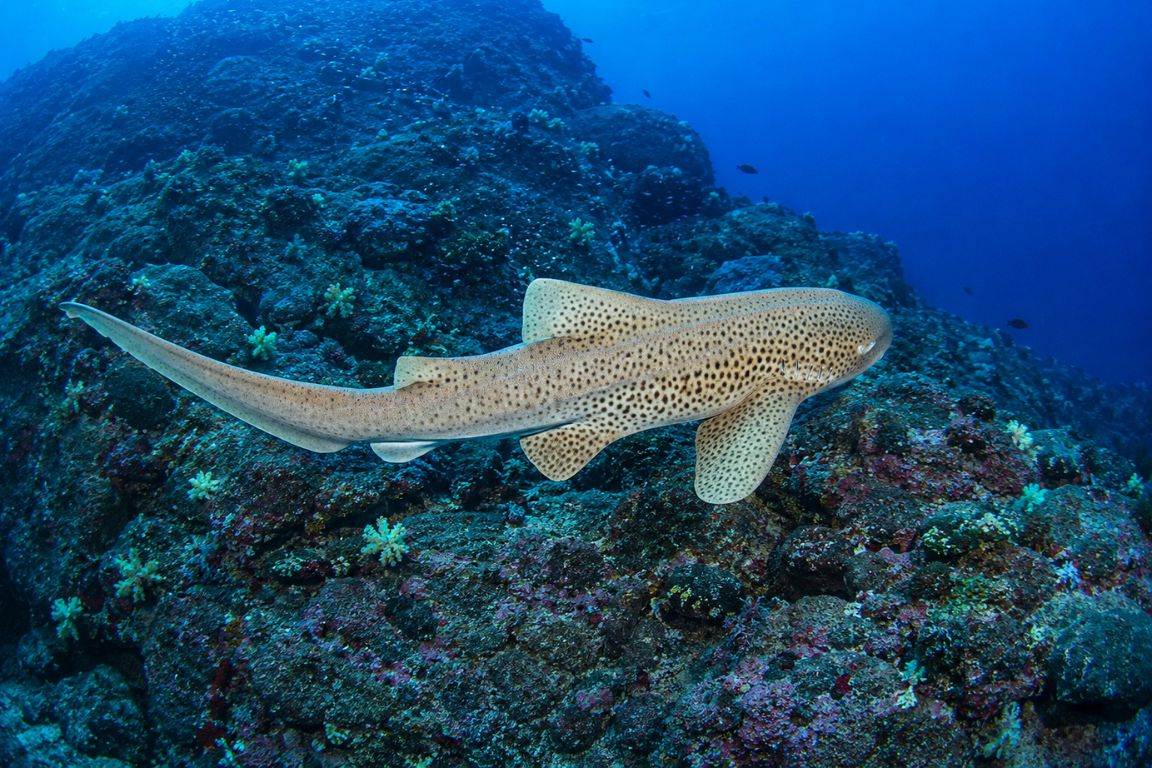 For the inner Krabi island circuit, an experienced snorkeler with a good guide sees comparable marine life to a diver at shallow sites. Depth unlocks genuinely different encounters: leopard sharks resting on sandy bottoms at 4-10m, wall corals and gorgonians at 10-18m, the Cathedral at Koh Haa at 14m, and the higher probability of whale shark encounters at outer sites accessible only by going under. For rare megafauna at the outer reefs, diving wins. For accessible, consistent, beginner-friendly encounters at inner islands, snorkeling holds its own.
The comparison is closer than most dive operators acknowledge. At Koh Phi Phi’s shallow reef zones, a dedicated snorkeler with a guide who knows the reef can see blacktip sharks, turtles, and the full range of reef fish in the same 45-minute window as a diver doing their first fun dive at the same site. The diver goes deeper and may see more species. The snorkeler at the surface, positioned above the coral at 2-4 metres depth, is not missing most of what makes Krabi’s reefs photogenic. What they’re missing is the sensation of being in the water at depth rather than looking down from above, and the species that genuinely don’t come to the shallows.
Leopard sharks are the clearest example of depth-dependent encounters. These bottom-resting sharks sit on sandy patches at 4-10 metres, motionless, and do not surface. A snorkeler positioned directly above one on flat calm water can sometimes see it from the surface with good visibility. In practice, most leopard shark encounters are diving encounters. The same applies to the Phi Phi Leh wall, to the Cathedral at Koh Haa, and to any swim-through site – these require enough depth to enter that snorkeling is not an option.
The guide dimension applies to both activities and changes the outcome significantly. A snorkeler on a standard 4 Islands tour with a guide focused on managing 15 people is getting a different experience to a snorkeler on a dive shop’s Phi Phi trip with a dedicated snorkel guide who knows which side of the reef holds the turtles at this tide on this day. Sea Gypsy Divers in Ao Nang runs dedicated snorkeling trips alongside their dive program specifically because their guides go to better sites, know where the animals are, and maintain smaller groups. The operator matters as much as whether you’re snorkeling or diving.
Not sure which Krabi dive and snorkel sites give you the best chance of spotting the most interesting marine life? Check out our marine life in Krabi guide before you book anything.
How Much Does Snorkeling Vs. Diving Cost in Krabi?
 Snorkeling on a group boat tour: 1,900 THB for local islands, 2,500 THB for Phi Phi, gear included. Fun diving (certified, 2 dives): 3,300-4,500 THB local, 4,500-5,500 THB Phi Phi, gear usually included. Discover Scuba Diving (no cert, 2 dives): 4,300 THB local, 5,500 THB Phi Phi. PADI Open Water course: 15,900 THB, 3 days, 4 dives, lifetime certification. PADI Advanced Open Water: 14,900 THB, 5 dives. National park fee treatment varies by activity, so check the selected listing for its amount, inclusion, and payment point.
The cost gap between snorkeling and diving is real but compresses when divided across a group or spread over multiple dive days. A snorkeling tour at 1,900 THB is genuinely low commitment. A fun dive day at 3,300-4,500 THB is two to three times the cost for a meaningfully different experience. The Open Water course at 15,900 THB looks expensive until you consider that it produces a lifetime certification usable anywhere in the world. For travelers spending a week in Krabi with serious interest in the reef, the course is not expensive relative to what it opens up for every future trip to any diving destination.
| Group snorkeling tour | 1,900 | 2,500 | Gear, guide, transfers, lunch |
| Fun dive (certified, 2 dives) | 3,300-4,500 | 4,500-5,500 | Gear, divemaster, boat, lunch |
| Discover Scuba Diving (2 dives) | 4,300 | 5,500 | Instructor 1:2, gear, briefing |
| PADI Open Water Course | 15,900 (3 days) | Included in course | 4 dives, e-learning, lifetime cert |
| PADI Advanced Open Water | 14,900 (2 days) | Included in course | 5 dives, cert to 30m |
| Equipment rental (own gear missing) | ~630 THB/day | ~630 THB/day | BCD, regulator, wetsuit |
| National park fee (extra, cash) | 400 THB/person | 600 THB/person | Collected on boat |
Prices and fees can change; check the selected activity and travel date for current totals. Transfer coverage and surcharges vary by activity and pickup area; check the selected listing before booking.
Equipment rental is usually built into tour and course prices at Krabi dive operators. The exception is travelers who own some gear but not all of it: Any discount for bringing personal dive equipment depends on the operator and should be confirmed before booking. Worth confirming at booking rather than discovering at the pier.
Do You Need Experience or Certification to Dive or Snorkel in Krabi?
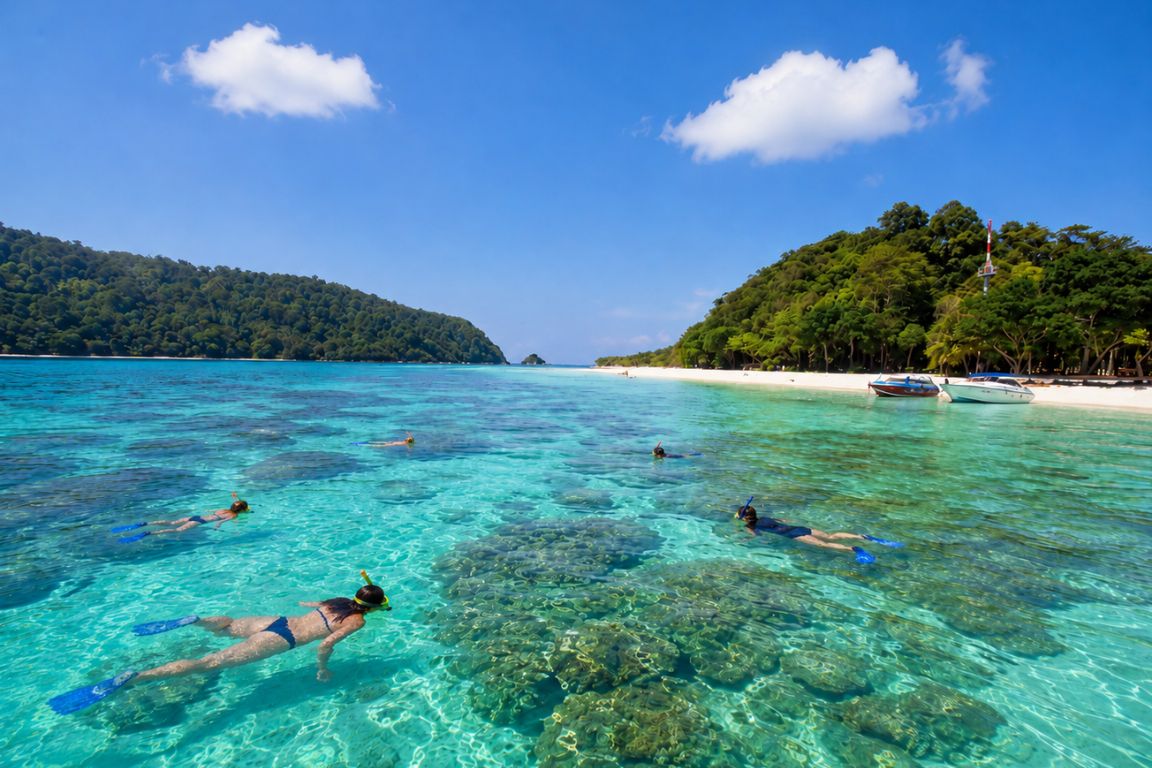 Snorkeling requires nothing: no certification, no swimming test, no prior experience. A life jacket handles buoyancy for non-swimmers. Fun diving requires a PADI Open Water certification (or equivalent). The listed Phi Phi Don Discover Scuba option requires no prior certification and includes two dives with no more than two divers per instructor. The PADI Open Water course requires you to float for 10 minutes, swim 200 metres (300 metres with mask, snorkel, and fins), and pass a basic medical fitness check. Minimum age for Open Water certification is 15; Junior Open Water starts at 10 with a maximum depth of 12 metres.
The Discover Scuba Diving program is the option most comparison articles either skip or underexplain. Here is what actually happens: you arrive at the dive operator in the morning, receive a 30-minute briefing covering the four or five key skills you need (how to equalise pressure in your ears, how to clear your mask, how to signal your instructor), practice in shallow water, then do two full dives at a local reef or Phi Phi with the instructor beside you throughout. No prior swimming test is technically required under PADI standards, though most Krabi operators strongly recommend being comfortable in open water before signing up. This introductory experience does not itself award Open Water certification. DSD is not a certification. It is a genuine diving experience, not a pool session, and it produces the underwater encounter that helps most people decide whether they want to pursue the full course.
The PADI Open Water course in Krabi runs over three days with e-learning completed in advance (10-15 hours online, recommended before arrival). Day one covers pool skills; days two and three involve four open water dives at local Ao Nang sites or Phi Phi. Completion certifies you to dive to 18 metres with a buddy of equal or higher certification worldwide, for life. Krabi is specifically well-regarded as a place to learn because conditions are mild – warm water at 27-30 degrees, gentle currents at most beginner sites, small class sizes at reputable operators, and the dive sites used for training produce actual marine life encounters rather than empty sandy bottoms.
What Are the Best Snorkeling Spots Vs. the Best Dive Sites in Krabi?
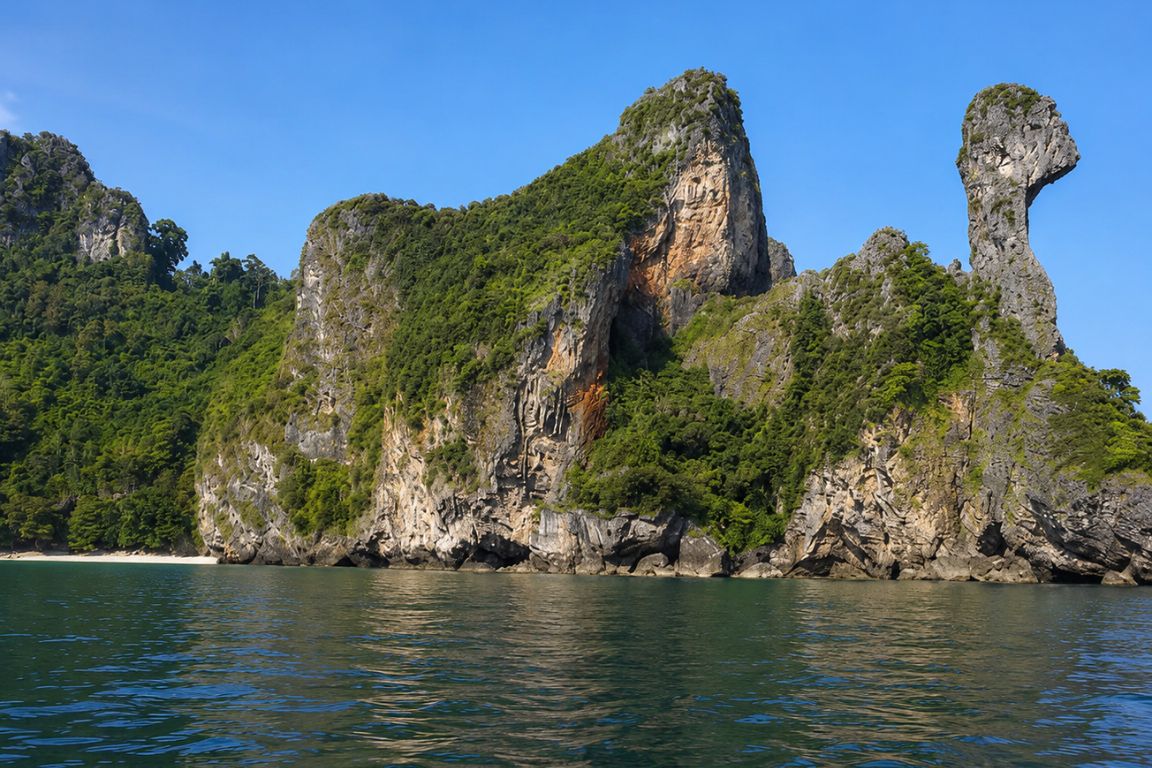 Best snorkeling spots accessible from Ao Nang: Chicken Island (reef fish, occasional blacktip), Koh Poda (coral gardens, parrotfish), Hong Island lagoon reefs, Koh Bida Nok (turtles, shallow reef), Koh Rok (sea turtles, diverse coral, Nov-Apr). Best dive sites: Koh Bida Nok and Nai (Phi Phi, blacktip sharks, turtles, soft coral), Koh Haa Cathedral (14m entry, cavern light formations), Phi Phi Leh wall (gorgonian fans, 14m), Hin Daeng and Hin Muang (manta rays and whale sharks, Feb-Apr peak, Advanced OW recommended).
Chicken Island on the inner circuit is the standard snorkeling benchmark: easy access, reliable fish, close enough to Ao Nang that even half-day tours reach it. The northeast reef section, away from where most boats anchor, holds the most active coral. The fish count here on a good dry-season morning – parrotfish, butterflyfish, sergeant majors, clownfish in three or four anemones, the occasional pufferfish hovering near an overhang – is high enough that a first-time snorkeler comes up with a lot to say about it.
Koh Haa Cathedral is the dive site that produces the most vivid descriptions from returning guests. The entrance begins at 14 metres, leads through a cavern into two interconnected chambers, and at the right time of day natural light beams enter from above through gaps in the rock ceiling. The cathedral name is not marketing language: the formations, the light, and the silence at depth combine into something that photographs poorly and stays in memory clearly. It is not accessible to snorkelers. It requires an Open Water certification and a comfortable dive at 14 metres.
We’ve put together a full site breakdown in our best islands for snorkeling near Krabi guide so you know exactly which islands to prioritize, which months give you the clearest visibility, and which tours actually take you to the best spots.
| Chicken Island (Koh Gai) | Excellent | Good (shallow) | Reef fish, blacktip sharks, clownfish |
| Koh Poda | Excellent | Good | Parrotfish, coral gardens |
| Hong Island | Good | Good | Reef fish, occasional turtle |
| Koh Bida Nok / Nai (Phi Phi) | Good (surface zones) | Excellent | Turtles, blacktip sharks, soft coral |
| Phi Phi Leh wall | No | Excellent | Gorgonian fans, peacock groupers (14m) |
| Koh Haa (lagoon zone) | Good | Excellent | Whale shark, reef butterflyfish, lizardfish |
| Koh Haa Cathedral | No | Outstanding | Cavern formations, stalactites, light beams |
| Koh Rok | Excellent | Excellent | Sea turtles, moray eels, diverse coral |
| Hin Daeng / Hin Muang | No | Outstanding (AOW) | Manta ray, whale shark, gorgonian walls |
Which Is Better for Families, Couples, and First-Timers?
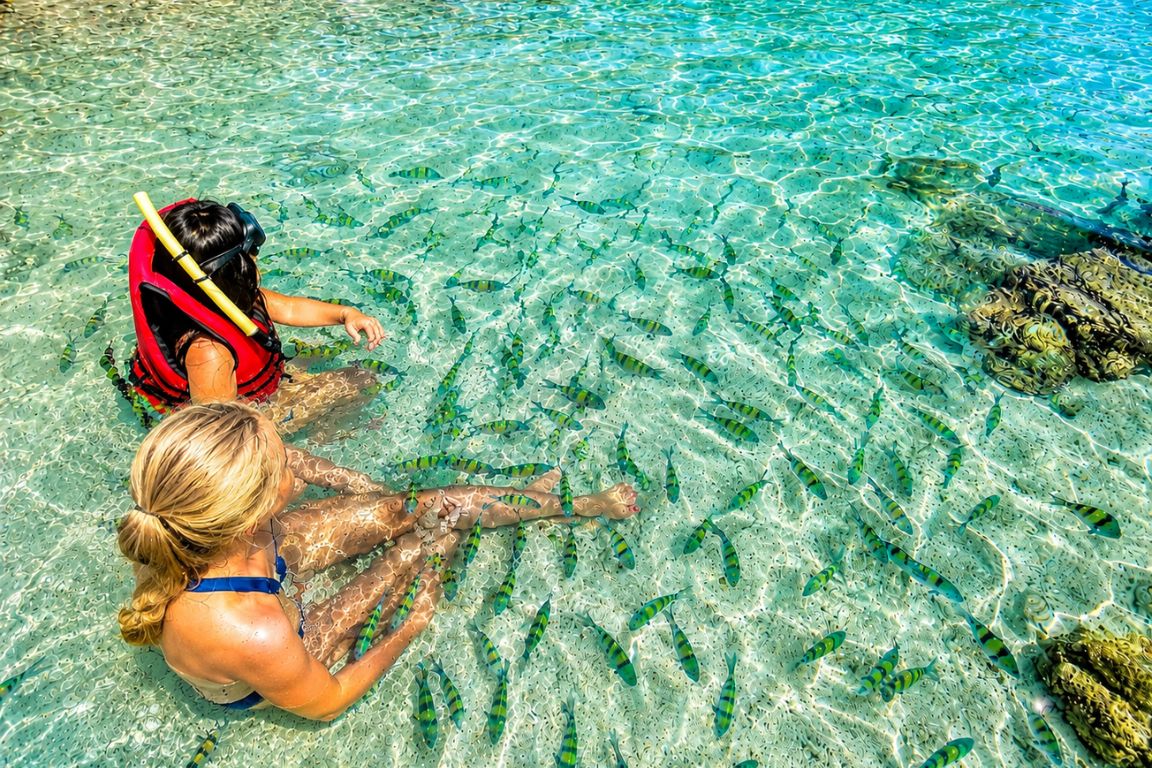 Families with children under 10: snorkeling only, no age restriction, life jackets provided. Families with children 10-14: snorkeling plus Junior Open Water diving up to 12 metres, maximum supervised depth. Couples: snorkeling suits a half-day combined with other activities; Discover Scuba Diving or a full certification course suits a couple that wants to share the experience for the rest of their travel lives. First-timers with one day free: snorkeling or DSD depending on whether going under the surface is the goal. First-timers with three or more days: PADI Open Water course in Krabi is one of the most commonly cited transformative travel experiences in Thailand.
For families with a wide age range, snorkeling is the cleanest solution because it accommodates everyone simultaneously. A six-year-old in a life jacket, a fourteen-year-old with a mask and fins, and two adults can all be in the same water at the same stop doing the same activity. Diving fragments the group: the certified adults dive while children wait on the boat, or the diving parent waits while non-diving family snorkels. If keeping the group together is a priority, snorkeling wins on logistics alone without needing to discuss the marine life comparison.
Bringing the family to Krabi and not sure which boat tours are genuinely suitable for children beyond just being marketed as family-friendly? Here’s our Krabi boat tours with kids guide so you plan a day everyone actually enjoys.
For couples specifically, the question is whether you want a shared experience on this trip or a lifetime shared capability. A couple who both do the Open Water course in Krabi can dive together on every future trip to any destination in the world. They emerge from three days with a skill, a certification, and a shared memory of their first reef dives in the Andaman. Couples who do this consistently report it as one of the better travel decisions they’ve made together. The comparison is not with snorkeling on this particular trip but with every future beach trip where one option is now available to them and the other is not.
First-timers with genuine curiosity about diving but only one free day should book Discover Scuba Diving rather than a standard snorkeling tour. The price premium is roughly 2,400-3,000 THB over a snorkeling tour. What it buys is an answer to a question most people carry for years: what does it actually feel like to breathe underwater? DSD answers that question with two real dives rather than a surface simulation. Whether the answer leads to a full certification course on this trip or a future one, the information is genuinely useful. A snorkeling tour, excellent as it is, doesn’t provide that answer.
First time visiting Krabi and genuinely torn between booking a tour and going it alone on the islands? Here’s our Krabi tour vs DIY island hopping guide so you don’t default to the wrong option.
What Do Travelers Consistently Get Wrong About Snorkeling and Diving in Krabi?
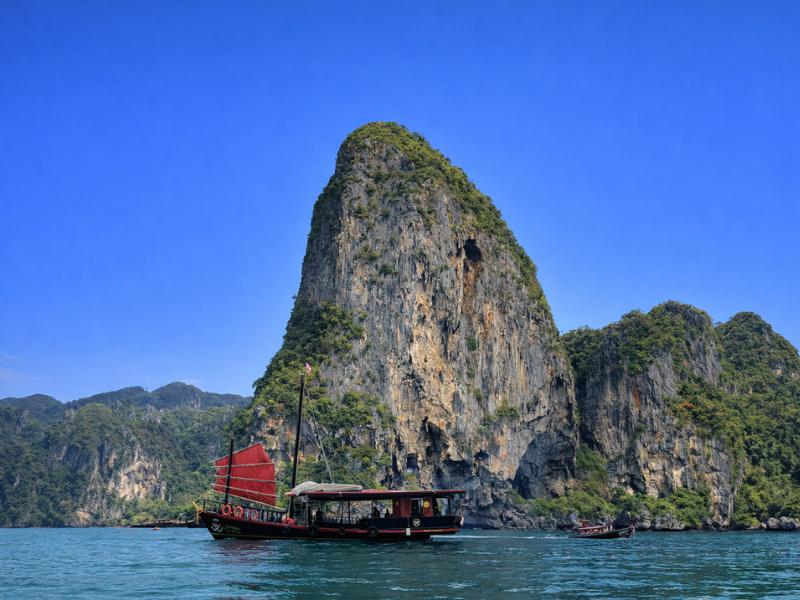
Four recurring mistakes: assuming snorkeling on a standard boat tour is comparable to snorkeling with a dedicated dive shop guide (it isn’t); skipping Discover Scuba Diving in favour of snorkeling because the price difference seems unjustified (it is justified for anyone genuinely curious about diving); waiting until the last day of a trip to decide about the Open Water course (it takes three days and requires advance booking at reputable operators); and not asking about group size before booking any water activity in Krabi (this single variable affects quality more than almost anything else).
The boat tour versus dive shop snorkeling gap is the most consistently underestimated quality difference in Krabi’s water activities market. Shared and private snorkeling formats differ in capacity, itinerary flexibility, guide support, and inclusions; compare the exact listing before choosing. The price difference between the two formats is often minimal. The experience difference is not.
The reluctance to spend 2,400-3,000 THB more on Discover Scuba Diving versus a snorkeling tour is understandable and often wrong. The people who choose snorkeling over DSD to save money and later describe it as the right call are generally people who had no interest in going underwater. The people who chose snorkeling over DSD to save money and later describe it as a mistake are the ones who came up curious and went home without having gone under. If you’re reading a comparison article weighing the two options, you probably have genuine curiosity. Book the DSD.
The timing mistake on the Open Water course is consistent enough to flag directly: Introductory dive plans may require advance administration and location-specific logistics. If you arrive on Wednesday wanting to start the course Thursday, you may find your preferred operator full. The course takes three days minimum, so deciding on day six of a seven-day trip means missing it entirely. If an Open Water certification is something you’re considering, contact your operator before or at the start of your trip, not after you’ve used most of your time.
Should You Snorkel or Dive on Your Krabi Trip?
 Snorkel if: you have one day or less, you’re travelling with children under 10, you’re not interested in going below the surface, or your priority is the broader Krabi experience – islands, beaches, sunset cruise – with swimming as a component rather than the centrepiece. Dive (or do DSD) if: you have genuine curiosity about what breathing underwater feels like, you have 3+ days and want a skill that transfers to every future beach destination, or you’re a certified diver who wants to access Phi Phi Leh wall, Koh Haa Cathedral, and the outer reef sites that snorkeling doesn’t reach.
Snorkeling in Krabi is not a consolation prize for people who don’t dive. The inner reef circuit produces real marine life, accessible technique, and zero logistics complexity. It fits into a day that includes other activities. Participation depends on the selected tour’s age, health, mobility, fitness, and water-confidence requirements. On the right day at the right spot with the right guide, the hour you spend floating above Chicken Island’s reef will be one of the clearer memories from your trip.
What diving adds is not primarily a better version of what snorkeling provides. It’s access to a different layer of the reef. Leopard sharks don’t come to the surface. The Cathedral doesn’t have a surface entrance. The sensation of neutral buoyancy at 10 metres, the absence of sound except your own breathing, the way fish respond to a diver who moves slowly and doesn’t kick – these are not incremental improvements on snorkeling. They are a genuinely separate experience that Krabi, with its mild conditions, warm water, and excellent dive operators, is one of the better places in the world to have for the first time.
The honest bottom line: if diving is something you’ve ever been curious about and you’re in Krabi for more than two days, the opportunity cost of not trying it is high. The conditions here are about as forgiving as open water diving gets. Book the DSD for one day, or the full course for three. If it turns out not to be for you, you’ve lost a day. If introductory diving suits you, consider separate certification training before planning future independent dives.
First time planning a Krabi trip around island hopping and not sure how to build it around everything else you want to do? Here’s our Krabi island hopping itinerary guide so the whole trip hangs together properly.
Questions about which operator suits your level, which sites are running this week, or how to fit a water day around your itinerary: the 7 Islands longtail cruise with snorkeling is the straightforward inner-reef day while you decide whether to add a dive.
Snorkeling Vs. Diving Planning Checks
Traveler priorities differ: compare available time, swimming confidence, group needs, certification status, and interest in descending below the surface.
Interest in future certification is a personal decision after experiencing introductory scuba. It is not an intermediate step for people who already want to certify. It genuinely changes a significant proportion of people’s intentions. Most of those guests arrived thinking they’d try one dive and see. Some travelers may decide to pursue certification after an introductory experience.
Frequently Asked Questions
Can You Snorkel Without Knowing How to Swim in Krabi?
Yes, with a life jacket. Most Krabi boat tours provide life jackets as standard and non-swimmers can participate in snorkeling stops in shallow, calm conditions. Guide support and in-water assistance vary by tour, so check the selected activity’s arrangements. For Discover Scuba Diving, PADI standards do not technically require swimming ability, but most Krabi operators recommend being comfortable in open water before attempting ocean dives. The PADI Open Water certification course requires swimming 200 metres and floating for 10 minutes as a minimum.
What Is Discover Scuba Diving and Is It Worth It Over Snorkeling?
Discover Scuba Diving (DSD) is a one-day PADI program where a certified instructor stays within arm’s reach for two full dives at a local reef or Phi Phi. No prior certification or swimming test is required. It costs 4,300 THB for local islands or 5,500 THB for Phi Phi – roughly 2,400-3,000 THB more than a snorkeling tour. For anyone genuinely curious about going underwater, it is worth it. It answers whether diving is something you want to pursue, and the two dives count toward a full Open Water certification if you decide to continue.
How Long Does the PADI Open Water Course Take in Krabi?
Three days, plus 10-15 hours of e-learning completed in advance online. Day one covers pool skills at the dive shop. Days two and three involve four open water dives at local Ao Nang islands or Phi Phi. Total course cost is 15,900 THB including gear, certification fee, and e-learning. The certification is valid for life and recognised globally. Krabi is considered one of the better places in Southeast Asia to earn it due to mild conditions and small class sizes at reputable operators.
Is Snorkeling or Diving Better for Seeing Sharks in Krabi?
Both produce shark encounters. Blacktip reef sharks are seen by snorkelers at Chicken Island and Koh Bida Nok regularly in dry season. Leopard sharks rest on sandy bottoms at 4-10 metres depth and are primarily a diving encounter – they rarely surface. Whale sharks are possible at outer sites for both snorkelers and divers but are more consistently encountered on dive trips to Koh Haa from February to April. At Hin Daeng and Hin Muang, where the most dramatic megafauna encounters happen, diving is the only access method.
Can Children Dive in Krabi?
Children aged 10-11 can earn a Junior Open Water Diver certification with a maximum depth of 12 metres, always diving with a certified adult. Children 12-14 earn Junior Open Water with a maximum depth of 18 metres alongside a certified adult. Full Open Water certification starts at age 15 with no depth restriction beyond the standard 18-metre OW limit. Snorkeling has no minimum age with adult supervision. Check each tour’s included equipment, minimum age, and child policy before booking.
Is It Safe to Dive in Krabi If You’ve Never Dived Before?
Yes, under the Discover Scuba Diving program with a qualified instructor beside you the whole time. Krabi is specifically well-regarded for beginner diving because conditions are mild: water is 27-30°C year-round, currents are gentle at most beginner sites, and the dive operators trained at PADI-certified centres run small group sizes. Open Water training has swimming, medical, and performance requirements that must be assessed by the chosen dive center. Choose a reputable operator with small class sizes – this single variable affects safety and quality more than any other.
Written by Ryan Supakorn
Thai tour guide since 2011 · Founder, Krabi Boat Tours
Ryan has guided travelers through Krabi’s islands, lagoons, and coastline since founding the agency.
Check your actual travel date before arranging ferries or hotels
Match the outing to your plans
Blank fields keep the initial suggestion. Age pricing alone does not confirm suitability; if eligibility is unverified, the tool will not recommend a match. Check pickup and restrictions for your selected package.
Compare two total quotes
Use current quotes in the same currency, including park fees, transfers and option extras.
Initial recommendation. Adjust the optional choices to match your plans.
From Phi Phi: Half Day Discover Scuba (2 Dives)
Prepare through e-learning, waivers, and medical review before completing two reef dives with no more than two participants per instructor.
5h · English guide listed · Starts on Phi Phi Don. Requires a prior overnight stay and contacting the dive centre at least one day before for medical checks and waivers; not a mainland day trip. · Confirm your selected option’s pickup, inclusions, fees and participant restrictions before booking.
Choose a date to view the published schedule. Confirm availability and final price on Viator.
No reviewed option matches these choices.