Krabi Tour vs DIY Island Hopping
A guided island hopping tour in Krabi removes almost all of the logistical friction, while a DIY approach offers more freedom but demands better timing, negotiation, and local awareness.
Compare this private guided longtail with group, captain-only, and DIY choices before deciding how much of your island day to arrange. Explore Private Hong & 4 Islands.
Last updated: June 17, 2026
A guided tour handles logistics, includes snorkel gear and lunch, and puts you with someone who knows where the fish are, when the tides turn, and which stop to hit first before the other boats arrive. DIY is genuinely possible in Krabi, especially a private longtail charter negotiated at the pier, but it requires more local knowledge than most first-timers have. The gap between a good guided tour and a well-executed DIY trip is smaller than you’d think. The gap between a bad guided tour and a chaotic DIY trip is larger than most travelers expect.
Booking choice: Use the private guided longtail as your baseline, then compare group and captain-only choices by route control and included services. Check dates for Private Hong & 4 Islands.
Quick Comparison: Guided Tour Vs. DIY Island Hopping in Krabi
| Typical cost | 900-1,200 THB/person (group) or 2,500-7,000 THB (private) | 2,500-4,000 THB/boat (longtail) + park fees separately |
| Logistics handled? | Varies: check pickup, fees, gear, and meals | No: you arrange everything |
| Flexibility | Low (group tour) to High (private tour) | High: you set the route and pace |
| Local knowledge included? | Yes, with a good guide | Only if the captain speaks English |
| Snorkel gear included? | Usually yes | Usually no, rent or bring your own |
| Lunch included? | Usually yes (group tours) | No, buy on island or bring your own |
| Best for | First-timers, solo travelers, families wanting everything arranged | Repeat visitors, couples, small groups comfortable with logistics |
National park fees Vary by guided tour Vary by charter; confirm before departure
Example figures only; compare live quotes and inclusions for your date.
What Is the Real Difference Between a Guided Krabi Tour and DIY Island Hopping?
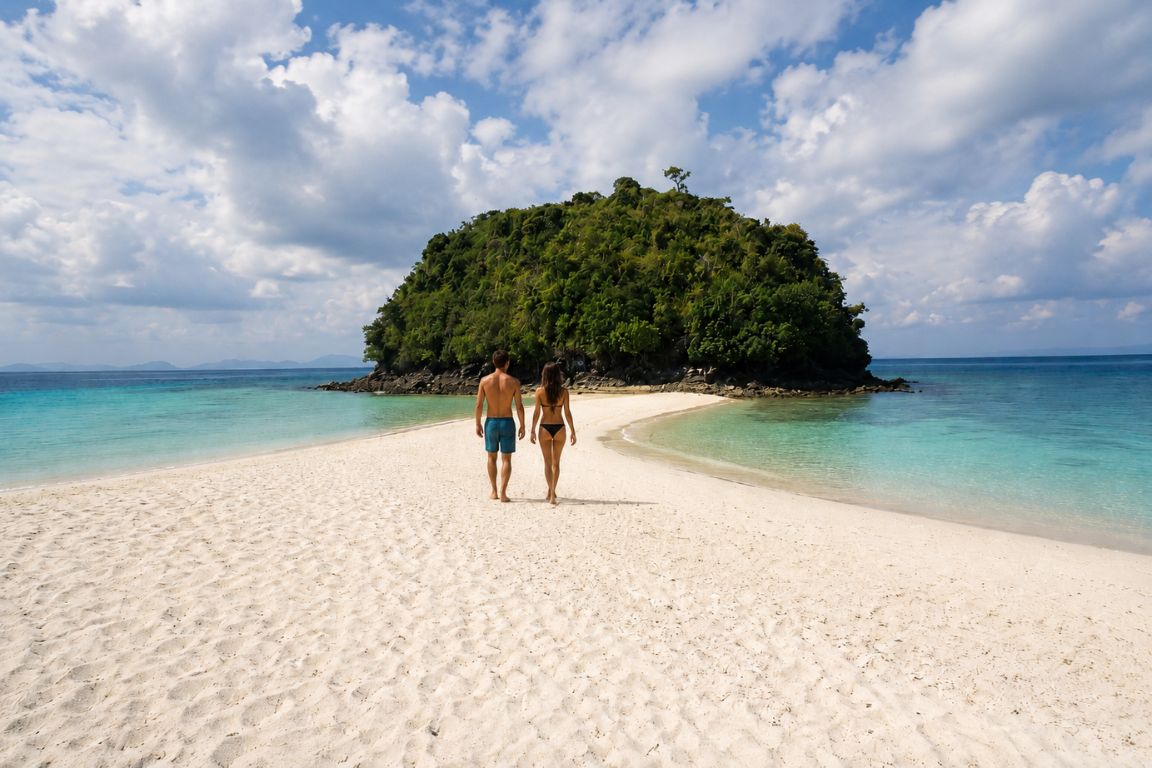 A guided tour may combine the boat, route, equipment, meals, and guide, but inclusions vary by booking. DIY island hopping means arranging each element yourself, typically by negotiating a private longtail charter at the pier. The practical difference isn’t just cost or flexibility: it’s knowledge. A guide who has run the same route for years knows things about tides, reef conditions, and timing that no amount of research replaces.
The framing most travelers use is wrong from the start. They treat it as a budget question: pay more for a tour, pay less and do it yourself. The real question is a logistics question: what do you know, and what are you walking into?
Krabi’s islands sit inside a marine national park system where conditions change with the tide cycle, not the clock. The sandbar at Tup Island that connects to the neighboring island only appears at low tide for a two-hour window. The entrance to Hong Lagoon is navigable by boat only at high tide and only by kayak at low. A guide calibrates the entire day’s stop order around that window. A longtail captain who doesn’t speak English cannot communicate that to you in time to do anything about it. You arrive at Tup at high tide, the sandbar is underwater, and you spend 45 minutes on a beach that looked different in every photo you researched. Not a disaster, but not what you came for.
DIY is genuinely accessible in Krabi in a way it isn’t in many destinations. The pier at Ao Nang has longtail operators who rent private charters for the day. You can show up, negotiate a price, agree on islands, and be on the water by 8am without booking anything in advance. That works. It works best for travelers who have done some research, aren’t attached to specific sights, and understand that the captain’s job is to drive the boat, not translate the experience into something meaningful.
Want to know which Krabi boat tour actually gets you to the best islands without spending half the day in transit? Here’s our Krabi boat tours guide so you book the right experience from the start.
How Much Does a Guided Tour Vs. DIY Island Hopping Actually Cost in Krabi?
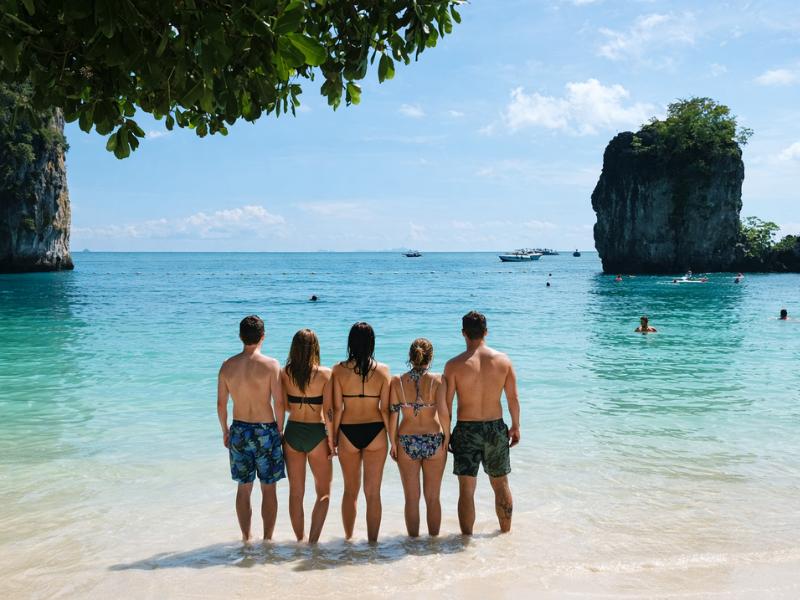
Group guided tours run 900-1,200 THB per person and typically include pickup, snorkel gear, and lunch. A DIY private longtail charter at the pier starts at 2,500 THB for the whole boat for a half-day. For two people, compare complete live quotes after accounting for every inclusion. For four or more people on a group tour, the per-person math tightens considerably. Park-fee treatment varies by booking; check whether admission is included and how any balance is collected.
The cost comparison that matters is per person, not per boat. A group tour at 1,000 THB per person for a group of four costs 4,000 THB total. A private longtail charter for the same four people at 2,500 THB for a half-day costs 625 THB each, less than a group tour, and the boat is entirely yours. That math surprises most travelers who assume DIY always means cheaper.
Where the guided tour earns back its price: inclusions. A group tour at 1,000-1,200 THB typically bundles hotel pickup (worth 200-400 THB on its own if you’d otherwise need a songthaew or Grab), snorkel gear (50-100 THB to rent separately), and lunch (150-250 THB on the island). Total those out and the “expensive” guided tour is often within a few hundred baht of the DIY equivalent, except the guide is already priced in.
| Boat/tour base cost | 900-1,200 THB/person | 2,500-4,000 THB/boat |
| Hotel pickup | Included | Grab taxi: ~150-300 THB |
| Snorkel gear | Included | Rent: 50-100 THB or bring own |
| Lunch | Included | Buy on island: 150-300 THB/person |
| National park fee (adult foreigner) | 200-400 THB extra (cash) | 200-400 THB extra (cash) |
| Guide/local knowledge | Included | Not included (captain only) |
| Total for 2 people (approx.) | 2,600-3,600 THB | 3,300-5,400 THB |
| Total for 4 people (approx.) | 5,200-7,200 THB | 4,200-6,800 THB |
Example figures only; compare live quotes and inclusions for your date. DIY totals assume private longtail half-day for the whole group.
One hidden cost DIY travelers underestimate: wasted time. Arriving at a pier without a confirmed boat, negotiating a price in a situation where you have limited leverage and no idea what the going rate actually is, waiting for the captain to prepare, sorting out the national park fee situation without a guide to explain it. A guided tour absorbs all of that friction. For some travelers that’s worth a lot. For others it’s irrelevant. Know which type you are before you decide.
Which Option Gives You More Time on the Islands?
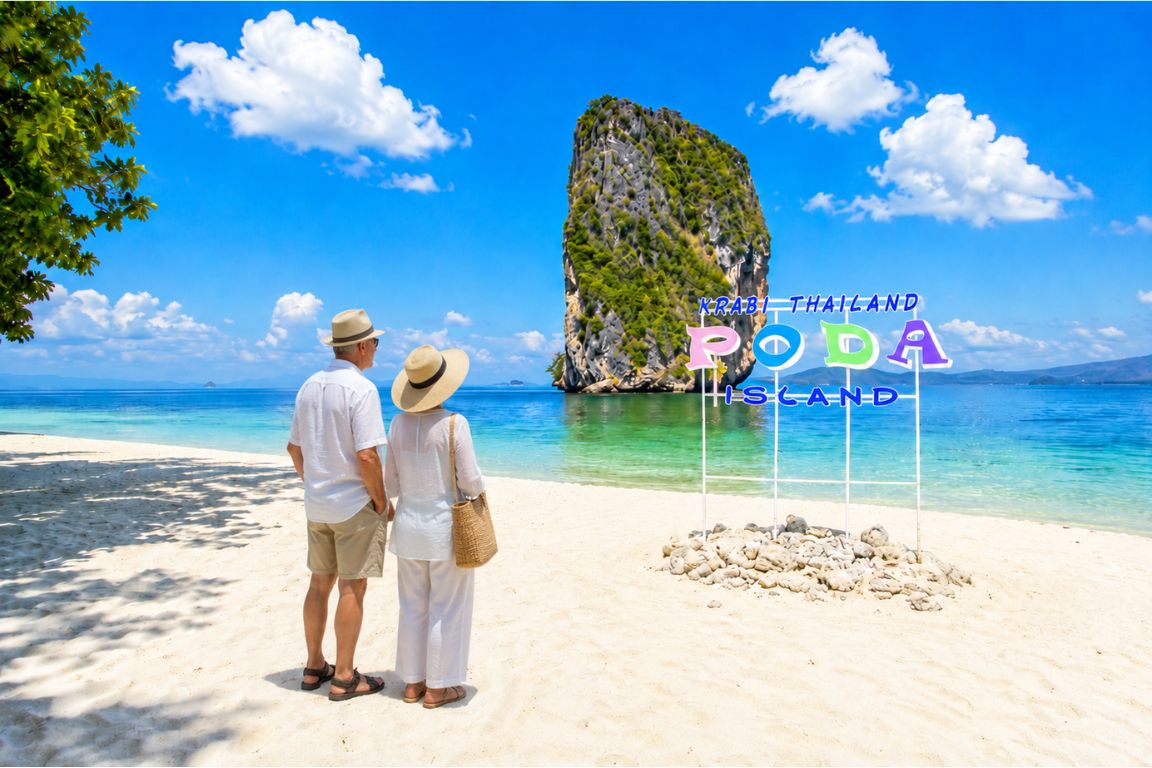 A well-run guided tour with an early departure actually gives you more productive island time than most DIY trips, because the guide builds the itinerary around tide windows and crowd patterns. DIY gives you more control over how long you stay at each stop, but without tide knowledge, you can easily arrive at the wrong time and find the best features of an island unavailable or overwhelmed with other boats.
The paradox most travelers miss: a group tour that departs at 7:30am often arrives at key stops like Hong Island and Tup Island before the swell of mid-morning tours. An independent traveler who shows up at the pier at 9am, negotiates a charter, and departs at 10am reaches the same islands two hours later, when the beaches are full and the sandbar at Tup is either submerged or lined with longtails. The DIY traveler has more flexibility in theory and less quality island time in practice.
Where DIY genuinely wins on time: you don’t leave until you’re ready. Group tours run fixed departure times from each stop. Forty-five minutes at Poda whether you’re done or not. On a private charter, DIY or guided, you can discuss stop timing within the booked duration and operating conditions. That’s the actual flexibility variable, and it doesn’t require going full DIY. A private guided charter gives you both the timing expertise and the flexible stops.
If you’d rather have someone manage the day while you manage the sunscreen, the prebooked private 4 Islands longtail offers four- or six-hour options and route customization without a morning pier negotiation.
Wondering how to balance guided boat tours with independent beach days and whether doing all four tour routes in a single trip is realistic without burning out on boats? This Krabi island hopping itinerary guide covers the planning details most visitors only wish they’d sorted before arriving.
Is DIY Island Hopping in Krabi Actually Possible for First-Timers?
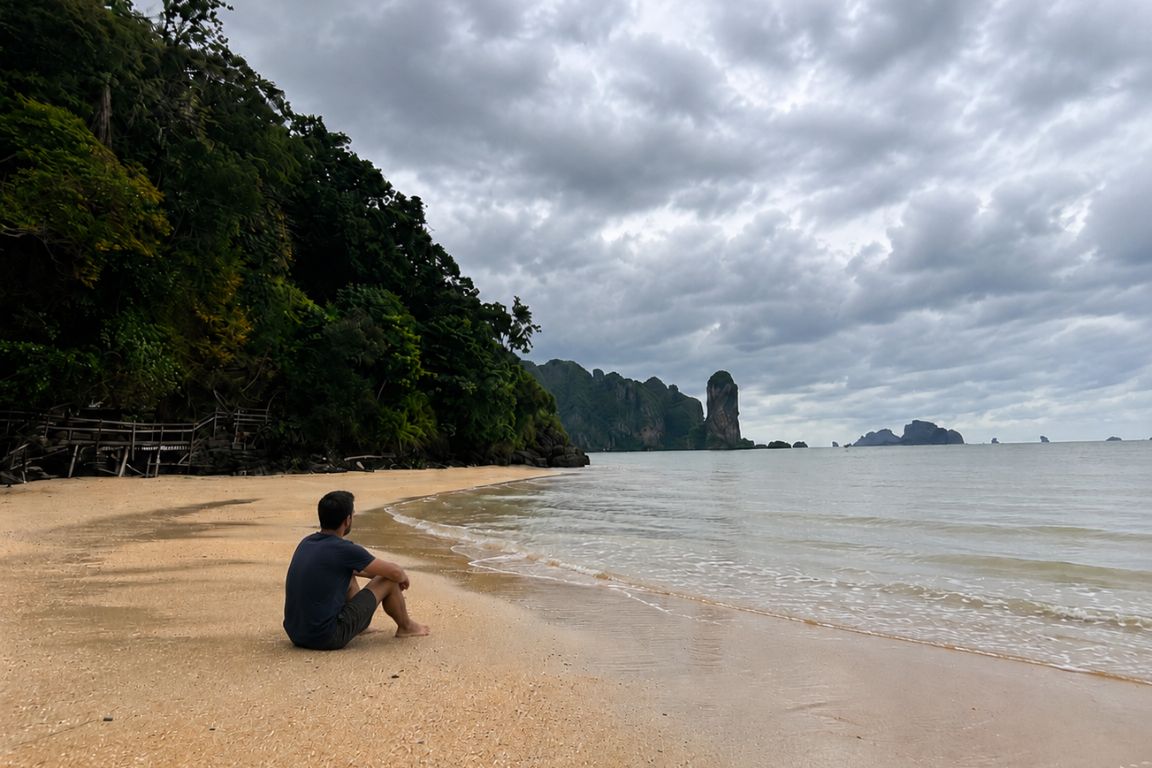 Yes, with realistic expectations. Ao Nang pier has longtail operators available daily and private charters are negotiable without advance booking most of the year. The practical challenges are: finding a captain who communicates clearly in English, knowing what price is fair without a reference point, understanding national park fee logistics, and not knowing which stop to hit first or when the tide windows open and close. These are solvable problems, but each one costs you something if you get it wrong.
The pier at Ao Nang and Nopparat Thara is not a chaotic free-for-all. It’s organized, the operators are accustomed to foreign travelers, and walking up and asking to hire a longtail for the day is a normal transaction. You agree on islands, agree on price, pay a deposit, and show up in the morning. That part is not difficult.
What’s harder: knowing if the price you agreed to is reasonable. Walk-up rates at the pier vary by operator, by season, and by how many travelers are competing for boats that morning. In peak season (December to February), a private longtail for a half-day might open at 3,500 THB and settle at 2,800 with negotiation. Without a reference point, travelers either overpay or walk away from a fair price thinking they can do better and still need to reassess the available boats and terms when they return.
The snorkeling gear situation is worth knowing: most DIY pier charters don’t include it. Operators who cater to independent travelers may have masks and fins on the boat, but quality varies from good to barely functional. Bring your own or rent from a dive shop in Ao Nang before departure. This is not a dealbreaker, but it’s the difference between a great snorkel stop and a frustrating one with leaking masks.
Want to know which season delivers the most out of a Krabi island-hopping day without the monsoon cancellations or peak season overcrowding? Here’s our best time for boat tours in Krabi guide so you don’t book the wrong time of year.
What Do You Lose When You Skip the Guide in Krabi?
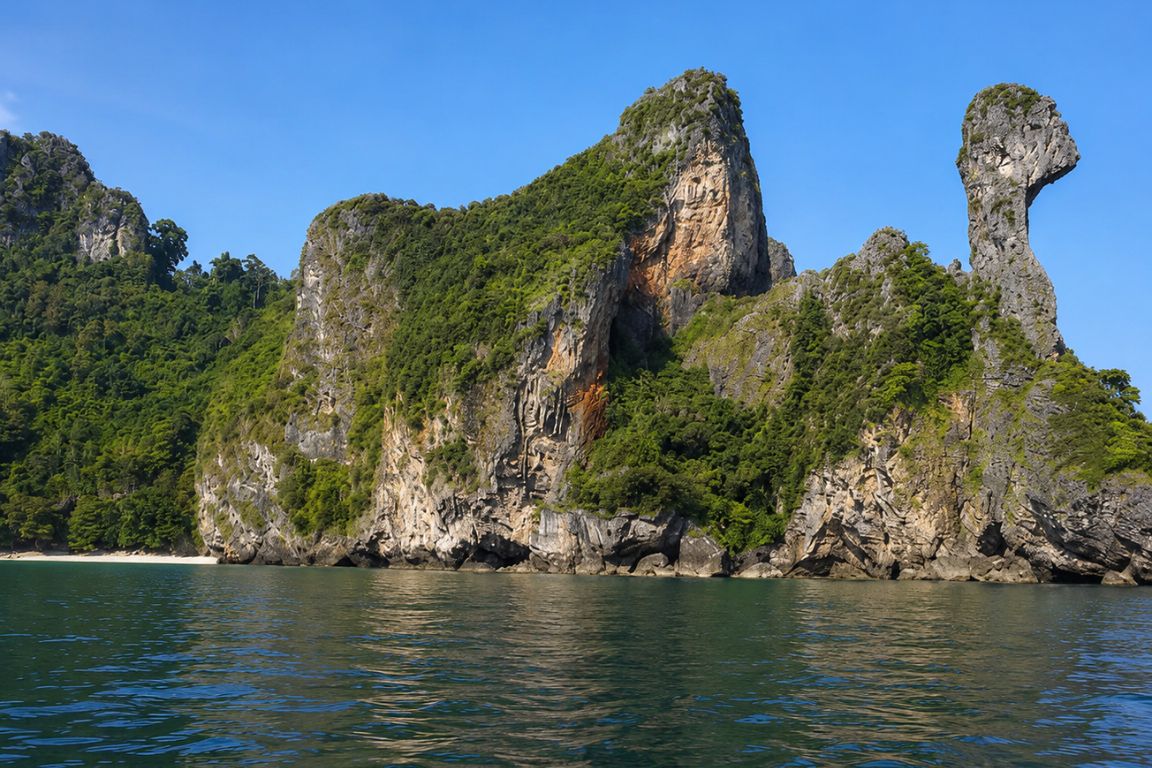 Without a guide, you lose tide timing, reef knowledge, cultural context, and someone to handle every logistical problem the moment it appears. Those aren’t abstract losses. The sandbar at Tup Island requires precise low-tide timing. The best coral at Chicken Island is 200 metres from where most boats drop anchor. The garlands on the longtail bow are sacred and shouldn’t be touched, a detail that matters to the captain. A guide carries all of that without you having to ask.
Tide knowledge is the most concrete thing a guide brings. The Andaman Sea around Krabi experiences two tidal cycles per day, and the difference between low and high tide at some stops is dramatic. The famous sandbar at Thale Waek connecting Tup Island to its neighbor is only walkable for roughly two hours around low tide. The entrance to Hong Lagoon is only navigable by motorized boat around high tide and by kayak at lower water. A guide plans the day’s stop order around these windows. Without that knowledge, you’re moving between islands in the order that seems logical on a map, which is almost never the same order that produces the best experience on the water.
Snorkeling spots are the second major loss. Most longtail boats anchor in the most accessible location at each island, which is often not the best snorkeling location. The clearest water, the most active coral, the part of Chicken Island’s reef where blacktip sharks are occasionally seen: a guide who has run this route hundreds of times knows exactly where to put you in the water. A captain navigating by habit anchors where he always anchors, which is fine, but fine is not the same as great.
The cultural details are subtler but real. The longtail bow carries flowers and silk garlands in honor of Mae Ya Nang, the spirit goddess of boats. Passengers shouldn’t touch that area. It’s considered sacred. Without a guide to mention this, foreign travelers sometimes handle the decorations while boarding, which creates a quiet awkwardness with the captain that sets the wrong tone for the day. A guide handles that before it happens.
Not sure which Krabi snorkeling spots are worth the boat ride and which ones disappoint in person despite the photos? Check out our best islands for snorkeling near Krabi guide before you book anything.
Which Option Is Better for Families, Couples, and Solo Travelers?
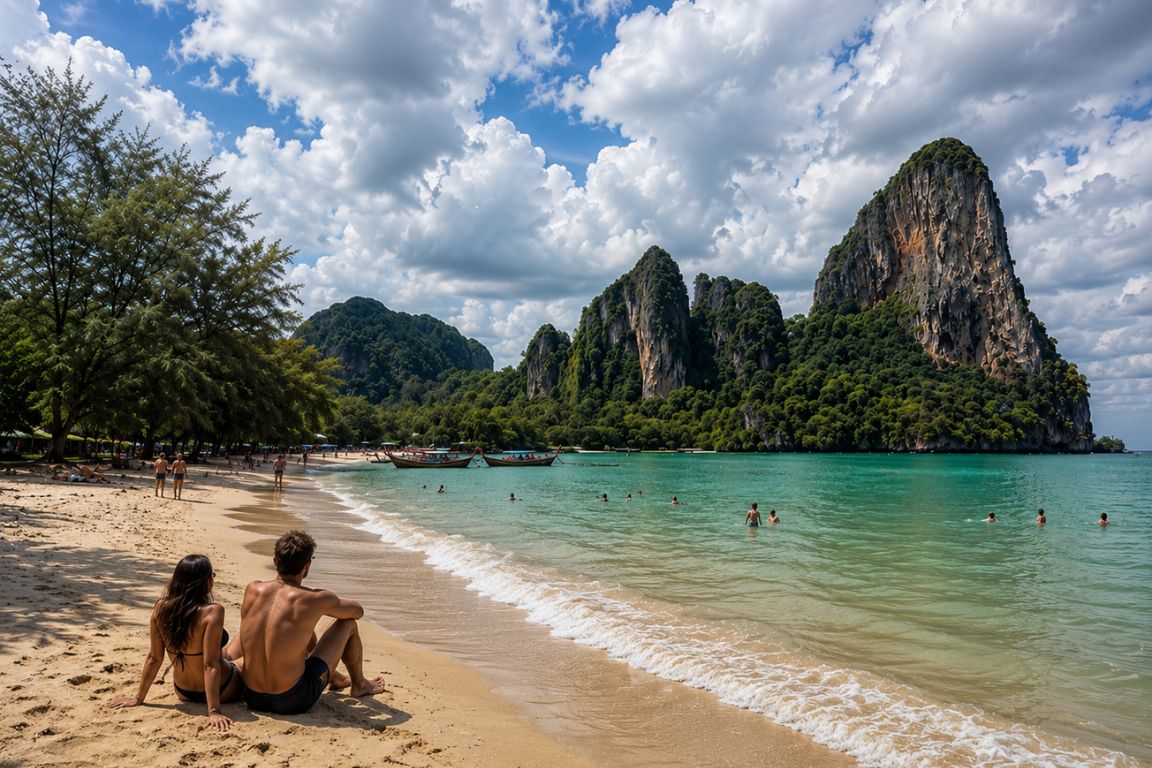 Solo travelers get the most from group guided tours: built-in social dynamic, all logistics handled, and no premium for traveling alone. Couples get the most from a private guided charter: full flexibility, the guide’s knowledge, and a boat to themselves. Families benefit most from a private option (guided or DIY) where pace is adjustable and returning early is genuinely possible, not a negotiation.
Solo travelers doing DIY face a specific problem: the economics don’t work. A private longtail charter is priced for the boat, not per person. Solo, that’s 2,500-4,000 THB for half a day. A group guided tour at 900-1,200 THB is dramatically better value, and the group dynamic on a well-run tour is usually easy to navigate. Group size and language mix vary by operator and departure. You’re not locked into anyone’s itinerary choices because everyone is on the same itinerary.
Couples tend to be the travelers who overthink the DIY option. Two people, a private longtail, no fixed schedule: it sounds ideal and often is. But the execution depends heavily on whether you’ve done enough research to compensate for having no guide. Couples who have read this far, know what tide windows matter, bring their own snorkel gear, and are comfortable navigating a pier negotiation will have a genuinely excellent day. Couples who arrive hoping it’ll figure itself out tend to have a decent day that could have been much better.
| Solo traveler | Group guided tour | Best value, logistics handled, social dynamic included |
| Couple | Private guided charter | Flexibility of private boat plus guide’s knowledge |
| Family with young kids | Private guided or private DIY | Pace control and early return option are non-negotiable |
| Group of 4-6 friends | Private longtail DIY or guided | Per-person costs align; depends on research appetite |
| First-timer to Krabi | Guided tour (group or private) | Guide’s tide and reef knowledge pays off most on first visit |
| Repeat visitor | DIY private longtail | Already know the stops; full flexibility is the upgrade |
Families with children deserve a specific note: the option that matters most isn’t guided versus DIY, it’s private versus group. On a group tour, you cannot shorten the day if a child hits a wall at noon. A private charter may offer more scope to discuss an earlier return, subject to the operator and conditions. That single variable is worth more to most families than any other factor in this comparison.
Not sure which Krabi island-hopping routes work for younger children and which ones involve conditions that make a long day on the water more challenging than it sounds? Check out our Krabi boat tours with kids guide before you book anything.
What Are the Biggest Mistakes DIY Island Hoppers Make in Krabi?
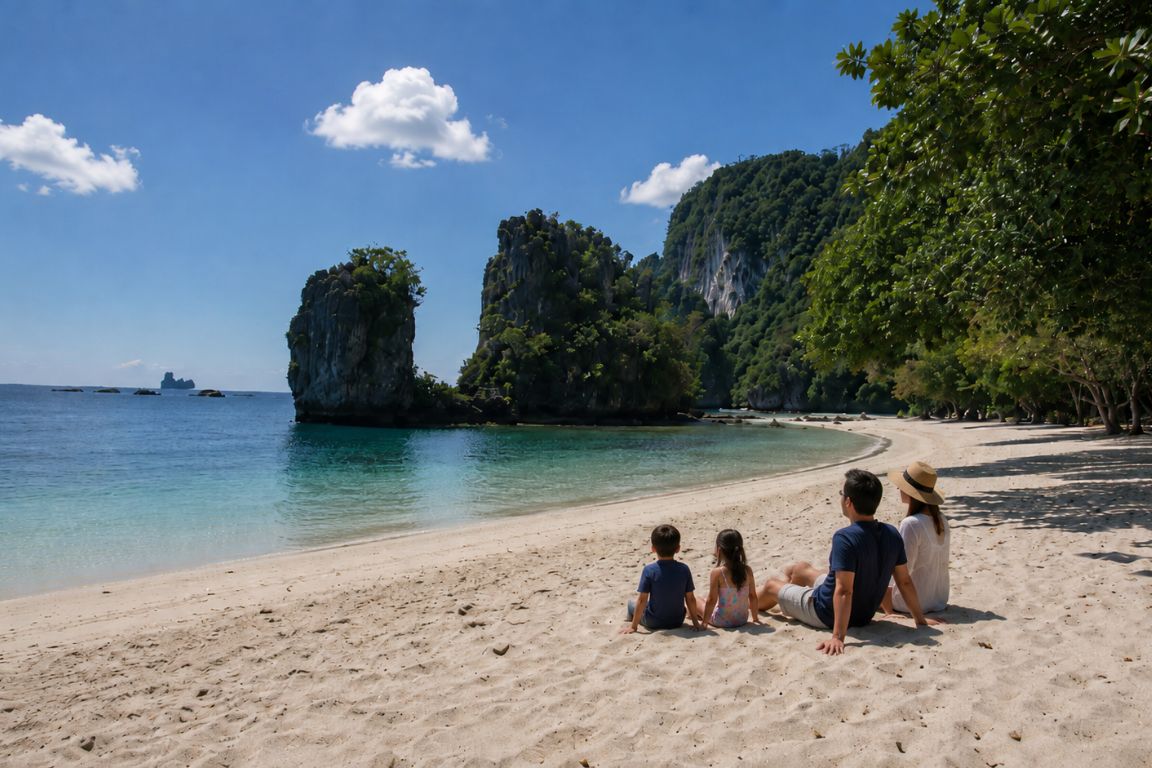 The five most consistent DIY mistakes in Krabi: arriving at the pier without cash for national park fees, negotiating a charter price without knowing the going rate, departing too late and missing the optimal tide windows, skipping snorkel gear and regretting it at every stop, and assuming the longtail captain will explain what you’re looking at. Each of these is avoidable with about 20 minutes of preparation.
The national park fee problem comes up constantly. Every island in Krabi’s major tour circuits sits inside a national park, and the entry fee is paid in cash to a ranger at the island, not to the boat operator. It’s 200-400 THB per adult foreigner depending on the specific park. A traveler who shows up at a pier with only card and 500 THB cash, expecting to cover two people’s lunch, a drink, and incidental expenses, arrives at the first island without enough money to enter. The ranger doesn’t process cards. The captain can’t cover it. The group waits awkwardly while someone sorts it out. Bring cash. Bring more than you think you need. Separate it from your wallet so you know exactly what’s allocated for park fees.
Leaving too late is the mistake that’s hardest to recover from. Longtail boats at Ao Nang pier operate from around 8am. Travelers who wander down at 9:30 after breakfast find the private charter boats are mostly committed for the day. The ones that aren’t are priced for the urgency. And even if you find a boat, a 10am departure puts you at Hong Island at high noon, when the lagoon may already have 15 other boats inside it and the viewpoint trail has a queue.
The most underestimated mistake: not briefing the captain on what you want before you leave the pier. A longtail captain running a DIY charter has no way to know you specifically want to find sharks at Chicken Island, or that you want to kayak into the Hong Lagoon at the right tide, or that one person in your group gets sick on a moving boat and needs stops to be longer and crossings to be slower. All of that is communicable at the pier before departure, in simple English with pointing at a map. What isn’t communicable is what you assumed the captain already knew. Have the conversation at the pier before you leave.
We’ve put together a full comparison in our Hong Islands vs 4 Islands guide so you know exactly which route fits your priorities, group size, and what you actually want from a day on the Andaman Sea.
Tour Vs. DIY Planning Checks
Traveler feedback can highlight logistics, route control, guide support, tide awareness, and the ability to discuss timing when comparing tour formats.
Traveler feedback commonly emphasizes timing and logistics: the gap between a good day and a great day in Krabi almost always comes down to timing, specifically hitting the right stops at the right point in the tide cycle. Guided tours with experienced operators build that in. DIY trips hit it by luck or miss it entirely. Travelers who come back often say the same thing: first trip was DIY, it was fine, we saw the islands. On a later visit they book a private 4 Islands longtail charter when they want the same islands with a set route and a flexible pace.
Guided Tour or DIY: Which Should You Choose for Your Krabi Trip?
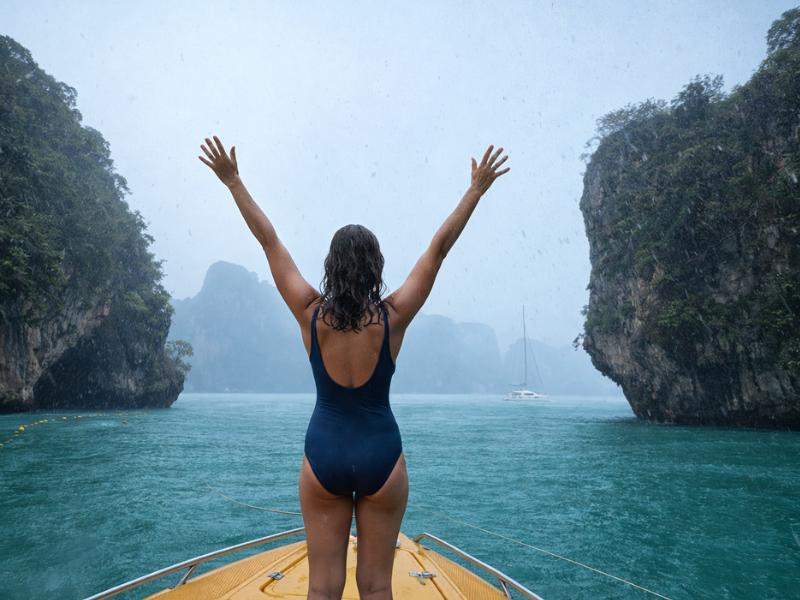
Choose a guided tour if this is your first time in Krabi, you’re traveling solo, you want everything arranged without friction, or you want a guide’s knowledge of tides and reef conditions working for you. Choose DIY private longtail if you’re a repeat visitor, you’re traveling as a couple or small group who’s done the research, you want complete schedule flexibility, and you’re comfortable at the pier. The best version of either option is a private charter: DIY for the experienced, guided for everyone else.
The honest answer most travel content avoids: there’s no meaningful difference between a good private guided charter and a well-executed DIY private longtail, except the guide. Both give you a private boat, a flexible itinerary, and full control over your day. The guided version adds someone who knows which reef is active this morning, how the tide looks for the lagoon today, and what the limestone formation in front of you is actually called and why it matters. Whether that’s worth the difference in price depends entirely on what you’re after.
A group guided tour is the most efficient first-day option for almost any traveler. Everything is handled, the route is optimized, and the guide produces moments you wouldn’t find on your own. The constraint is the group. If 12 strangers on the same schedule sounds fine, it usually is fine. If it sounds like something you’d spend the day working around, book private.
The single question that decides it: do you want to figure out Krabi’s islands, or do you want to experience them? Both are valid. They just require different bookings. Questions before you commit? Check a Hong Islands group tour or a private 4 Islands longtail charter against the cost table above, then pick by group size and how much of the day you want arranged.
Frequently Asked Questions
Can I Just Show Up at the Pier and Find a DIY Longtail Boat in Krabi?
Yes. Ao Nang pier and Nopparat Thara pier have longtail operators available daily, and private charters can be negotiated without advance booking most of the year. For a preferred departure time or route, check availability for your actual travel date. If you want a specific departure time or route, arrange it the evening before rather than morning of.
Is a Guided Krabi Tour or DIY Cheaper for a Group of Four?
For four people, a private longtail DIY charter (2,500-4,000 THB for the boat) usually comes out cheaper than four individual group tour tickets (3,600-4,800 THB total), but the guided tour includes hotel pickup, snorkel gear, and lunch that you’d pay for separately DIY. The total difference depends on live quotes and whether transfers, meals, equipment, guides, docking, and park fees are included.
Do Guided Tours or DIY Trips Include the National Park Entry Fee?
Park-fee treatment varies by tour and charter. National park fees of 200-400 THB per adult foreigner are paid in cash directly to a ranger at the island. This applies to both guided tours and DIY charters. Budget for this separately and carry cash on the day.
What’s the Main Advantage of a Guided Tour Over DIY in Krabi?
Tide and timing knowledge. A guide can explain the day’s route and conditions, but specific tide access and crowd levels are not guaranteed. Without that knowledge, you’re working from a map rather than a tide chart.
Is DIY Island Hopping Better for Experienced Travelers?
Generally yes. Travelers who have been to Krabi before, understand the tide timing, know what gear to bring, and feel comfortable negotiating at the pier get the most from DIY private charters. First-timers almost always get more value from a guided option, private or group, because the guide fills in knowledge gaps that research only partially covers.
What Should I Brief the Longtail Captain on Before Departure If I’m Going DIY?
Confirm the islands in order, ask which stop should be first based on today’s tide, establish an expected return time, clarify whether park fees are your responsibility to pay or the captain handles collection, and flag any specific things you want to do (kayak the lagoon, snorkel a specific reef, photograph a particular formation). Have this conversation at the pier with a map before the engine starts.
Written by Ryan Supakorn
Thai tour guide since 2011 · Founder, Krabi Boat Tours
Ryan has guided over 11,700 travelers through Krabi’s islands, lagoons, and coastline since founding the agency.
Check your actual travel date before arranging other Krabi plans
Match the outing to your plans
Blank fields keep the initial suggestion. Age pricing alone does not confirm suitability; if eligibility is unverified, the tool will not recommend a match. Check pickup and restrictions for your selected package.
Compare two total quotes
Use current quotes in the same currency, including park fees, transfers and option extras.
Initial recommendation. Adjust the optional choices to match your plans.
Private Tour to Hong Islands & 4 Islands with Sunset & Night Snorkel
A private Hong Islands longtail pairs a certified guide with lunch, commentary, snorkeling guidance, and listed park fees.
7h–9h · English guide listed · Private longtail with park fees; sunset and night snorkeling require the upgraded option. · Confirm your selected option’s pickup, inclusions, fees and participant restrictions before booking.
Choose a date to view the published schedule. Confirm availability and final price on Viator.
No reviewed option matches these choices.